Authored by George King
R&D Manager & Emergency Preparedness Specialist at Fitiger Life LLC
Medically Reviewed by Travis Brecka Captain & Critical Care Paramedic
|
By January 1, 2027, California 911 medical call-processing agencies must deliver pre-arrival medical instructions, including choking guidance. Airway readiness now depends on dispatch-time usability: after unsuccessful first-line action, a second-line tool has to be reachable, coachable, and deployable inside a four-minute rescue window. |
California has moved airway emergencies into the instruction phase
AB 645 does more than expand dispatcher responsibility. It moves part of the rescue sequence into the phone call itself. Public safety agencies that process 911 medical calls must provide pre-arrival medical instructions, and those instructions must include airway and choking guidance for infants, children, and adults. The law also requires local EMS agency medical director approval and consistency with each agency's adopted medical protocols. California has turned the dispatch window into an operational part of the airway response chain.
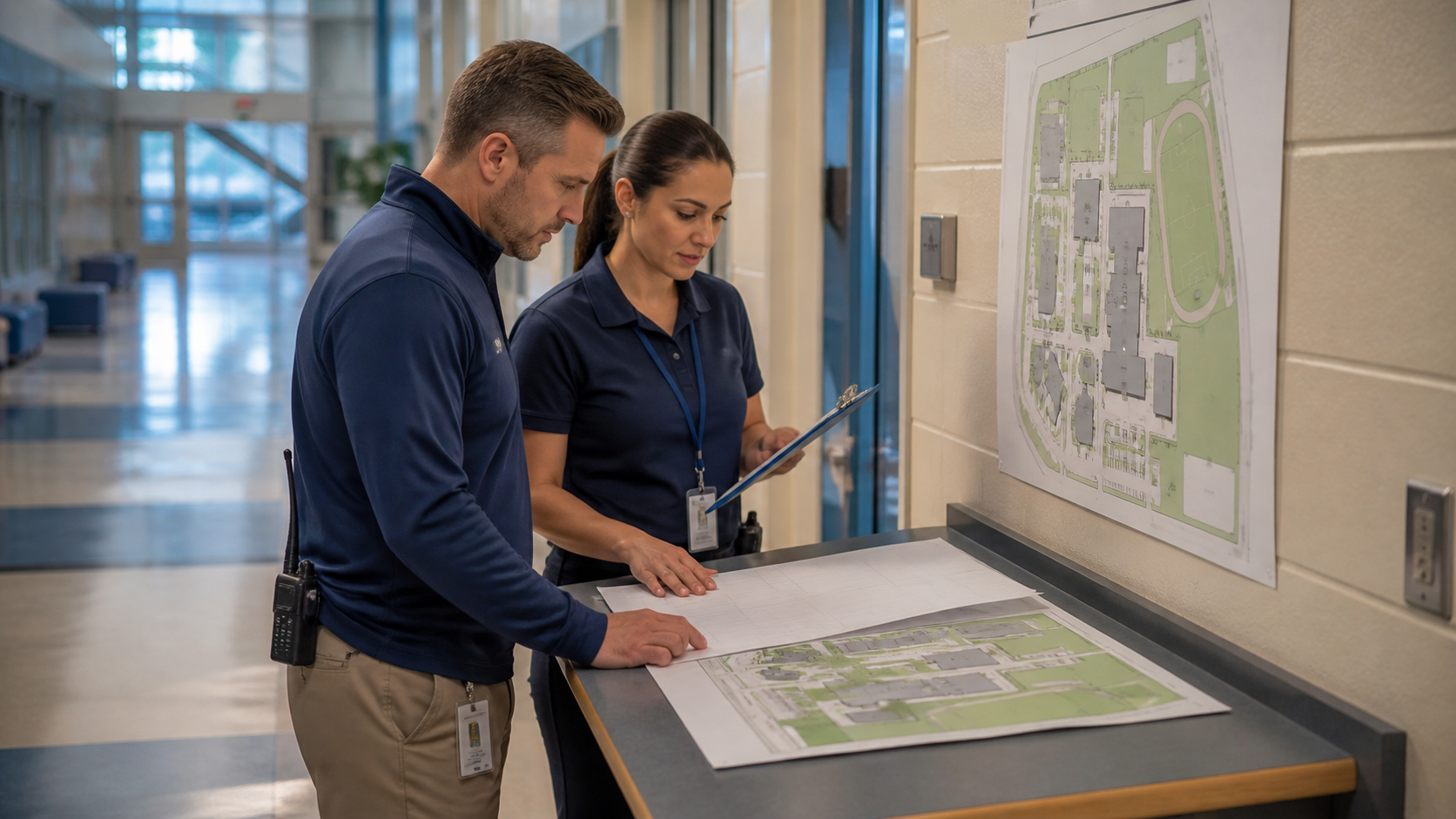
A bystander under stress is no longer waiting passively for EMS. The caller becomes part of the intervention pathway. Recognition, verbal coaching, device reach, and sequence clarity now have to survive the same minute. A school choking emergency kit that sits in a classroom cabinet, a distant office, or a locked nursing room may still exist on paper, but the dispatch window will expose its real weakness the moment the caller asks, 'Where is it?'
Published simulated-use research gives this discussion a more useful frame. In one layperson usability comparison, participants using a simple place-push-pull suction sequence averaged 36.6 seconds. A more complex catheter-based intervention averaged 50.4 seconds. The gap is about 14 seconds. In a routine skills demo, that number looks small. In an airway emergency with falling oxygen reserve, 14 seconds is a meaningful operational cost. The benchmark does not prove every real-world rescue will follow the same timing. It does show what instruction simplicity does under pressure.
|
Intervention path |
Simulated average time |
Operational implication |
|
Simple place-push-pull suction sequence |
36.6 seconds |
Shorter verbal coaching path; lower instruction load under phone guidance |
|
More complex catheter-based intervention |
50.4 seconds |
Longer setup and instruction burden; higher risk of breakdown under stress |
The dispatch window favors sequences that can be described clearly, repeated cleanly, and executed without extra assembly or interpretation.
The dispatch window is not a script problem alone. It is a physiology problem. Brain injury risk rises quickly when complete obstruction is not relieved. Rural counties, distributed campuses, sports fields, and multi-building sites extend the interval before professional responders reach the victim. Dispatchers bridge that gap with sequence control. If the verbal path is too long, too ambiguous, or too dependent on perfect retrieval, the bridge fails before EMS arrives.
Fitiger's safety-audit model treats retrieval latency as the one core engineering variable the facility still controls after the emergency starts. Dispatch guidance can be precise. The caller can still lose the scene if the device is locked in another building, staged behind office access, or hidden in a cabinet no one at the incident point can reach. A perfect phone script cannot repair bad room logic. Once the responder leaves the victim to search for equipment, the system has already traded instruction quality for travel time.
Start with the scene, not the protocol PDF. Measure the path from the likely incident point to the nearest viable second-line backup. Check whether the first responder can stay with the victim while another adult retrieves equipment. Check whether signage is visible from the actual room, not just from the cabinet wall. Check whether after-school, sports, and multi-building conditions break the same response path that looks acceptable during normal daytime operations. Retrieval latency is not an abstract delay. It is the part of the rescue sequence the site either controls or wastes.
California's size makes the dispatch window more consequential. In rural counties and spread-out public facilities, the call itself may be the only organized medical guidance available for several minutes. That does not make dispatch the whole answer. It raises the cost of vague instructions, poor device placement, and sequence confusion. The longer the EMS interval, the more the rescue chain depends on a caller being able to recognize the emergency, follow first-line steps, and transition to reachable second-line backup only if standard measures have been tried without success.
The FDA's March 4, 2026 communication keeps the line clear. Established choking rescue protocols come first. An authorized anti-choking device is a second option if standard measures are unsuccessful. AB 645 does not change that order. It increases the need to teach it correctly. Pre-arrival instructions have to preserve manual first-line action, not compete with it. A dispatch-guided second-line sequence only makes sense when the bystander understands that it follows failed standard measures rather than replacing them.
Audit the scene where the emergency is most likely to begin. Time the path from recognition to first-line action, from first-line failure to second-line reach, and from caller instruction to physical deployment. If the first responder has to leave the victim to find a phone, a cabinet, or another adult who knows where the device is, the dispatch window has already exposed the system's weak point.
Does AB 645 require a specific anti-choking device?
No. AB 645 requires pre-arrival medical instructions for specified emergencies, including choking. It does not name one device brand or create product-specific approval language.
Does dispatch guidance change the FDA's second-line boundary?
No. Established first-line choking rescue comes first. An authorized suction anti-choking device remains a second option only after unsuccessful standard measures.
Why does the 36.6-second benchmark matter?
It shows how instruction simplicity affects usability under stress. Shorter, clearer action paths are easier to coach over the phone during a time-sensitive emergency.
What is the main engineering variable facilities still control?
Retrieval latency. Once the emergency starts, the site controls where the device is staged, how fast it can be reached, and whether the first responder has to leave the victim to get it.
This article is for educational and preparedness planning purposes only. It does not replace medical training, legal review, or local EMS protocol approval. Established choking rescue protocols should come first. Any second-line device use must follow current FDA positioning and local institutional policy.


