Based on third‑party laboratory reports (CY2506164N‑4 / CY2506164N‑3), this white paper explains why Fitiger EasyPumpVac (FAC‑01 platform) requires validated reprocessing (cleaning + disinfection) and summarizes worst‑case challenge results
By Fitiger Engineering Team
Reviewed by Fitiger Product Safety Team
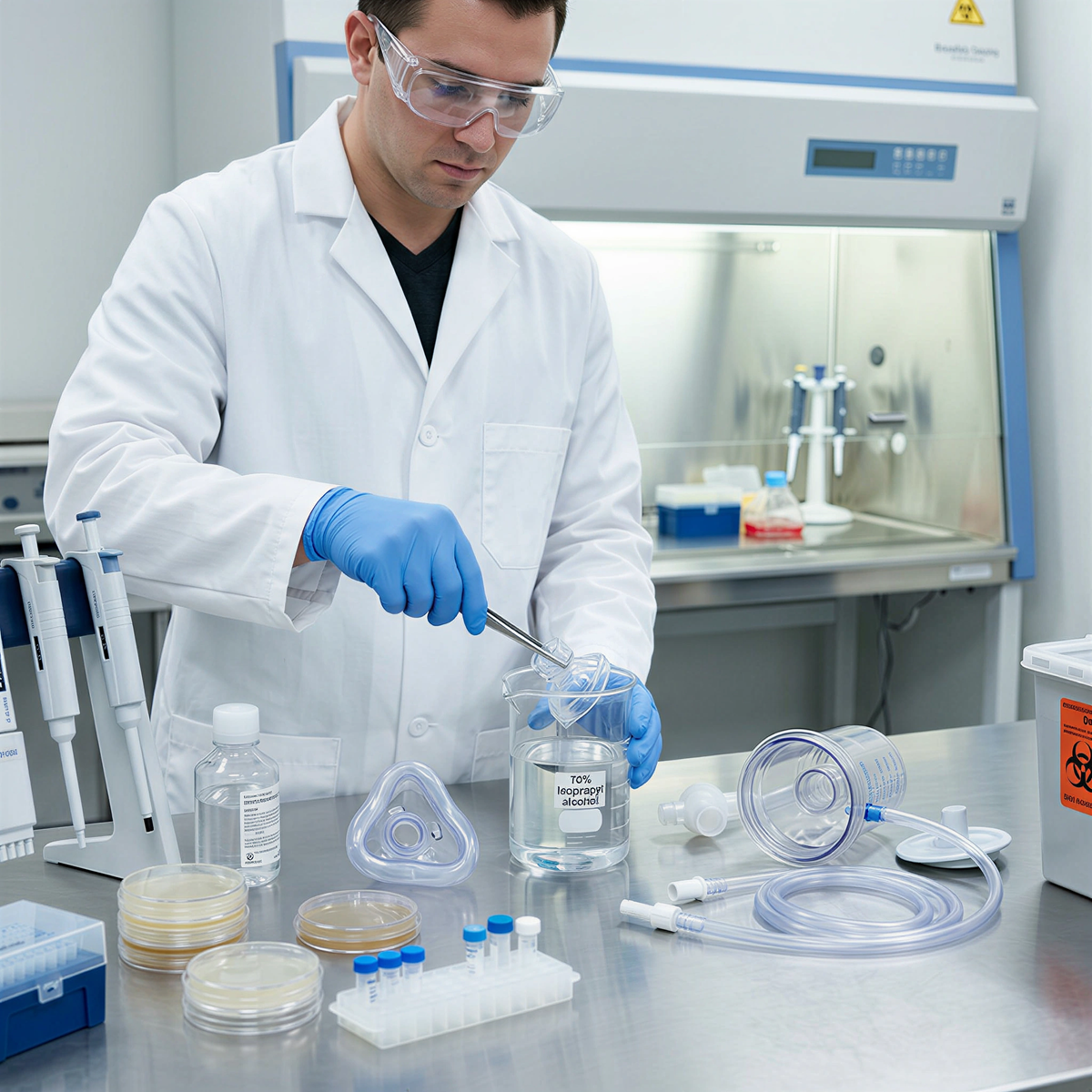
Technical interpretation based on third‑party challenge-testing data (CY2506164N-4 / CY2506164N-3) and authoritative reprocessing principles
TL;DR
- Independent laboratory testing validated the Fitiger EasyPumpVac (FAC‑01 platform) reprocessing approach: cleaning first, followed by 75% medical alcohol immersion disinfection.
- Under a worst‑case challenge using the minimum labeled immersion time (5 minutes), the disinfection study reported ≥6‑log reduction for four representative bacteria and ≥3‑log reduction for Mycobacterium terrae; conclusion: disinfection validation passed.
- Cleaning validation reported total protein residue approximately 0.3–0.4 μg/cm², well below the report acceptance limit of ≤6.4 μg/cm²; conclusion: cleaning validation passed.
- Together, these results support the recommended reprocessing procedure for reusable components when users follow the full Instructions for Use (IFU).
Executive Summary
- This white paper discloses core reprocessing validation data (cleaning + disinfection) for the Fitiger EasyPumpVac series (based on the FAC‑01 manual negative‑pressure suction platform), including the effectiveness of a 75% alcohol immersion disinfection method under a minimum immersion time challenge condition of 5 minutes.
- The validation used a standardized challenge workflow (inoculate → dry/fix → disinfect → extract/recover → culture and count) to demonstrate acceptable microbial reduction under high contamination load.
- Disinfection validation results: ≥6‑log reduction for four representative bacteria and ≥3‑log reduction for Mycobacterium terrae; report conclusion: disinfection validation passed.
- Cleaning validation results: total protein residue approximately 0.3–0.4 μg/cm², significantly below the acceptance limit of ≤6.4 μg/cm²; report conclusion: cleaning validation passed.
- In line with authoritative reprocessing principles, manufacturers are expected to provide validated reprocessing instructions and select disinfection intensity based on contact-risk level. Fitiger chose a more conservative validation endpoint (including Mycobacterium challenge) to reduce cross-contamination risk and improve verifiability.
1. Why must Fitiger anti‑choking devices undergo cleaning/disinfection validation?
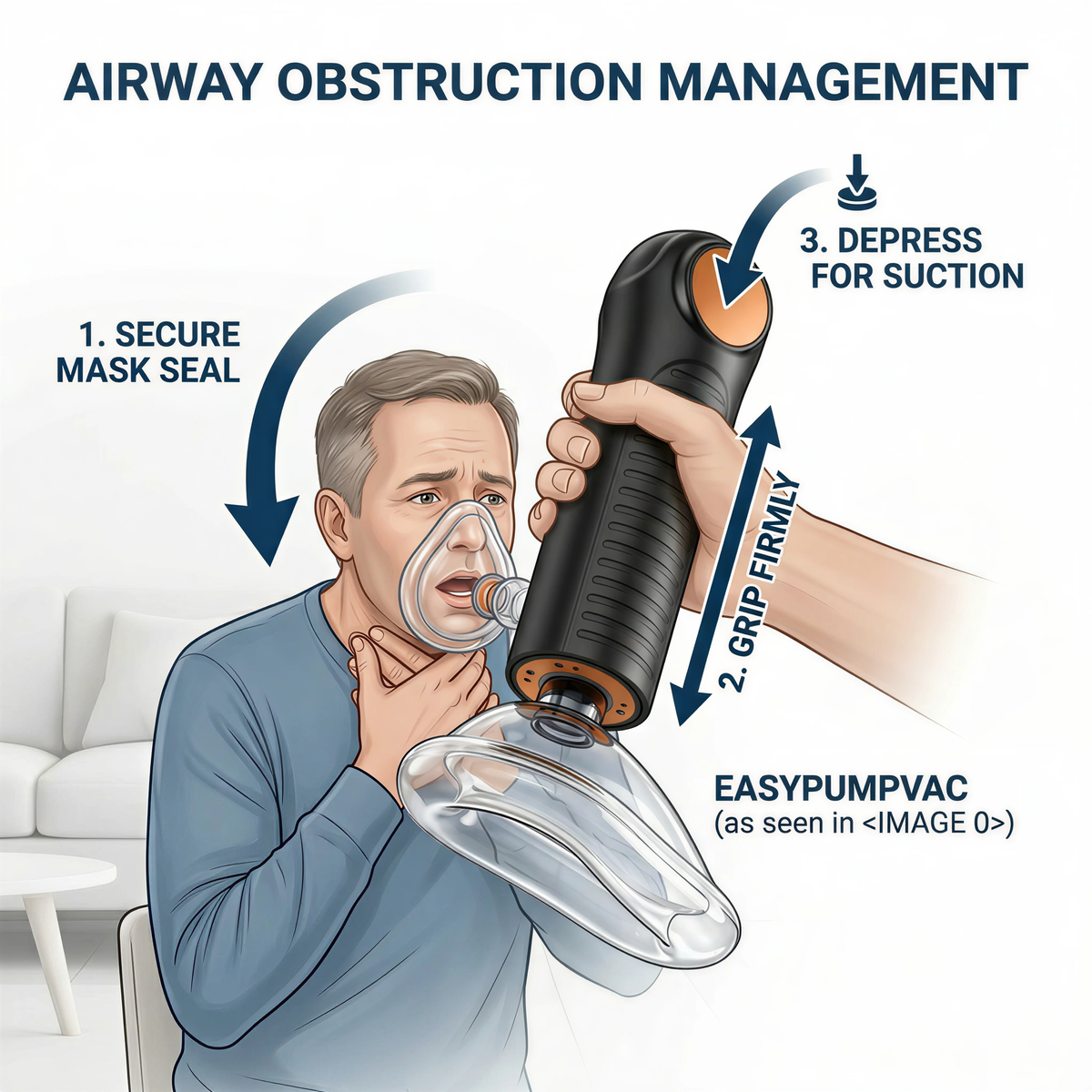
Anti‑choking suction devices are emergency-contact devices: during a choking event, components may contact perioral skin, saliva, and secretions, and there is a possibility of repeated use across home or institutional settings. This makes a validated reprocessing pathway essential (cleaning to remove organic residues + disinfection to reduce microbial load). Without validated reprocessing, there is risk of secondary contamination and cross‑infection.
Before choosing equipment, review Fitiger's anti-choking device buyer evidence checklist for FDA wording, testing, seller traceability, and kit-selection questions.
Fitiger selected third‑party validation for the following technical reasons:
- Emergency conditions are uncontrolled: contamination type and burden vary, so effectiveness must be demonstrated under worst‑case conditions.
- Reusable characteristics: reusable devices should provide repeatable, executable, and verifiable reprocessing instructions to meet regulatory and institutional procurement expectations (schools, transportation, eldercare, first responders, etc.).
- Material and structural complexity: mask surfaces and internal container surfaces can create microbial ‘harbor sites’; challenge testing verifies disinfectant contact and sufficient exposure time.
- User consistency: validation fixes key process parameters (concentration, time, and step order) as minimum acceptable standards to reduce misuse risk.
2. Validation Evidence and Study Design
- Evidence Source:
- Third‑party laboratory validation reports: CY2506164N‑4 (disinfection method effectiveness) and CY2506164N‑3 (cleaning method effectiveness), both approved on 2025‑06‑30.
- Method Transparency:
- Worst‑case design using high inoculum challenge + drying fixation + minimum exposure time; log‑reduction calculated with positive/negative controls and recovery correction.
- Scope:
- Applies to reprocessing of reusable EasyPumpVac (FAC‑01 platform) components; users must follow the full IFU.
- Compliance Baseline:
- Manufacturers are expected to provide validated reprocessing instructions and select disinfection intensity using risk-based classification; this white paper interprets Fitiger’s program under authoritative principles.
- Reproducibility:
- Reports include sample details, groups, strain identifiers, culture conditions, calculation methods, and pass conclusions for third‑party review.
3. Authoritative requirements for reprocessing devices contacting skin and/or mucosal areas
Key point: Regulations often do not hard-code a universal required log-reduction value. Instead, manufacturers are expected to
(a) provide executable reprocessing instructions,
(b) scientifically validate the effectiveness of those instructions,and
(c) select disinfection/sterilization level based on the body-contact risk level (intact skin vs mucosa vs sterile tissue).
Principle summary:
- Risk classification (Spaulding) and disinfection level: noncritical items contacting intact skin typically use cleaning plus low-level disinfection; semicritical items contacting mucosa or non-intact skin often require at least high-level disinfection depending on use and risk.
- FDA expectations for reusable medical devices: reprocessing instructions (cleaning, disinfection/sterilization, drying, inspection, etc.) should be scientifically validated and clearly presented in labeling/IFU.
- ISO 17664 series: requires manufacturers to provide information for processing (cleaning, disinfection or sterilization, etc.) to ensure safe and effective reuse.
4.1 Disinfection Validation (CY2506164N‑4)
Disinfectant & method: after rinsing/cleaning, immerse in 75% medical alcohol for ≥5 minutes and air dry naturally (the study used 5 minutes as the challenge condition).
Challenge design highlights:
- Target microorganisms: Staphylococcus aureus, Escherichia coli, Klebsiella pneumoniae, Pseudomonas aeruginosa, and Mycobacterium terrae (strain identifiers provided in the report).
- Inoculum & fixation: inoculate 200 μL suspension onto the internal surfaces of the canister and large mask, then dry for 60 minutes in a biosafety cabinet to increase adhesion difficulty.
- Worst‑case parameter: the minimum manufacturer-claimed immersion time (5 minutes) was used as the challenge condition.
- Recovery & enumeration: wipe + extraction recovery, membrane filtration/plate counting, corrected by a recovery-efficiency factor, then log‑reduction calculated.
- Control system: positive control (inoculated, not disinfected) and negative control (not inoculated, disinfected) confirm test validity.
4.2 Cleaning Validation (CY2506164N‑3)
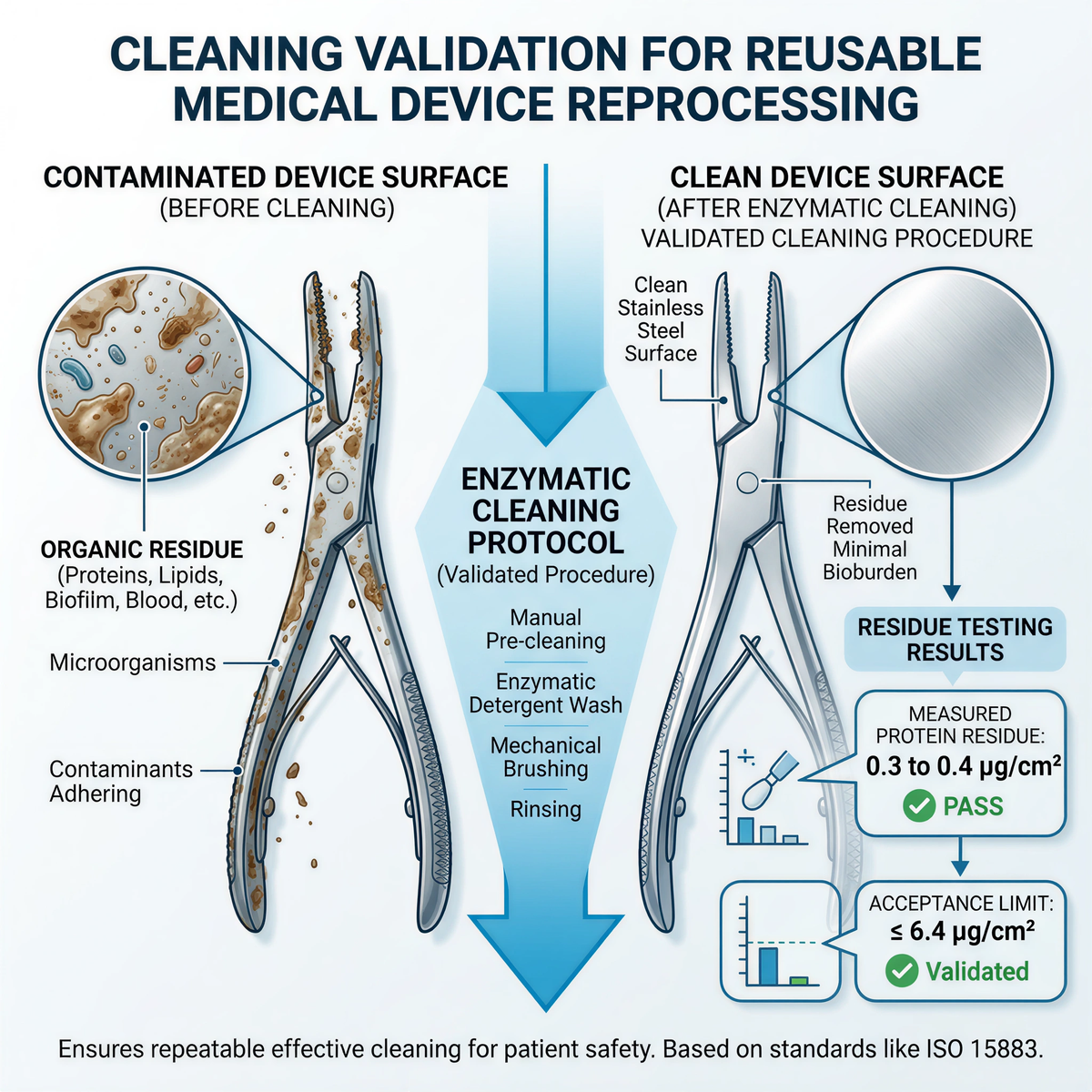
Cleaning workflow (per report): running-water rinse (≥30 s) → enzymatic detergent 1 mL:300 mL soak 2 min → brush 2 min (mask + canister) → rinse + soft-bristle brush 1 min → gauze wipe dry + air gun drying for canister interior.
Validation endpoints: no visible soil + total protein residue ≤6.4 μg/cm² (report limit).
5. Core results disclosure: disinfection and cleaning validation outcomes
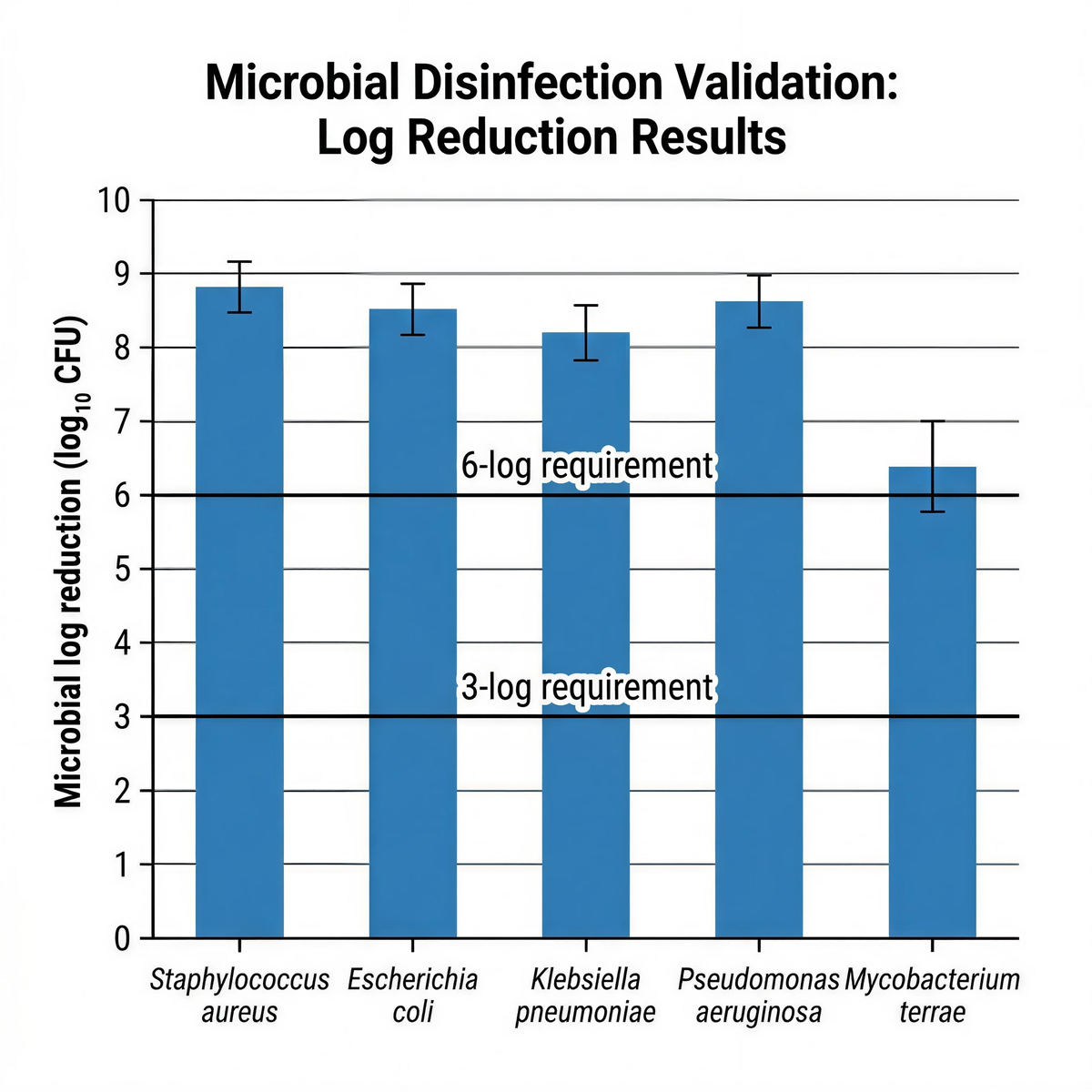
5.1 Disinfection validation: log‑reduction results (minimum 5-minute challenge)
|
Target Microorganism (Strain)
|
Pass Threshold (Report)
|
Observed Log Reduction (Range)
|
Conclusion (Report)
|
|
Staphylococcus aureus (ATCC6538)
|
≥6 log
|
8.87–8.87
|
≥6 log reduction, meets requirement
|
|
Escherichia coli (8099)
|
≥6 log
|
8.33–8.81
|
≥6 log reduction, meets requirement
|
|
Klebsiella pneumoniae (ATCC13883)
|
≥6 log
|
9.10–9.10
|
≥6 log reduction, meets requirement
|
|
Pseudomonas aeruginosa (ATCC15442)
|
≥6 log
|
9.20–9.20
|
≥6 log reduction, meets requirement
|
|
Mycobacterium terrae (ATCC15755)
|
≥3 log
|
6.41–7.01
|
≥3 log reduction, meets requirement
|
Table 1. Disinfection validation log-reduction results under minimum 5-minute immersion challenge conditions. Source: Third-party laboratory report CY2506164N-4.
Interpretation: The report pass threshold is bacteria ≥6‑log and Mycobacterium terrae ≥3‑log. Log‑reduction ranges under challenge conditions were above the thresholds.
5.2 Cleaning validation: protein residue results
|
Group
|
Total Protein Residue (μg/cm²)
|
Acceptance Limit (μg/cm²)
|
|
Test Sample Group 1
|
0.3
|
6.4
|
|
Test Sample Group 2
|
0.3
|
6.4
|
|
Test Sample Group 3
|
0.3
|
6.4
|
|
Negative Control Group
|
0.4
|
6.4
|
Table 2. Cleaning validation protein residue results. Source: Third-party laboratory report CY2506164N-3.
Interpretation: Cleaning validation demonstrates that ‘cleaning first’ controls organic residues far below the acceptance limit, providing a stable and repeatable prerequisite for subsequent disinfection.
6. Comparison against ‘minimum expectations’: Fitiger chose a more conservative validation path
Many noncritical items that contact intact skin are typically associated with a ‘cleaning + low-level disinfection’ principle in authoritative guidance. However, in real emergencies an anti‑choking suction device may contact the perioral area and secretions. To reduce uncertainty, Fitiger adopted a more conservative validation strategy: third‑party challenge testing verified ≥6‑log reduction for common bacteria and included a Mycobacterium challenge meeting a ≥3‑log threshold.
What this means (no exaggeration — technical meaning only):
- Meeting and exceeding thresholds at the minimum 5-minute exposure suggests additional process margin against real‑world variation.
- Including a Mycobacterium challenge is a more conservative difficulty setting that improves coverage for more tolerant organisms (disinfection level still depends on IFU and intended context).
- Together with cleaning validation, this forms complete chain-of-evidence: cleaning reduces organic load, then disinfection reduces microbial load.
7. Validated reprocessing SOP
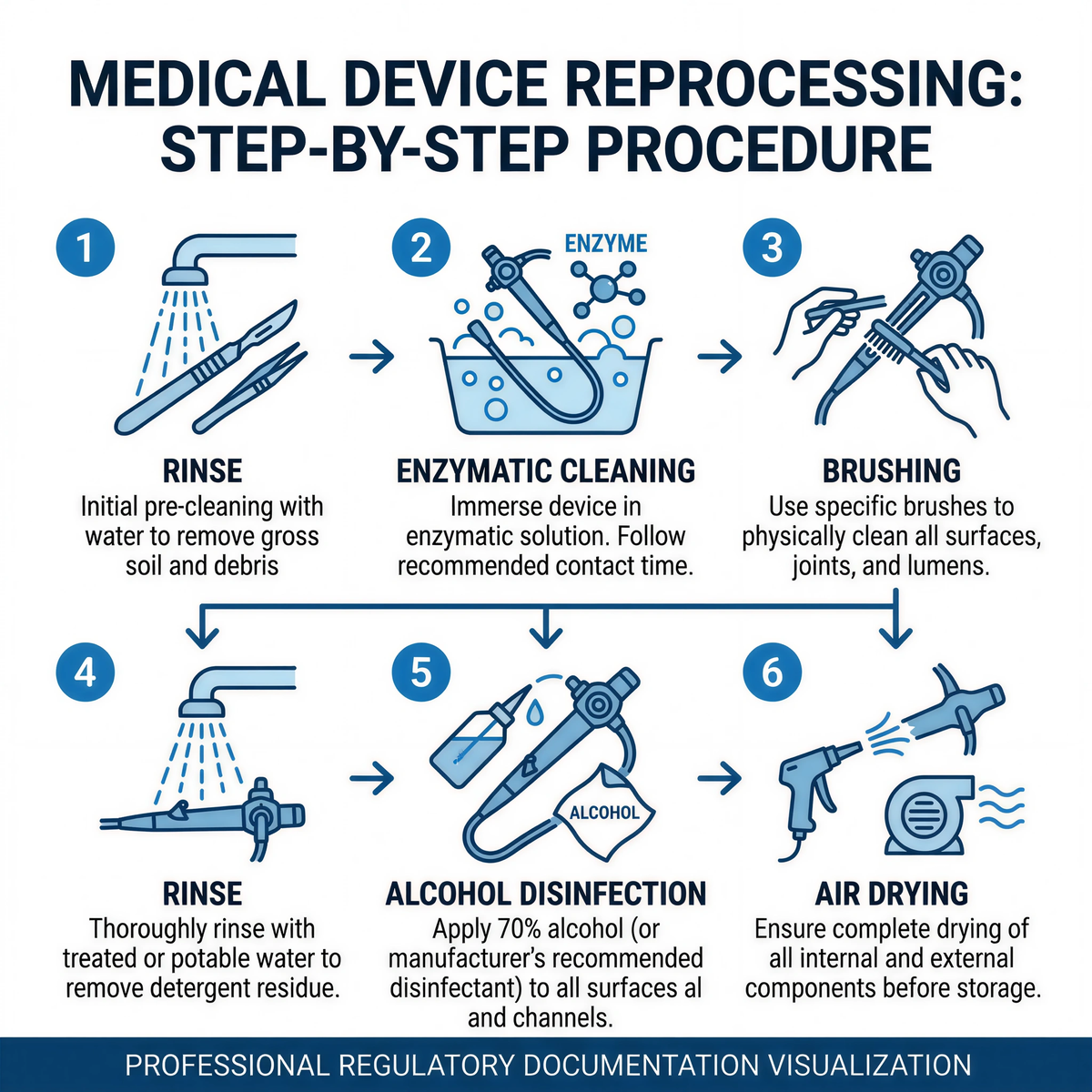
- Disassemble: remove mask and other detachable parts per IFU.
- Pre‑rinse: rinse under running water for ≥30 seconds until no visible contamination remains.
- Enzymatic cleaning: add 1 mL enzymatic detergent to 300 mL water; soak for 2 minutes.
- Brush: total 2 minutes (brush mask surfaces and canister interior surfaces).
- Rinse & secondary brush: rinse and brush with a soft‑bristle brush for 1 minute.
- Dry: wipe with gauze; the canister interior may be dried with an air gun.
- Disinfect: fully immerse in 75% medical alcohol; time ≥5 minutes.
- Air dry: remove and air dry naturally to avoid re‑contamination; store only after fully dry.
8. Technical FAQ
Q1: Why validate immersion disinfection instead of only wipe disinfection?
A: Immersion increases contact with complex surfaces and potential recesses/internal areas. Validating the minimum exposure time under worst‑case challenge aligns with engineering verification and reproducibility expectations.
Q2: Why use 5 minutes?
A: The report specifies the manufacturer’s instruction as ‘immerse for at least 5 minutes.’ The study used the minimum allowed immersion time as the challenge condition, which validates effectiveness at the lowest permitted parameter.
Q3: What is the basis for saying this is ‘more conservative’ than minimum expectations?
A: Authoritative guidance for many noncritical items is principle-based (cleaning + low-level disinfection). Fitiger selected stricter challenge endpoints (bacteria ≥6‑log, Mycobacterium ≥3‑log) and disclosed third‑party measured ranges, representing a more stringent validation path.
Q4: How can the log‑reduction data be verified?
A: The report provides positive/negative controls, culture conditions, correction method (recovery efficiency factor), and device‑level count results, allowing third parties to recompute using the report formulas.
Q5: Is this white paper a regulatory claim or medical advice?
A: No. This white paper explains validation design and the meaning of the data. Use and reprocessing should follow the IFU, local regulations, and institutional infection‑control policies.
Request the Full Lab Reports & School Procurement Packet
Do you need the complete certification documents for your institution's compliance review? Contact our Engineering Team.
Appendix: Authoritative References


