
EasyPumpVac transport testing evaluated a complete FAC01 shipping unit under the test sequence identified in third-party laboratory report BY2507074S-1.
Before choosing equipment, review Fitiger's anti-choking device buyer evidence checklist for FDA wording, testing, seller traceability, and kit-selection questions.
Before testing, the packaged unit was conditioned for 72 hours at 23deg C and 50% relative humidity. It was then exposed to manual handling, stacking, free vibration, low-pressure conditions, road and air vibration profiles, concentrated impact, and final re-handling under YY/T 0681.15-2019.
The recorded test conditions included:
The report states that the tested items conformed to its stated requirements and records no package damage or visible product-appearance damage across the test sequence.
That result supports EasyPumpVac distribution readiness under the tested conditions. It does not, by itself, establish shelf life, unrestricted environmental storage, post-transport suction performance, or the outcome of any choking emergency.
A product can meet its design specifications when it leaves the factory and still be affected by what happens next.
Cartons are stacked in warehouses. Packages move through conveyor systems, delivery vehicles, airport cargo networks, and local sorting facilities. They experience repeated vibration, changes in atmospheric pressure, compression from other boxes, and occasional drops.
For an anti-choking device, shipping validation answers a narrow but important question: did the packaged shipping unit tolerate the defined distribution stresses without recorded package damage or visible product-appearance damage?
It does not answer every question about the device. It does not replace suction testing, connection-strength testing, human-factors evaluation, aging studies, or clinical evidence. Still, it is a necessary part of the larger product-readiness picture.
At Fitiger, we believe that distinction should be stated plainly. A laboratory report is most credible when readers can see exactly what was tested, what was observed, and where the evidence stops.
Readers can review additional report-backed testing on our Scientific Evidence page.
The FAC01 sample was evaluated as a complete one-box shipping unit rather than as an unpackaged device placed directly on a laboratory bench.
The report identifies:
| Model: FAC01. | Transport-unit mass: 2.38 kg. |
| Production date: May 8, 2025. | Recorded validity date: May 7, 2027. |
| Preconditioning: 72 hours at 23deg C and 50% relative humidity. | Inspection basis: YY/T 0681.15-2019. |
Testing a complete shipping unit matters because the carton, internal positioning, storage components, and product all work together during distribution. A device may be physically durable while its packaging performs poorly, or a carton may look acceptable while internal components have shifted.
The FAC-01 transport sequence was designed to examine the packaged system through multiple distribution-style stresses rather than one isolated event.
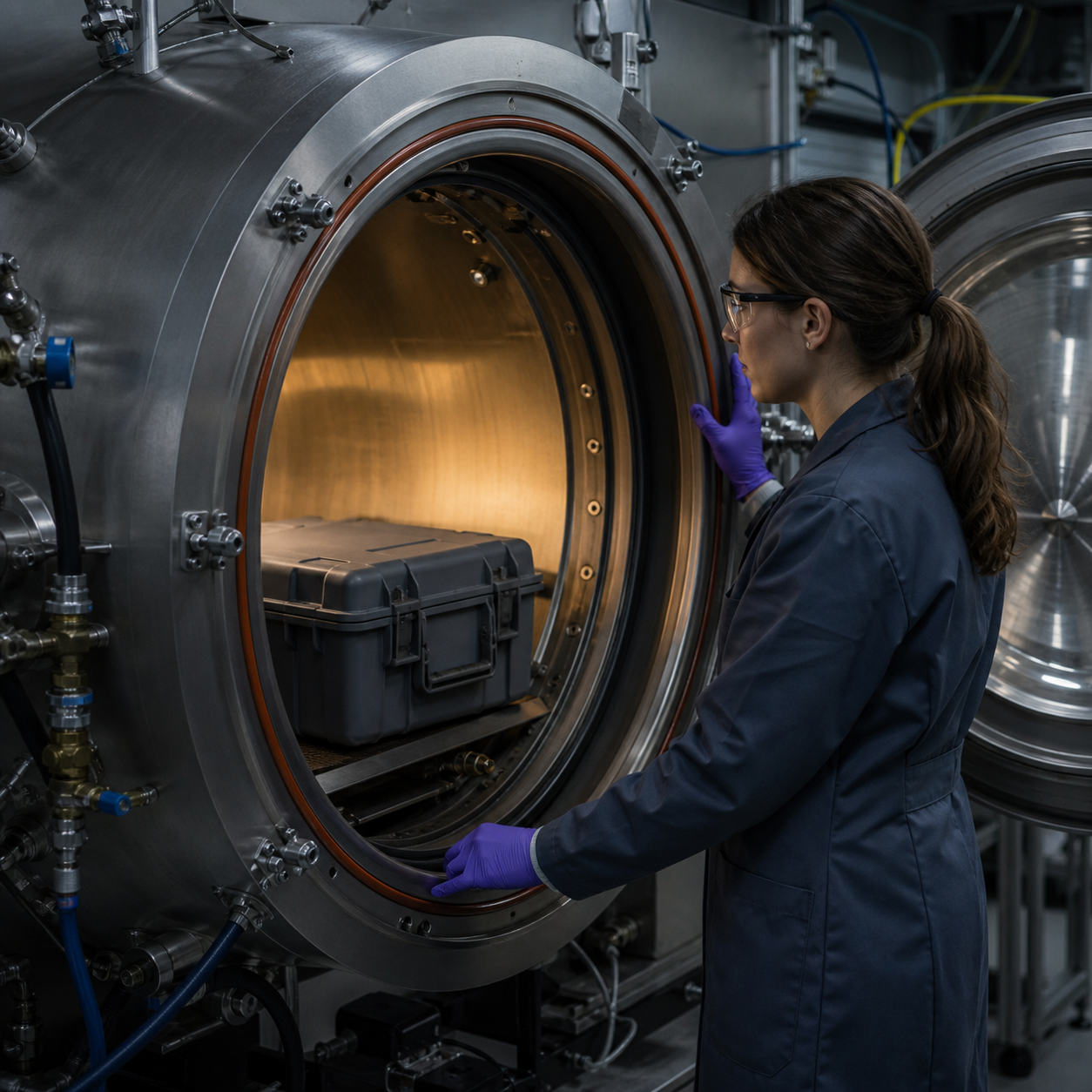
The FAC01 shipping unit was exposed to 59.5 kPa for 60 minutes.
Low-pressure transport testing is relevant because atmospheric pressure can change during air shipment and high-altitude distribution. Those changes may affect packaging shape, internal fit, seals, and the way components remain positioned inside a shipping unit.
The report does not label this condition as proof of every possible aircraft route, altitude, or global-shipping scenario. We should not make that leap for it.
The evidence-supported conclusion is more specific: the FAC01 shipping unit completed the recorded 59.5 kPa, 60-minute exposure as part of the full test sequence, and the results table recorded no package damage or visible product-appearance damage.
That is meaningful transport evidence. It is not a promise of unlimited altitude tolerance or unrestricted storage after shipment.
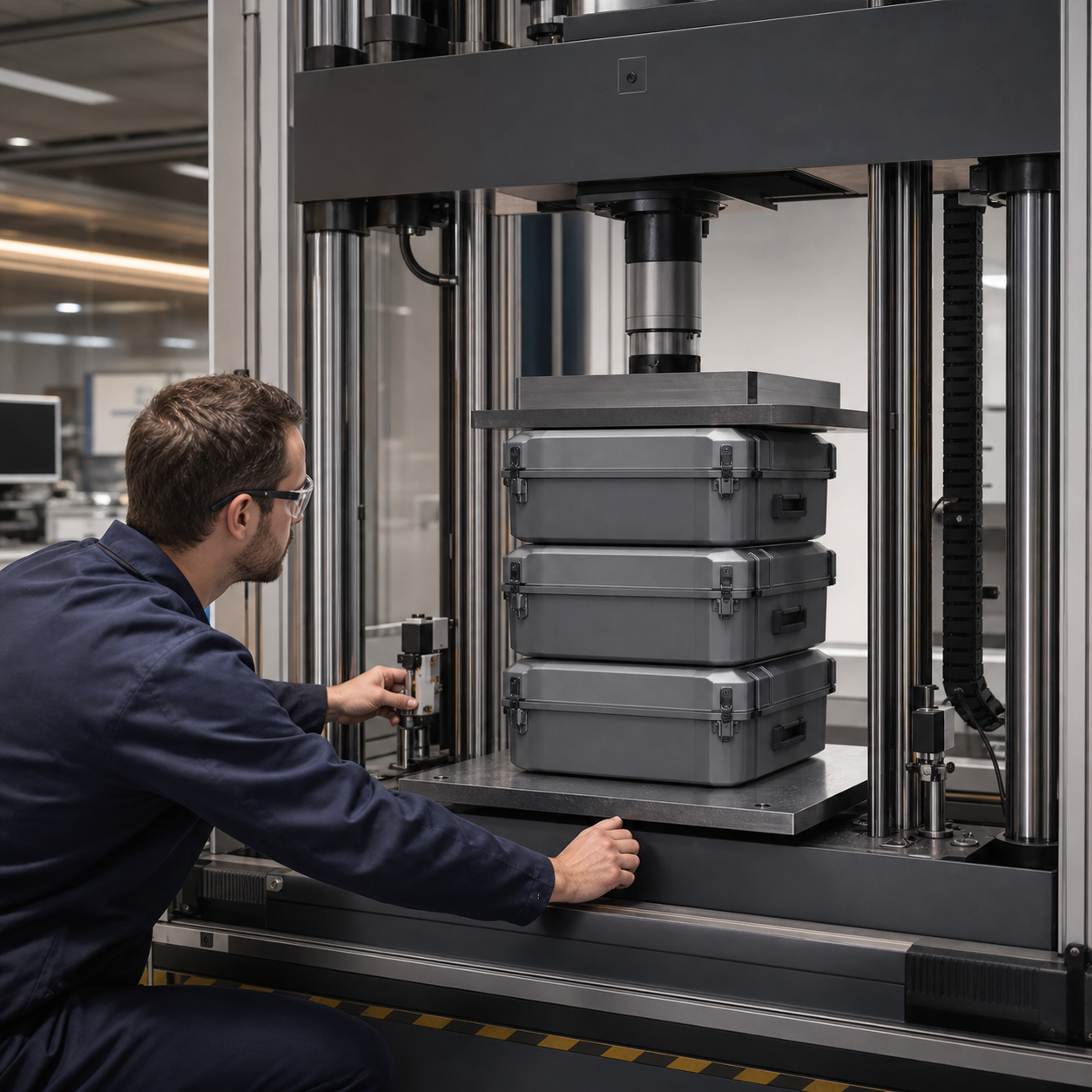
Shipping boxes rarely travel alone. They are placed beneath other cartons in warehouses, on pallets, inside delivery vehicles, and during temporary storage.
The FAC01 report used:
The purpose of the stacking test was to evaluate whether the shipping unit could tolerate the specified compressive load within the test framework.
After the recorded stacking stage and the wider transport sequence, the report continued to list no package damage and no product-appearance damage.
This does not mean the carton can support any weight or remain under compression indefinitely. It means the tested unit met the report's stated requirements under the defined 327 N condition.
For procurement teams and families, that is a more useful statement than a vague claim such as 'heavy-duty packaging.' It names the tested load and preserves the limits of the evidence.
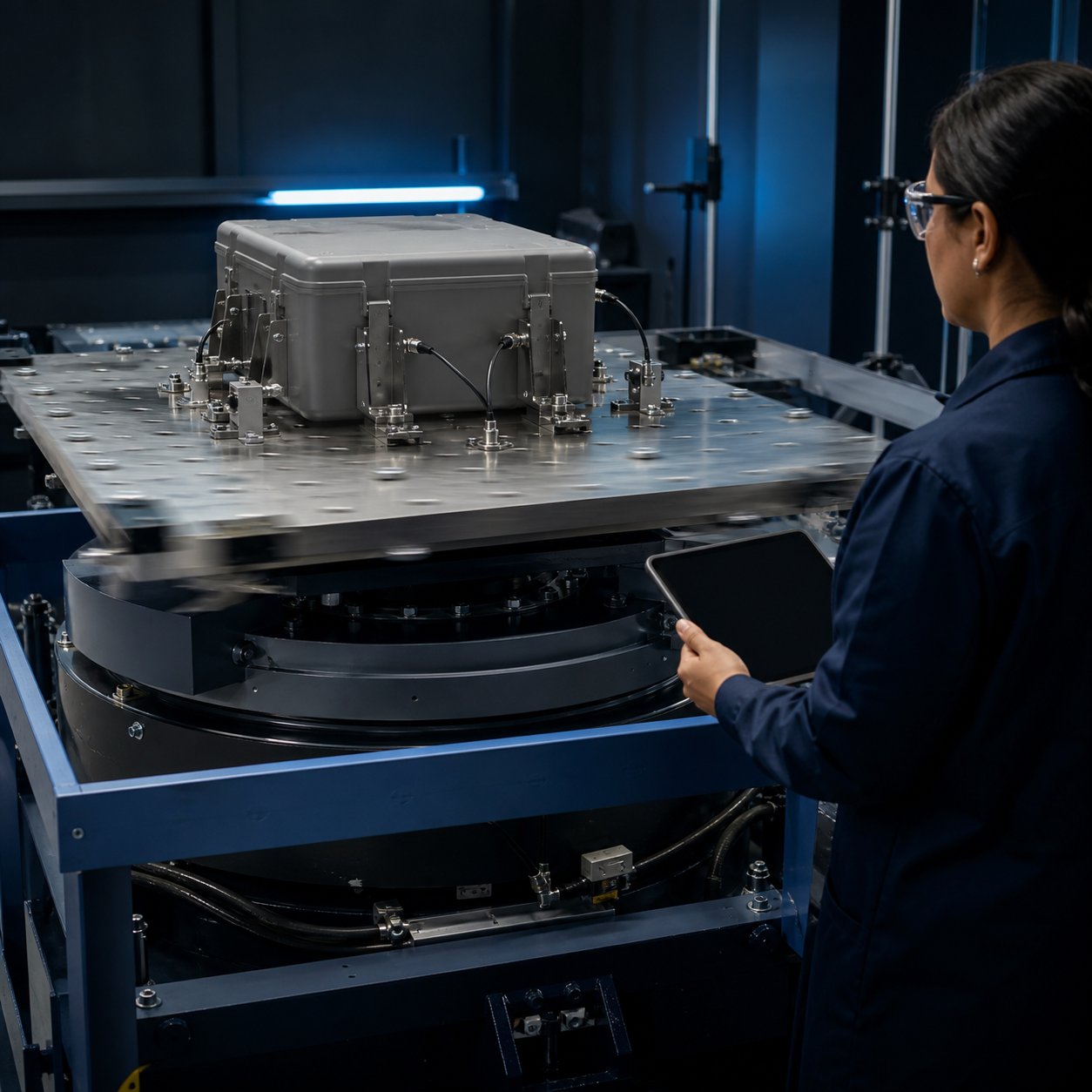
Distribution damage is often cumulative.
A package may never experience one dramatic impact, yet it can spend hours moving against a vehicle floor, shifting through sorting equipment, or absorbing repeated vibration during air and road transport.
The FAC-01 shipping validation included several movement profiles.
The report records free vibration at:
The road-transport sequence included:
The air-vibration condition was:
This combination is important because the shipping unit was not assessed through one generic 'shake test.' It was exposed to free vibration and multiple random-vibration levels intended to represent different transport stresses.
The report's itemized results continued to record no package damage and no visible product-appearance damage.
That supports packaging stability under the recorded vibration profiles. It does not, on its own, prove that every internal functional specification was retested after vibration.
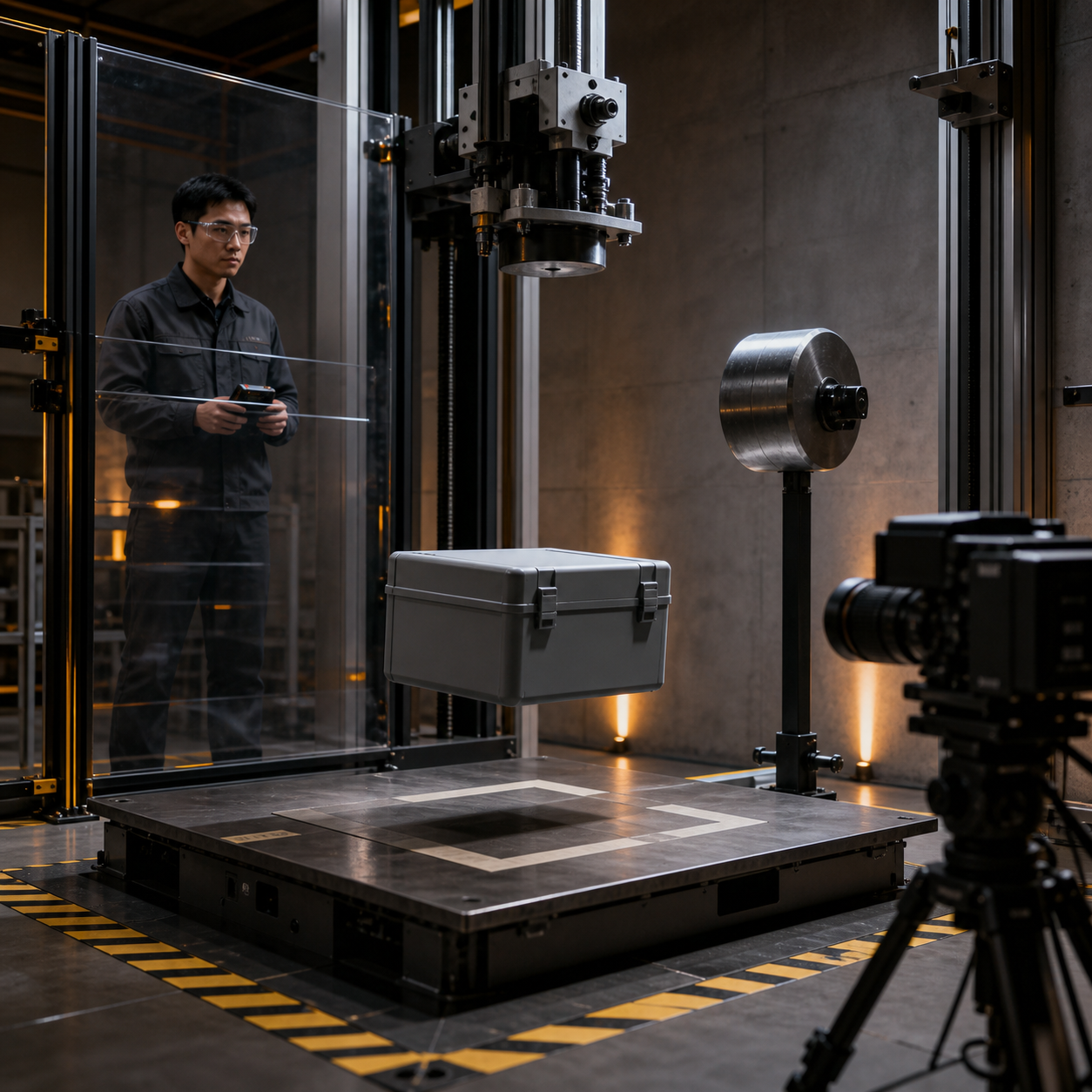
Packages are picked up, transferred, set down, and occasionally mishandled. A realistic distribution test therefore needs to consider human handling as well as continuous vibration.
The FAC01 sequence included two manual-handling stages.
This section is useful for buyer inspection because it separates tested package handling from unsupported drop-proof claims.
The first stage used a drop height of 38 cm. During the later re-handling stage, the report again recorded 38 cm drops and included a 76 cm drop on carton face 3.
The reference to 'face 3' describes the orientation of the shipping carton during the test. It should not be interpreted as a general claim that the unpackaged EasyPumpVac device is drop-proof from 76 cm.
A concentrated-impact test was also included in the sequence.
After these recorded events, the laboratory results table still listed no package damage and no product-appearance damage.
The careful conclusion is that the complete FAC-01 shipping unit tolerated the specified handling and impact sequence within the report. It does not mean every drop height, surface, angle, or repeated-abuse condition is covered.
The wording in a laboratory report matters.
The FAC01 results describe:
Those findings support the visible condition of the package and product after the recorded transport sequence.
They should not automatically be rewritten as:
Unless a report includes those additional evaluations, they remain separate questions.
This distinction is central to E-E-A-T. Technical authority is not built by making a result sound broader than it is. It is built by showing readers exactly what the evidence establishes.
Within the recorded test conditions, the FAC-01 report supports discussion of:
The report is also useful for procurement review because it provides specific numbers instead of relying on general statements such as "travel-ready" or "durable."

The FAC01 shipping report does not independently establish:
Transport testing is one part of a broader evidence program. Shelf-life support, functional verification, materials evaluation, human-factors testing, labeling, and regulatory review address different questions.
FDA recognizes ASTM D4169 as a standard relevant to evaluating whether shipping units can withstand distribution environments. FDA's standards information also references ISO 11607-1 and ISO 11607-2 in the broader medical-device packaging context.
The FAC01 report used YY/T 0681.15-2019, not ASTM D4169 or ISO 11607. These standards should not be presented as interchangeable.
The broader point is that packaging and shipping-unit performance are recognized parts of medical-device development and quality review. Transport evidence is not just a logistics detail added after product design is finished.
FDA shelf-life guidance also treats packaging, storage conditions, and transportation conditions as factors that may affect how long a device remains within acceptable specifications. That is why one transport report cannot replace a complete shelf-life program.
A passing transport report does not eliminate the need for inspection when a product arrives.
Before placing an EasyPumpVac kit into a kitchen, school, office, restaurant, caregiver bag, or senior-care readiness point:
Do not assume that 'portable' means suitable for continuous storage in an overheated vehicle or any uncontrolled environment. Storage boundaries still apply.
EasyPumpVac transport testing addresses whether the packaged product tolerated the recorded distribution sequence. It does not change the emergency-response order.
In a choking emergency, call 911 and follow established choking rescue protocols first. FDA states that anti-choking devices may be considered only as a second option if established protocols are unsuccessful.
The How It Works page explains that second-line boundary in plain language for families, facilities, and responders.
Any suction anti-choking device should be used only within its current instructions for use, intended user population, warnings, and applicable regulatory status.
A well-protected package matters because a readiness device may spend a long time waiting to be needed. But packaging evidence cannot replace training, emergency communication, correct staging, or first-line choking response.
Good transport evidence is rarely dramatic. It is a chain of controlled conditions, recorded values, observations, and clearly stated limits.
For EasyPumpVac FAC01, the useful evidence is concrete:
| 72 hours of controlled preconditioning. | 59.5 kPa for 60 minutes. |
| 327 N stacking load. | Free, road, and air vibration profiles. |
| Manual-handling drops up to 76 cm on carton face 3. | No package damage or visible product-appearance damage recorded across the tested sequence. |
Those findings support a measured discussion of distribution readiness.
They do not need to be stretched into a promise the report never made. The numbers are more credible when they are allowed to speak within their actual scope.
Before choosing a readiness location, review kit comparison options and match the storage point to the responder who would actually reach it first.
For related planning context, review the anti-choking device buyer evidence checklist.
The report states that the tested items conformed to the requirements of YY/T 0681.15-2019. Its results table records no package damage and no product-appearance damage across the tested sequence.
The FAC-01 shipping unit was exposed to 59.5 kPa for 60 minutes.
The report records a calculated stacking load of 327 N with a maximum transport stack height of three layers.
No. The 76 cm result applies to a specified face-3 drop of the complete packaged shipping unit within the laboratory sequence. It is not a universal drop-proof claim for the unpackaged product.
Not by itself. The report records package condition and product appearance. Post-transport suction output or other functional endpoints would require the relevant functional test data.
No. Transport testing supports distribution-readiness evidence under the tested conditions. Shelf-life claims require a broader evidence package that may include accelerated aging, real-time aging, packaging evaluation, storage limits, and post-aging verification.
The transport report does not establish unlimited hot-car or cold-car storage. Always follow the labeled storage conditions and inspect the kit after unusual heat, humidity, water exposure, or visible package damage.
Third-party FAC-01 transport-performance report BY2507074S-1 - Primary source for FAC-01 model identification, preconditioning, 59.5 kPa exposure, 327 N stacking load, vibration profiles, drop conditions, and recorded package/product-appearance results.
U.S. FDA - Shelf Life of Medical Devices - Supports the distinction between transport testing and the broader activities used to establish device shelf life.
U.S. FDA - Medical Devices that Have Been Exposed to Heat and Humidity - Supports labeled environmental limits, the risk of heat and humidity exposure, and checking packaging and seals before use.
U.S. FDA Recognized Consensus Standards - ASTM D4169-22 - Supports the broader regulatory relevance of laboratory evaluation of shipping units under anticipated distribution hazards.
U.S. FDA - Choking Rescue Protocol Safety Communication - Supports standard choking rescue first and anti-choking devices only as a second option if standard protocols are unsuccessful.
This article discusses laboratory distribution testing for Fitiger EasyPumpVac FAC-01 based on third-party report BY2507074S-1. It is intended for engineering, product-safety, and educational discussion only.
Transport testing does not establish clinical effectiveness, guarantee the outcome of an emergency, replace shelf-life validation, or constitute FDA marketing authorization. In a choking emergency, call 911 and follow established choking rescue protocols first. Use any second-line suction device only according to its current instructions for use and applicable regulatory requirements.


