R&D Manager & Emergency Preparedness Specialist at Fitiger Life LLC.
Medically Reviewed by Dr. Danielle K. Miller DNP, MSN, BSN, RN.
|
TL;DR Before choosing equipment, review Fitiger's anti-choking device buyer evidence checklist for FDA wording, testing, seller traceability, and kit-selection questions. |
Why this distinction matters in 2026
The most dangerous confusion in this category is not legal jargon. It is rescue delay created by bad terminology.
When a caregiver, parent, school buyer, or nursing-home administrator reads 'FDA for this device category and for the intended use being promoted., many assume the product itself has already been reviewed for safety and effectiveness. That assumption is wrong. In 2026, the federal framework became much clearer, and the cost of using the wrong term became harder to ignore. A suction anti-choking device now sits inside a defined U.S. second-line category. Administrative registration and marketing authorization are no longer phrases that can be blurred together without creating operational risk.
Terminology discipline is a safety variable: in a hypoxia crisis, mistaking administrative registration for clinical authorization can trigger dangerous rescue delays. Buyers may believe a listed product has already crossed the same review threshold as an authorized one. Policy writers may draft weaker protocols. Trainers may teach the wrong boundary. A product label may sound compliant while the actual the device may not be in the lawful second-line category.
What 'FDA registered' actually means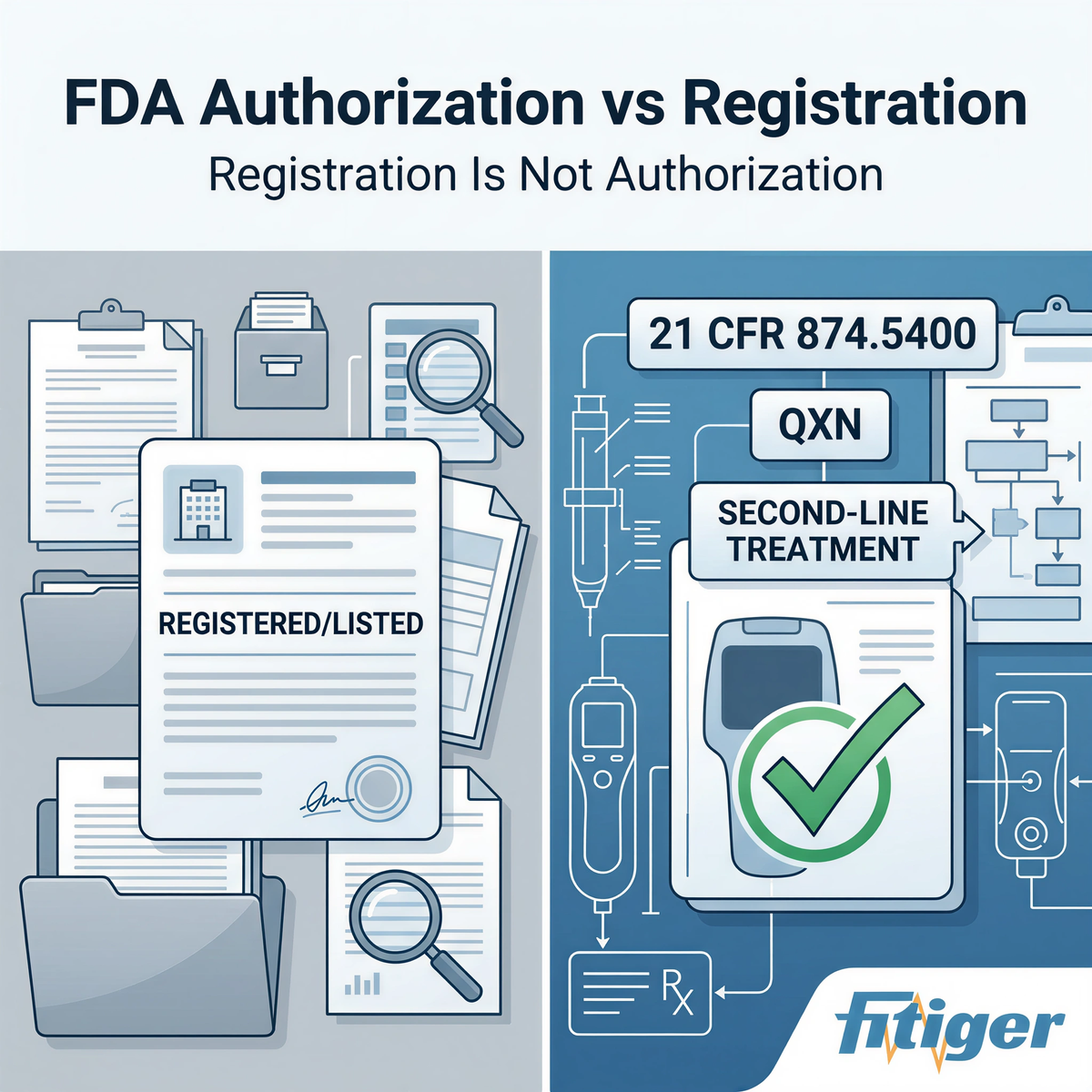
Registration is real. It is also much narrower than most marketing copy makes it sound.
FDA explains that facility registration and device listing place a firm and its devices in FDA's administrative system. That database entry does not denote approval, clearance, or authorization of the facility or its devices. In plain language, registration tells you that an establishment completed an administrative requirement. It does not tell you that FDA reviewed the product itself and granted lawful marketing status for this device category.
That is why phrases such as 'FDA registered' or 'made in an FDA-registered facility' cannot do the work buyers think they do. They answer an administrative question. They do not answer the clinical, regulatory, or procurement question that actually matters: has this product been reviewed and authorized for the role it claims to fill in a choking emergency?
What 'FDA listed' means
Listing is also administrative.
A listed device appears in FDA's registration and listing system as a device associated with a registered establishment. That still does not make the device approved, cleared, or authorized. Listing confirms existence inside the administrative database. It does not confirm that the device has crossed a lawful premarket review threshold for the indication being promoted.
That distinction matters because many buyers stop at the database search. A device can appear in an FDA-related database and still lack the reviewed second-line status that schools, facilities, and families assume they are seeing.
What 'FDA authorized' means in this category
Authorization is different because it reflects FDA review and a defined regulatory identity.
FDA's March 4, 2026 safety communication states that, as of that date, the agency had authorized at least one anti-choking device for marketing and distribution in the United States. The De Novo order for DEN250012 created the category under 21 CFR 874.5400, product code QXN, as a Class II suction anti-choking device classified as a second-line treatment after unsuccessful use of a basic life support choking protocol. It has been reported in bench testing to generate negative pressure on the order of 154 mmHg after unsuccessful use of a BLS choking protocol.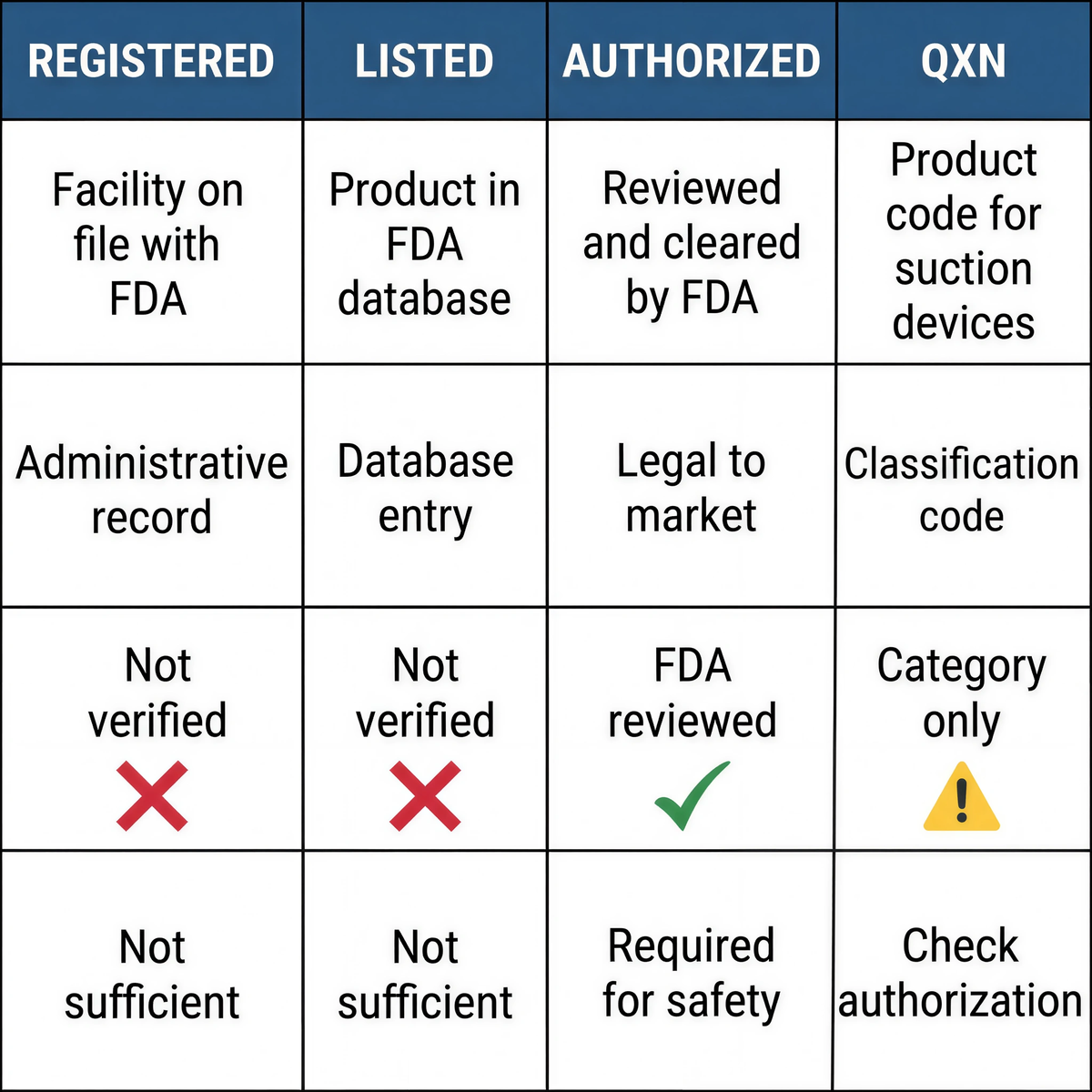
That wording is not minor. It fixes the legal and operational place of the device in the rescue sequence. First-line choking rescue protocols come first. A QXN-coded suction device enters only after unsuccessful BLS. This is the point where authorization becomes more than a paperwork label. It becomes a clear statement of what the device is, where it belongs, and what standards it had to satisfy before lawful marketing.
Regulatory term matrix
The quickest way to remove confusion is to separate the terms cleanly.
Why the 2025 to 2026 timeline changed buyer risk
The timeline matters because stale screenshots and recycled copy can now hide a completely different compliance reality.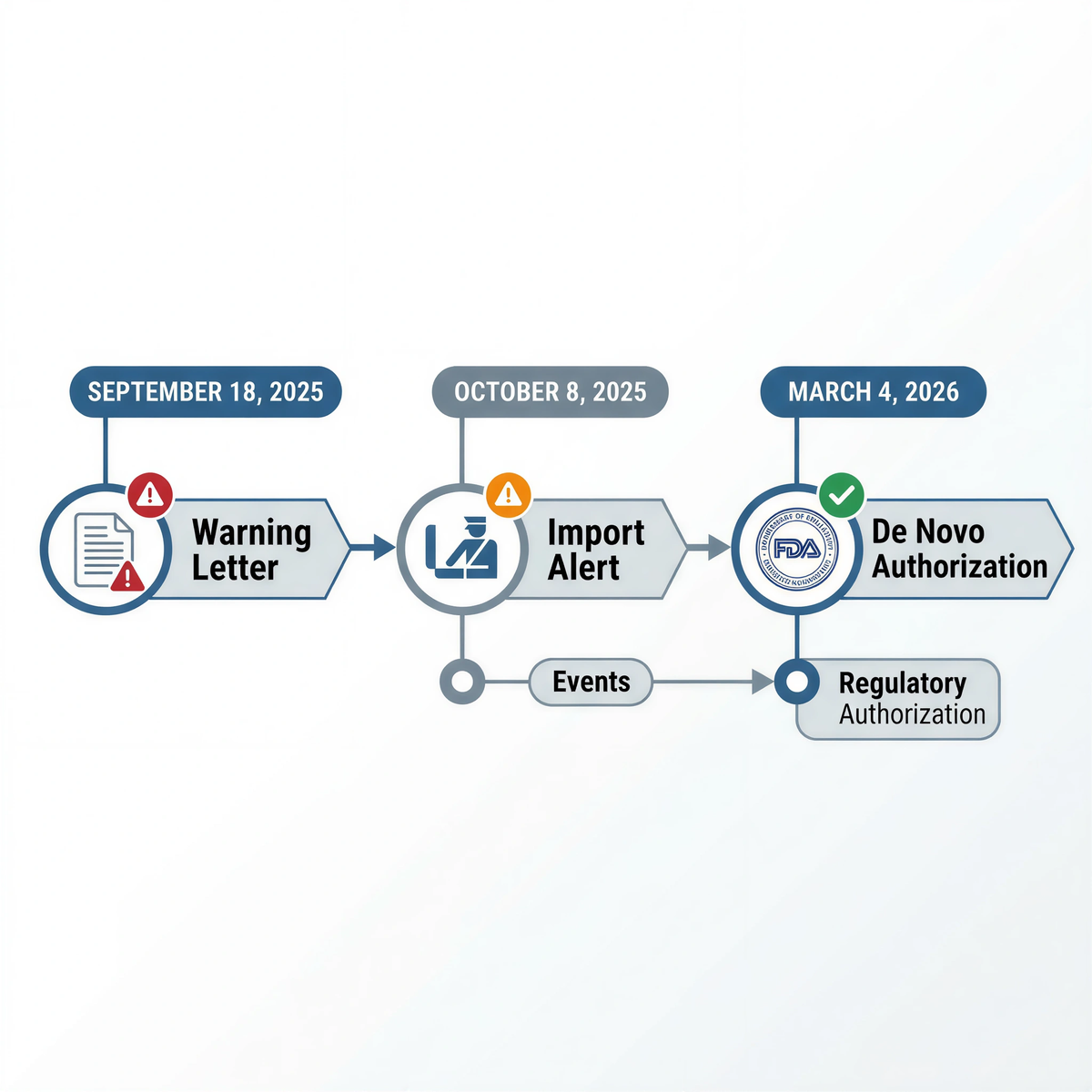
On September 18, 2025, FDA issued a warning letter stating that LifeVac was being marketed in the United States without import alert listing multiple suction anti-choking devices that were not authorized for distribution in the United States . On October 8, 2025, FDA issued an import alert listing multiple suction anti-choking devices that were not authorized for distribution in the United States. Then, on March 4, 2026, FDA updated its public safety communication to reflect the authorization of one anti-choking device and noted that it had issued a close-out letter the same day.
Stale screenshots and recycled copy provide false reassurance, masking the October 8, 2025 import alert on unauthorized devices. This is why current official status matters more than old marketplace claims, cached pages, or distributor language. A category that changed this quickly cannot be evaluated with last year's screenshots.
Why authorization is not just legal identity but performance control
In this category, authorization is also a performance boundary.
DEN250012 did not simply attach a code to a product. It created a Class II category while being subject to special controls around non-clinical performance testing, human factors, biocompatibility, labeling, adverse events, and post-market surveillance expectations. FDA's review summary describes a device sequence that vents air away from the patient during compression, uses a one-way valve to protect outward force direction, and then generates negative pressure during the pull phase.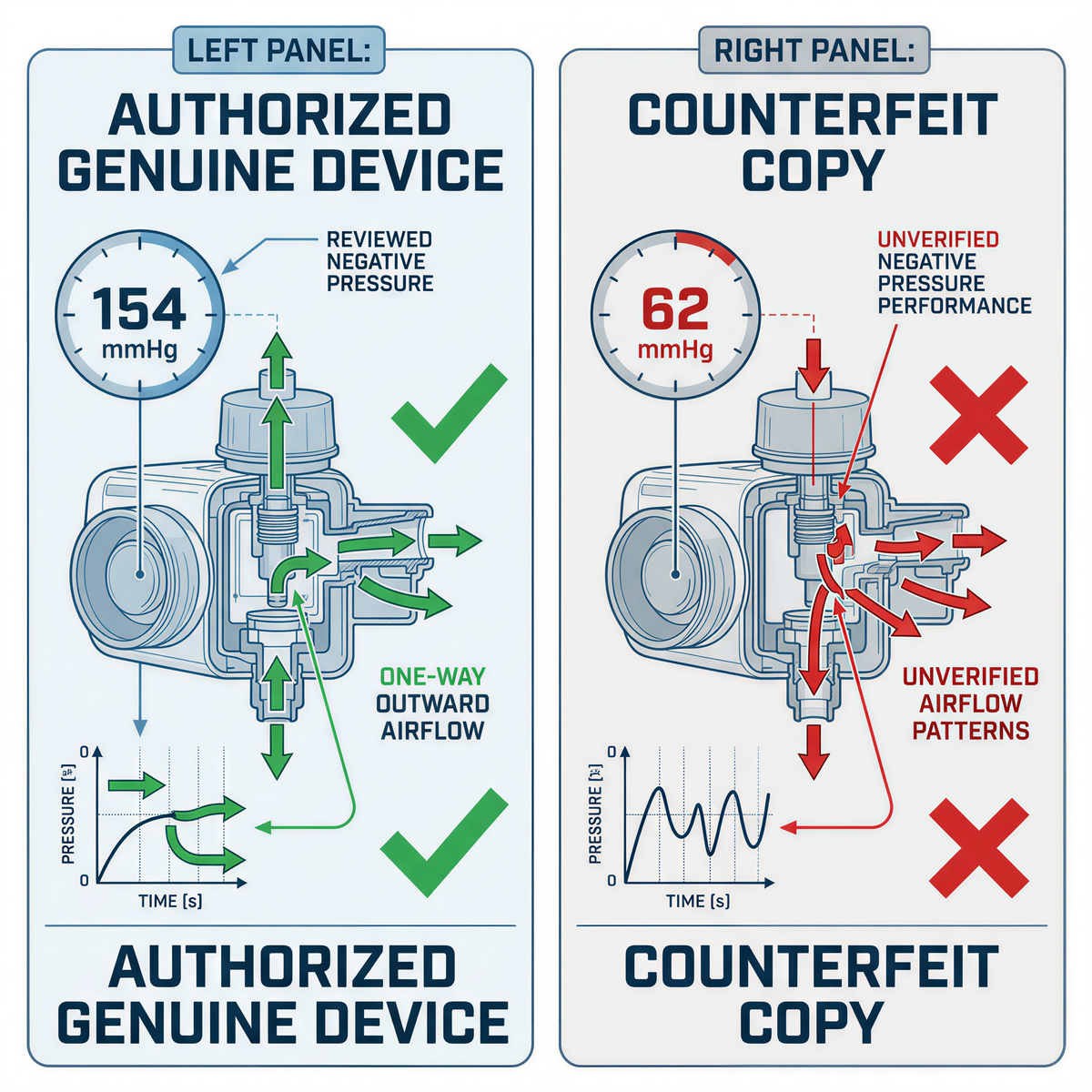
The divide is not financial; it is mechanical: verified pressure control vs. unverified airflow patterns. A 2025 comparative paper reported about 154 ± 57 mmHg of negative pressure for a genuine device and about 62 ± 29 mmHg for a counterfeit copy. That 2.5-fold gap is not a branding story. It is a force-delivery story. Authorization in 2026 is not only about legal language. It is also the clearest public signal that the device sits inside a reviewed performance framework rather than outside the framework.
What schools, facilities, and family buyers should verify
A responsible buyer should verify four things before writing policy, training staff, or staging the device for emergency use.
First, confirm whether the product is actually authorized in the relevant category rather than merely registered or listed.
Second, confirm that the category is the 2026 second-line class under 21 CFR 874.5400 with product code QXN. Third, confirm that the training and labeling preserve the first-line versus second-line sequence.
Fourth, confirm that the device's mechanical claims can be tied back to reviewed design logic rather than generic sales language.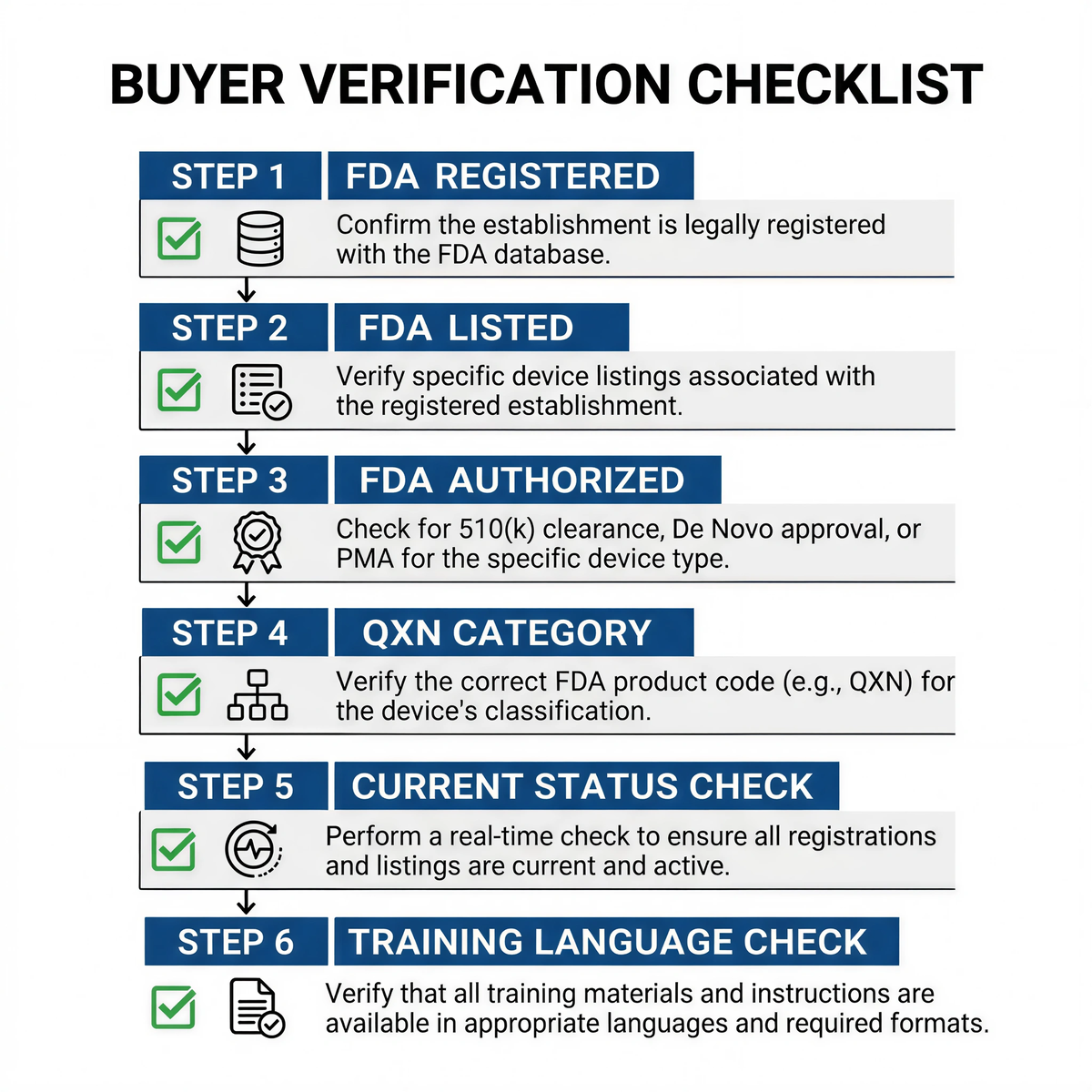
This is also where a procurement file becomes more than a commercial record. It becomes evidence that the buyer understood the difference between administrative presence in a database and lawful second-line status after review.
Where Fitiger fits
Fitiger should not imitate the vague language that created confusion in this market. Precision is stronger.
Registration is paperwork. Listing is database visibility. Authorization is reviewed status. In a category where brain injury can begin in as little as about 4 minutes without oxygen , the category language and rescue sequence cannot be treated like branding choices. A company that explains 21 CFR 874.5400, QXN, and the second-line boundary clearly is behaving more like a serious device company and less like a reseller leaning on regulatory-sounding phrases.
Closing
The shortest accurate answer is this:
FDA registered means an establishment has completed an administrative requirement
FDA listed means a device appears in the administrative database only
FDA authorized means FDA reviewed the device for lawful marketing under the relevant regulatory pathway.
For suction anti-choking devices in 2026, that reviewed second-line category is 21 CFR 874.5400, product code QXN. Read everything else after that line, not before it.
|
Regulatory term |
Legal reality |
Safety implication |
|
FDA Registered |
Administrative record for a facility or establishment. It does not mean the device itself has been reviewed for safety, effectiveness, or marketing authorization. |
Confusing registration with authorization creates false trust and can distort rescue planning, procurement, and training. |
|
FDA Listed |
Administrative database entry linking a device to a registered establishment. It confirms presence in the database, not lawful marketing authorization for the claimed use. |
A listed device may still fall outside the reviewed second-line category that buyers assume they are seeing. |
|
FDA Authorized |
Reviewed marketing status granted through a valid FDA pathway. In this category, the 2026 reference point is De Novo DEN250012. |
This is the status that allows the device to be identified under 21 CFR 874.5400 as a second-line treatment after unsuccessful BLS. |
|
QXN Product Code |
The FDA product code attached to the 2026 Class II second-line suction anti-choking device category. |
This is the category identifier that signals alignment with the 2026 FDA framework, its special controls, and its second-line boundary. |
Engineering and compliance control points
|
Physics variable |
Clearing mechanism |
Engineering proof (2025 data) |
Why it matters |
|
Vent path |
External air expulsion during compression |
FDA review summary describes air exiting through the vent system on the bottom of the device, not into the patient. |
Protects against secondary downward force during the preparation stroke. |
|
Negative pressure |
Outward suction event at the airway interface |
Genuine device: about 154 ± 57 mmHg; counterfeit copy: about 62 ± 29 mmHg. |
A 2.5-fold pressure gap helps explain why authorization is not just legal identity but reviewed performance. |
|
Valve behavior |
One-way outward-directed flow control |
FDA describes a ball-valve system :UK regulator warned counterfeit copies may lack a working one-way valve. |
Direction control is the difference between rescue logic and downward displacement risk. |
|
Seal integrity |
Mask-to-airway pressure circuit |
Effective negative pressure depends on maintaining a closed enough mask seal during the pull phase. |
Leakage can reduce usable suction even when the device housing appears correct |
What is the difference between FDA registered and FDA authorized?
FDA registered refers to establishment registration and device listing inside FDA's administrative system. FDA authorized means the device has a real marketing status based on FDA review. In this category, the relevant 2026 second-line device framework is 21 CFR 874.5400 with product code QXN.
Does FDA listing mean the anti-choking device is approved or cleared?
No. FDA's own guidance says registration and listing do not denote approval, clearance, or authorization of the device or the facility.
What does QXN mean in 2026?
QXN is the FDA product code assigned to the Class II suction anti-choking device category created under 21 CFR 874.5400 as a QXN-coded suction device is used only after unsuccessful use of a BLS choking protocol.
Why does the import alert matter?
Because it showed that multiple suction anti-choking devices were being treated by FDA as unauthorized for U.S. distribution. That makes stale screenshots, recycled marketplace language, and vague 'registered' claims much less reliable.
Why do pressure numbers matter if the regulatory status is the main point?
Because in this category authorization is tied to reviewed performance evidence. A 2025 comparison reported about 154 ± 57 mmHg for a genuine device and about 62 ± 29 mmHg for a counterfeit copy, in bench testing, which helps explain why lawful status and mechanical reliability cannot be separated cleanly.|
Source name |
What it supports |
Full URL |
|
FDA registration and listing reminder |
Explains that registration and listing do not denote approval, clearance, or authorization. |
|
|
FDA safety communication, March 4, 2026 |
Supports the current federal second-line framework and the statement that established rescue protocols remain first-line. |
|
|
FDA De Novo order DEN250012 |
Supports 21 CFR 874.5400, product code QXN, Class II status, and the second-line-after-unsuccessful-BLS boundary. |
https://www.accessdata.fda.gov/cdrh_docs/pdf25/DEN250012.pdf |
|
FDA warning letter, September 18, 2025 |
Supports the point that unauthorized marketing status existed before the 2026 De Novo authorization. |
|
|
2025 comparative pressure study |
Supports the reported pressure difference between a genuine device and a counterfeit copy: about 154 ± 57 mmHg versus 62 ± 29 mmHg. |
|
|
MedlinePlus choking reference |
Supports the statement that brain damage can begin in as little as 4 minutes without oxygen. |
This article is for preparedness, engineering, and regulatory education only. It is not medical or legal advice. In a choking emergency, follow established first-line rescue protocols, activate emergency services, and treat any suction anti-choking device only as a second-line option after unsuccessful use of a basic life support choking protocol.
This Article is reviewed by Dr. Danielle K. Miller, DNP, MSN, BSN, RN and this review reflects a limited assessment for general medical accuracy and public health consistency only and does not constitute comprehensive clinical validation, regulatory verification, or endorsement of all content, products, claims, or implied outcomes discussed within this material


