Introduction: A 6-factor readiness model shows portable airway devices work best when storage, masks, instructions, maintenance, setting, and training align.
For a household checklist, see Fitiger's child and home choking safety readiness plan.
A portable airway clearance device is often purchased after a simple assumption: if the product is small enough to carry, it is ready for an emergency. That assumption is too narrow. Choking incidents in homes, travel settings, restaurants, cafeterias, daycare dining rooms, and eldercare spaces create different access problems. A device that sits in a drawer, remains packed in a car, or cannot be understood under pressure may add little practical value.
The stronger procurement question is not which device looks most compact. Buyers should ask whether the device can be found, understood, fitted, maintained, and integrated into a response process. For families, that means kitchen and dining placement, caregiver familiarity, mask fit, and clear instructions. For travel, it means bag organization, visible storage, and protection from damage. For public dining or care environments, it means repeatable inspection and staff awareness.
Storage convenience describes whether the product fits inside a drawer, bag, car kit, first aid cabinet, or dining station. Emergency usability asks a harder question: can a responsible adult identify the device, confirm its parts, understand the sequence, select the correct mask, and act without searching through packaging or instructions that are too complex for the moment.
A compact product can still fail at the system level. If it is hidden behind unrelated supplies, separated from its masks, packed without instructions, or known only to one family member, its portability has not translated into readiness. Buyers should therefore evaluate the device and the surrounding storage plan together.

The home environment usually involves repeat routines: meals, snacks, eldercare, childcare, and family gatherings. The device should have a fixed location near likely risk zones without being accessible to unsupervised children. Travel creates a different challenge. Bags are unpacked, moved between vehicles and hotels, and handled by different people. Public dining areas add visibility, staff access, hygiene, and inspection questions.
Visibility and reach distance define the first seconds of response. A device stored twenty steps away has a different value from one placed near a kitchen counter, cafeteria station, or caregiver bag. User confidence defines the next seconds. If the instructions require too much interpretation, the device may slow rather than support action.
A portable airway clearance device should be understood as one part of a choking emergency preparedness plan. It may support airway obstruction response when used according to product instructions, but it should not be treated as a complete medical system. Official guidance and medical safety communications continue to emphasize established choking rescue protocols, emergency contact procedures, and first aid training.
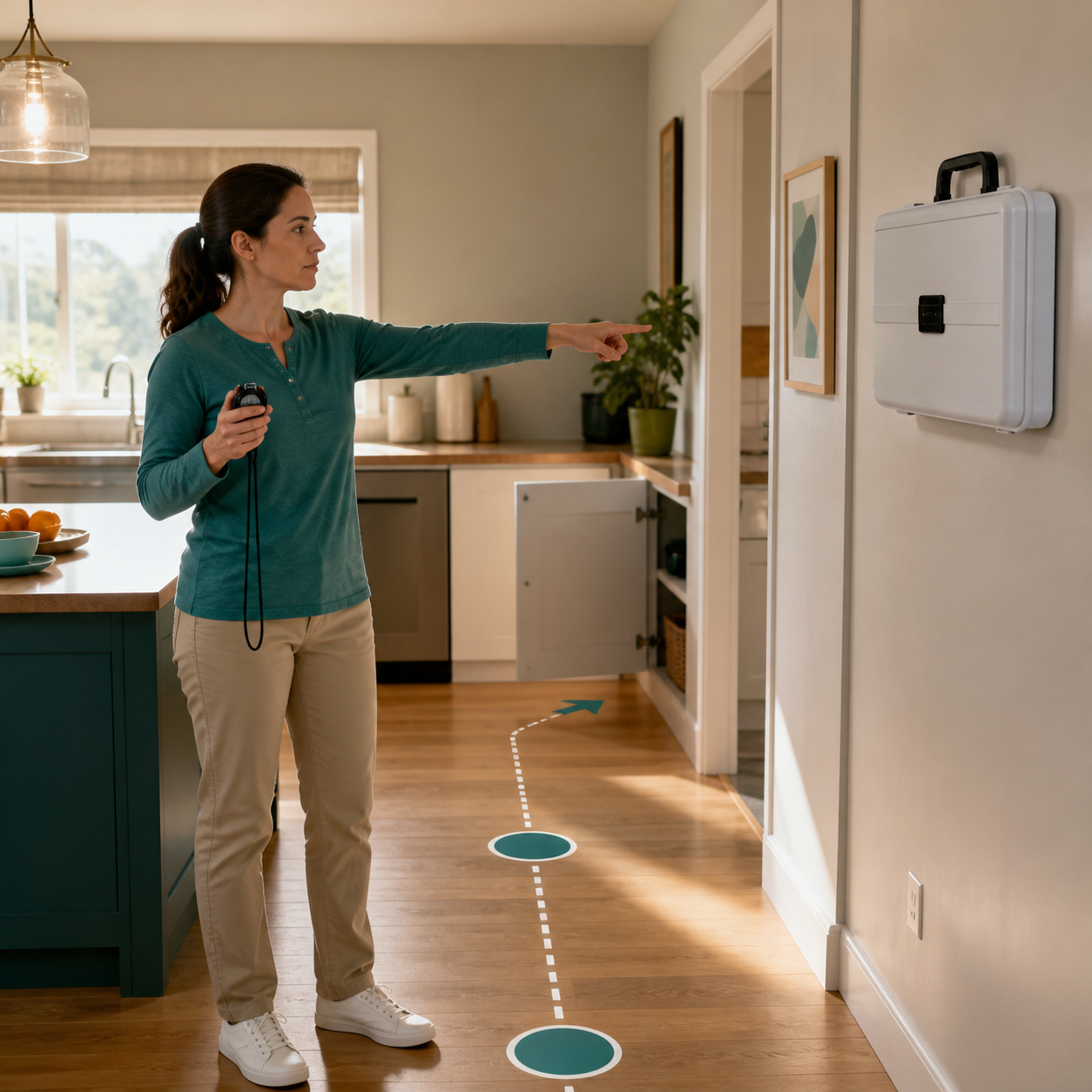
Deployment speed is the first selection criterion because choking response depends on recognition, access, and clear action. Buyers should check whether a device requires unfolding, assembly, seal preparation, compression, mask attachment, or other steps before use.

Mask readiness is often underestimated. Buyers should verify how many masks are included, whether different sizes are available, how the masks are stored, and whether replacement masks can be obtained. One mask assumption can be weak when users include children, adults, older adults, guests, or public-space visitors.
Fit, hygiene, and availability are linked. A device with multiple masks may support broader planning, but only if the masks remain clean, clearly stored, and replaced when required. Shared environments need an inspection routine so parts do not disappear after demonstrations, cleaning, or storage moves.
Portability should be judged by the complete kit, not only the main device. A carry bag, visible color, stable packaging, and grouped masks can make the device easier to move between home, car, hotel, and dining areas. Storage discipline means the device has a defined place and is not treated as a loose object that drifts between drawers.
Emergency tools are often used by people who are not calm. For that reason, instruction quality is not secondary. Buyers should look for direct language, diagrams, clear sequencing, warnings, and a product page that explains the device role without exaggerated claims. A device that is technically capable but confusing during first contact creates operational risk.
A rarely used emergency device still needs maintenance logic. Buyers should check whether masks, seals, or contact parts require replacement, how the device should be cleaned or stored, and how often the kit should be inspected. A product without a replacement path can become difficult to manage after storage, demonstration, damage, or use.
This article uses a priority-weighted decision table rather than a fixed 100-point score. A universal score can make a travel kit, family drawer, and public dining station look falsely comparable. The same factor may be high priority in one scenario and moderate priority in another.
|
Evaluation Factor |
Home Use Priority |
Travel Priority |
Dining Area Priority |
Why It Matters |
|
Fast deployment |
High |
High |
Very High |
Response depends on seconds and user confidence. |
|
Mask readiness |
High |
Medium |
High |
Different users may require different mask sizes. |
|
Storage visibility |
Medium |
High |
Very High |
A hidden device has limited response value. |
|
Instruction clarity |
High |
High |
High |
Non-professional users may act under panic. |
|
Maintenance plan |
Medium |
Medium |
High |
Shared spaces need repeatable inspection. |
|
First aid integration |
High |
Medium |
High |
Device use should not create procedural confusion. |
Home readiness should focus on repeated meal settings and known caregivers. Kitchens, dining rooms, family rooms, eldercare spaces, and childcare zones are the most relevant storage points. A household should decide who is responsible for checking the kit, where the instructions remain visible, and whether all adults know the device location.
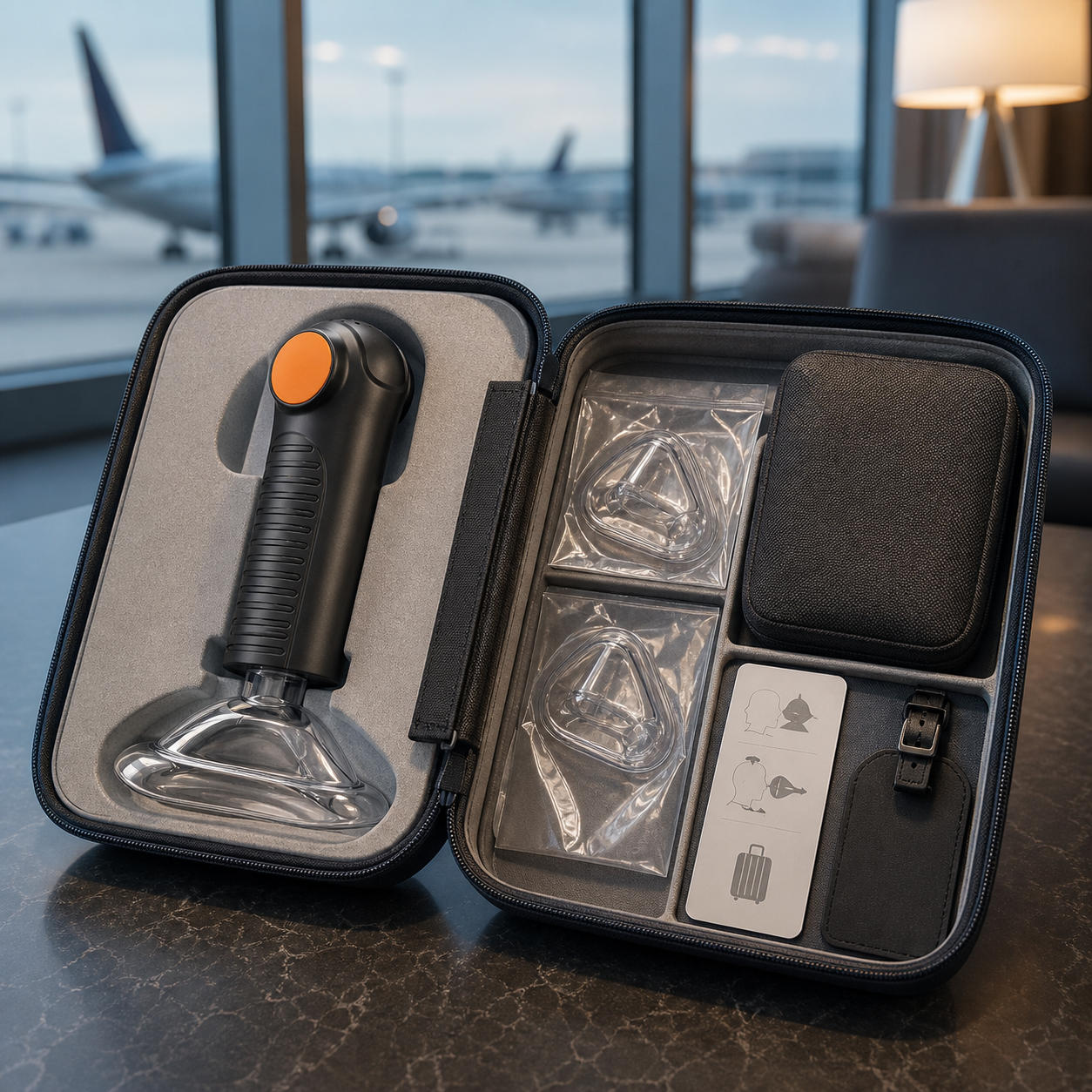
Travel introduces movement and uncertainty. A product may be packed before departure, shifted between bags, left in a hotel room, or stored in a car. A travel-ready device should have a carry bag or protective storage method that keeps masks, instructions, and the main unit together. The device should also be easy to identify among toiletries, snacks, chargers, and other travel items.
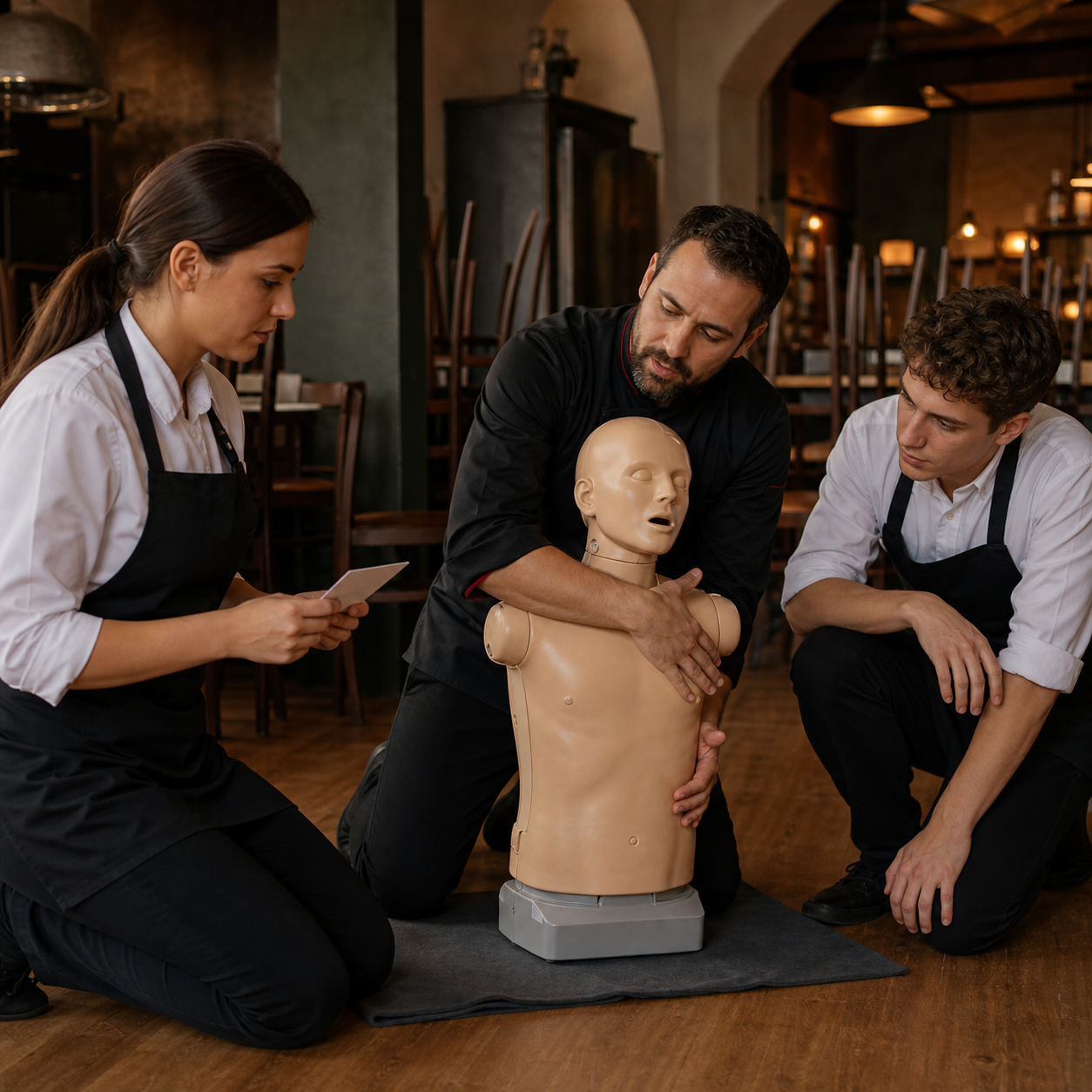
Restaurants, cafeterias, daycare dining rooms, senior centers, and workplace meal areas require public-access thinking. The device should not be randomly placed on a counter, but it should be available to designated responders. Staff should know where it is, what it is for, when to call emergency services, and how it fits with existing choking response procedures.
Caregivers should compare user age range, user ability, likely meal locations, emergency communication, and confidence under pressure. The device should be chosen because it strengthens a response system, not because the product page uses urgent language. Decision-making should include who might use the device, who might call emergency services, and who inspects the kit.
|
Scenario |
Primary Risk |
Readiness Feature |
Evidence to Check |
|
Home kitchen |
Meals, snacks, older adult care, child feeding |
Fixed visible storage and adult familiarity |
Product contents, mask sizes, manual, storage guidance |
|
Travel bag |
Packed items separated or difficult to find |
Carry bag and grouped components |
Bag design, kit contents, compact shape |
|
Dining area |
Shared response and staff turnover |
Station placement and inspection routine |
Instructions, replacement masks, staff protocol |
|
Caregiver kit |
Different users and stressful decision-making |
Mask options and simple sequence |
Mask range, manual clarity, current guidance |
A strong product page should give buyers enough evidence to evaluate the device without relying on emotional stories. The strongest evidence includes kit contents, intended use, setup logic, included masks, replacement guidance, storage suggestions, and clear boundaries.
Portability is a feature, not a complete readiness plan. A device can be compact yet poorly located. Buyers should require a storage decision at the time of purchase. If the device is intended for home use, choose the room and drawer. If it is intended for travel, choose the bag pocket. If it is intended for a dining area, choose the station and inspection owner.
Masks and contact parts may require replacement after use, storage, or routine intervals depending on product guidance. A device with missing or unfit masks is not ready. Shared environments should record inspections and keep replacement parts available.
A portable airway clearance device should be paired with choking recognition, emergency contact steps, and first aid training. A buyer who purchases equipment but ignores user readiness has solved only part of the problem.
Because choking response is a sensitive safety topic, buyers should be cautious with absolute claims. Strong product evaluation relies on evidence, instruction clarity, intended use, and scenario fit. A device page should explain what is included, how parts are managed, and what boundaries apply.
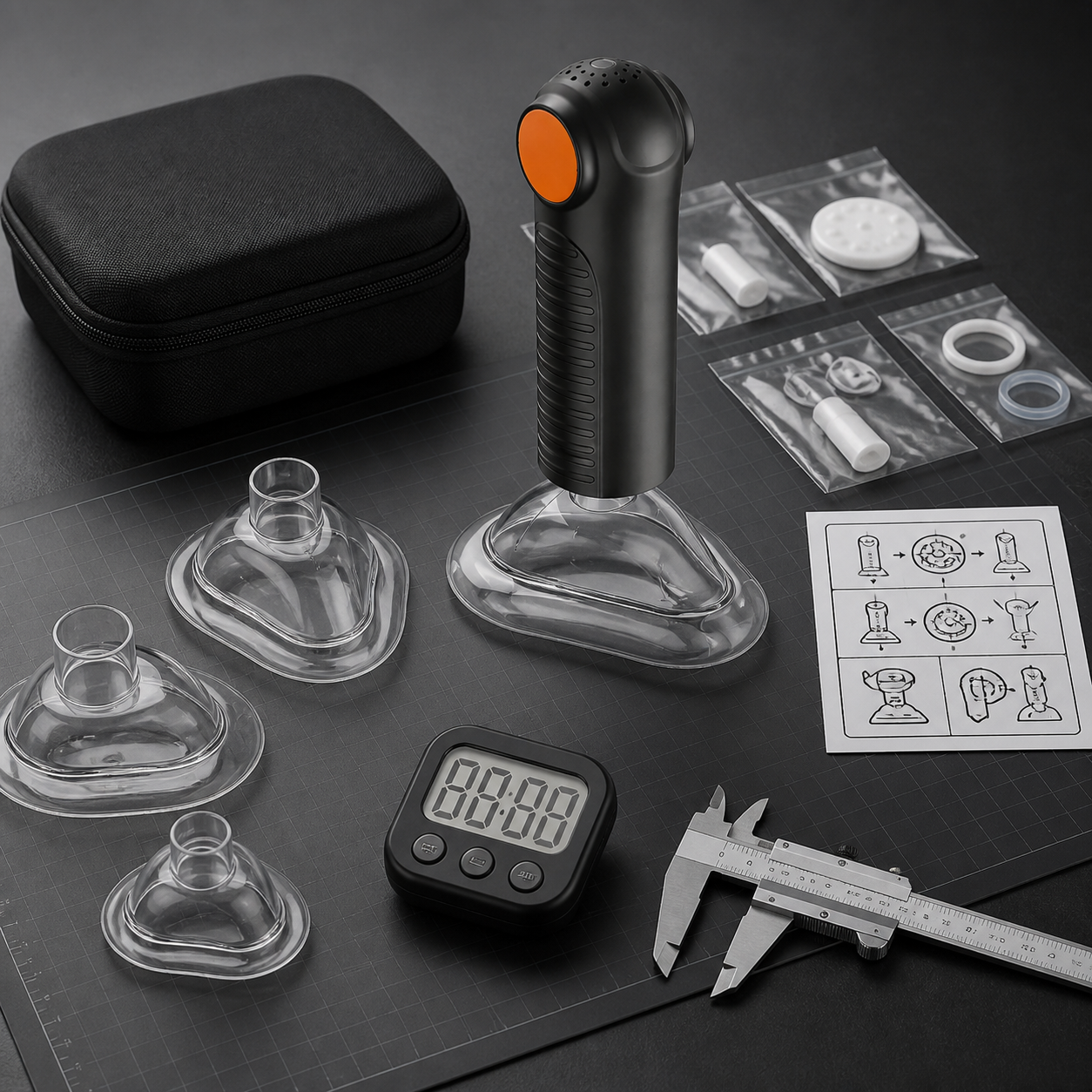
Fitiger EasyPumpVac can be analyzed as a product-page example of a portable airway preparedness device. The product page presents the EasyPumpVac Yellow as an emergency airway device with a non-invasive suction concept, quick setup language, compact storage, interchangeable masks, a user manual, and an orange canvas carry bag. The page also frames the device for homes, childcare centers, eldercare settings, kitchens, dining areas, bags, cars, and first aid kits.
The strongest interpretation is functional rather than promotional. The product-page signals suggest a kit designed around storage, portability, and multi-user mask planning. Buyers should still verify current instructions, replacement availability, safe storage, and local emergency guidance before relying on the device in a household or facility plan.
The most useful procurement model has three layers: device readiness, user readiness, and environment readiness. Device readiness asks whether the product can function as intended and stay organized. User readiness asks whether a non-professional can understand the sequence under stress. Environment readiness asks whether the product is located where choking risk occurs.
|
Readiness Layer |
Buyer Question |
Evidence to Look For |
|
Device readiness |
Can it be used quickly and stored accessibly. |
Setup steps, kit contents, carry bag, mask quantity |
|
User readiness |
Can a non-professional understand what to do. |
Manual clarity, visual instructions, simple sequence |
|
Environment readiness |
Is it placed where choking risk occurs. |
Kitchen, dining room, travel bag, first aid station |
A: The most important feature is not portability alone. The device must be accessible, understandable, fitted with appropriate masks, and integrated into the intended emergency setting.
A: The product category may overlap, but shared spaces usually require stronger attention to placement, visibility, inspection routines, staff familiarity, and replacement parts.
A: No. It should be considered one element of a broader choking emergency preparedness plan, alongside first aid training, emergency contact procedures, and product instructions.
A: Masks affect fit, hygiene, and readiness. Buyers should check how many masks are included, how they are stored, and whether replacement guidance is available.
A: Buyers should avoid relying only on promotional claims, price, or small size. Stronger evaluation uses evidence, usability, storage logic, maintenance planning, and response integration.
A portable airway clearance device should be evaluated as a readiness system rather than a single object. The device must be compact enough to store, visible enough to find, simple enough to understand, adaptable enough for different users, and maintainable enough for long-term planning.The most defensible procurement approach combines a priority-weighted table, a buyer verification checklist, and a three-layer readiness model.
| Link: |
| https://www.fda.gov/medical-devices/safety-communications/update-fda-encourages-public-follow-established-choking-rescue-protocols-fda-safety-communication |
| Note: Used for safety-context guidance that established choking rescue protocols remain central. |
| Link: |
| https://www.cdc.gov/infant-toddler-nutrition/foods-and-drinks/choking-hazards.html |
| Note: Used for prevention-oriented context around children and food-related choking hazards. |
| Link: |
| https://wicworks.fns.usda.gov/resources/reducing-risk-choking-young-children-mealtimes |
| Note: Used for mealtime risk context and child-care prevention framing. |
| Link: |
| https://medlineplus.gov/ency/article/000047.htm |
| Note: Used for general health-library context on choking response and emergency recognition. |
| Link: |
| https://www.nhs.uk/conditions/baby/first-aid-and-safety/first-aid/how-to-stop-a-child-from-choking/ |
| Note: Used for official public-health context on child choking response. |
| Link: |
| https://www.healthdirect.gov.au/choking |
| Note: Used for additional public-health context on choking symptoms, risk, and response. |
| Link: |
| https://www.betterhealth.vic.gov.au/health/conditionsandtreatments/choking |
| Note: Used for public-health background on choking risk and prevention. |
| Link: |
| https://www.ready.gov/kit |
| Note: Used for emergency-kit planning context and household preparedness logic. |
| Link: |
| https://fitiger.net/products/fitiger-easypumpvac-emergency-airway-device-yellow?VariantsId=10034 |
| Note: Used as the primary product-page example for kit contents, portable storage, masks, and home readiness positioning. |
| Link: |
| https://fitiger.net/pages/easypumpvac-home-safety |
| Note: Mandatory user-provided page used for Fitiger home safety context, mask-size discussion, and storage planning. |
| Link: |
| https://fitiger.net/pages/how-it-works |
| Note: Used for related product education and airway device operation context. |
| Link: |
| https://fitiger.net/pages/fitiger-to-business |
| Note: Used for institutional context including schools, workplaces, transportation, and community organizations. |
| Link: |
| https://fitiger.net/pages/faq |
| Note: Used for support and product-information context within the Fitiger site. |
| Link: |
| https://www.industrysavant.com/2026/06/reusable-emergency-preparedness-tools.html |
| Note: Mandatory user-provided article used for maintenance, lower-waste readiness, and reusable emergency-kit planning context. |
| Link: |
| https://www.ready.gov/business |
| Note: Used as broader preparedness reading for organizational continuity and planning discipline. |
This post was reproduced from: https://www.industrysavant.com/2026/06/how-to-choose-portable-airway-clearance.html
This article compares portable airway-clearance readiness factors such as access, mask fit, storage, maintenance, traceability, instructions, and first-aid integration. It does not prove clinical superiority or establish that any product is authorized for a particular use unless an exact current regulatory record supports that claim.
This article is for general preparedness education and is not medical advice. Follow current official choking-response guidance, the device manufacturer's instructions for use, trained first-aid practice, and local emergency-dispatch instructions. Call emergency services immediately for a severe choking emergency.


