Introduction: Reusable home rescue kits can reduce whole-device turnover only when replacement masks, cleaning rules, and safe disposal are clearly defined.
Emergency preparedness products often sit unused for months or years, yet many are purchased as sealed, single-life units. When one contact part ages, one seal weakens, or one component is damaged, the entire kit may be discarded because no separate replacement path exists. That pattern creates avoidable material turnover and forces households and organizations to repurchase equipment that could have remained useful with a defined maintenance plan.
The problem is not that safety products wear out. It is that the replacement decision is often too coarse. A circular maintenance model asks a more precise question: which parts must be renewed for safe performance, and which parts can remain in service when the manufacturer permits it? This approach connects product design, purchasing, cleaning, storage, and end-of-life planning rather than treating disposal as an afterthought.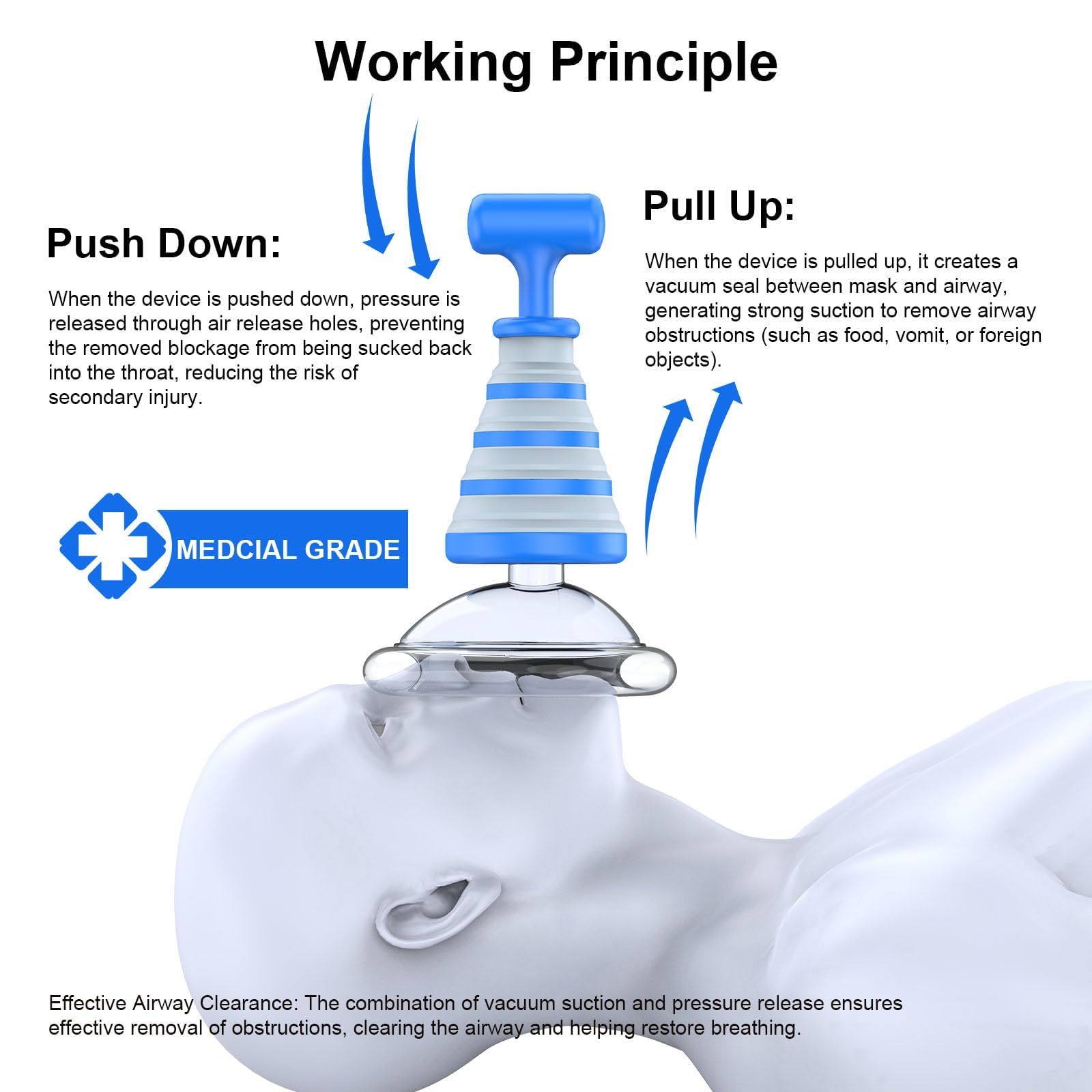
Any discussion of rescue equipment must begin with the correct response order. Standard first aid and emergency calling come first. For a person who can still cough, the usual guidance is to encourage coughing. For a person who cannot breathe, speak, or cough, trained back blows and abdominal thrusts are used according to age and condition while emergency services are contacted. A household device is a second-line option, not a substitute for that sequence.
That hierarchy matters for sustainability because it limits how the product should be marketed and used. A compact kit can support readiness, but it should not encourage delayed emergency action or replace training. The most responsible lifecycle begins with clear instructions, realistic expectations, and regular first-aid education. Product maintenance only adds value when the user understands when the device should be used and when professional help must be summoned.
Circular maintenance is not a promise that a medical or safety product can be used forever. It is a disciplined way to extend the useful life of durable components while replacing parts that are designed to be renewed. In a manual suction kit, the reusable item may be the pump body or handle, while masks, seals, valves, or other contact parts may have defined replacement intervals.
This model can reduce whole-device turnover, but it also creates new duties. The owner must store the kit correctly, follow cleaning instructions, inspect parts, record replacements, and stop using any component that shows damage or contamination. A maintenance plan is therefore part of product safety, not an optional environmental feature. Without those controls, reuse becomes a claim without an operational system behind it.
A practical review starts with the components that touch the user and those that create suction. Masks are obvious renewal items because fit and contact hygiene are essential. A damaged mask, a poor seal, or a mask used by the wrong age group can undermine performance and should not be treated as a permanent part. Valves and sealing surfaces also deserve close attention because their condition affects airflow.
The pump body may be reusable if the manufacturer specifies cleaning, drying, inspection, and storage conditions. A foldable structure may be convenient to store, but folds and seals can accumulate debris or wear over time. Buyers should not assume that a reusable body is maintenance-free. They should confirm which parts are user-serviceable, which parts require replacement, and when the entire unit must be retired rather than repaired.
A buyer should be able to answer five questions before relying on a maintenance model. Which parts contact the face or airway? Which parts can be cleaned and reused? Which parts have a fixed replacement interval? What conditions require immediate retirement? Who keeps the replacement record? Clear answers turn circular design from a marketing phrase into a verifiable purchasing criterion.
Material choices influence durability, cleaning, and disposal, but a material name alone does not prove an environmental benefit. Silicone, thermoplastic, and mixed-material assemblies have different production impacts and end-of-life pathways. Buyers should request material specifications, cleaning compatibility, and disposal guidance rather than relying on broad labels such as eco-friendly or safe for the planet.
Hygiene creates a firm boundary around reuse. A reusable device should not be shared casually between users, and the manufacturer instructions should determine whether cleaning is sufficient after use. Replacement masks may reduce the number of discarded pump bodies, but they still create a consumable stream. The correct comparison is therefore not reusable versus zero waste. It is whole-unit replacement versus targeted replacement carried out under a defined safety protocol.
Foldable or pre-compressed kits can fit into drawers, travel bags, and care kits where a rigid device might not. Smaller storage volume may also reduce packaging and improve inventory density, particularly for schools, clinics, and eldercare teams. A recent buyer guide notes that foldable manual kits can keep the response sequence short when the product is stored near the place where help is needed.
Compactness, however, is not the same as lower lifecycle impact. A smaller product may use more complex components, mixed materials, or a shorter service interval. Procurement teams should compare product mass, packaging, replacement frequency, cleaning requirements, and expected service life. The strongest claim is specific: a compact kit can improve storage and logistics, while material efficiency and waste reduction still require supporting evidence.
A circular maintenance review should begin with the response plan and end with a disposal plan. The following sequence helps buyers compare options without treating sustainability as a separate marketing claim.
Confirm that standard first aid, emergency calling, and staff or family training come before device use.
Match each mask and component to the people and age groups the kit is intended to serve.
Request cleaning, drying, inspection, and replacement instructions in writing.
Identify which parts can be replaced separately and whether those parts will remain available.
Set an inspection schedule and keep a simple replacement log for shared or institutional kits.
Define how damaged parts, used masks, packaging, and retired devices will be handled locally.
Families may need only one well-placed kit, while institutions may need multiple units, assigned owners, and scheduled audits. In both cases, response coverage matters more than the number of products purchased. Placement guidance for home kits often begins with eating and care areas because those are the places where choking incidents are most likely to occur.
A credible environmental claim should distinguish design intent from measured outcome. Reusable body, replaceable mask, compact storage, and reduced packaging are observable design features. Reduced waste, lower carbon emissions, and avoided material use are outcome claims that need data. Buyers should ask whether the supplier has a lifecycle assessment, a verified material inventory, or a take-back pathway.
Regulators and public-health agencies consistently emphasize that health products must be represented accurately. In a safety category, an environmental message should never imply that cleaning is unnecessary, that a replacement interval can be ignored, or that a product is appropriate for every user. The most defensible position is transparent: reuse where permitted, replace what safety requires, and disclose the limits of the system.
Storage affects both readiness and product condition. A kit should remain accessible, clean, dry, and protected from contamination. It should not be stored behind locked doors, mixed with food preparation tools, or left where children can handle the masks. For families, the first placement should follow the rooms where meals and care happen. For organizations, each unit should have a named location and an inspection owner.
End-of-life planning completes the model. Used or expired masks, damaged valves, packaging, and retired pump bodies may require different disposal routes. Local rules vary, and a device that has contacted a person during an emergency may require special handling. A supplier that promotes long-term maintenance should also explain replacement intervals, spare-part access, and practical disposal instructions.
A: Yes. Reusable means that some parts may remain in service under specific conditions, not that the kit has an unlimited life. Damage, contamination, expiry, missing replacements, or manufacturer instructions can require retirement of one part or the entire device.
A: Masks are contact and fit components that may wear, become contaminated, or require periodic renewal. Replacing them separately can keep a serviceable pump body in use, but only when the manufacturer permits that maintenance model and replacement parts remain available.
A: No. A folding design may reduce storage and shipping volume, but environmental performance also depends on material mass, component durability, replacement frequency, packaging, and end-of-life handling. Compact design is a useful feature, not proof of lower impact.
A: Buyers can request material specifications, packaging data, expected service life, replacement intervals, cleaning instructions, and any lifecycle assessment. Claims about waste or carbon reductions should be linked to measurable assumptions rather than general statements about reuse.
A: A kit can support more than one user only when the correct mask sizes and replacement rules are followed. Contact parts should not be shared without the cleaning or replacement steps specified by the manufacturer, and a poor mask fit can reduce performance.
A: Store it where meals or care commonly take place and where a caregiver can reach it without delay. The location should be clean, dry, unlocked, and separated from food preparation areas. Keep the pump and matching masks together.
A: A maintenance log should identify the unit, location, responsible person, inspection dates, cleaning events, mask replacements, damaged parts, and final disposal. These records show that reuse is controlled rather than assumed.
A circular maintenance model for home rescue kits begins with a precise idea: safety and hygiene decide what can be reused, while product design determines whether targeted replacement is practical. Replacing a mask or another defined consumable can reduce whole-kit turnover, but it does not remove the need for inspection, training, correct storage, and proper disposal.
The better purchasing question is not whether a product calls itself sustainable. It is whether the supplier identifies serviceable parts, supplies replacements, explains the conditions for reuse, and supports a realistic end-of-life plan. FITIGER and its FoldPumpVac Home Kit can be reviewed as one example of a reusable pump body and replaceable mask approach within that broader procurement framework.
https://medlineplus.gov/choking.html
Note: Provides plain-language first-aid guidance and clarifies when emergency help should be sought for a choking incident.
https://www.healthdirect.gov.au/choking
Note: Explains recognition and first-response steps for adults, children, and infants in a home or community setting.
https://www.health.harvard.edu/healthy-aging-and-longevity/emergencies-and-first-aid-choking
Note: Places choking response in a broader first-aid context and highlights preparation around common eating and care situations.
https://www.sja.org.uk/first-aid-advice/choking/
Note: Describes standard choking response steps and reinforces the role of emergency calling before equipment is considered.
Note: Introduces lifecycle thinking and materials management principles that support evaluating products beyond disposal.
Note: Explains practical reduction, reuse, and recycling considerations that can inform packaging and end-of-life planning.
https://www.epa.gov/rcra/medical-waste
Note: Clarifies that medical and potentially contaminated waste may require specific handling rather than ordinary disposal.
https://www.who.int/news-room/fact-sheets/detail/health-care-waste
Note: Provides an international overview of health-care waste categories, risks, and safe management principles.
https://environment.ec.europa.eu/strategy/circular-economy_en
Note: Defines circular economy priorities such as keeping products in use, reducing waste, and improving resource efficiency.
https://fitiger.net/products/fitiger-foldpumpvac-home-kit?VariantsId=10142
Note: Shows a foldable manual kit with a reusable pump concept, multiple masks, storage bags, and a replacement program.
https://fitiger.net/pages/how-it-works
Note: Explains the intended place-and-pull operating sequence and the role of the product as a backup response tool.
https://fitiger.net/pages/scientific-evidence
Note: Collects product-related evidence and technical material that buyers can review before accepting performance claims.
https://fitiger.net/pages/anti-choking-device-buyer-evidence
Note: Offers buyer-facing documentation and validation context that can support a more structured procurement review.
https://www.industrysavant.com/2026/10/how-to-choose-right-anti-choking-device.html
Note: Discusses device type, mask coverage, manual operation, and the importance of standard first aid before suction equipment.
https://www.secrettradingtips.com/2026/10/where-should-you-keep-choking-rescue.html
Note: Focuses on placement around eating and care areas, storage access, and the difference between one kit and multiple response zones.
Note: Provides family-focused prevention guidance and context for age-related choking risks and supervision.
https://www.betterhealth.vic.gov.au/health/conditionsandtreatments/choking
Note: Offers additional public-health information on recognition, prevention, and emergency response.


