After 3 PM, staffing patterns on campus change dramatically, and emergency readiness often drops. School nurses clock out, administrative staff leave, and supervision is distributed across gymnasiums, athletic fields, and after-school programs.
You can close this “after-school readiness gap” by establishing dedicated staging points, providing coach-friendly role scripts, and running a quick weekly check to ensure emergency equipment stays highly accessible when supervision is lighter.
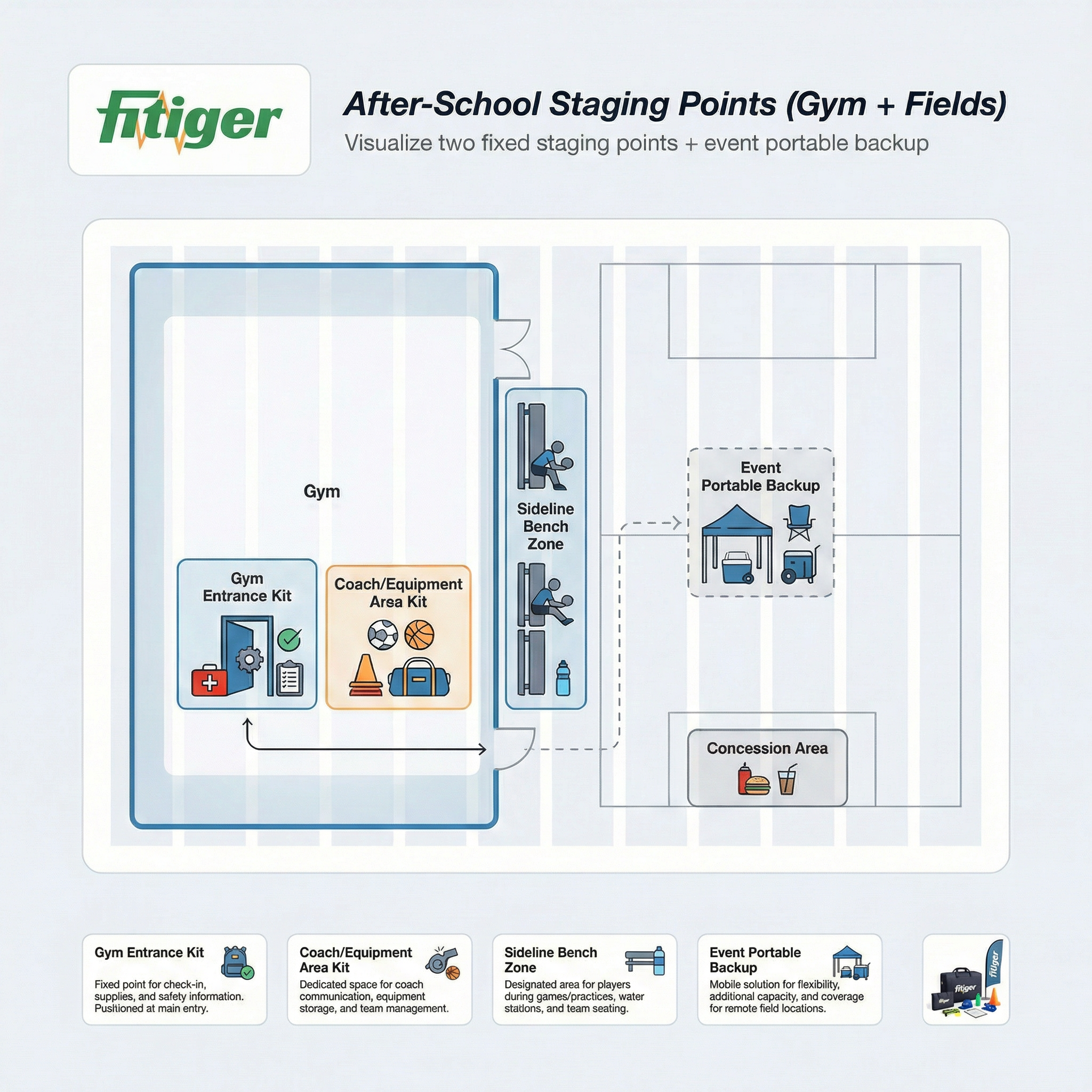
Strategic Staging: Stage one kit at the main gym entrance and one near the equipment room/coach area. It must be visible, at adult height, and never buried behind sports gear.
Assign Roles: Assign a coach lead and a backup adult for each program. Post a short role script inside the main coach binder.
The 2-Minute Weekly Check: Run a weekly readiness check: confirm the kit is present, access is unobstructed, and signage is clear.
Event Carry Rule: For away games or outdoor events, add a portable backup kit (like the collapsible Fitiger FoldPumpVac) carried by the event lead. It should be kept in a top-pocket pouch, never buried at the bottom of a heavy equipment bag.
Log & Escalate: Document the check in a simple log and escalate immediately to the athletic director if access is ever blocked.
Print and tape this to the inside cover of the team clipboard or coach binder: “If a student is choking: You call 911 and clear space. You run to the staged kit. I will stay with the student, perform first aid, and direct roles.”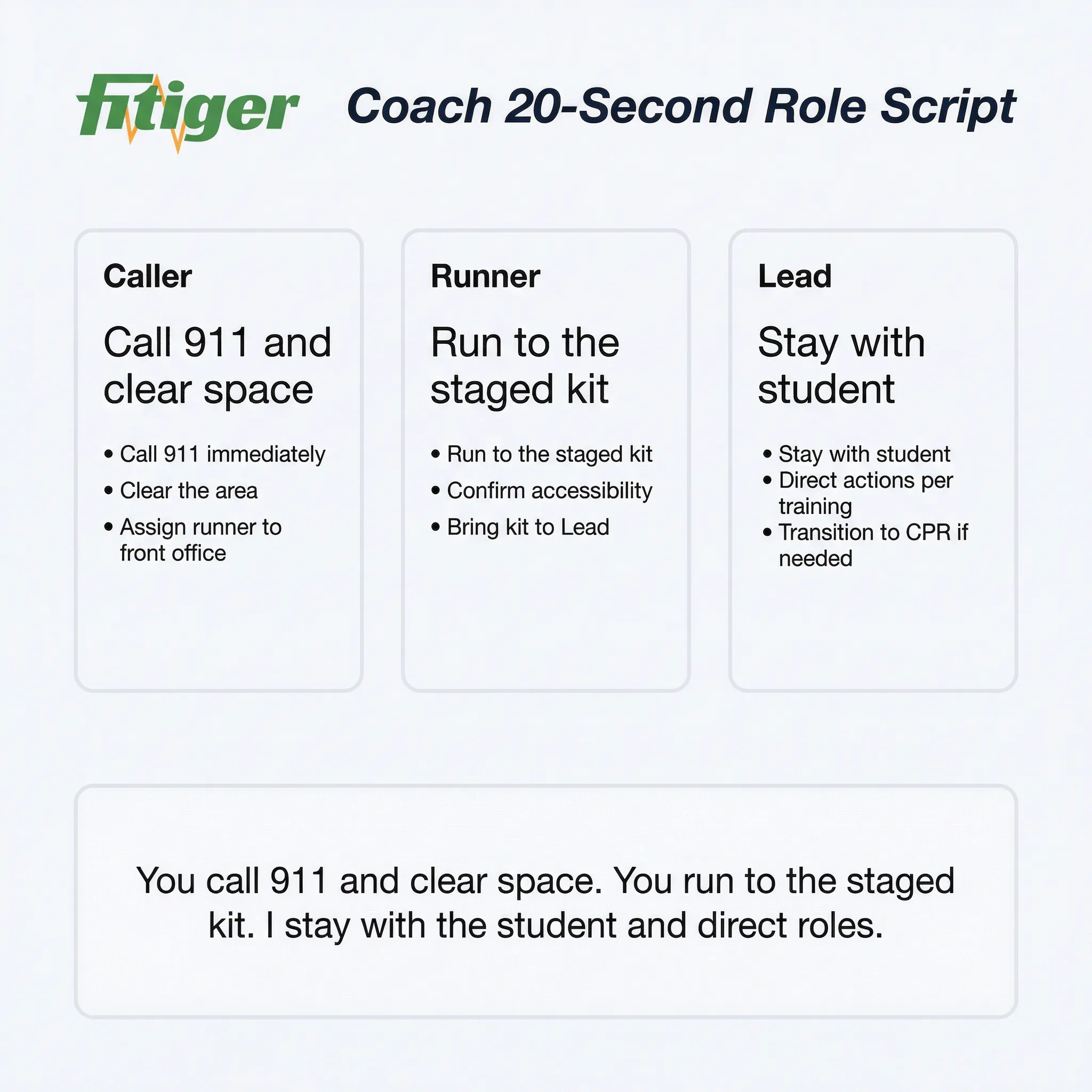
Tool B: Weekly Readiness Check Log Keep this log near the school choking emergency kit:
Date / Program
Kit location verified
Obstructions removed
Initials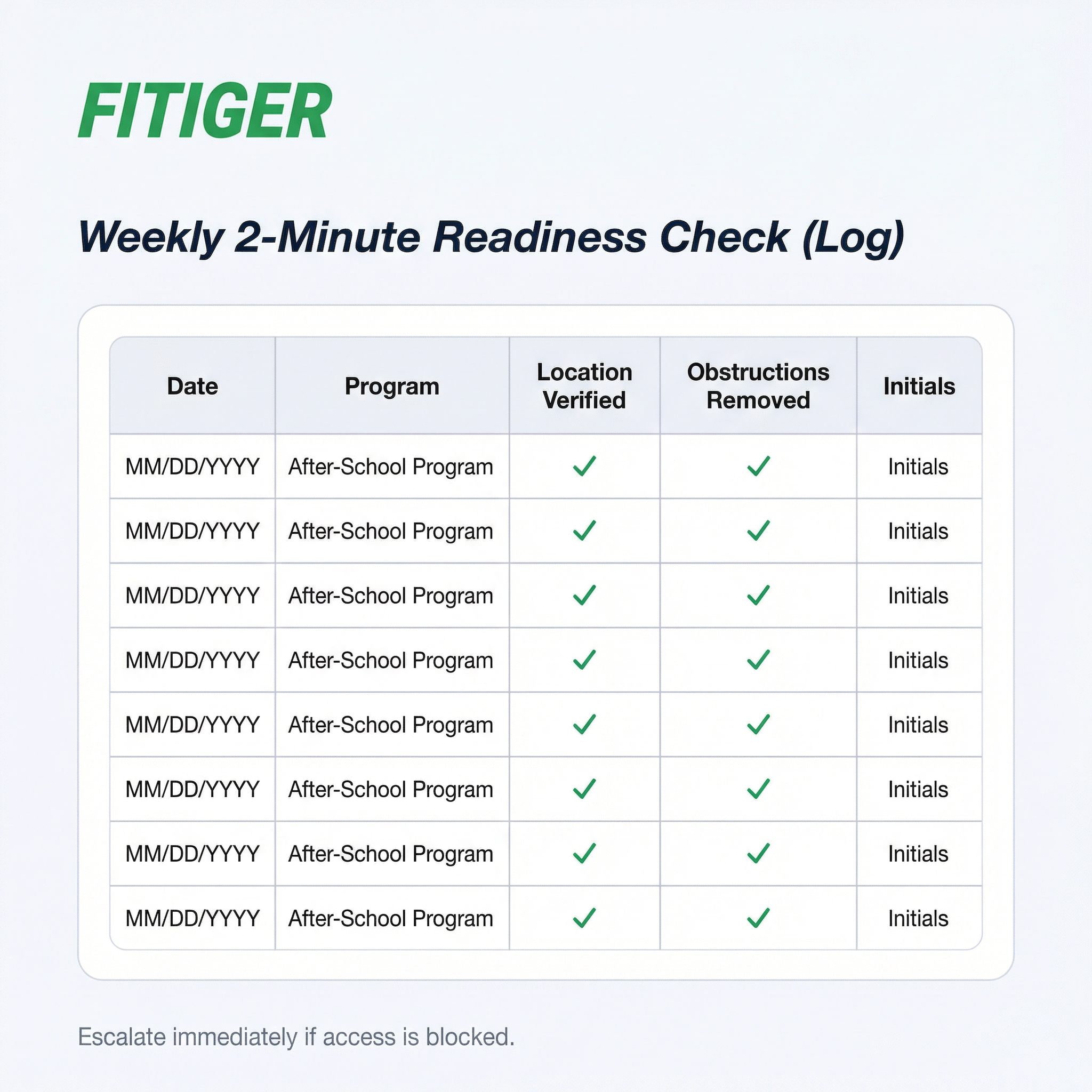
Tool C: Event Portable Kit Carry Rule
“Event lead must carry the portable emergency kit on-body or in a top-accessible pouch. Check at arrival and before dismissal.”
Q: Why is after-school considered a higher risk for readiness gaps?
A: Staffing is much lighter, supervision is widely distributed across a large campus, and critical staging points can easily get blocked by moving sports equipment or event setups.
Q: Where exactly should we stage kits for sports programs?
A: Near the main gym entrance and the coach/equipment area—they must be highly visible and not hidden behind stored gear or locked in an office after hours.
Q: What is the fastest drill format for busy coaches?
A: A 20-second role script read aloud, followed by a physical walk to the emergency kit. Repeat this weekly as part of the standard practice setup.
Q: Are portable airway clearance devices approved for athletic programs?
A: Yes, many districts are equipping their traveling coaches and athletic trainers with non-invasive portable suction devices as a secondary rescue tool. Read our guide on the Fitiger Schools Program to learn how to build a procurement packet for your district.
This article is for emergency preparedness planning and training workflows. It does not provide medical advice and does not replace local regulations, school


