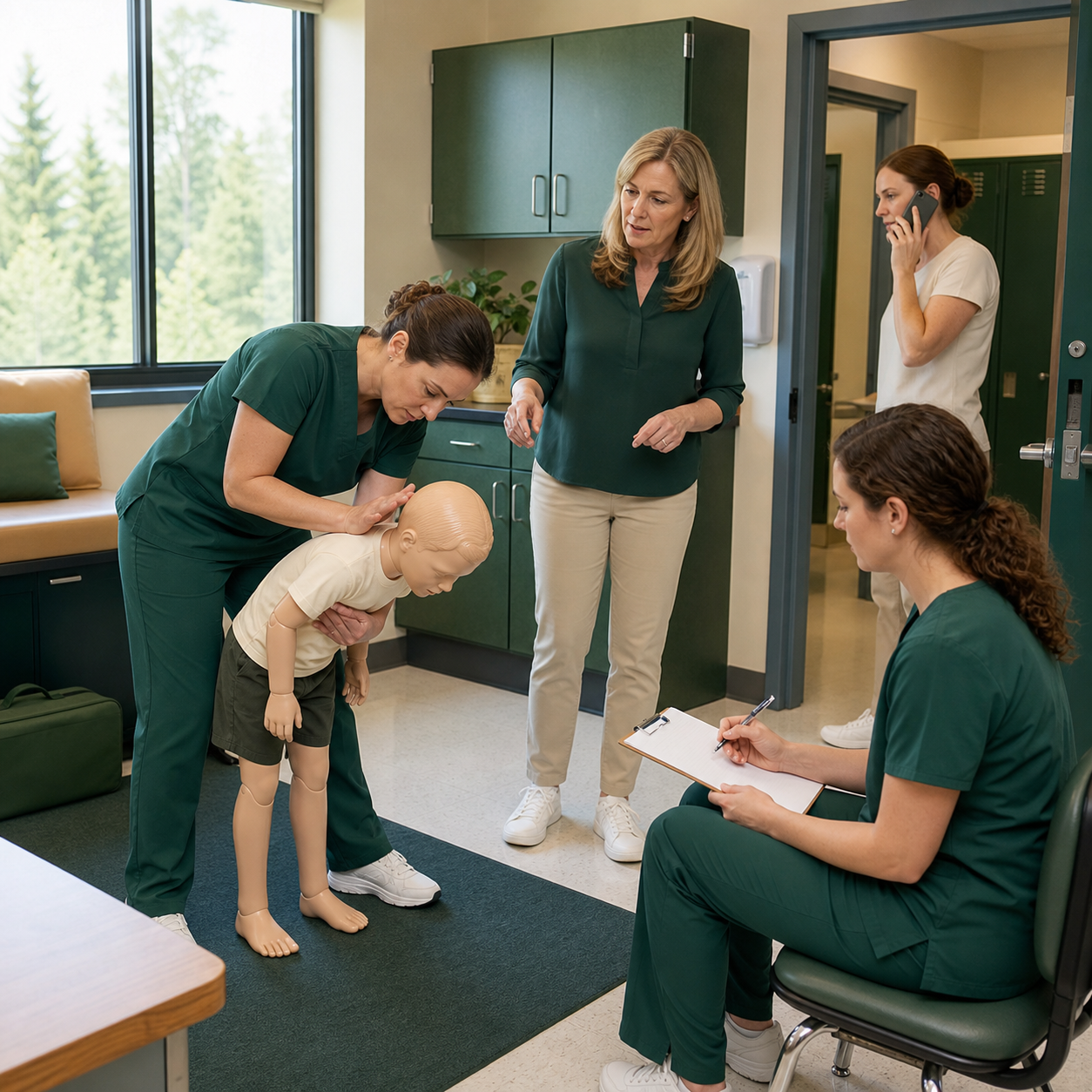
|
If a second-line device does not remove the object, the response must transition without pause. A failed pull is a physical diagnostic, not an endpoint. Check seal, maintain the BLS choking sequence, prepare EMS handoff, and prevent repeated blind attempts from becoming Failure to Rescue inside the four-minute oxygen window. Before choosing equipment, review Fitiger's anti-choking device buyer evidence checklist for FDA wording, testing, seller traceability, and kit-selection questions. |
| A suction anti-choking device is used in the hardest part of the response chain: after severe obstruction is recognized and standard first-line action has not cleared the airway. If the device attempt fails, the event has not paused. Oxygen loss continues. The responder now has to read the failure, correct what can be corrected immediately, and move to the next emergency action without turning the device into a delay loop. |
| The FDA 2026 framework under 21 CFR 874.5400 and product code QXN defines this category as a suction anti-choking device as a second-line treatment after unsuccessful use of a basic life support choking protocol. That boundary matters during failure. It keeps the device inside a larger rescue sequence: recognition, 911 activation, first-line BLS choking response, second-line suction attempt when allowed by policy and labeling, and immediate transition if the attempt does not work. |
| A failed attempt can expose seal insufficiency, leak paths around the mask, unstable positioning, a bolus that resists displacement, or a device reset problem. It does not create extra time. In bench-model swallowing research, clearing a starch-based bolus required 5.4 kPa, compared with 1.7 kPa for a gum-based material. That number should not be treated as a universal airway threshold. It does show why food composition, seal quality, and force transfer can decide whether a rescue action produces movement. |
| If facial hair, dentures, facial structure, movement, or poor mask seating creates a leak path, negative pressure reaching the obstruction may fall below the level needed to move a resistant solid food bolus. A rescuer should not interpret every failed pull as user error. The better question is operational: what did the failure reveal, and what is the next action that protects the oxygen window? |
|
Failure sign |
Engineering diagnosis |
Next operational action |
|
No resistance during pull |
Seal failure or leak path; suction is escaping around the mask instead of loading the obstruction. |
Re-seat the mask immediately. Check facial hair, dentures, skin folds, vomit, mask angle, and device position. Do not keep pulling blindly. |
|
Mask collapses inward or strong resistance appears |
High vacuum is developing, but the object may be stuck, oversized, wedged, or poorly aligned with the suction path. |
Resume the age-correct BLS choking sequence while maintaining 911 escalation. Prepare EMS handoff and monitor for loss of responsiveness. |
|
No visible change after a short attempt window |
The second-line attempt is not producing meaningful displacement fast enough for the hypoxia timeline. |
Transition immediately. Continue first-line emergency actions; if unresponsive, start CPR and follow dispatcher or EMS instructions. |
|
Device will not reset, valve appears blocked, or unit sticks |
Possible mechanical issue, contamination, or one-way valve problem. |
Remove from the sequence. Do not troubleshoot equipment during active hypoxia. Return to BLS actions and EMS handoff. |
| The 2025 AHA choking update changed the first-line baseline for conscious adults and children: use repeated cycles of five back blows followed by five abdominal thrusts until the object is expelled or the person becomes unresponsive. For infants, the sequence is five back blows followed by five chest thrusts. Device use should not erase that sequence from the room. |
| In a real event, one person may be leading manual rescue while another retrieves and prepares the policy-authorized device. If the device attempt fails, the room should not restart its thinking from zero. The caller should already be on 911. The rescuer should already be ready to continue the BLS choking protocol. A second adult should be preparing the path for EMS. |
|
Responder role |
During device attempt |
If the attempt fails |
|
Lead rescuer |
Maintains airway focus, mask position if using the device, and visible assessment of responsiveness. |
Returns immediately to the appropriate BLS choking protocol or CPR if unresponsive. |
|
Caller |
Calls 911, gives location, age, severe choking status, and whether the person is conscious. |
Updates dispatcher that a second-line device attempt did not clear the obstruction. |
|
Runner / EMS liaison |
Clears space, retrieves AED/first-aid kit if relevant, opens access route. |
Meets EMS at the planned entrance and reports sequence, timing, device attempt, and change in responsiveness. |
|
Observer / recorder |
Tracks approximate time, visible signs, and response steps without interfering. |
Captures the failure point for clinical handoff and post-event review. |
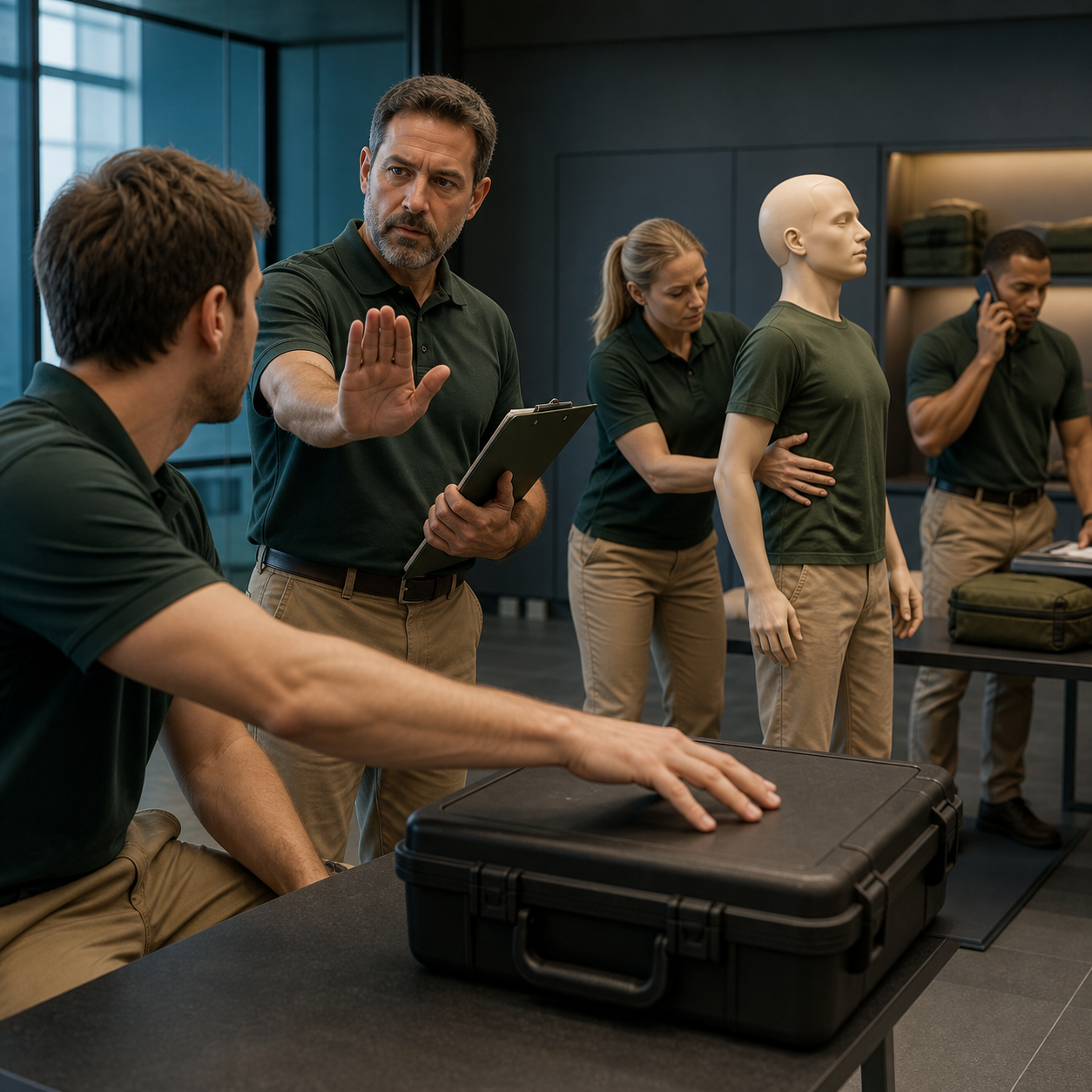
| Failure to Rescue is not only a hospital quality term. In an airway obstruction, it describes a preventable transition from recognized danger to irreversible harm because the system stayed too long on an ineffective action. Inside a four-minute oxygen window, each extra attempt without correction can consume the time needed for manual rescue, CPR transition, dispatcher guidance, and EMS access. |
| System design should not encourage unlimited tries. A second-line device is a redundancy layer after first-line failure, not an invitation to keep repeating the same movement after the failure pattern is visible. The safer rule is narrow: one rapid diagnostic correction, then transition. If the mask was clearly leaking, correct the seal once. If strong resistance remains and the object does not move, the next step is not another blind pull. It is continuation of the emergency algorithm. |
|
Time pressure |
Operational meaning |
Safer response discipline |
|
0-15 seconds after failed attempt |
Immediate diagnostic window: seal, position, visible device issue. |
Correct only obvious fit problems. Keep 911 active. |
|
15-60 seconds |
Second-line window is narrowing; repeated failure is now a rescue-chain problem. |
Continue BLS actions. Prepare CPR transition if responsiveness declines. |
|
After loss of responsiveness |
Airway obstruction has progressed into a collapse pathway. |
Lower to a firm surface, start CPR, check mouth only when opening the airway for breaths, remove only visible objects, follow EMS guidance. |
|
Post-event |
The failure becomes a safety data point. |
Record timing, fit issue, food type, sequence, staff roles, and medical outcome for QAPI or safety review. |

A failed suction attempt can come from several sources. Some are correctable in seconds. Others are not. Preparedness means knowing the difference before the emergency.

The worst time to decide the failure sequence is after the device fails. A household, school, restaurant, bus team, or care facility should write the transition rule into its response plan. That plan does not need to be long. It needs to be executable under stress. For portable second-line staging, compare the FoldPumpVac series against the actual retrieval path, not only the storage cabinet.
|
Planning question |
Why it matters |
Fitiger-ready standard |
|
Who calls 911? |
Device use can distract the room from escalation. |
A named role calls immediately when severe choking is recognized; device retrieval does not replace the call. |
|
Who leads manual rescue? |
The BLS sequence must continue when the device is not yet available or does not work. |
The trained rescuer stays on the person; a second responder retrieves equipment. |
|
What is the transition trigger? |
Repeated blind attempts waste the oxygen window. |
After one failed attempt and one obvious correction, return to the emergency algorithm without debate. |
|
How is EMS briefed? |
EMS needs timing, sequence, food type, device attempt, and responsiveness change. |
Use a short handoff script: what happened, what was tried, what changed, and when. |
|
How is the event reviewed? |
A failed attempt may reveal placement, training, seal, food, or supervision problems. |
Record failure signs and add them to QAPI, school safety review, or family emergency planning. |
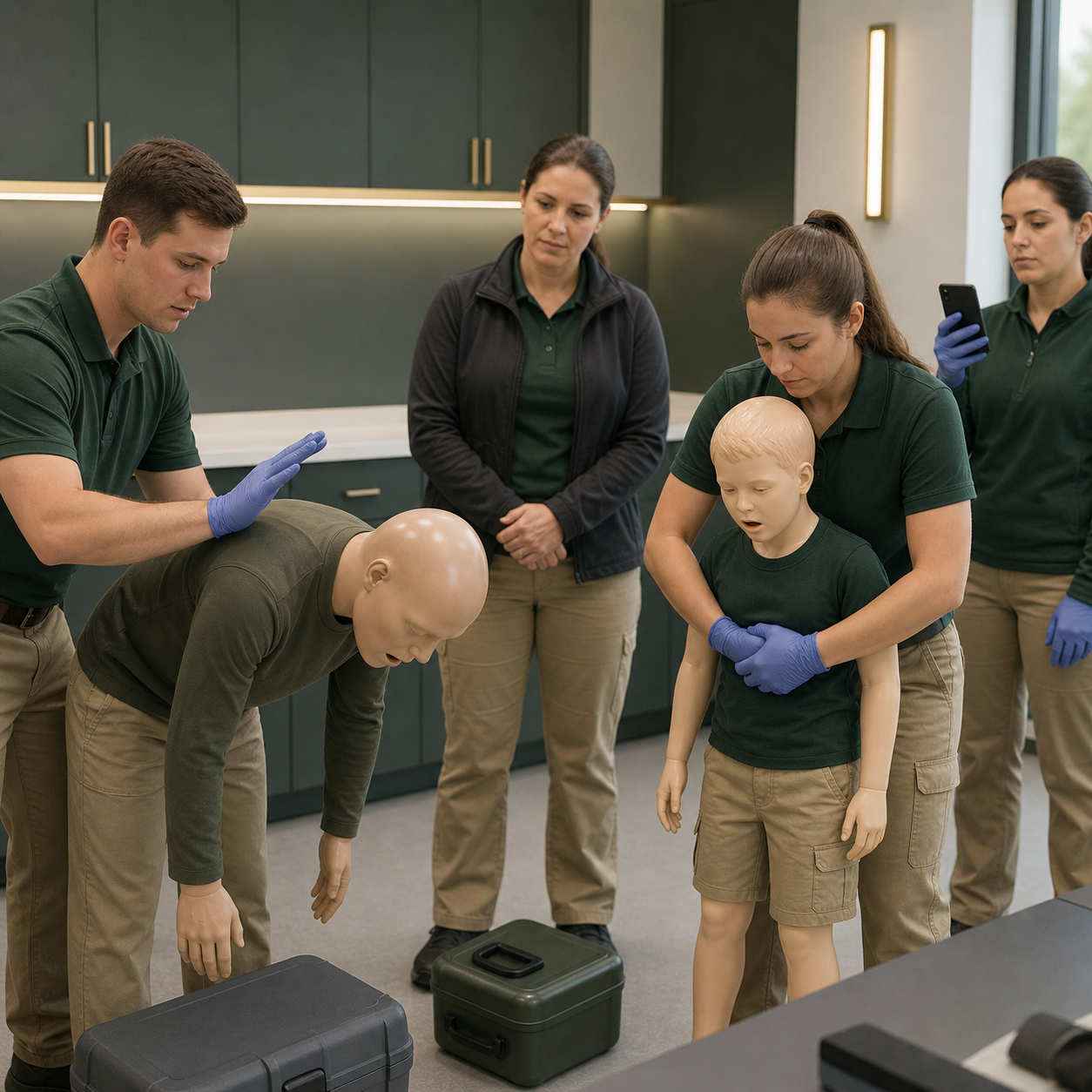
This sequence is not a substitute for device instructions, first-aid training, dispatcher guidance, or local EMS protocols. A FoldPumpVac portable device should be evaluated by reach time, setup clarity, and whether a trained responder can access it without abandoning first-line rescue. It is a planning framework for keeping the rescue chain moving when a second-line attempt fails.
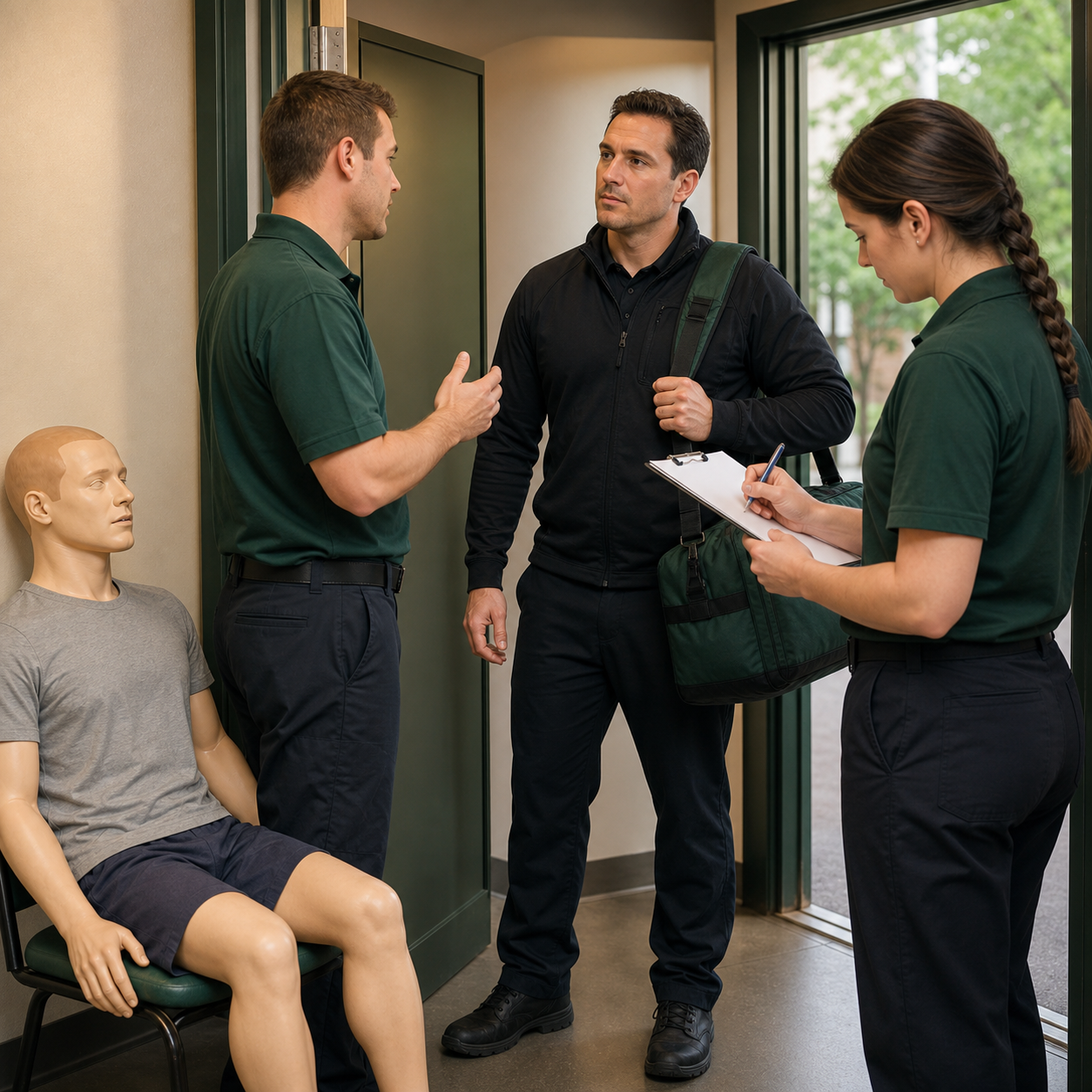
| Fitiger readiness planning treats the EasyPumpVac Airway Clearance Home Kit as a bounded redundancy layer when the setting calls for a powered home or care-area option. The device has value because it can add a different physical mechanism after BLS choking protocol fails. Its value drops when the surrounding system is vague: no caller, no role split, no transition rule, no EMS handoff, no post-event review. |
| A strong plan does not promise that every obstruction will clear. It reduces the chance that a correctable device problem becomes a rescue failure. It also protects against the most dangerous error after unsuccessful device use: standing still, repeating the same action, and losing the remaining oxygen window. |
| If the device does not remove the object, the rescue sequence has reached a decision point. Read the failure fast. Correct only the obvious seal or setup problem. Keep 911 active. Continue the age-correct BLS choking protocol. Move to CPR if responsiveness is lost. The engineering goal is not repeated attempts. It is controlled transition before hypoxia outruns the room. For household storage and instruction review, map the FoldPumpVac Home Kit to the same transition rule. |
| For related planning context, review the bench-model swallowing research. |
Make sure 911 is active, check for one obvious mask seal or setup problem, correct it only if it can be fixed immediately, and continue the age-correct BLS choking protocol. If the person becomes unresponsive, start CPR and follow dispatcher or EMS instructions.
Not always. Failure may reflect a leak path, poor seal, facial hair, dentures, movement, anatomy, food resistance, bolus size, or device problem. A failed attempt is diagnostic, but it does not create extra time.
No. Repeated blind attempts can turn a second-line tool into a delay source. After one failed attempt and one obvious correction, the safer plan is to return to the emergency algorithm and prepare EMS handoff.
The 5.4 kPa figure comes from bench-model research on clearing a starch-based bolus in a tongue-palate simulator. It helps explain why dense food can resist displacement. It is not a universal airway threshold, a device performance claim, or a clinical success guarantee.
No. Under the FDA 2026 framework, a suction anti-choking device in the QXN category is a second-line treatment after unsuccessful BLS choking protocol use. It does not replace choking first aid, CPR, 911, EMS, training, or device instructions for use.
| FDA Safety Communication, March 4, 2026 - Supports the hierarchy of established choking rescue protocols first and anti-choking devices as a second option when standard protocols are unsuccessful. |
| FDA De Novo DEN250012 - Supports the definition of suction anti-choking device as a second-line treatment after unsuccessful BLS choking protocol use. |
| FDA De Novo Database Entry for DEN250012 - Supports the device classification name, regulation number 874.5400, product code QXN, and decision date. |
| American Heart Association Newsroom, 2025 CPR Guidelines Update - Supports the updated 5 back blows + 5 abdominal thrusts sequence for conscious adults and children and 5 back blows + 5 chest thrusts for infants. |
| American Heart Association News, 2026 choking guidance summary - Supports public-facing summary language on alternating back blows and abdominal thrusts, and starting CPR if the person becomes unresponsive. |
| Mechanical Simulator of Tongue-Palate Compression Study - Supports the 5.4 kPa vs 1.7 kPa bolus-clearing comparison in a bench-model context. |
| American Red Cross Adult and Child Choking First Aid - Supports first-aid education context and continued cycles of back blows and abdominal thrusts. |
This article is for emergency preparedness planning and educational support. It is not medical advice, diagnosis, treatment, or a replacement for hands-on CPR, first-aid training, device instructions for use, local EMS protocols, or professional clinical judgment. In a choking emergency, call 911 and follow dispatcher instructions. Use any device only according to its labeling, instructions, and applicable policy.


