
| Fake or unsupported anti-choking devices hide risk in valve direction, mask seal, pressure reserve, material identity, instructions, seller traceability, and FDA language. In 2026, buyers should verify 21 CFR 874.5400 / QXN status, avoid "FDA registered" shortcuts, and check the exact product before trusting Amazon listings, reviews, or low-price claims. |
| Before choosing equipment, review Fitiger's anti-choking device buyer evidence checklist for FDA wording, testing, seller traceability, and kit-selection questions. |
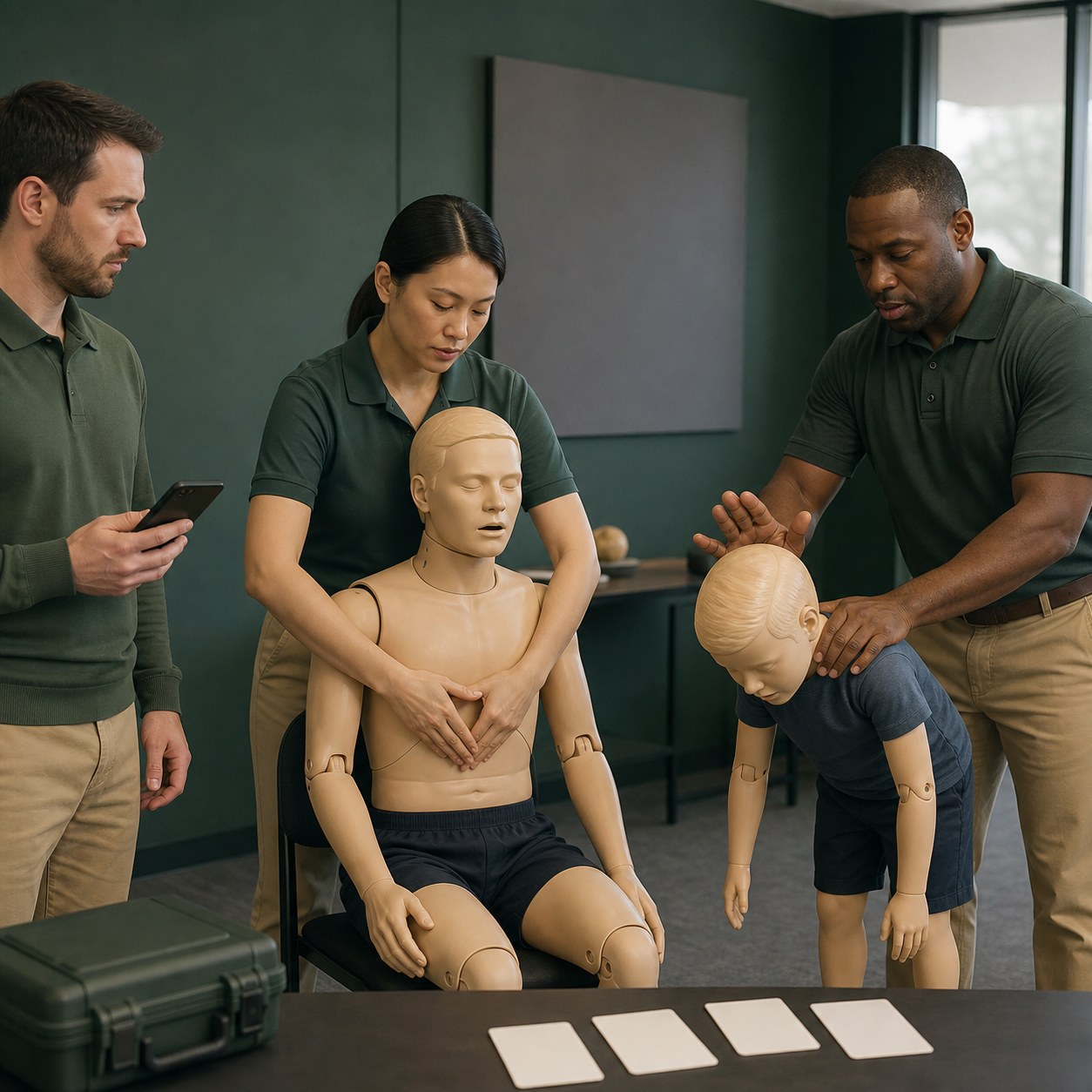
| A choking emergency leaves little room for product uncertainty. The device is either traceable or it is not. The valve either supports the intended airflow path or it does not. The mask either seals under real facial geometry or it leaks. The pressure circuit either holds usable reserve or collapses during the pull phase. The instructions either preserve first-line rescue or blur the sequence. |
| A fake or unsupported anti-choking device can look convincing in a product photo. Clean packaging, five-star reviews, dramatic emergency language, and phrases such as "FDA registered" do not prove lawful authorization, usable pneumatic performance, or safe second-line placement. Amazon and other marketplaces are fast buying environments. Airway safety is not a fast-click category. |
Amazon is discussed here as a marketplace context, not as a claim that every anti-choking device listing on Amazon is fake. Product names such as LifeVac, Dechoker, Fitiger, and other device names are used only for identification where relevant. This article is a buyer-education guide by Fitiger and does not claim that a specific seller or product is counterfeit unless that status is supported by official records, enforcement actions, or direct product verification.
| A fake product is not the only risk. A real-looking product page can still teach the wrong response. |
| FDA's March 4, 2026 safety communication tells the public to follow established choking rescue protocols first. If standard protocols are unsuccessful, anti-choking devices may be used as a second option. FDA also warns that using a device before established protocols could delay critical action. |
| A trustworthy listing should not imply device-first use, skipped first-line rescue, delayed emergency activation, universal age coverage, or guaranteed rescue. The listing should preserve the response chain: severe choking recognition, established first-line action, emergency activation, second-line use only after unsuccessful standard measures, and medical follow-up when needed. |
|
Listing language |
Buyer risk |
|
"Use first in any choking emergency" |
Device-first delay. |
|
"No training needed" |
False confidence under stress. |
|
"FDA registered" as the main proof |
Administrative language may be mistaken for product authorization. |
|
"Works for everyone" |
Ignores age, weight, mask fit, anatomy, and instructions. |
|
"Guaranteed rescue" |
Unsupported medical outcome claim. |
|
"Same as leading brand" |
Possible copycat or unverified equivalence claim. |

| "FDA registered" is one of the easiest phrases to misunderstand. Registration and listing are administrative concepts. They do not, by themselves, mean that a device has been approved, cleared, or authorized for a claimed medical use. |
| For suction anti-choking devices, buyers should look for product-specific authorization and category fit. FDA's De Novo database identifies LifeVac under DEN250012 as a suction anti-choking device as a second-line treatment, with regulation number 874.5400 and product code QXN. That product-specific record does not automatically apply to every similar-looking marketplace device. |
|
Term on listing |
What it may actually mean |
Buyer action |
|
FDA registered |
Facility or listing administration. |
Do not treat as product authorization. |
|
FDA listed |
Database presence. |
Verify exact device and claimed use. |
|
FDA-authorized |
Product-specific lawful marketing status for a defined use. |
Check FDA database record. |
|
QXN / 21 CFR 874.5400 |
Second-line suction anti-choking device category. |
Verify whether the exact product maps to that status. |
|
"FDA approved" |
Often misused in marketplace copy. |
Require product-specific proof. |
| FDA's March 2026 communication states that the agency issued an import alert on October 8, 2025, listing multiple suction anti-choking devices that had not been authorized for distribution in the United States. The same FDA page also notes a May 10, 2021 warning letter to DeChoker LLC regarding quality-system compliance for its tracheobronchial suction device. |
| Those records should not be turned into broad attacks on every marketplace listing. They do justify a harder verification standard. A buyer should question unclear manufacturer identity, missing product-specific authorization proof, copied images, vague U.S. distribution language, incomplete instructions, missing lot traceability, and low-price listings that use broad emergency claims. |
|
Marketplace signal |
Why it matters |
|
Unclear manufacturer or distributor |
No accountable quality, service, or recall path. |
|
No current instructions for use |
Age, weight, contraindications, and second-line sequence may be missing. |
|
Only "FDA registered" language |
Administrative status can be confused with product authorization. |
|
Copied product photos or copied wording |
Possible copycat listing or stale claim. |
|
Very low price with broad rescue claims |
Price may hide unknown valve, seal, material, or seller-chain risk. |
|
Reviews that do not match the shown product |
Marketplace feedback may not map to the exact device being sold. |
Review analytics must replace emotional consensus: under stress, marketplace feedback does not dictate biological survival. A buyer cannot inspect internal valve alignment, chamber volume, polymer aging, or pressure decay from an Amazon image. The risk is mechanical before it becomes medical.
|
Component |
Copy / counterfeit failure mode |
Emergency risk and latency impact |
|
One-way valve |
Missing ball-valve, weak flap, poor alignment, or reversed airflow logic. |
Can create wrong force direction, fail outward-only suction logic, or waste time during the pull phase. |
|
Bellows / chamber |
Weak elastomer, incorrect internal volume, deformation, or poor rebound. |
May fail to generate usable negative pressure reserve when standard measures have already failed. |
|
Mask cushion |
High Shore A hardness above the ideal flexible range, poor edge recovery, or warped storage shape. |
Edge lift under rapid pull collapses the pressure circuit and creates leak paths. |
|
Instructions |
Device-first sequence, poor translation, missing contraindications, or age/weight omissions. |
Creates recognition latency and sequence drift inside the 4-minute oxygen window. |
|
Packaging and lot traceability |
No lot number, no IFU, no replacement path, relabeled box, or mixed seller inventory. |
Weakens recall, replacement, inspection, and institutional due diligence. |
| A suction anti-choking device is not just a cup and handle. Valve behavior controls force direction. Public reporting on UK regulator warnings described counterfeit or unbranded anti-choking devices sold through online marketplaces and noted that fake devices may lack a proper one-way suction valve. Without the right valve behavior, pressing or handling a device can create the wrong force direction and raise risk rather than reduce it. |
| Visual aesthetics do not correlate with pneumatic performance: unverified valve geometry and edge-lift collapse the pressure gradient during the pull phase. Seller traceability matters because internal valve logic is not visible to ordinary buyers. |
| A suction device needs mechanical reserve after standard first-line measures are unsuccessful. Weak pressure, valve leakage, mask deformation, or poor seal can consume that reserve before the device does useful work. |
| Food mechanics explain the risk. Experimental oral-flow work has reported model values near 5.4 kPa, about 40.5 mmHg, for clearing starch-based material and about 1.7 kPa for gum-based material of similar apparent viscosity. Those values are not clinical rescue thresholds. They show that obstruction material changes the physical problem. |
| Comparative bench research has reported that a genuine suction anti-choking device generated about 154 +/- 57 mmHg of negative pressure, while an unauthorized copy generated about 62 +/- 29 mmHg. A copy producing 62 mmHg may sound forceful in a product description. In real use, mask leakage, edge lift, poor valve geometry, facial hair, dentures, edentulous cheek collapse, or weak pull coupling can spend that margin quickly. A pressure circuit that falls near the 40.5 mmHg model clearing burden for a starch-based bolus has little room left for field variability. |
| Fitiger evidence materials reference a 19 kPa to 42 kPa pressure/testing range under defined conditions. That kind of evidence helps buyers separate engineered claims from generic "powerful suction" language. It remains bench evidence. It does not replace first-line rescue, EMS, or product-specific authorization. |
|
Evidence point |
Useful interpretation |
Boundary |
|
5.4 kPa starch-based bolus model value |
Solid food can require substantially more mechanical pressure than softer material. |
Not a universal clinical threshold. |
|
1.7 kPa gum-based model value |
Gel-like material can behave very differently from compact solid food. |
Does not predict every obstruction. |
|
154 +/- 57 mmHg genuine-device bench value |
Shows stronger measured negative-pressure reserve under test conditions. |
Does not guarantee rescue outcome. |
|
62 +/- 29 mmHg copy-device bench value |
Suggests copy-device performance can be far weaker and more variable. |
Must be read with test setup and product identity. |
|
Fitiger 19 kPa to 42 kPa testing range |
Provides a defined engineering evidence layer for Fitiger materials. |
Not proof of FDA authorization or clinical superiority. |

| Marketplace reviews often rely on visible impressions: "looks good," "easy to hold," "arrived fast," or "hope I never use it." High-risk airway groups expose the weakness of that approach. |
| Food-choking mortality rises sharply with age; published public-health summaries have described food-choking death rates among adults 65 and older as several times higher than among young children, with some comparisons placing the older-adult rate about seven times the rate for ages 1 to 4. Pediatric swallowing studies also show why visible observation can miss risk: in one high-risk pediatric aspiration cohort, thin fluids were silently aspirated in 81% of aspirating patients. That figure should not be generalized to healthy children or to foreign-body obstruction events. It does support one narrow safety point: "I did not hear coughing" is not enough evidence that airway risk was absent. |
|
High-risk group |
Why reviews can mislead |
Buyer check |
|
Adults 65 and older |
Dysphagia, dentures, frailty, reduced cough, and seated meals can change the airway event. |
Check mask fit, staging near meals, caregiver role, and emergency activation. |
|
Wheelchair users |
Backrests, armrests, trays, and posture can limit first-line mechanics and device positioning. |
Stage backup near dining and care zones; define retrieval role. |
|
Pediatric neurologic or developmental disorders |
Silent aspiration and low-signal distress can make visual observation unreliable. |
Use individualized medical and feeding guidance; do not generalize reviews. |
|
Edentulous users |
Cheek collapse can weaken mask contact and create leak paths. |
Inspect mask edge compliance and consider how facial geometry affects seal. |
A fake or unsupported device often fails at the softest part of the system: the mask. The mask has to contact real skin, facial hair, cheek shape, dentures, edentulous facial geometry, sweat, saliva, movement, and stress. A small leak path can reduce useful suction quickly.
|
Seal checkpoint |
Why it matters |
|
Mask material |
Unknown rubber-like material may not hold flexibility, edge recovery, or skin-contact suitability. |
|
Edge compliance |
The seal edge must adapt to facial geometry during pull motion. |
|
Mask sizes |
Adult and child users may require different masks. |
|
Storage shape |
Folded, crushed, or heat-damaged masks may not recover. |
|
Replacement path |
A mask with no traceable replacement option weakens readiness. |
|
Inspection guidance |
Buyers need to know when the mask should be replaced. |
Medical-grade silicone is relevant because the face-contact layer is not decoration. It is part of the pressure system. Fitiger's material-contact positioning belongs in that context: useful for evaluating mask and seal quality, not a claim of guaranteed rescue or automatic FDA authorization.
| A mask can look clean and still lose pressure performance. Medical-grade silicone and similar elastomers can change during natural storage, especially after heat cycling, compression, skin-oil exposure, and cleaning-agent contact. Photo-oxidative and surface-aging processes can increase Shore A hardness, pushing the material away from the soft, conforming range needed for face-mask sealing. As hardness rises, elasticity and elongation at break fall. |
| During a rapid pull, the mask edge must remain compliant. If the edge stiffens, it lifts across cheek contour, beard texture, dentures, or an edentulous face. That microscopic leak path can collapse the pressure gradient instantly. The device may look undamaged while the seal circuit has already weakened. |
| Marketplace listings should explain mask inspection, replacement timing, storage temperature, cleaning limits, spare-mask source, lot traceability, and contact-material identity. A stored device with an uninspected mask is not readiness. It is inventory with unknown seal behavior. |
Fake products can still have positive reviews. A review may reflect shipping speed, price, packaging appearance, or the buyer's sense of reassurance. It may not reflect product identity, valve design, pressure behavior, material quality, or actual emergency performance.
|
Review pattern |
Why it may be weak |
|
"Looks just like the expensive one" |
Copy-like appearance does not prove valve or seal function. |
|
"Great price" |
Low price can hide unknown materials and seller chain. |
|
"Haven't used it yet, five stars" |
No performance information. |
|
"Fast shipping" |
Fulfillment feedback, not safety evidence. |
|
"FDA registered" repeated by buyers |
May repeat seller language without verification. |
|
"Works for all ages" |
Product-specific age, weight, and mask limits still matter. |
Reviews are not useless. They are just not enough. Traceability comes before emotion.
|
Checkpoint |
What to verify |
|
Product identity |
Exact brand, model, manufacturer, and product version. |
|
Seller identity |
Official store, authorized seller, or traceable distributor. |
|
FDA language |
Product-specific authorization, not vague "registered" language. |
|
Response sequence |
First-line choking rescue first; device only after unsuccessful standard measures. |
|
Valve design |
One-way airflow logic and instructions that avoid downward force risk. |
|
Mask system |
Sizes, material, edge flexibility, storage condition, and replacement path. |
|
Pressure evidence |
Defined test conditions and realistic evidence boundaries. |
|
IFU |
Full instructions for use, warnings, contraindications, age/weight limits. |
|
Lot traceability |
Batch, packaging, support, replacement, and recall path. |
|
Review quality |
Specific use details, not only shipping or "peace of mind" comments. |

|
Arrival check |
What to do |
|
Box condition |
Look for crushed, opened, relabeled, or incomplete packaging. |
|
Instructions |
Confirm full instructions for use are included, not only a generic card. |
|
Masks |
Confirm correct sizes and undamaged seal edges. |
|
Valve / chamber |
Check that components match the official product description. |
|
Labeling |
Confirm model, lot, manufacturer, and warnings. |
|
Storage |
Put the device where choking risk occurs, not in a random closet. |
|
Household plan |
Identify who calls emergency services and who retrieves the device if standard measures fail. |
Do not store a device that nobody has inspected.
Fitiger buyers should use the same discipline. A genuine Fitiger purchase should be traceable through official or authorized channels. The buyer should be able to confirm the product family, packaging, instructions, mask set, replacement route, and support contact.
FoldPumpVac's value is compact staging and distributed readiness. EasyPumpVac's value is short operation path and compact handling. Those advantages matter only when the product is genuine, inspected, and placed inside a first-line-first response plan.
Schools, care facilities, restaurants, camps, and childcare programs should not rely on an Amazon listing alone. They need a procurement file, not a screenshot.
|
Procurement file item |
Why it matters |
|
Exact product identity |
Prevents substitution by a similar-looking device. |
|
Seller authorization |
Reduces counterfeit and gray-market risk. |
|
FDA status review |
Prevents "registered" from being mistaken for authorized. |
|
Instructions for use |
Defines age, weight, warnings, and second-line use. |
|
Training language |
Preserves first-line rescue and emergency activation. |
|
Inspection log |
Keeps mask, packaging, and replacement status visible. |
|
Placement map |
Reduces retrieval latency. |
|
Incident documentation plan |
Supports EMS handoff and post-event review. |
After an incident, weak records do not stay administrative. They become evidence problems.

| A choking device is not a decorative emergency item. It is a pressure system intended for a narrow second-line role. Check the seller, exact product, FDA language, valve and mask system, instructions, replacement parts, placement location, and household or facility response plan before storing the device. A real readiness purchase survives those checks. A fake or unsupported device usually depends on the buyer skipping them. |
| For buyer comparison, review Fitiger How It Works before selecting any anti choking device for a readiness plan. |
| For evidence boundaries, compare public marketplace claims with Fitiger scientific evidence, instructions, material checks, and seller traceability. |
| For official product routing, start with the FoldPumpVac series when compact staging and verified purchase path matter. |
| For specific portable readiness, compare the FoldPumpVac portable device and the FoldPumpVac Home Kit based on storage, setting, and instructions for use. |
| For home and caregiver readiness, compare the EasyPumpVac Airway Clearance Home Kit when short operation path and household staging are the main buying factors. |
| For institutional purchase planning, keep Schools procurement records separate from marketplace screenshots. |
Search FDA's medical device databases for the exact device name, De Novo number, regulation number, or product code. For the 2026 suction anti-choking category, LifeVac's De Novo record is DEN250012, regulation number 874.5400, product code QXN. Do not treat "FDA registered" as product authorization.
No. FDA registration or listing does not, by itself, mean that a device has been approved, cleared, or authorized. Buyers should verify the exact product through current FDA records and product-specific claims.
The hidden risks include wrong valve behavior, weak suction, poor mask seal, unknown materials, incomplete instructions, missing age or weight boundaries, and no traceable seller or replacement path.
Valve behavior controls force direction. A proper suction pathway supports outward removal logic. A weak, missing, or incorrect valve can collapse the pressure circuit or create unsafe force behavior.
No. Reviews can show buyer experience, shipping, packaging, and perceived confidence. They cannot verify valve design, FDA status, pressure behavior, material quality, seller authorization, or clinical performance.
Silicone can harden or lose edge compliance through aging, heat cycling, compression, skin oils, and cleaning-agent exposure. A mask can look intact while a microscopic leak path reduces the pressure gradient during pull motion.
Buy from Fitiger or an authorized seller, confirm the product family, inspect packaging and instructions, verify masks and replacement path, and keep the device inside a first-line-first choking response plan.
| FDA Safety Communication - supports first-line rescue first, second-option anti-choking device language, import-alert references, DeChoker warning-letter reference, and registration/listing caution. |
| FDA De Novo database DEN250012 - supports LifeVac De Novo record, regulation number 874.5400, product code QXN, and March 4, 2026 decision date. |
| FDA De Novo order DEN250012 - supports second-line suction anti-choking device classification, indications for use, Class II status, and QXN details. |
| FDA import alert - supports FDA's public statement that multiple suction anti-choking devices were listed as not authorized for U.S. distribution. |
| Comparative bench pressure study - supports pressure-performance differences reported between certified and unauthorized suction-based devices. |
| Silent aspiration risk study - supports pediatric silent aspiration discussion in high-risk cohorts. |
| Silicone rubber material aging overview - supports general material-science discussion around elastomer aging, hardness, elasticity, and seal behavior. |
This article is a buyer-verification guide for anti-choking devices sold through Amazon or similar marketplaces. It compares risk signals, seller traceability, FDA language, valve design, mask seal, pressure evidence, and Fitiger product-verification steps. It does not claim that every marketplace listing is fake. It does not prove clinical superiority of any product. It does not replace accredited first-aid training, emergency medical care, or product-specific instructions for use.
This article is for preparedness, product-safety, engineering, and buyer-verification education only. It is not medical, legal, regulatory, or procurement advice. In a choking emergency, follow established first-line rescue protocols, call 911 or local emergency services, and treat suction anti-choking devices only as second-line options after unsuccessful standard choking rescue measures and within product-specific instructions for use. Verify the FDA status of any specific device before making claims about authorization, clearance, approval, or compliance.


