
Fitiger anti-choking device lab testing evaluated measurable hardware characteristics in EasyPumpVac FAC-01 and FoldPumpVac FAC-02 under defined laboratory conditions.
Before choosing equipment, review Fitiger's anti-choking device buyer evidence checklist for FDA wording, testing, seller traceability, and kit-selection questions.
The reports recorded:
These results provide engineering evidence about the tested devices. They do not prove clinical effectiveness, guarantee the outcome of a choking emergency, or constitute FDA marketing authorization.
Emergency equipment is often described with broad words such as powerful, reliable, easy, or durable.
Those words may sound reassuring, but they do not answer the questions an engineer, facility manager, caregiver, or procurement team should ask.
| How much negative pressure did the device generate during the test? | How much force was required to actuate it? |
| Did the mask connection remain attached under tension? | Were important dimensions checked against defined tolerances? |
| Did the inspected surfaces show burrs, sharp edges, or visible manufacturing defects? |
The type-inspection reports for EasyPumpVac FAC-01 and FoldPumpVac FAC-02 help move the discussion from impressions to recorded values.
At Fitiger, we believe that is the right way to discuss life-safety hardware: explain what was measured, identify the test conditions, and keep every conclusion within the limits of the evidence.
This article reviews findings described in two Fitiger type-inspection reports:
| CY2506324N-1 for FAC-01. | CY2506324N-2 for FAC-02. |
| For product-family consistency across Fitiger technical content: | FAC-01 refers to EasyPumpVac. |
| FAC-02 refers to FoldPumpVac. |
The reports address hardware and manufacturing characteristics such as negative pressure, pull force, connection firmness, dimensional control, and product appearance.
They should be read as non-clinical engineering documents. They are not clinical studies, emergency-outcome studies, or regulatory authorization decisions.
| Finding | Recorded result | Evidence boundary |
| Negative pressure | FAC-02 recorded -51 kPa to -55 kPa against a -40 kPa reference. | Bench pressure does not prove clinical outcome or every seal condition. |
| Pull force | FAC-01 recorded 27 N to 30 N; FAC-02 recorded 30 N to 34 N, below a 45 N upper reference. | Pull force is not the same as full human-factors proof. |
| Connection firmness | Both tested assemblies showed no separation under 10 N tension. | This applies to the specified load and tested assemblies. |
| Dimensional control | Key components were checked against tolerances; FAC-02 medium-mask height was 52.3 mm to 52.6 mm. | Dimensional consistency does not guarantee a perfect seal for every user. |

A manual suction device works by creating a negative pressure difference when the device is actuated.
The FAC-02 report recorded negative pressure between -51 kPa and -55 kPa under the listed test configurations. The inspection criteria used -40 kPa as its reference value.
Because the values are negative, the magnitude of the recorded pressure difference was 11 kPa to 15 kPa greater than the magnitude of the -40 kPa reference.
That is the precise engineering takeaway.
It is reasonable to say that the tested FAC-02 configurations exceeded the negative-pressure reference used in the inspection criteria.
It would not be reasonable to turn that result into claims such as:
Bench pressure is one part of device performance. Real use also depends on mask selection, seal quality, placement, operating technique, component condition, and whether the device is used within its instructions.
A high pressure reading does not describe the entire device.
A suction pathway can lose effectiveness if the mask does not seal, the connection loosens, a valve does not operate as intended, or the user cannot complete the required motion.
That is why a responsible anti-choking device lab report should be read as a group of related findings rather than as a contest built around one number.
The FAC-01 and FAC-02 reports are more useful when pressure is considered alongside:
| Pull force. | Connection retention. |
| Component geometry. | Surface quality. |
| Instructions for use. | Human-factors performance. |
| Durability and storage evidence. |
Engineering evidence becomes stronger when several measurements tell a coherent story. It becomes weaker when one result is isolated and presented as if it answers every performance question.
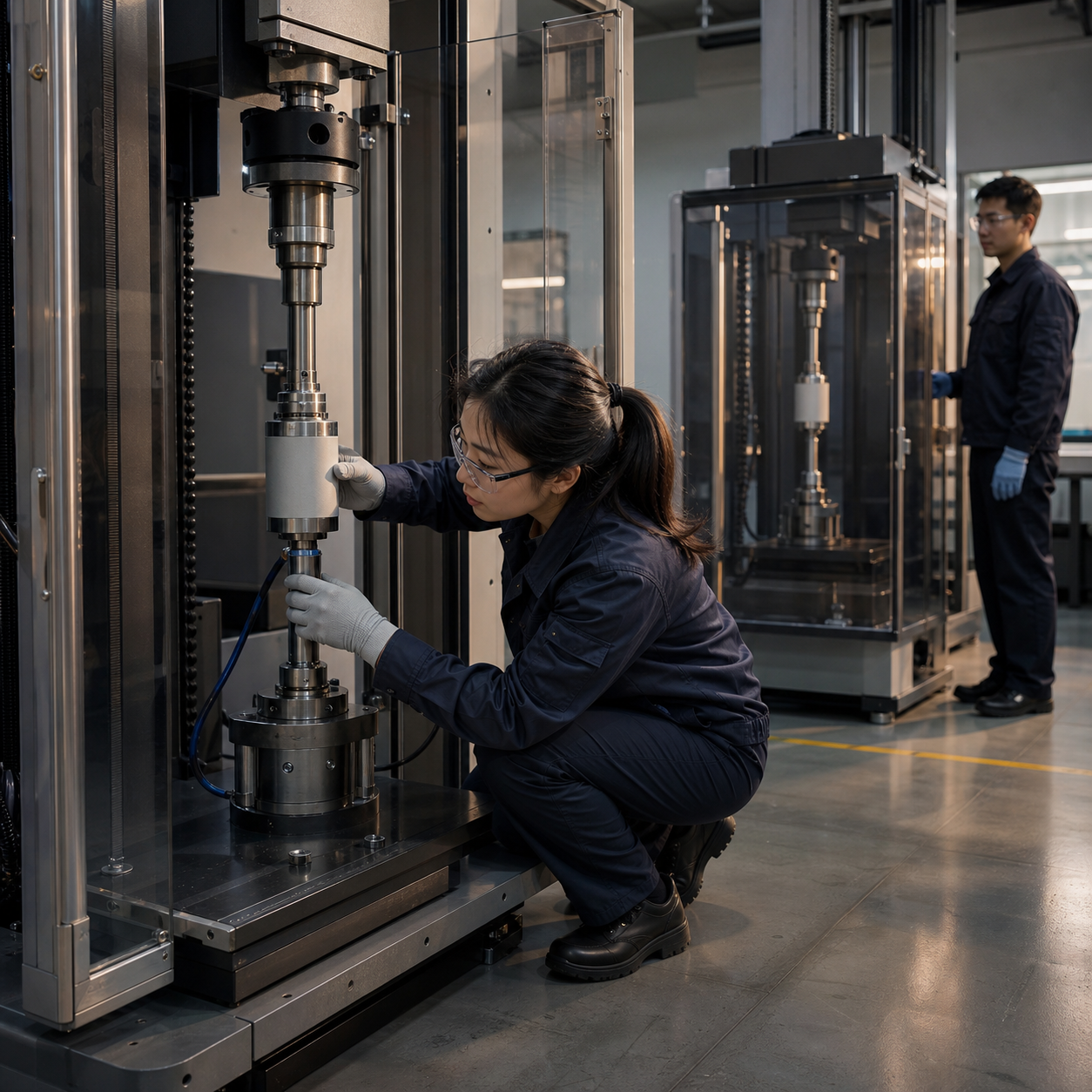
A manual suction device is also a human-operated mechanical system. The device must generate the intended pressure, but the user must also be able to complete the actuation motion. The reports recorded:
All of the reported values were below the 45 N reference used in the inspection framework.
That finding supports a narrow conclusion: the tested configurations required less than the stated upper pull-force reference during the laboratory measurements.
It does not prove that every person can use either device correctly.
Real-world usability may be influenced by:
| Grip strength. | Hand position. |
| Body position. | Device orientation. |
| Stress and time pressure. | Mask stabilization. |
| Familiarity with the operating sequence. | Physical limitations of the intended operator. |
Pull force is therefore relevant to usability, but it is not a substitute for human-factors testing or training.
Emergency operation is rarely performed under ideal conditions.
A person may be kneeling, leaning across furniture, working in a tight space, or trying to maintain a mask seal while completing the pull.
Under those conditions, an unnecessarily high actuation force could make consistent operation more difficult.
The reported FAC-01 and FAC-02 pull-force ranges help describe the mechanical demand of the tested devices. They also give procurement teams a concrete specification to review rather than relying on phrases such as easy to pull.
The correct evidence-based wording is not "anyone can operate it."
The better wording is:
The tested FAC-01 and FAC-02 configurations recorded pull forces below the 45 N upper reference used in the inspection criteria.
That statement is accurate, measurable, and easier to defend.
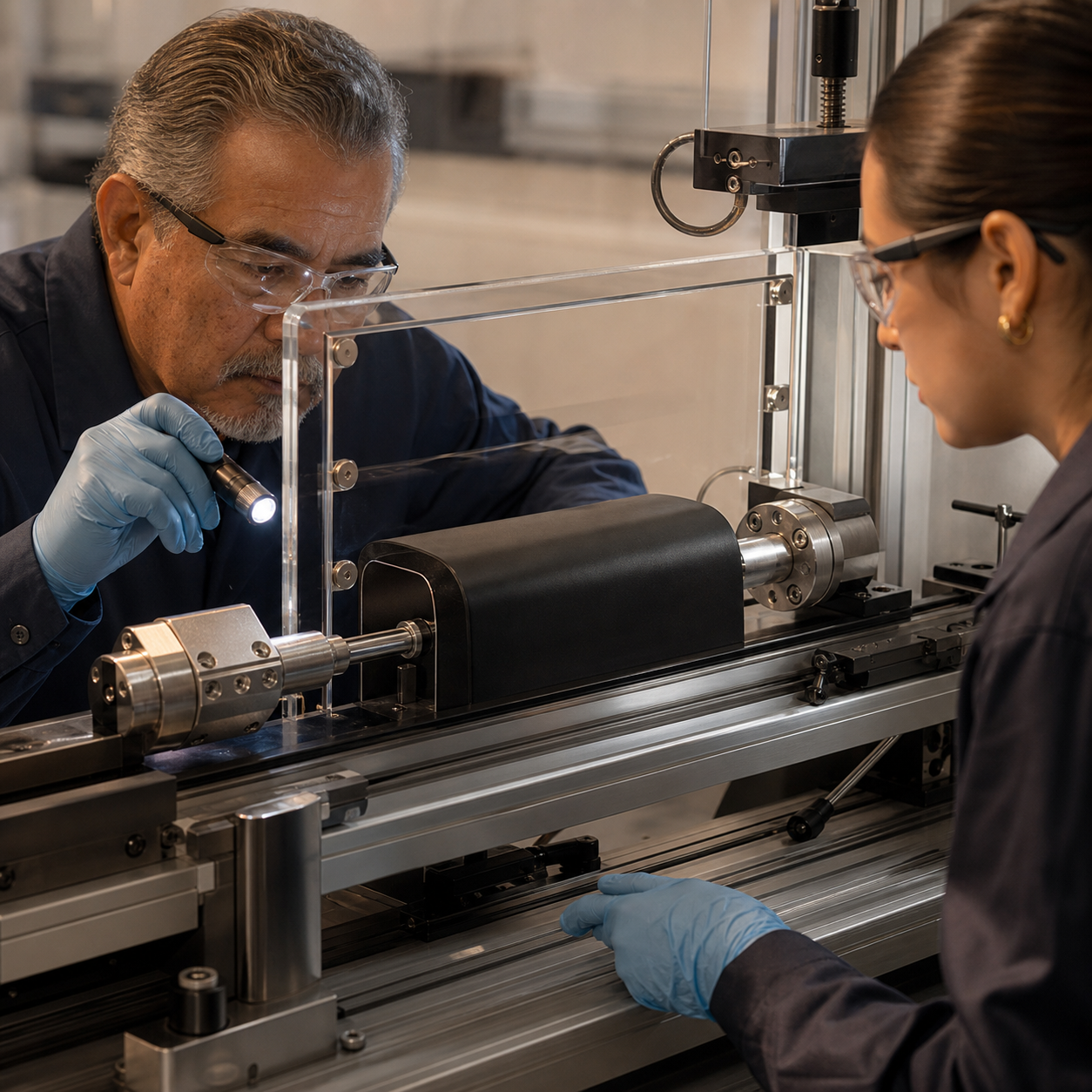
A manual airway suction device depends on a continuous mechanical and pressure pathway. The mask must remain connected to the device body while the user stabilizes the mask and actuates the suction mechanism. In the reported connection tests:
This result supports the connection integrity of the tested assemblies under the specified 10 N load.
It does not prove that a connection can withstand any pulling direction, unlimited repetitions, improper assembly, accidental twisting, or damage caused by storage outside the labeled conditions.
Still, the finding is important.
If the connection separates during actuation, the suction pathway is interrupted. Connection retention is therefore not merely a packaging or cosmetic feature. It is part of the device's mechanical function.
"No separation recorded" is stronger and more precise than a general claim such as secure design. It identifies the load and the observed result. It should not be rewritten as:
The test finding applies to the inspected assemblies and the defined condition.
That boundary should remain visible in product pages, technical articles, distributor materials, and procurement documents.

Negative pressure depends on more than the internal mechanism.
The interface between the mask and the user also matters. If critical dimensions drift too far from the intended geometry, the fit and sealing behavior may become less predictable.
The inspection reports evaluated key component dimensions against stated tolerances. One specific data point was the FAC-02 medium-mask height, reported from 52.3 mm to 52.6 mm. A narrow recorded range can support manufacturing-consistency review for the inspected samples.
It does not prove that one mask will create a perfect seal on every user. Faces differ in size, shape, facial hair, dental structure, soft-tissue contour, and positioning.
The correct conclusion is that dimensional inspection helps confirm whether manufactured components follow the specified design geometry.
That is one part of repeatable device production.
The reports also described visible product characteristics such as the absence of burrs, sharp edges, and obvious molding defects in the inspected samples.
These observations may sound less impressive than negative-pressure numbers, but they matter at the user-contact interface.
A mask and device body should not present rough edges, unstable surfaces, or obvious molding defects where they may contact the face or hands.
Surface inspection can support manufacturing-quality review. It does not replace biocompatibility testing, material characterization, cleaning instructions, or long-term aging evaluation.
Each test addresses a different question.
The FAC-01 and FAC-02 type-inspection data support discussion of:
These are meaningful product-development findings.
They allow Fitiger to replace vague product language with specific, report-backed measurements.
The reports do not independently establish:
| Clinical effectiveness in a choking emergency. | A guaranteed obstruction-removal rate. |
| Superiority over standard choking first aid. | Superiority over another anti-choking device. |
| Safety for every age, weight, or medical condition. | Successful operation by every potential user. |
| Long-term shelf life. | Performance after every storage or transport condition. |
| FDA clearance, approval, or authorization for Fitiger products. | A guaranteed emergency outcome. |
Those claims require different forms of evidence.
Clinical information, non-clinical simulated-airway testing, human-factors evaluation, durability testing, aging studies, biocompatibility, labeling, training, and regulatory review each address separate parts of the overall evidence package. Readers comparing laboratory findings with rescue sequence boundaries should review How It Works before treating any test number as an emergency-use claim.
A type-inspection report can provide useful engineering evidence.
It cannot authorize a medical device for sale in the United States.
FDA marketing authorization is a separate regulatory determination based on the applicable device classification and submission requirements.
The current U.S. device type is identified as a suction anti-choking device as a second-line treatment. It is a Class II device type under 21 CFR 874.5400, product code QXN.
The classification describes use after an unsuccessful basic life support choking protocol.
The creation of that device classification does not automatically authorize every suction anti-choking device already being sold or listed in an FDA database.
FDA establishment registration and device listing also do not mean that a product has been approved, cleared, or authorized.
For Fitiger, the responsible position is clear: these reports should be presented as engineering evidence, not as FDA authorization.
Laboratory performance data does not change the order of emergency care.
In a choking emergency, responders should:
The reports discussed in this article do not show that a Fitiger device should be used before back blows, abdominal thrusts, chest thrusts, CPR, or dispatcher-directed care.
Engineering measurements and emergency-response recommendations answer different questions. They should not be blended into one claim.
The American Heart Association's adult basic life support guidance states that the effectiveness and safety of suction-based airway clearance devices have not been established for adults with foreign-body airway obstruction and that evidence is insufficient to make a recommendation.
That does not make mechanical testing irrelevant.
It means mechanical results must not be presented as if they settle the broader clinical question.
| A pressure reading can show what happened during a pressure test. | A pull-force result can show the force recorded during actuation. | A connection test can show whether separation occurred under the specified load. |
None of those tests, alone or together, determines how often a device will resolve choking in real emergencies or what adverse events may occur across a broad population.
That distinction is essential to credible E-E-A-T writing.

A school, restaurant, nursing home, workplace, or family comparing emergency-readiness equipment should not stop at a single performance number.
A more complete review should ask:
| Which exact model was tested? | Which report contains the result? | Was the complete product configuration evaluated? |
| What was the test method? | What acceptance criterion was used? | What result was recorded? |
| Was the result visual, mechanical, functional, or clinical? | Was the device tested after transport or aging? | Were human-factors studies completed? |
| What age, weight, and user limitations appear in the current instructions? | What is the product's current regulatory status? | What inspection and replacement schedule applies after purchase? |
This approach prevents a procurement decision from being driven by one isolated specification or an unsupported marketing phrase. For product-level planning, compare the EasyPumpVac Airway Clearance Home Kit and the FoldPumpVac portable device against the setting, operator, storage path, and current instructions for use.
The most useful part of the Fitiger lab data is the pattern across the measurements.
| The FAC-02 report recorded negative pressure beyond the magnitude of the reference used in the inspection criteria. | The FAC-01 and FAC-02 pull-force values remained below the stated upper reference. |
| Both tested connections remained attached under 10 N of tension. | Dimensional inspections showed that key components were evaluated against specified tolerances. |
Together, those findings provide a more complete mechanical picture than any one value alone.
The reports address pressure generation, user actuation, component retention, and manufacturing consistency.
That does not complete the entire clinical or regulatory evidence chain. It does show that the tested hardware was evaluated as a mechanical system rather than promoted through an unsupported headline number.
Responsible technical communication is not about finding the largest number in a report. It is about connecting each number to the question the test was designed to answer. The FAC-01 and FAC-02 reports provide useful evidence that:
Those findings deserve to be communicated clearly.
They also deserve accurate boundaries.
A laboratory report becomes more credible, not less credible, when the company publishing it explains what it cannot prove.
For related planning context, review the anti-choking device buyer evidence checklist.
The reports included measurements and inspections related to negative pressure, pull force, connection firmness, dimensional tolerances, and visible product quality.
FAC-01 refers to EasyPumpVac in the current Fitiger technical content set.
FAC-02 refers to FoldPumpVac in the current Fitiger technical content set.
The report recorded a range from -51 kPa to -55 kPa under the tested configurations, against a -40 kPa reference in the inspection criteria.
FAC-01 recorded 27 N to 30 N, while FAC-02 recorded 30 N to 34 N. The inspection criteria included a 45 N upper reference.
Both tested models were exposed to 10 N of tension at the mask-to-body connection, with no separation recorded under the tested condition.
No. Pressure must be evaluated with seal quality, pull force, component retention, durability, human factors, instructions, regulatory status, and clinical evidence.
No. They are laboratory type-inspection reports addressing defined engineering and manufacturing characteristics.
No. Laboratory reports and FDA marketing authorization are separate. The reports provide engineering evidence but do not authorize Fitiger products for marketing in the United States.
No. Established choking rescue protocols should be followed first. A suction anti-choking device should only be considered as a second option if the standard protocols are unsuccessful and only within its instructions and applicable regulatory status.
Fitiger report CY2506324N-1 - Supports FAC-01 EasyPumpVac pull-force, connection-retention, dimensional, and appearance findings. Reference: Project laboratory report.
Fitiger report CY2506324N-2 - Supports FAC-02 FoldPumpVac negative-pressure, pull-force, connection-retention, dimensional, and appearance findings. Reference: Project laboratory report.
FDA Safety Communication, updated March 4, 2026 - Supports established choking protocols first, second-line device positioning, authorization boundaries, and the distinction between registration/listing and authorization.
FDA De Novo Order DEN250012 - Supports 21 CFR 874.5400, Class II, product code QXN, second-line positioning, special controls, and premarket notification expectations for this device type.
American Heart Association Adult Basic Life Support Guidance (2025) - Supports the statement that evidence is insufficient to recommend suction-based airway clearance devices in adult foreign-body airway obstruction.
This article discusses laboratory type-inspection findings for Fitiger EasyPumpVac FAC-01 and FoldPumpVac FAC-02 based on reports CY2506324N-1 and CY2506324N-2.
It is intended for engineering, product-safety, procurement, and educational discussion only.
The reported laboratory findings do not establish clinical effectiveness, guarantee the outcome of a choking emergency, replace established choking rescue protocols, or constitute FDA marketing authorization.
In a choking emergency, call 911 and follow established choking rescue protocols first. Use any second-line suction device only according to its current instructions for use, warnings, intended population, and applicable regulatory requirements.


