An emergency device can be inside the building and still be operationally unavailable. The problem is rarely the straight-line distance on a floor plan. Delay accumulates when staff must identify the location, leave the person needing help, find a key, pass through locked doors, move supplies, open unfamiliar packaging, or discover that the kit is incomplete.
An access audit tests that chain before an emergency exposes it.
Consider a cafeteria in a separate wing of a school.
The emergency equipment inventory lists a choking backup device in the main health office. On the building map, the health office appears nearby. A staff member estimates that the walk takes less than a minute.
During a real access test, the route looks different.
The responder must:
| Leave the rear dining area. | Move around occupied tables. |
| Exit through a staff door. | Cross a corridor. |
| Enter the administrative suite. |
| Wait for a secured door to be opened. | Find the health-office cabinet. |
| Locate the correct key. | Move unrelated supplies. |
| Identify the correct kit. | Return to the cafeteria. |
The equipment was never far away. Access was.
A five-minute retrieval in this kind of scenario is not a medical target or acceptable delay. It is evidence that the system contains barriers that were hidden by the inventory record.
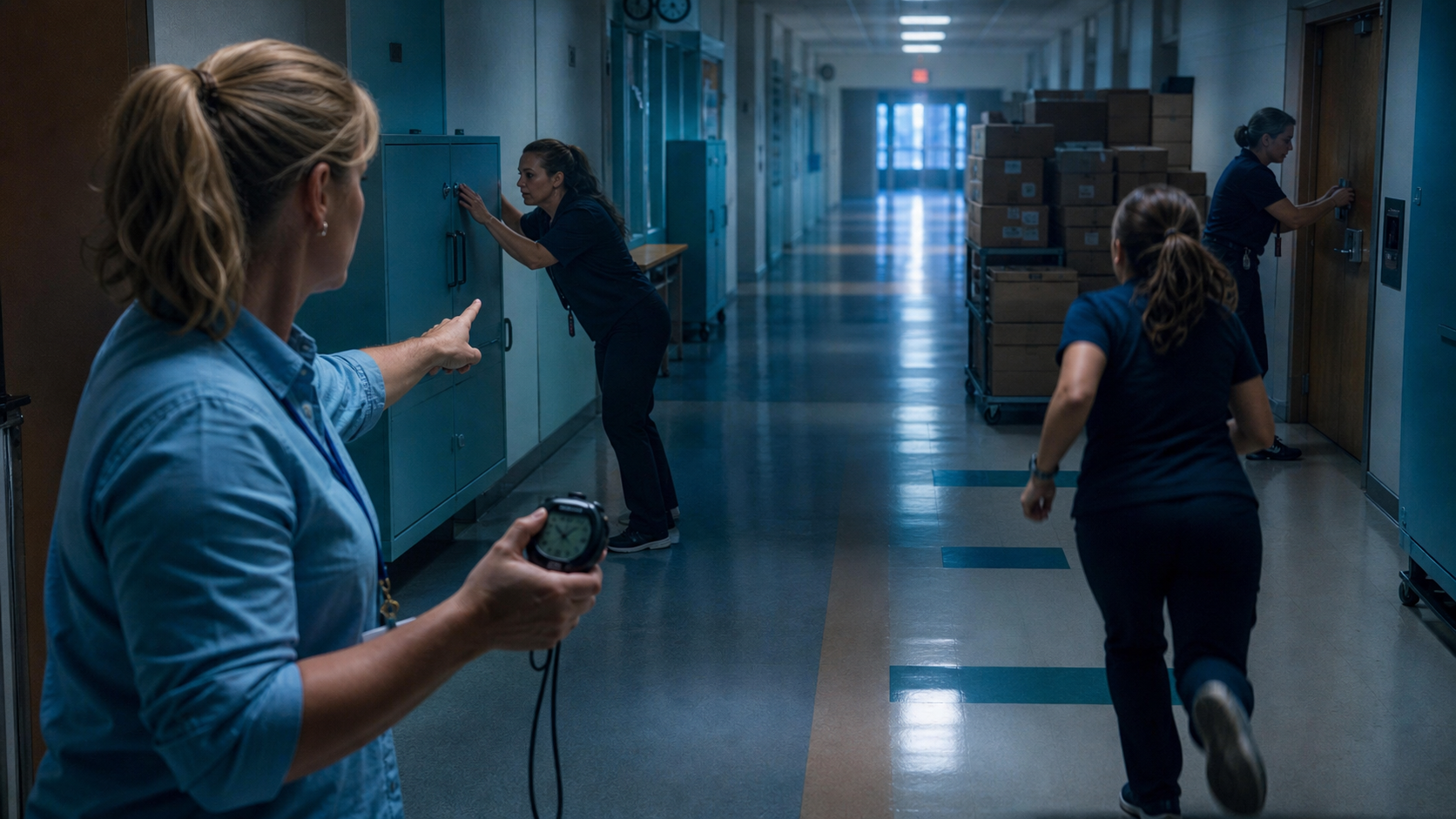
Organizations often imagine delay as one obvious problem:
| The device is too far away. | The door is locked. | No one knows where the key is. |
Actual response latency is usually cumulative.
Ten seconds may be lost deciding who should go. Another twenty seconds may be spent checking the wrong cabinet. A locked door may require a call to the front office. The person with the key may be outside the building. Staff may find the bag but not know whether it contains the right equipment.
Each delay appears minor when reviewed separately.
Together, they can turn a nearby resource into an unusable one.
An audit should therefore examine the entire retrieval path, not only walking distance.
An equipment access audit must preserve the emergency response sequence.
For a responsive person with severe airway obstruction, trained staff should activate emergency medical services and begin the applicable established choking first-aid procedure. If the person becomes unresponsive, CPR and dispatcher instructions become part of the response.
A suction-based anti-choking device belongs only in a second-line backup role after standard choking rescue has been attempted without success.
The audit should never train staff to stop first-line care while everyone searches for a device.
Where several trained adults are present, roles may be divided:
| One person begins established first-line rescue. | One person calls 911. |
| One person retrieves approved backup equipment. | One person manages the room or meets EMS. |
Where only one responder is present, the organization's procedure must reflect that limitation. The device should not create a competing first task.
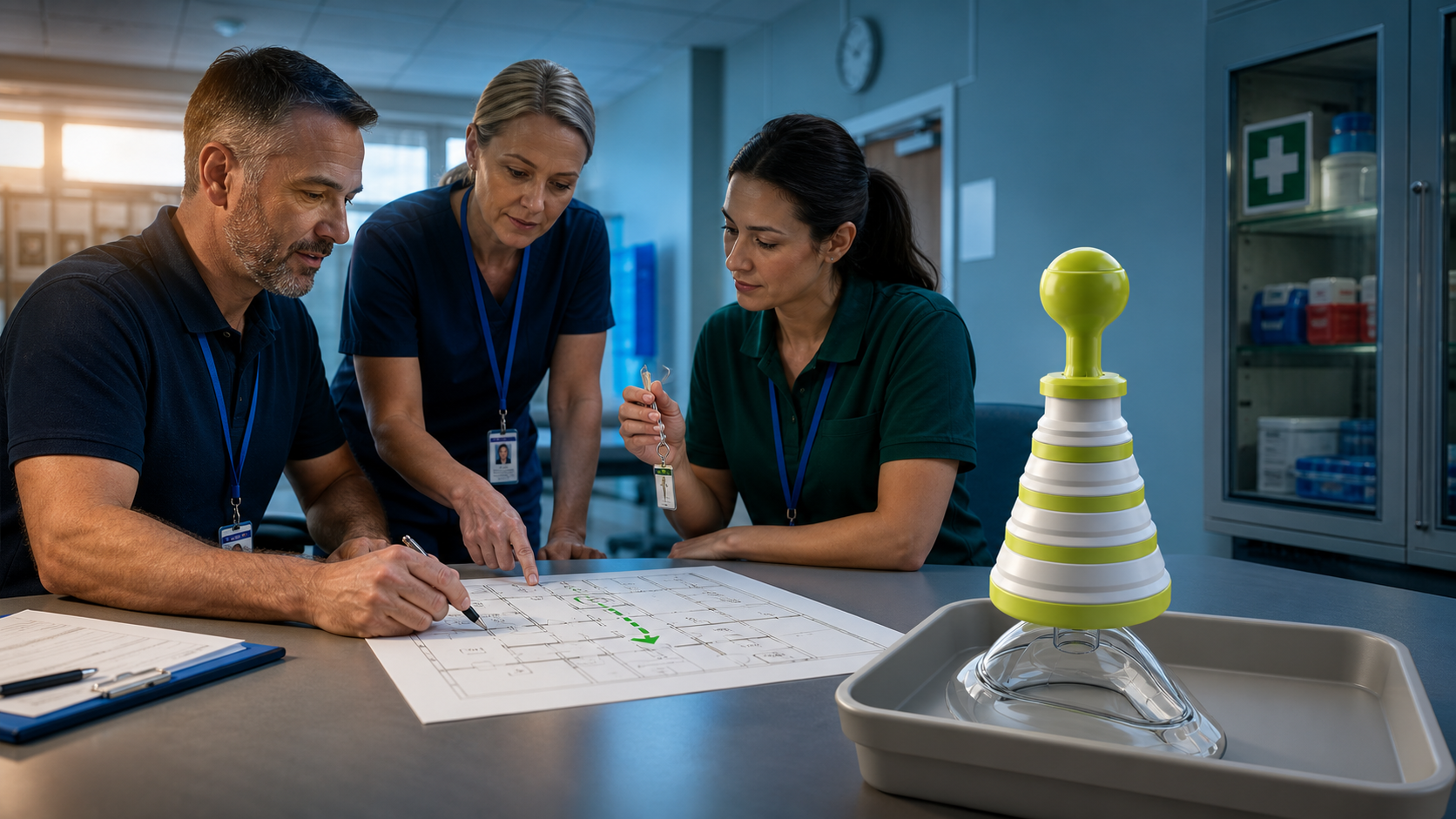
A facility may say:
The kit is less than 100 feet away.
That number does not establish accessibility.
The useful questions are:
| Can staff identify the exact location? | Is the route open? | Does access require a key, badge, code, or permission? |
| Is the cabinet visible? | Can the correct kit be identified immediately? | Are required components present? |
| Can the responder return without becoming disoriented? | Does the route work after hours? | Does it work when usual staff are absent? |
| Can retrieval occur without interrupting first-line care? |
Distance is one variable. It is not the conclusion.
Many equipment checks begin at the cabinet.
An inspector opens it, confirms that the device is present, checks the components, and signs the log.
That is a storage inspection.
An access audit begins where the person needing help would be.
Possible starting points include:
| Farthest cafeteria table | Opposite side of a gym | Detached classroom |
| Second-floor resident lounge | Overnight shelter dining room | Rear of a school bus |
| Outdoor meal area | Athletic field concession stand | Community room after the office closes |
| Mobile service location |
The auditor then follows the normal route to the equipment and back.
Starting from the cabinet can confirm that the device exists. It cannot confirm that staff can reach it.
An empty building produces an unrealistically clean audit.
Doors may be propped open. Hallways are clear. Tables are stacked. The receptionist is present. The person conducting the test already knows the route.
A stronger audit occurs during realistic operating conditions, without interfering with safety or services.
For example:
| During lunch setup | During an active meal period | At the beginning of an evening event |
| During an overnight shelter shift | While a substitute employee is working | During bus loading |
| After the nurse's office closes | During a weekend facility rental | During seasonal weather conditions |
The goal is not to create surprise or embarrass employees.
It is to test the system people actually use.
The equipment owner may retrieve the kit quickly because that person selected the location, holds the key, and performs inspections.
That does not prove general access.
Ask someone from another relevant role to complete the test:
| Cafeteria employee | Substitute teacher | Coach |
| Front-office employee | Shelter supervisor | Volunteer coordinator |
| Bus attendant | Facilities employee | After-school staff member |
Do not provide detailed coaching before the test.
Ask:
Please identify and retrieve the nearest approved choking emergency backup kit.
Observe what happens.
The staff member may know that equipment exists but not where. The person may find the cabinet but not know how to open it. A sign may point to a room whose name has changed.
These findings are system information, not employee failures.
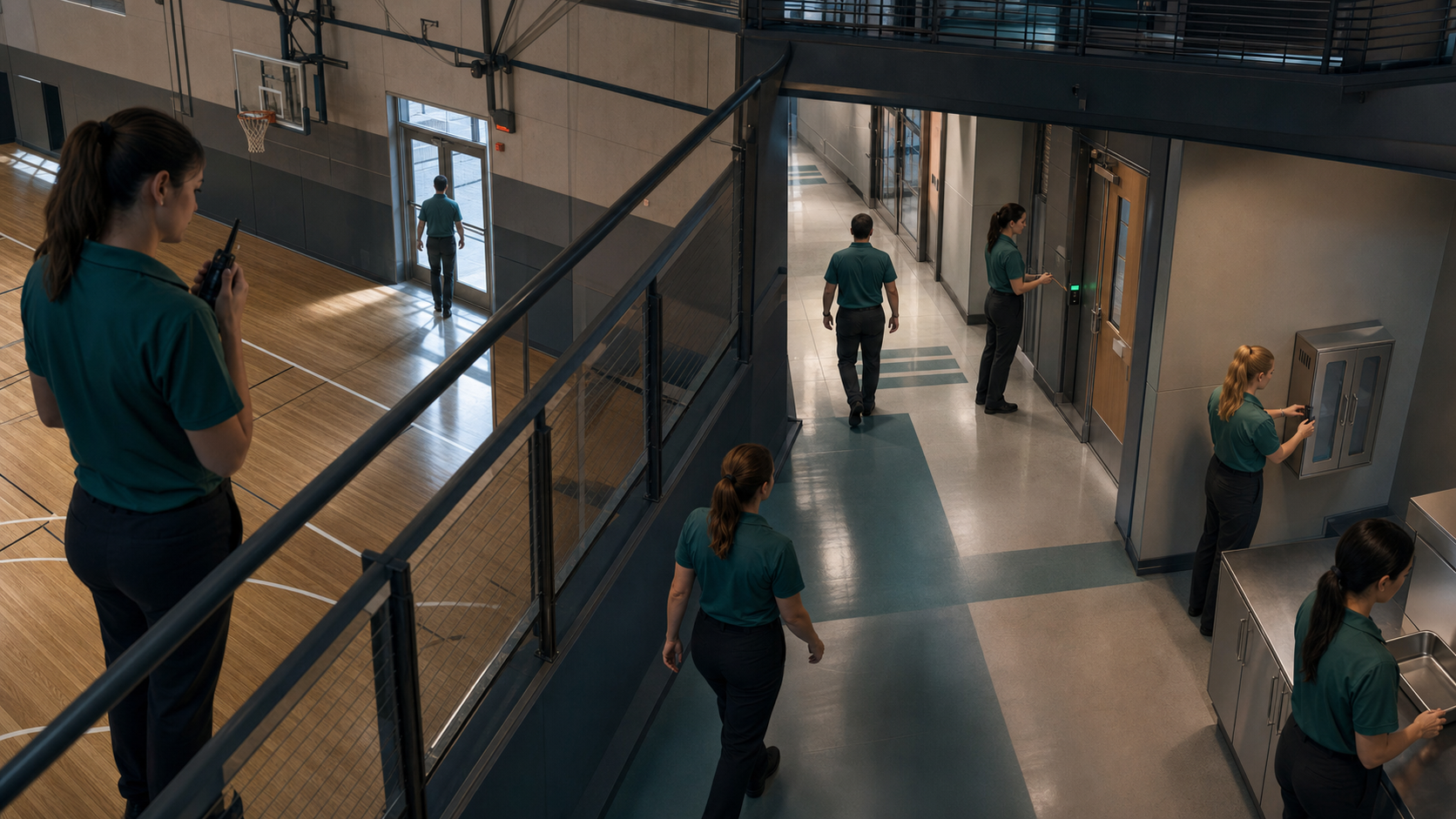
A useful audit separates the route into measurable stages.
Record:
| Who decided that equipment should be retrieved? | Did staff know who should go? | Was there hesitation or duplicated effort? |
| Did anyone interrupt first-line response unnecessarily? | Stage 2: Departure from the incident area | Record: |
| Could the retriever leave safely? | Did furniture or crowds block the path? | Did someone need to supervise other people? |
| Was another responder available? | Stage 3: Navigation | Record: |
| Did the retriever know the location? | Was signage clear? | Were room numbers or building names accurate? |
| Did the person go to the wrong location first? |
Record:
| Was the door locked? | Was a key, badge, or code required? |
| Was the access method immediately available? | Did another employee have to be located? |
Record:
| Was the cabinet visible? | Was it blocked? |
| Could the person open it? | Were unrelated supplies in the way? |
| Was the kit clearly identified? |
Record:
| Was the device present? | Were required components present? |
| Were instructions available? | Was the packaging intact? |
| Was the correct kit selected? |
Record:
| Did the retriever return by the correct route? | Was the route still open? |
| Did the person carry the equipment securely? | Could the incident location be identified again? |
Breaking the test into stages shows where the delay occurs.
Time the Audit, but Do Not Worship the Number
A stopwatch can help identify improvement.
It should not become the only measure.
Two routes may take the same amount of time but have different reliability.
Route A may be a clear walk to a visible cabinet.
Route B may require a key that happened to be available during the test.
Both may take ninety seconds once. Route B is more fragile.
Record:
| Total retrieval time | Time spent navigating |
| Time spent waiting for access | Time spent locating the kit |
| Time spent checking contents | Number of barriers |
| Dependence on a particular employee | Whether the route worked without coaching |
The purpose of timing is to expose delay and compare corrections.
It is not to declare that a particular number guarantees safety.
A long retrieval often contains several correctable failures.
For example:
20 seconds: staff decide who should retrieve the kit.
35 seconds: retriever moves through a crowded room.
40 seconds: person reaches the office but finds the door locked.
60 seconds: staff locate someone with a badge.
30 seconds: the health-office cabinet is opened.
45 seconds: unrelated supplies are moved.
30 seconds: the correct bag is identified.
40 seconds: retriever returns.
No single step appears to account for five minutes.
The chain does.
This distinction matters because the solution may not be buying another device. It may be removing several small barriers.
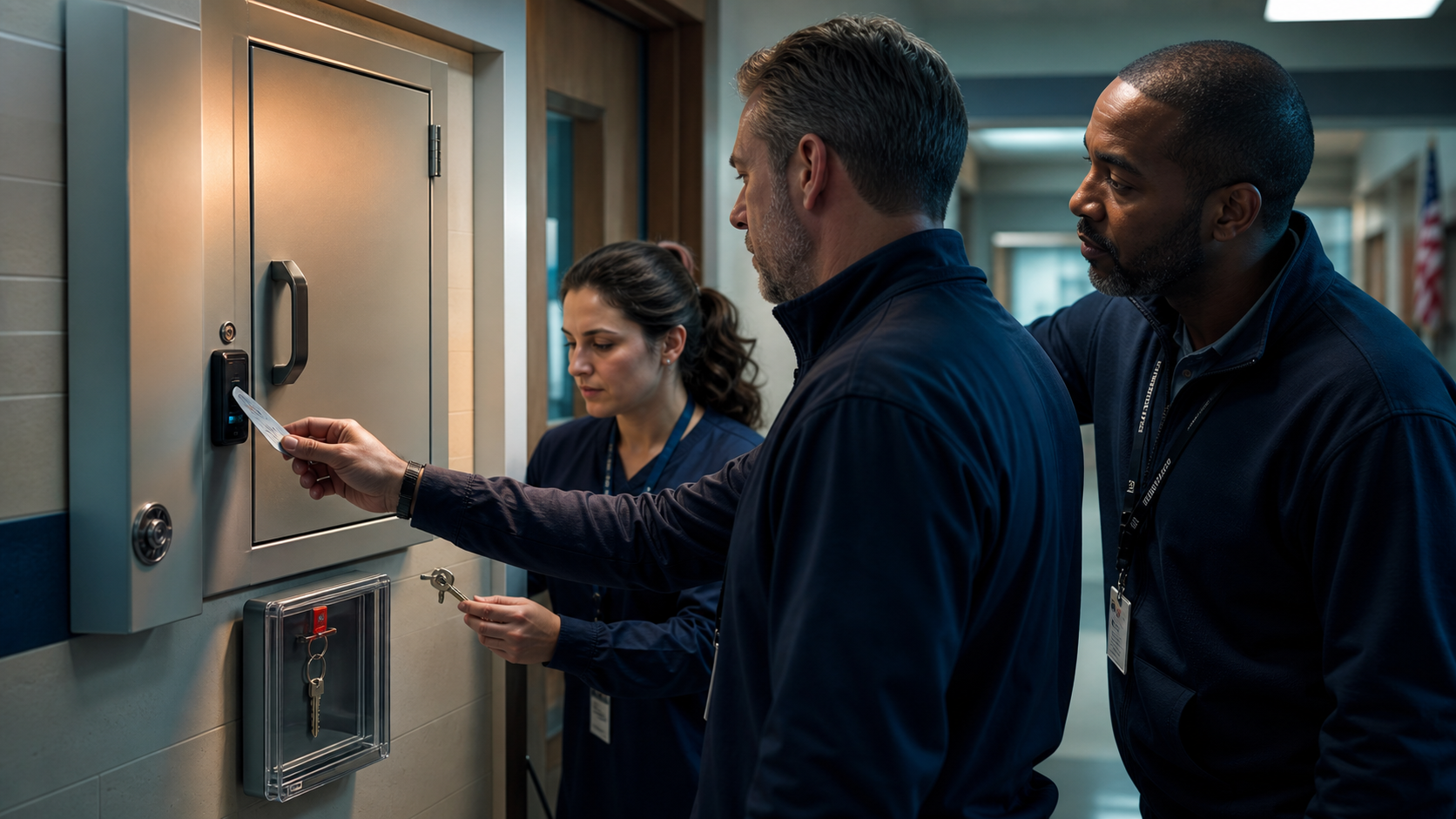
A locked cabinet can protect equipment from tampering or theft.
It can also make the equipment unavailable.
An access review should determine:
| Who has the key? | Is there more than one key? | Is the key kept near the cabinet? |
| Can substitute staff access it? | Does the badge reader work during outages? | Does the code change? |
| Is after-hours access different? | What happens if the primary key holder is absent? | Can emergency access occur without damaging the cabinet? |
The goal is not necessarily to remove every lock.
It is to prevent one lock from becoming one point of failure.
Possible corrections include:
| Backup key in an approved location | Broader staff badge permissions |
| Tamper-evident but unlocked cabinet | Supervised open-access location |
| Emergency breakaway seal | Relocation to an accessible controlled area |
The organization should select the control that fits its policy and environment.
A common arrangement is:
The manager has the key.
That works while the manager is present, reachable, and knows the key's location.
It fails when the manager is:
| Off duty | In another building |
| On break | Responding elsewhere |
| Replaced by a substitute | Carrying the key home |
| Unable to answer a radio | No longer employed |
A critical emergency resource should not depend on one individual's memory or presence.
At minimum, define a primary and backup access method.
Signs often outlive the placement they describe.
A cabinet may move because of:
| Construction | Room reassignment |
| Security changes | Renovation |
| New equipment | A temporary relocation that became permanent |
The wall sign may still direct staff to the old room.
Audit:
| Hallway signs | Cabinet labels | Building maps |
| Staff handbooks | Emergency binders | Digital plans |
| Orientation materials | Bus records | Inspection logs |
Every reference should match the current location.
A device is not fully relocated until the navigation system is updated.
A facility may have several nearby cabinets:
| First-aid supplies | AED |
| Spill kit | Medication storage |
| Fire equipment | General emergency bag |
| Choking emergency backup kit |
If labels are vague or visually similar, staff may open the wrong one.
The audit should confirm that:
The correct cabinet is easy to identify.
Labels are readable from the normal approach.
The cabinet contents match the label.
The wording does not imply incorrect first-line use.
The device is not buried inside another kit.
A responder should not need to open several cabinets to find the right one.
Emergency equipment often shares space with unrelated supplies.
Over time, the cabinet may collect:
| Bandages | Cleaning cloths | Forms |
| Medications | Batteries | Personal belongings |
| Extra masks | Food-service supplies | Training materials |
| Replacement parts |
The device may still be present but no longer immediately reachable.
An access audit should check whether staff can remove the complete kit in one motion.
If several objects must be moved, the storage arrangement should be corrected.
A sealed storage bag may protect the product.
It may also slow staff who have never opened it.
Review:
| Zippers | Tamper seals | Buckles |
| Plastic wrapping | Inner compartments | Component labels |
| Instruction placement | Whether tools are needed | Whether the bag opens fully in the available space |
The audit should not require opening sterile or single-use components unnecessarily.
Staff can still test whether the outer storage system is understandable and accessible.
Product orientation should explain the storage bag without being confused with certified first-aid training.
Reaching the cabinet quickly is not useful if the required mask or connector is missing.
An access audit should coordinate with the inspection system.
Confirm:
| Correct device | Required masks | Required valves or connectors |
| Current instructions | Intact packaging | Storage bag |
| Product identification | Replacement status | If a required item is missing, record: |
| What was missing | When it was discovered | Whether the kit was removed from service |
| Who was notified | When replacement was ordered | When the location returned to service |
A checkmark showing "problem found" is incomplete without corrective action.
The person who knew the system may leave.
New staff, substitutes, volunteers, temporary employees, and contractors may not receive the same orientation.
An access audit should ask:
| Is equipment location included in onboarding? | Are substitutes shown the location? |
| Do after-school staff receive orientation? | Are weekend rental supervisors informed? |
| Do bus drivers know substitute-vehicle procedures? | Are volunteers told who is trained to respond? |
| Is awareness refreshed after relocation? |
A cabinet known only through institutional memory will become invisible when staff changes.
Daytime access does not prove evening access.
After hours:
| The main office may be locked. | The nurse may be absent. |
| Badge permissions may change. | Interior doors may close automatically. |
Only part of the building may be open.
A coach or volunteer may be the senior person present.
Security staff may control entry.
The event may use a different entrance.
Test the system during the hours the area is actually occupied.
A gym kit intended for evening tournaments must be available during evening tournaments.
A campus with detached buildings cannot be evaluated as one indoor space.
Outdoor travel may involve:
| Courtyards | Stairs | Locked exterior doors |
| Weather | Poor lighting | Vehicle traffic |
| Construction | Different badge systems | Gates |
A device in the main building may not reliably support a detached cafeteria or gym.
Audit each building from its farthest occupied area.
Do not average several routes into one campus number.
A facility may place equipment on another floor and rely on an elevator.
That route should be reviewed for:
| Elevator availability | Access code |
| Wait time | Power outage |
| Fire alarm behavior | Mobility limitations |
| Service interruptions | Staff familiarity with stairs |
The existence of an elevator does not guarantee immediate vertical access.
A second location may be justified when floors operate independently and the elevator is a critical dependency.
A reception desk may appear staffed throughout operating hours.
In practice, the receptionist may:
| Escort a visitor | Take a break |
| Leave after normal office hours | Work from another area |
| Lock the desk during an event | Be responsible for several buildings |
If emergency equipment is behind reception, test whether other authorized staff can access it.
A desk is not an access system.
A bus kit should be tested from the driver's seat and student area after the vehicle is safely parked and secured.
Review:
| Driver access | Attendant access | Aisle obstruction |
| Student belongings | Mobility equipment | Secured compartment |
| Substitute vehicle differences | Temperature exposure | Visibility |
| Transfer records |
A transportation office inspection cannot confirm access on the route.
The device must be audited where it is carried.
A portable kit may move between:
| Vehicles | Field trips | Meal sites |
| Outreach routes | Events | Staff members |
| Access depends on custody. | The audit should identify: | Who checked it out |
| Which vehicle or event received it | Where it was stored | Who inspected it |
| When it should return | Who confirmed return | What happens if the route changes |
| What happens if the kit does not return |
A mobile kit without a custody record can become unavailable without anyone noticing.
A responder may reach the cabinet quickly and lose time returning.
Possible problems include:
| Similar corridors | Several dining areas |
| Closed doors | Crowds |
| Poor room labels | Changing event layouts |
| No one guiding the retriever back | A mobile incident location |
The audit should confirm that the incident location remains identifiable.
On large campuses, one staff member may need to guide the retriever or meet EMS.
One successful retrieval does not prove the system is reliable.
Repeat the audit with:
| Different staff roles | Different shifts | Substitute staff |
| After-hours operations | Different starting points | Seasonal conditions |
| A relocated cabinet | A substitute bus | Compare results. |
If one experienced employee retrieves the device in forty seconds while three other employees cannot find it, the system is not a forty-second system.
It is a person-dependent system.
An access audit should not be designed to catch staff making mistakes.
Staff should understand:
| The purpose of the test | That no person is in danger |
| That first-line response is not being evaluated unless part of approved training | That findings will be used to improve the system |
| That privacy will be protected | That no one should perform an unauthorized clinical procedure |
A calm operational audit usually produces better information than a dramatic simulation.
Do Not Use a Child or Resident as a Choking Actor
A general access audit does not require a simulated victim.
Use a neutral starting marker, chair, cone, clipboard, or room location.
Do not:
| Place a mask on a participant | Ask someone to imitate distress |
| Stage panic around children | Record identifiable people unnecessarily |
| Present the drill as a real emergency | Encourage untrained clinical actions |
Clinical skills practice belongs in an appropriate training environment.
The access audit tests location, communication, and system design.

A practical form may include:
| Basic information | Facility | Building |
| Date | Time | Operating condition |
| Auditor | Staff participant | Starting location |
| Equipment location | Response roles | 911 caller identified |
| First-line responder identified | Equipment retriever identified | Room-management role identified |
| EMS meeting role identified | Route | Distance or route description |
| Doors encountered | Locks encountered | Keys or badges needed |
| Stairs or elevators | Outdoor travel | Obstacles |
| Signage | Retrieval | Correct cabinet found |
| Cabinet opened | Correct kit identified | Required components present |
| Instructions present | Total time | Coaching required |
| Reliability | Dependent on one employee | Works after hours |
| Works for substitutes | Works during normal occupancy | Works during seasonal conditions |
| Backup route available | Corrective action | Problem found |
| Immediate control | Responsible person | Due date |
| Completion date | Verification test | Final status |
The form should create action, not merely produce a score.
Not every finding has the same impact.
A simple classification can help prioritize corrections.
Critical barrier
The device cannot be reached or used as intended.
Examples:
| No key available | Device missing |
| Required component missing | Cabinet behind a locked, inaccessible door |
| Equipment assigned to the wrong vehicle | Storage conditions outside labeled requirements |
| Major barrier |
Access is possible but unreliable or substantially delayed.
Examples:
| Only one employee knows the location | Signage points to the wrong room |
| Substitute staff lack access | Cabinet is blocked |
| After-hours access is unclear | Route requires several handoffs |
| Minor barrier |
The system works but could be clearer or more consistent.
Examples:
| Label difficult to read | Inspection record stored elsewhere |
| Backup owner's name outdated | Map needs revision |
| Staff orientation material uses an old room name | Severity should drive the correction deadline. |
Some improvements require budget approval.
Others can be fixed quickly.
Low-cost corrections may include:
| Moving the cabinet | Removing unrelated supplies | Updating signs |
| Adding a backup key | Expanding badge access | Updating the building map |
| Including the location in staff orientation | Naming a backup owner | Correcting the inventory record |
| Adding a route card | Labeling the correct outer bag |
Do not delay simple access corrections while waiting for a larger procurement project.
A failed audit may lead immediately to a request for additional equipment.
That may be appropriate, but it should not be automatic.
First ask whether the delay can be corrected by:
| Relocation | Better access | Better signage |
| Staff orientation | Removing locks | Updating custody |
| Correcting transfer procedures | Reorganizing storage | Another unit may be justified when: |
| Buildings are detached | Several dining areas operate simultaneously | Separate floors function independently |
| Mobile programs cannot access building equipment | After-hours areas are isolated | Transportation routes require assigned kits |
| Environmental barriers prevent one location from covering another | Quantity should follow the audit findings. |
A correction is not complete when someone says it was made.
Retest the route.
For example:
| A backup key was added. Can staff find it? | The cabinet moved. Does signage point to the new location? |
| Badge access expanded. Does it work after hours? | The device moved closer. Are storage conditions still appropriate? |
| A substitute-bus process was written. Was it tested? | Staff received orientation. Can they retrieve the kit without coaching? |
A closed corrective action should be verified in the operating environment.
Repeat access testing after:
| Construction | Room reassignment | Equipment relocation |
| Staff turnover | Policy change | New locks or badge systems |
| New after-school programs | Bus reassignment | Route changes |
| Seasonal storage change | An incident | A near miss |
| A missing component | A failed inspection |
Access is not a permanent property of the cabinet.
It changes when the organization changes.
A donated device may be recorded as delivered without being operationally placed.
The organization should distinguish:
| Approved | Allocated | Shipped |
| Delivered | Received | Awaiting placement |
| Placed | In service | Removed from service |
| Quarantined | Replaced | The donation file should connect to: |
| Exact location | Primary owner | Backup owner |
| Inspection record | Access audit | Training status |
| Non-resale condition | Replacement responsibility | A delivered product is inventory. |
A placed, inspected, accessible, and managed product is an operational resource.
An access audit may show that one location cannot reliably support several occupied areas.
A strong donation request should explain:
| Starting locations tested | Existing equipment location | Access barriers |
| Corrective actions already attempted | Remaining coverage gap | Requested quantity |
| Proposed locations | Primary and backup owners | Inspection plan |
| Training status | Shipping contact | Non-resale commitment |
| For example: |
Our school tested retrieval from the detached cafeteria and found that the current health-office cabinet requires passage through two access-controlled doors. Badge access and signage were improved, but the route still requires staff to leave the separate building. We are requesting one donated choking emergency kit for an approved cafeteria location. The cafeteria manager will serve as primary owner and the assistant principal as backup.
Organizations that have documented a remaining access gap can request preparedness equipment support through the FITIGER Donation Program.
Submitting a request does not guarantee approval, quantity, training, shipment, or delivery by a requested date.
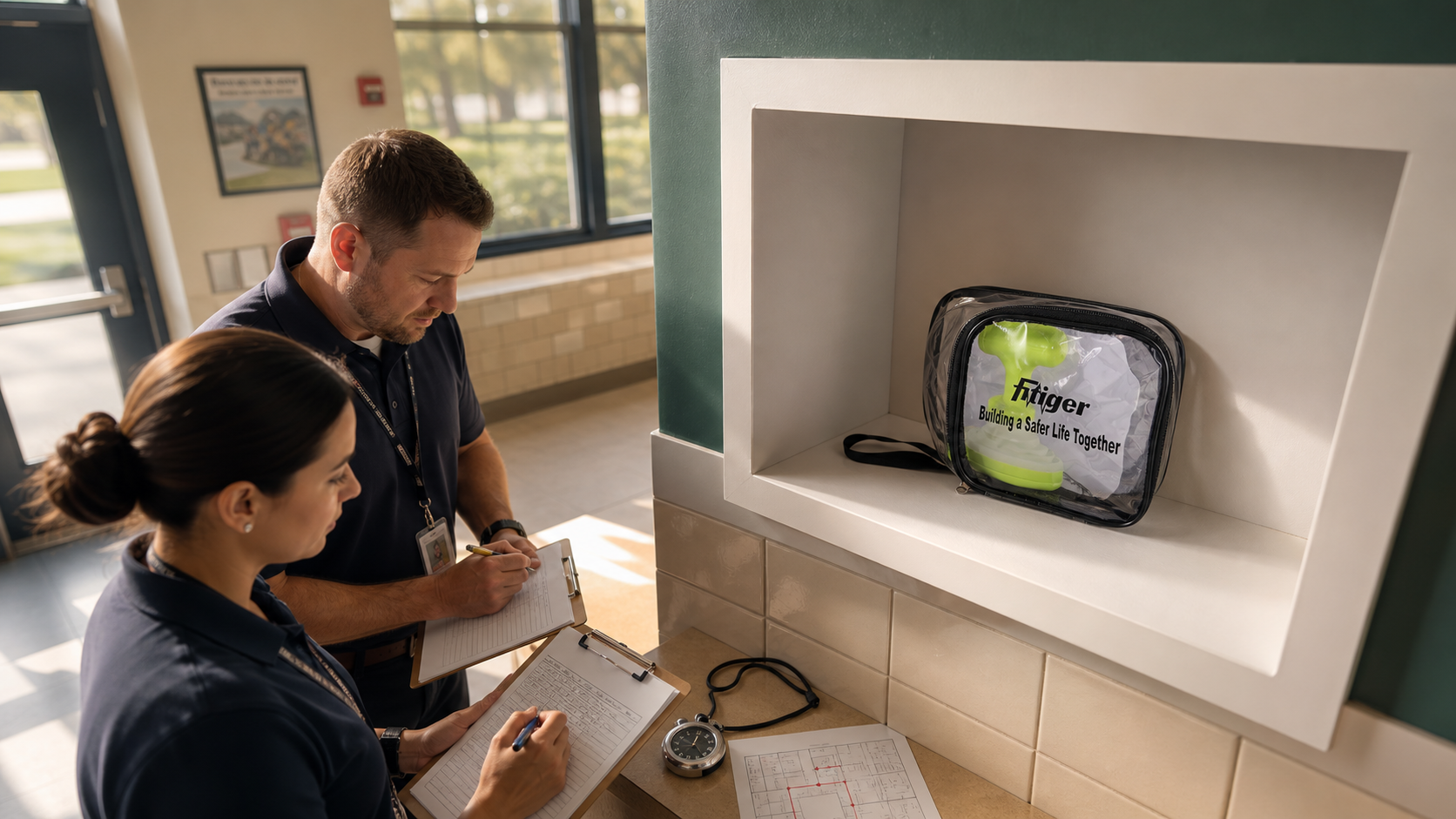
| Select a real occupied area. | Identify the approved equipment location. | Confirm the normal operating condition. |
| Assign a neutral starting marker. | Identify first-line, 911, retrieval, and room-management roles. | Use a staff member who does not routinely manage the cabinet. |
| Begin at the farthest relevant point. | Observe navigation without coaching. | Record doors, locks, keys, badges, and obstacles. |
| Confirm the correct cabinet and kit can be identified. | Verify required components through the normal inspection process. | Record total time and delay by stage. |
| Classify barriers. | Assign corrective actions and owners. | Retest after corrections. |
The value of the audit is not the stopwatch result.
It is the list of barriers the organization can remove.
| Response sequence | 911 activation does not wait for equipment. Standard choking rescue remains first-line. CPR escalation is understood. Equipment retrieval is assigned without interrupting necessary care. The device remains a second-line backup. |
|---|---|
| Location awareness | Staff can identify the exact location. Signs match the current cabinet. Maps and records are current. Substitute and after-hours staff know the route. Similar cabinets are clearly distinguished. |
| Physical access | Doors are open or have reliable emergency access. Keys, badges, or codes have backups. The cabinet is not blocked. The kit can be removed in one clear action. The return route is reliable. |
| Equipment readiness | Correct device is present. Required components are present. Instructions are current. Packaging is intact. Storage conditions are appropriate. |
| Reliability | Access does not depend on one employee. The route works during normal occupancy. The plan works after hours. Mobile and substitute-vehicle transfers are controlled. Repeated tests produce consistent results. |
| Corrective action | Findings are classified. An owner is assigned. A deadline is recorded. The correction is implemented. A verification test is completed. |
The cabinet problem is not solved because the device appears on an inventory list.
It is solved when ordinary staff can locate, access, retrieve, and manage the equipment while the established emergency response continues without delay.
It is a field test that begins at the area the equipment is intended to support and evaluates navigation, doors, locks, keys, cabinet access, equipment readiness, return route, staff awareness, and corrective actions.
No universal five-minute allowance is established by this article. A five-minute retrieval is used as an example of accumulated operational delay and should trigger review of preventable access barriers.
No. Staff should call 911 and begin the established first-line choking rescue procedure. The device belongs only in a second-line backup role after unsuccessful standard rescue.
A safety coordinator or equipment owner may organize it, but the retrieval test should include staff who do not routinely manage the cabinet, such as cafeteria staff, substitutes, coaches, volunteers, or after-hours supervisors.
Not exclusively. At least some testing should reflect normal operating conditions, including occupied rooms, access-controlled doors, after-hours use, and realistic staffing.
No. The route may still depend on one employee, one key, temporary door access, or prior coaching. Reliability across different staff, shifts, and conditions matters.
Not automatically. The organization should balance access with security and determine whether backup keys, broader badge permissions, tamper-evident storage, or relocation provides reliable authorized access.
The organization should set a regular schedule and repeat the audit after relocation, construction, staffing changes, new locks, route changes, an incident, a near miss, or a failed inspection.
No. The audit evaluates the operational system. It does not teach or certify choking rescue, CPR, clinical assessment, or device use.
Yes. Results can show the existing location, barriers found, corrections attempted, remaining coverage gap, proposed new location, and responsible equipment owners.
FITIGER Donation Program - Target page for eligible school and organizational donation requests.
American Red Cross - Adult and Child Choking - Supports established first-line choking response education.
U.S. Food and Drug Administration - Supports the second-line-use boundary and the need to follow established choking rescue protocols first.
This article is for general education, emergency equipment access planning, and operational auditing. It is not medical advice, legal advice, a response-time standard, or a substitute for certified first-aid training, manufacturer instructions, organizational policy, or professional review.


