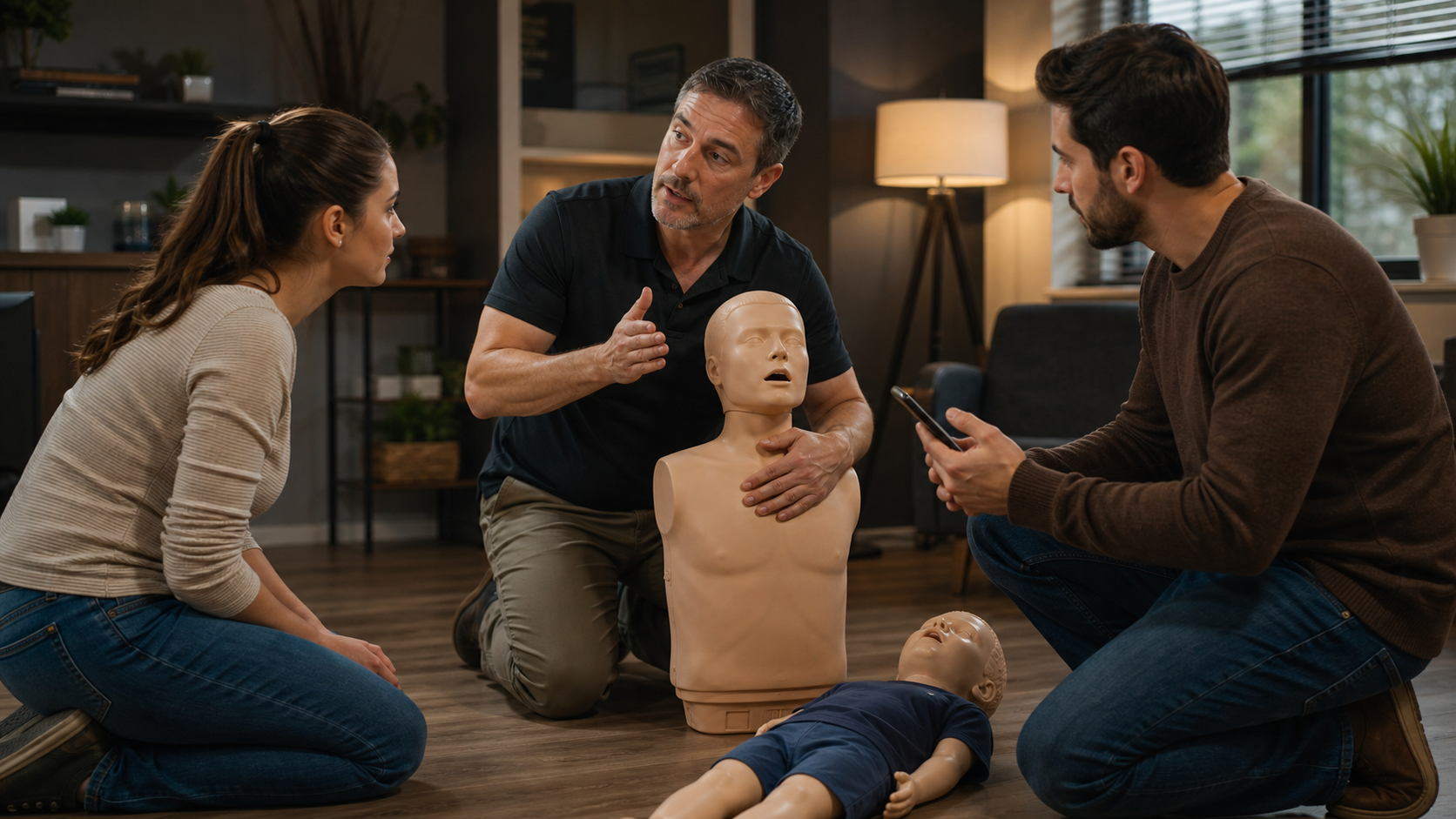
For a conscious child over 1 year old or an adult who cannot breathe, speak, cry, or cough effectively, start the choking first aid sequence: give five firm back blows, then five abdominal thrusts, and repeat while 911 is being called. If the person becomes unresponsive, begin CPR and follow dispatcher instructions. A suction anti-choking device belongs only as a second-line backup after standard first aid is unsuccessful.
For a household checklist, see Fitiger's child and home choking safety readiness plan.
This guide is written for family caregivers, teachers, coaches, restaurant staff, workplace safety teams, and anyone who may need to act before EMS arrives. It focuses on children over 1 year old and adults. Infants under 1 year require a different first-aid method.
The most important decision is whether the person is moving air. If the person can cough forcefully, cry, speak, or breathe, encourage coughing and watch closely. Do not interfere with a strong cough.
Severe choking is different. The person may suddenly become silent, clutch the throat, make weak or high-pitched sounds, be unable to cough effectively, turn pale or blue around the lips, look panicked, become weak, or collapse. Children may not explain what is happening. A noisy room, cafeteria, sports field, or restaurant can hide the first few seconds.
Families and schools can reduce risk earlier by reviewing child choking prevention behaviors and common choking hazards by age, but prevention never removes the need for rescue training.

Stand slightly behind the choking adult, or kneel behind a smaller child. Support the chest with one arm and lean the person forward so gravity can help move the object out instead of deeper into the airway.
With the heel of your free hand, give five firm back blows between the shoulder blades. Each blow should be separate and purposeful. After each blow, check whether the object has come out and whether the person can breathe or cough effectively.
Back blows are for severe choking, not mild coughing. If the person is coughing strongly, let the cough work and monitor closely.

If five back blows do not clear the airway, move to abdominal thrusts, often called the Heimlich maneuver. Stand behind the adult, or kneel behind a small child. Wrap your arms around the waist. Make a fist and place the thumb side just above the navel and below the rib cage.
Grasp your fist with your other hand and give five quick inward-and-upward thrusts. Do not make them slow pushes. Each thrust should be a distinct attempt to move air upward from the lungs and dislodge the obstruction.
Use force appropriate to the person's size. A small child does not receive the same force as a large adult. If the person is pregnant, very large, or you cannot reach around the abdomen, use chest thrusts instead of abdominal thrusts.
Repeat five back blows and five abdominal thrusts until the object comes out, the person can breathe, EMS takes over, or the person becomes unresponsive. Do not pause between cycles while the airway remains fully blocked.
If another person is present, assign that person to call 911 immediately while you begin first aid. If you are alone and the person is still conscious, call 911 as soon as possible and keep rescue efforts moving.
After the object comes out, the person should still be evaluated when symptoms continue, breathing feels abnormal, throat pain persists, the person lost consciousness, or there is any concern about airway injury or aspiration.

If the person becomes unresponsive, lower them to the floor and begin CPR according to your training and dispatcher instructions. Chest compressions may help move the obstruction. After compressions, open the airway and look. Remove an object only if you can see it. Do not perform a blind finger sweep.
If you are alone and have not already called 911, call as soon as you can, then return to CPR. Continue until EMS arrives, the person recovers, or you are instructed to stop by emergency professionals.
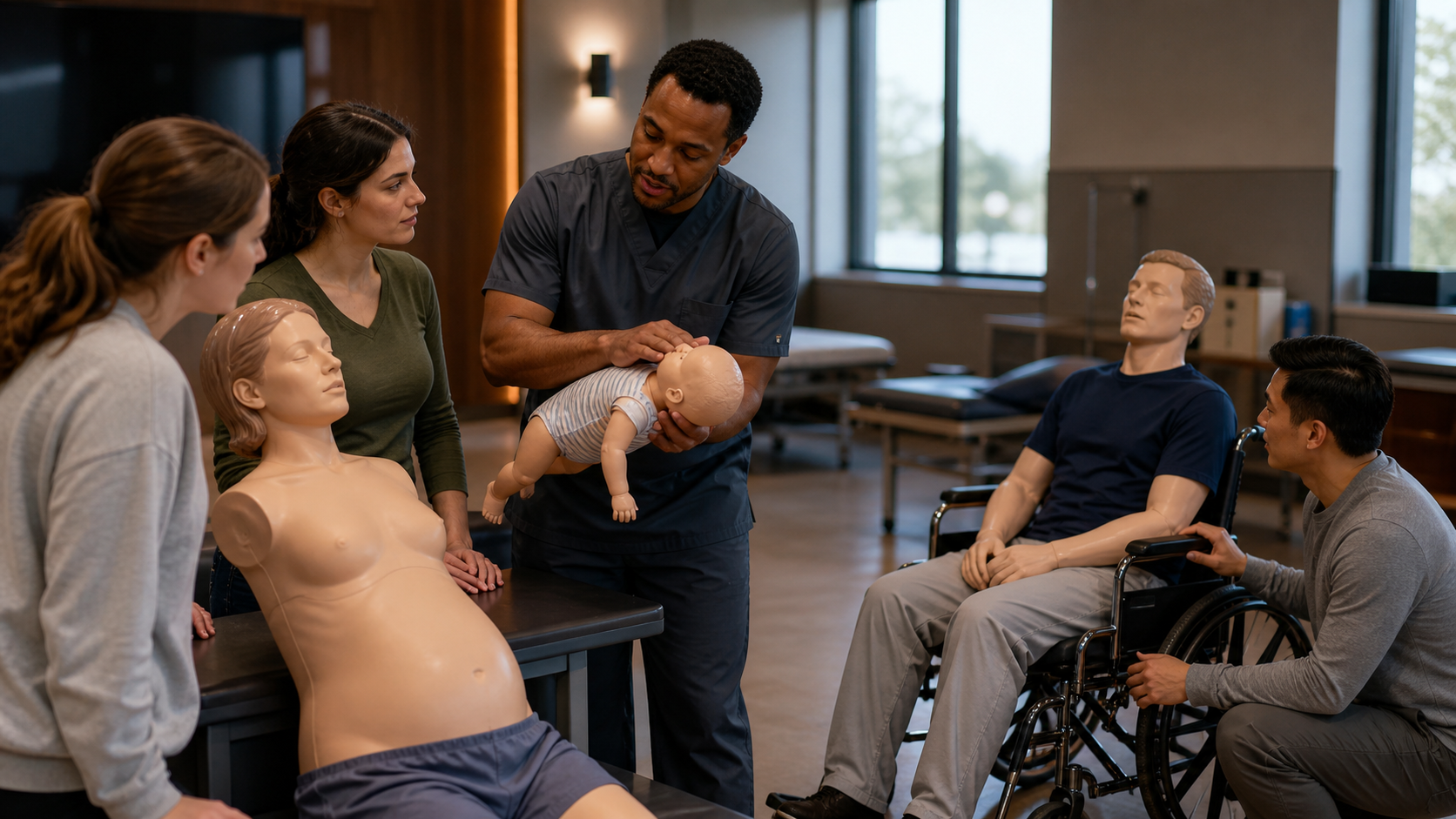
Infants under 1 year old are not treated with abdominal thrusts. Use infant choking first aid: five back slaps with the infant face down and head lower than the chest, then five chest thrusts with two fingers on the breastbone. Repeat and call emergency services. Do not use Fitiger devices on infants under 1 year old.
For a pregnant person or a person with obesity where abdominal thrusts are not appropriate, use chest thrusts at the base of the breastbone. For a wheelchair user or a person you cannot position normally, adapt your stance and use back blows and chest thrusts when abdominal thrusts are not possible.
If you are choking alone, call 911 if possible and begin a self-rescue plan: use your own fist for abdominal thrusts or press your upper abdomen against a firm chair back or counter edge. Solo choking planning is especially important for older adults, people who eat alone, and people with swallowing risk.
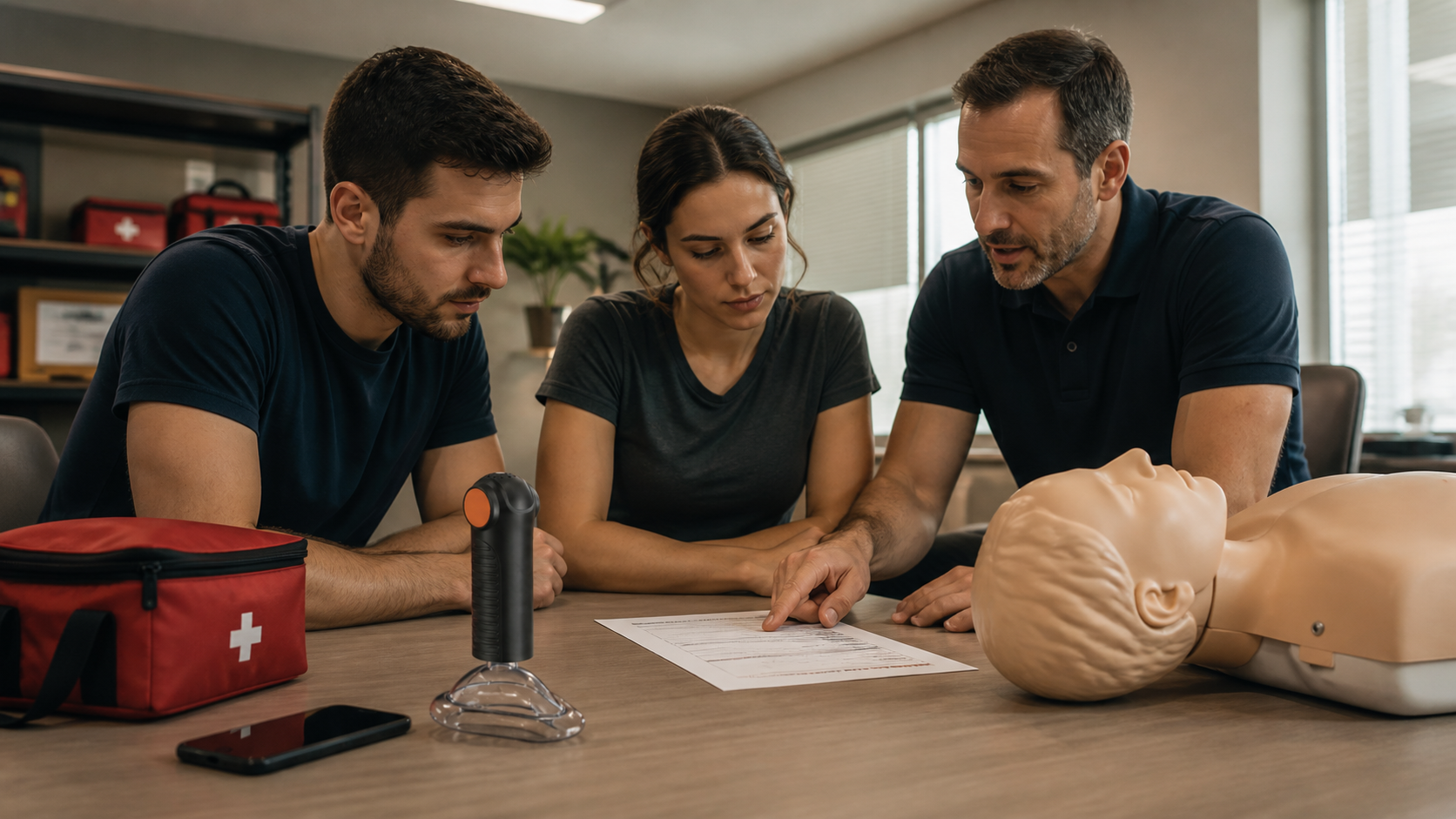
Fitiger and other suction anti-choking devices should not replace back blows, abdominal thrusts, 911, CPR, or EMS. The FDA's second-line framing is important: follow established choking rescue protocols first, then consider an authorized suction device only if standard protocols are unsuccessful and the person fits the product instructions.
For families, schools, and care settings comparing second-line backup options, the practical question is placement and familiarity. A device hidden in a closet does not help. A device staged near dining areas, school cafeterias, caregiver bags, or emergency kits can support readiness when the first-line sequence has failed.
The How It Works page explains the Fitiger second-line suction pathway. For portable readiness, the FoldPumpVac series can support school, travel, car, and caregiver-bag planning.
For home and caregiver settings, the EasyPumpVac Airway Clearance Home Kit is a relevant product route when a second-line device is staged as part of a written response plan.
Many choking emergencies can be reduced before first aid is ever needed. Cut foods appropriately, avoid hard candy and whole grapes for younger children, keep small objects and balloon fragments away from children, slow down rushed meals, and separate eating from running, laughing, and moving between rooms.
Adults should chew carefully, avoid talking with a full mouth, and be cautious with alcohol, dentures, dry meat, large bites, and eating alone. Families, schools, restaurants, senior care teams, and workplaces should practice who calls 911, who starts first aid, where the emergency kit is, and who meets EMS.
The best rescue plan is simple enough to repeat: recognize severe choking, call 911, give five back blows, give five abdominal thrusts, repeat, start CPR if unresponsive, and use any suction device only as second-line backup after standard steps fail.
|
Readiness item |
What to confirm |
|---|---|
|
Recognition |
Can staff or family identify silence, weak cough, inability to speak, and color change? |
|
911 role |
Who calls, who stays with the person, and who meets EMS? |
|
Manual first aid |
Can responders perform five back blows and five abdominal thrusts or chest thrusts? |
|
CPR transition |
Can responders start CPR if the person becomes unresponsive? |
|
Second-line backup |
Is the device visible, complete, familiar, and used only after standard steps fail? |
For related planning context, review the child and home choking safety readiness plan.
If the person cannot breathe, speak, cry, or cough effectively, call 911 or send someone to call, then begin five back blows followed by five abdominal thrusts for a child over 1 year old or an adult.
If the person is coughing strongly and moving air, encourage coughing and monitor closely. Forceful rescue actions are for severe choking when the person cannot cough effectively, breathe, speak, or cry.
Stand behind the person, place a fist just above the navel and below the rib cage, grasp it with the other hand, and give quick inward-and-upward thrusts. Use force appropriate to the person's size.
Do not use abdominal thrusts. Use infant choking first aid: five back slaps and five chest thrusts, repeat as needed, call emergency services, and start infant CPR if the baby becomes unresponsive.
Use chest thrusts instead of abdominal thrusts. Place your hands at the base of the breastbone and thrust inward. Call 911 and continue first aid according to training.
A suction anti-choking device should be considered only after standard choking rescue steps are unsuccessful, and only when the person fits the current product instructions. It should not delay 911, manual rescue, CPR, or EMS.
Yes, especially if breathing remains abnormal, the person lost consciousness, pain persists, or there is concern about aspiration or airway injury. Emergency responders or medical professionals should evaluate concerning cases.
American Heart Association Newsroom - Supports the 2025 choking update: 5 back blows followed by 5 abdominal thrusts for conscious children and adults, and 5 back blows plus 5 chest thrusts for infants.
AHA Adult Basic Life Support Guideline, 2025 - Supports the adult BLS choking recommendation and the rationale for alternating back blows and abdominal thrusts.
MedlinePlus Medical Encyclopedia - Supports the practical instruction that pregnant or obese people should receive chest thrusts instead of abdominal thrusts.
American Red Cross Adult and Child Choking First Aid - Supports public first-aid training language for 5 back blows and 5 abdominal thrusts and CPR transition if unresponsive.
FDA De Novo DEN250012 - Supports FDA Class II classification of suction anti-choking device as a second-line treatment after unsuccessful BLS choking protocol.
FDA Product Code QXN TPLC Page - Supports product code QXN, regulation number 874.5400, device class 2, and second-line intended-use wording.
This article is for education, emergency preparedness planning, and product-safety discussion. It is not medical advice, diagnosis, treatment, legal advice, or a substitute for CPR or first-aid training. Follow pediatrician guidance, clinician guidance, school policy, workplace policy, local emergency protocols, and current first-aid training. In a choking emergency, call 911 or local emergency services and follow established choking rescue protocols.


