|
Manual rescue first. Backup second.Print one copy for the kitchen, fridge door, or family first-aid area. Review it with grandparents, babysitters, relatives, and any adult supervising meals, parties, sleepovers, or sports-day snacks. For a household checklist, see Fitiger's child and home choking safety readiness plan. |
|---|

Children ages 3 to 12 still face choking risk, but the risk becomes more mobile and social. Keep food rules simple, recognize when coughing is no longer effective, call 911 early for severe choking, and practice the first minute at home. Any suction anti-choking device belongs only in a second-line backup role after unsuccessful standard rescue.

Keep these rules short enough to survive a busy week.
| Check: Meals and snacks happen while seated whenever possible. |
| Check: Kids finish chewing before talking, laughing, standing up, or moving around. |
| Check: No running, wrestling, jumping, or rough play with food in the mouth. |
| Check: Kids avoid putting large bites or several pieces of food into the mouth at once. |
| Check: Younger children in this age range still receive age-appropriate food preparation. |
| Check: Small toys, coins, pen caps, balloons, game pieces, and other non-food objects stay away from eating zones. |
| Check: One adult is clearly responsible for watching younger children during parties, family gatherings, and group meals. |
| Check: Grandparents, babysitters, and visiting relatives follow the same rules. |
| Check: Children know that hiding, walking away, or trying to stay quiet during a choking emergency wastes time. |
School-age children gain independence gradually. Food choices and supervision should still match the child's age, chewing ability, and judgment.
|
Food or situation |
What to review |
|---|---|
|
Whole grapes, cherry tomatoes, and similar round foods |
Check: Prepare thoughtfully, especially for younger children. |
|
Hot dogs and sausages |
Check: Avoid round coin-shaped slices. Cut lengthwise first when serving younger children. |
|
Hard candy, chewy candy, and gum |
Check: Set clear age-appropriate household rules. |
|
Popcorn, whole nuts, and seeds |
Check: Use extra caution with younger children and distracted group settings. |
|
Meat, cheese, and firm food chunks |
Check: Keep bites manageable and encourage slower eating. |
|
Movie snacks |
Check: Reduce distractions and stop rough play while food is out. |
|
Sports-day snacks |
Check: Avoid rushed bites between activities. |
|
Birthday parties and sleepovers |
Check: Identify the supervising adult and review the snack setup. |
|
Food in a moving vehicle |
Check: Consider whether an adult could safely respond without delay. |

The kitchen table is only one part of the plan.
|
Eating zone |
Common pattern |
Readiness check |
|---|---|---|
|
Kitchen island |
Rushed breakfast or after-school snack |
Check: Phone nearby. Check: Child seated. Check: Address card visible. |
|
Couch or media room |
Popcorn, candy, screens, laughter |
Check: No rough play. Check: Adult knows where the readiness setup is stored. |
|
Homework desk |
Eating while distracted |
Check: Child pauses before speaking or moving around. |
|
Patio or backyard |
Family meals and play |
Check: Phone signal works. Check: Adult can access the setup quickly. |
|
Back seat of the car |
Snacks during school runs or travel |
Check: Avoid foods that are difficult to manage. Check: Adult response is realistic. |
|
Birthday party |
Split supervision and unfamiliar snacks |
Check: One adult is clearly watching younger children. |
|
Sleepover |
Late-night snacks and unfamiliar household rules |
Check: Supervising adult knows the emergency plan. |
|
Sports field or tournament |
Fast bites between activities |
Check: Pack age-appropriate snacks. Check: Avoid eating while running or playing. |
|
What you notice |
What it may mean |
What to do |
|---|---|---|
|
Strong coughing, speaking, crying, or clear sounds |
Air is still moving |
Check: Encourage coughing. Stay close. Watch for change. |
|
Cough becomes weak or ineffective |
The obstruction may be worsening |
Check: Call 911 and prepare to act immediately. |
|
Child cannot cough effectively, speak, cry, or breathe |
Severe airway obstruction |
Check: Begin the current child choking rescue protocol immediately. |
|
Child becomes unresponsive |
Life-threatening emergency |
Check: Begin CPR according to training and follow dispatcher instructions. |
Check: Do not perform a blind finger sweep.
Check: Remove an object only if it is visible when the mouth is opened during care.
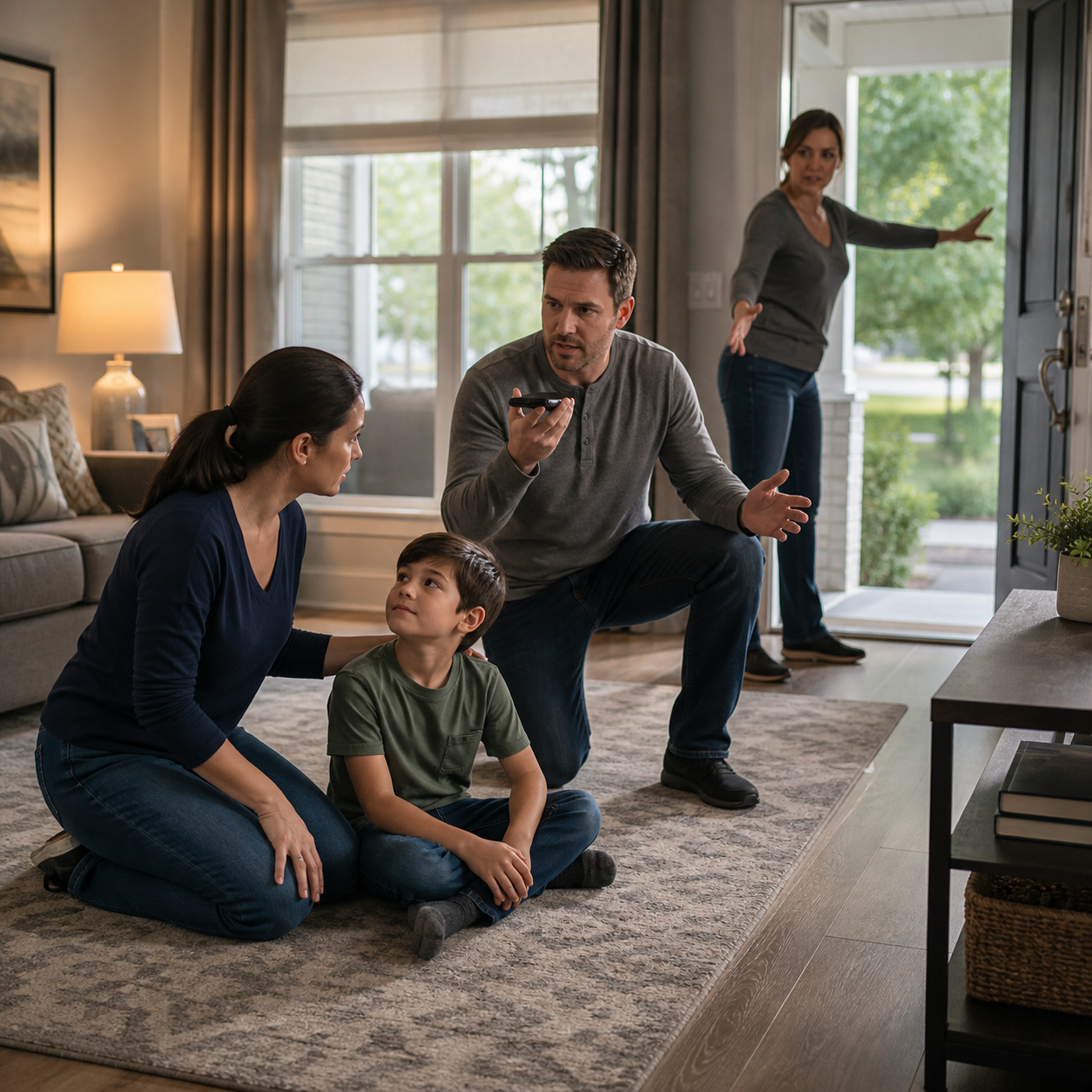
For severe choking:
| Check: Call 911 as early as possible. |
| Check: Use speakerphone when practical. |
| Check: State clearly: "A child is choking." |
| Check: Give the exact address. |
| Check: Give 5 back blows. |
| Check: Give 5 abdominal thrusts. |
| Check: Repeat the cycle until the object is expelled or the child becomes unresponsive. |
| Check: Lower the child safely to a firm, flat surface. |
| Check: Begin CPR according to your training. |
| Check: Follow dispatcher instructions. |
| Check: Seek emergency medical care. |
A printed checklist supports memory. It does not replace hands-on child first-aid and CPR training.
A busy household can have several adults present and still lose time because nobody knows who is doing what.
|
Role |
First responsibility |
Practical details |
|---|---|---|
|
Lead Responder |
Stay with the child and act according to training |
Do not leave the child to search for equipment. |
|
Call and Control |
Call 911, use speakerphone, give the address, and keep the area workable |
Move siblings, pets, and bystanders back. |
|
Retrieve and Meet EMS |
Bring the readiness setup, unlock the door, and guide responders in |
Clear the hallway and entry path. |
One adult may need to handle more than one role. The sequence still helps.
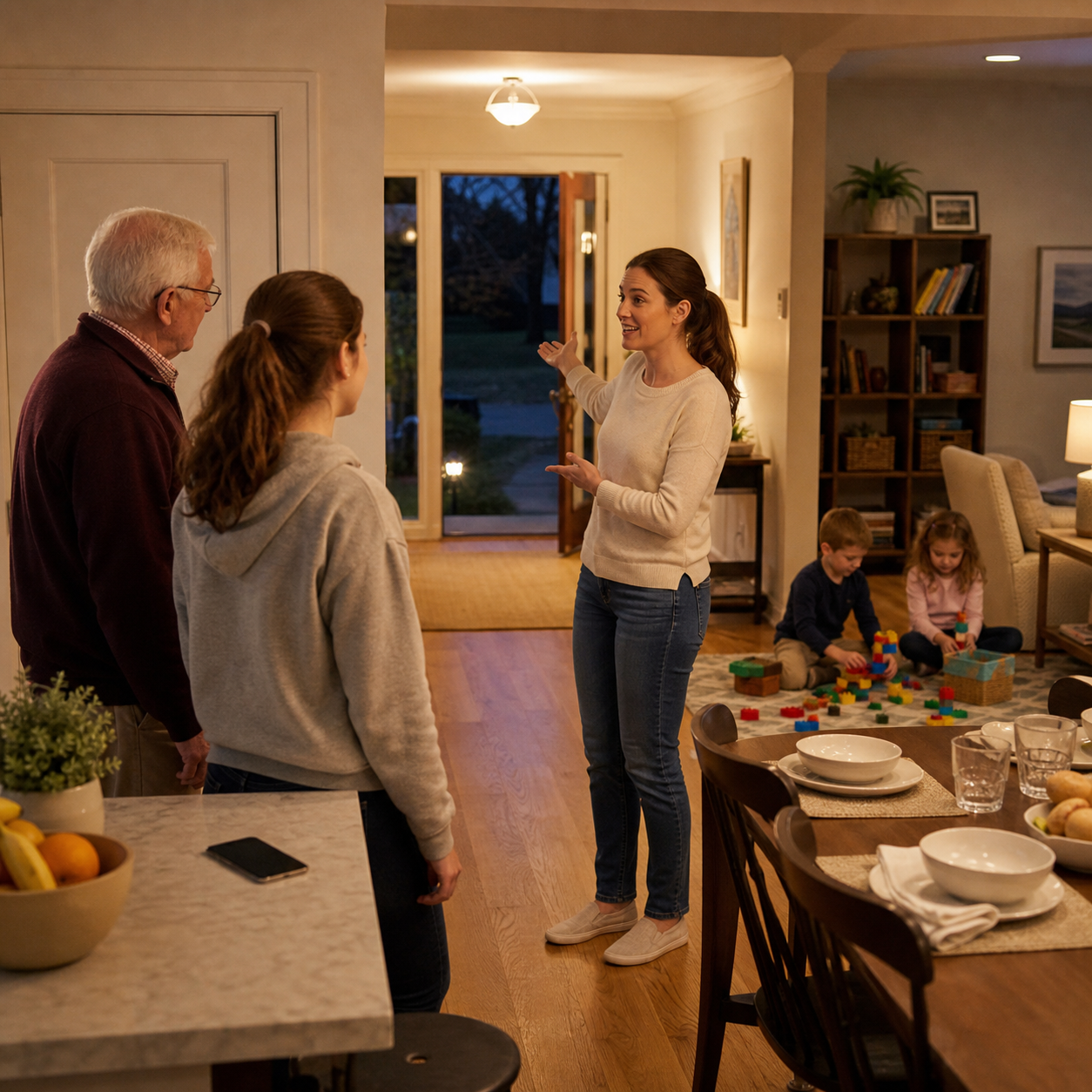
Start from the places where your child really eats.
| Check: Begin at the kitchen island. |
| Check: Repeat the test from the couch or media room. |
| Check: Repeat the test from the patio, homework desk, or backyard if food is often eaten there. |
| Check: Confirm that an adult can reach a phone immediately. |
| Check: Confirm that the full home address is posted clearly. |
| Check: Confirm that the readiness setup can be reached in roughly 30 to 60 seconds without searching. |
| Check: Confirm that cabinets are not locked or blocked. |
| Check: Confirm that packaging and pouches are intact. |
| Check: Confirm that grandparents and babysitters know the exact storage location. |
|
Date |
Starting zone |
Retrieval time |
Delay found |
Fix completed |
|---|

Run a two-minute review before higher-risk days.
| Check: Review snack choices. |
| Check: Remind children to sit down before eating. |
| Check: Assign one supervising adult during group snacks. |
| Check: Keep the phone accessible. |
| Check: Confirm the full address or venue location. |
| Check: Check whether the readiness setup is accessible. |
| Check: Do not leave a travel backup buried under luggage or locked in a trunk. |
| Check: Tell grandparents, coaches, relatives, or babysitters where the setup is stored. |
| Child's name: ______________________________________________________ |
| Age: _______________________________________________________________ |
| Allergies or medical notes: __________________________________________ |
| Full home address: _________________________________________________ |
| Parent or guardian phone: ___________________________________________ |
| Backup contact: ____________________________________________________ |
| Main eating zones: __________________________________________________ |
| Foods or snacks requiring extra caution: _______________________________ |
| Phone location: ____________________________________________________ |
| First-aid setup location: _____________________________________________ |
| Second-line backup location, if applicable: _____________________________ |
| Check: Keep snacks seated whenever possible. |
| Check: Watch younger children closely during the first bites. |
| Check: Call 911 early for severe choking. |
| Check: Use the current child choking rescue protocol. |
| Check: Begin CPR according to training if the child becomes unresponsive. |
| Check: Do not treat any suction device as a replacement for manual rescue, CPR, 911, EMS, or training. |
| Check: Use any device only within its current instructions, warnings, age limits, and weight limits. |
Run this check monthly and after travel, parties, any opened pouch, any use, or a household move.
|
Inspect |
Replace or correct when needed |
|---|---|
|
Storage pouch or packaging |
Check: Opened, torn, wet, heat-damaged, or visibly compromised |
|
Components |
Check: Missing, loose, damaged, or stored in different places |
|
Current instructions |
Check: Missing, outdated, or unfamiliar to caregivers |
|
Phone access |
Check: Phone moved away from the main eating zone |
|
Posted address card |
Check: Missing, hard to read, or outdated |
|
Retrieval path |
Check: Blocked by clutter, furniture, or a reorganized cabinet |
|
Travel readiness |
Check: Backup buried under luggage, left in a trunk, or difficult to retrieve |
|
Caregiver handoff |
Check: New babysitter, grandparent, or relative has not been briefed |
Prevention, child first-aid training, manual rescue, 911, EMS, and CPR when unresponsive come first.
Manual rescue first. Backup second.
For a household that wants one fixed-location second-line backup near the kitchen or family eating area, the FITIGER EasyPumpVac Series is the more natural fit. Its shorter pull path and straightforward operation sequence support a clear, repeatable home-readiness routine.
For families that need compact storage across more than one setting, the FITIGER FoldPumpVac Series may be the stronger option. Its foldable design is easier to stage in a caregiver bag, sports-day kit, travel setup, or protected storage location near a second eating zone.
Do not choose a product based on convenience alone. Check the current product-specific instructions, warnings, age limits, weight limits, and applicable regulatory status before adding any device to the household plan.
Any suction anti-choking device belongs only in a second-line backup role after unsuccessful standard choking rescue for complete airway obstruction.
| Check: Seek medical evaluation after a serious choking episode. |
| Check: Seek care especially if rescue actions were performed, a suction device was used, coughing continues, breathing sounds unusual, swallowing seems painful, or the child does not return to normal behavior. |
| Check: Write down what happened while details are fresh. |
| Check: Replace any opened, used, incomplete, or damaged item according to its instructions. |
| Check: Review whether phone access, storage location, caregiver handoff, or retrieval time created delay. |
| Check: Fix the weak point before the setup is restaged. |
Post this checklist near the kitchen or fridge door. Walk from the main eating zones to the phone and readiness setup. Time the route. Show grandparents and babysitters the exact storage location.
For a fixed-location second-line home backup, review the FITIGER EasyPumpVac Series. For travel, sports-day kits, and compact multi-location staging, review the FITIGER FoldPumpVac Series.
Manual rescue first. Backup second.
Yes. The risk changes as children gain independence, but it does not disappear. School-age children may eat quickly, laugh while chewing, snack in the car, or eat candy and other foods in settings where supervision is lighter.
Encourage coughing and stay close. A forceful cough usually means air is still moving. Watch carefully for any change. If the cough becomes weak or the child cannot speak or breathe, call 911 and begin the current child choking rescue protocol.
For a responsive child with severe choking, use repeated cycles of 5 back blows and 5 abdominal thrusts until the object is expelled or the child becomes unresponsive. If the child becomes unresponsive, begin CPR according to training.
Eating in a moving vehicle can create a difficult response situation because the driver may not be able to stop and help immediately. Consider the child's age, food choice, supervision, and whether an adult could respond without delay.
A monthly walk-test is a practical baseline. Repeat it before parties, holidays, sports tournaments, sleepovers, travel, or a new caregiver's first visit.
EasyPumpVac Series is usually the more natural fit when the family wants a fixed-location second-line backup near the kitchen or dining area and values a shorter pull path with a straightforward operation sequence.
FoldPumpVac Series may be the stronger fit when compact storage, portability, travel readiness, or staging near more than one eating zone matters.
No. Any suction anti-choking device belongs only in a second-line backup role after unsuccessful standard choking rescue for complete airway obstruction and only within its current instructions.
This checklist is for educational and preparedness-planning purposes only. It does not replace medical advice, legal advice, pediatric guidance, certified first-aid or CPR training, calling 911, EMS, professional medical care, local emergency procedures, or the current product-specific instructions for use.
Use any suction anti-choking device only within its current instructions, warnings, contraindications, age limits, weight limits, and applicable regulatory status. Seek emergency medical care whenever a choking incident is serious, symptoms continue, or a child becomes unresponsive.


