School bus choking preparedness requires more than putting an emergency kit near the driver. A workable plan defines who stops and secures the vehicle, who calls 911 or dispatch, who begins trained first-line choking rescue, who supervises other students, where equipment is secured, and how the kit is inspected, transferred, and replaced.
Before choosing equipment, review Fitiger's anti-choking device buyer evidence checklist for FDA wording, testing, seller traceability, and kit-selection questions.
The plan must also work on substitute buses, rural routes, field trips, and vehicles carrying students with individual health or transportation needs.
A classroom emergency happens in a fixed location. A bus emergency does not. The vehicle may be moving through traffic, stopped on a narrow road, miles from school, outside reliable mobile coverage, carrying students of different ages, operating without an attendant, using a substitute driver, exposed to heat or freezing temperatures, or far from equipment stored on campus.
These conditions change how staff reach help, report the location, supervise students, and access equipment. They do not change the first-line response sequence.
For a responsive person with severe airway obstruction, trained staff should activate emergency medical services and begin the applicable established choking first-aid procedure. If the person becomes unresponsive, CPR and dispatcher instructions become part of the response. A suction-based anti-choking device belongs only in a second-line backup role after standard choking rescue has been attempted without success.
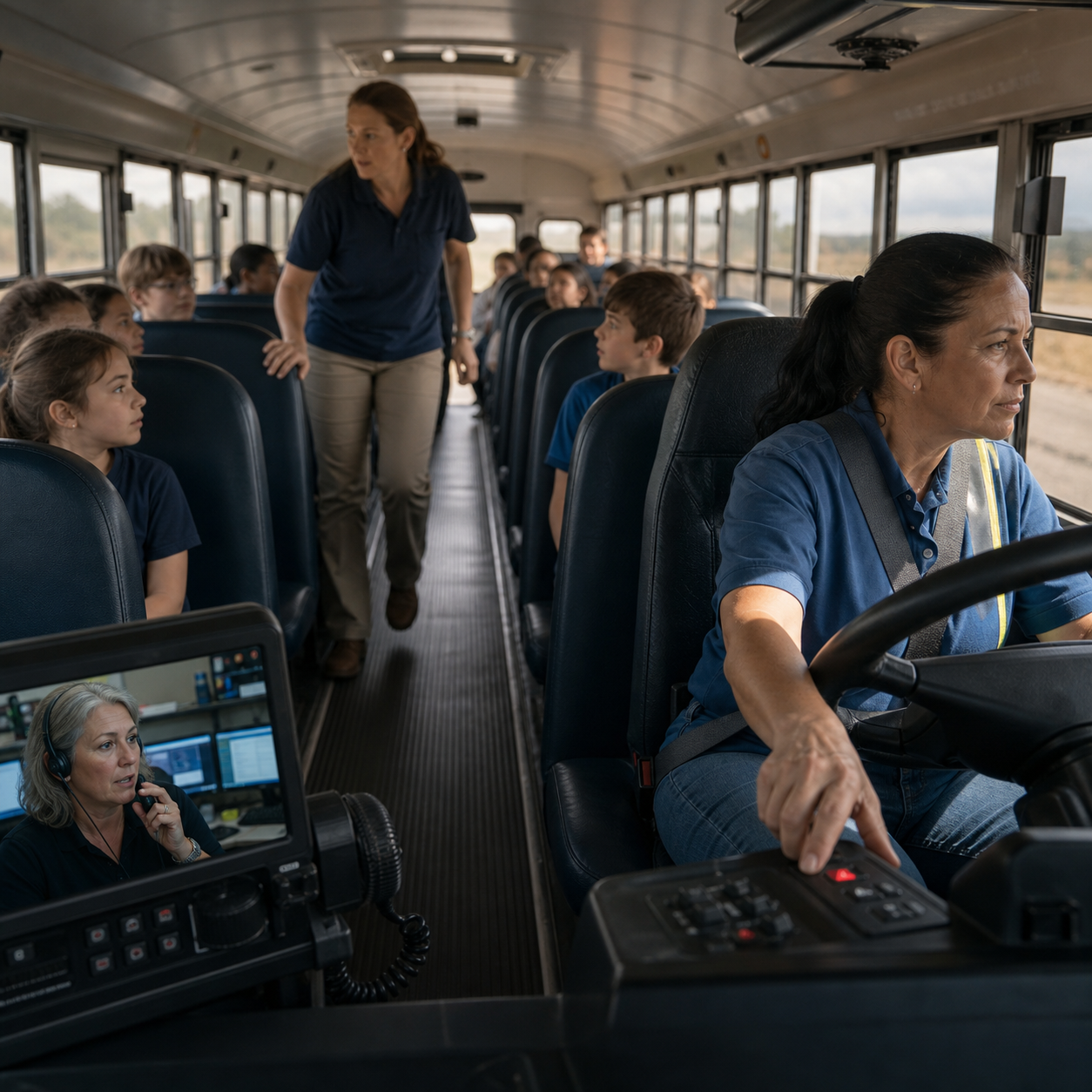
A driver may need to recognize the emergency, move the bus out of traffic, stop safely, set the brake, activate hazard lights, contact dispatch or 911, report the location, supervise passengers, reach the student, begin or support first aid, and direct arriving responders.
A policy that simply says, "The driver will respond," is incomplete. The transportation department should define the order of actions and identify which tasks can be transferred to another trained adult.
The driver can focus on stopping, securing the vehicle, communication, and directing responders. The attendant may assess the student, begin trained first-line care, retrieve approved backup equipment, and support passenger supervision. The actual assignment must match district policy, staff training, and vehicle configuration.
Many school buses operate with only the driver. The plan cannot assume a second adult will be available. The district should determine how the driver stops safely, whether 911 or dispatch is contacted first, how the location is reported, how other passengers are kept seated, how the driver reaches the student, and how arriving responders identify the vehicle.
Students should not be assigned clinical responsibilities. A student may follow a limited safety direction that is allowed by policy, but the response system should not depend on a child performing choking rescue or operating medical equipment.
The driver should not attempt to provide first aid while the bus is moving. The transportation procedure should specify a safe-stop sequence appropriate to the route and local requirements: signal and move out of active traffic, stop the vehicle, set the parking brake, activate hazard lights, secure the vehicle, contact dispatch or 911, and begin or support the emergency response.
Dispatch may be responsible for calling 911 when the driver cannot, confirming the bus and route number, locating the vehicle through GPS, providing direction of travel, notifying school administration, sending a replacement bus, preserving radio traffic, and recording the timeline.
A useful location report includes the bus number, route, road name, direction of travel, nearest intersection or mile marker, a landmark, GPS location, and a safe access point. "Bus 18 is somewhere on the north route" is not adequate.
Routes may include unnumbered rural roads, private lanes, large apartment complexes, industrial parks, mountain roads, construction detours, and temporary stops. Possible location tools include fleet GPS, route maps, dispatch software, mile markers, cross streets, landmarks, and radio location updates. The district should test whether drivers and dispatchers can describe a bus location accurately during a routine route.
A bus may use two-way radio, a driver mobile phone, a bus-mounted cellular system, a GPS emergency button, or dispatch relay. The district should identify a primary and backup method, areas with weak coverage, what to do during a radio outage, whether the driver may call 911 directly, and how substitute drivers receive the procedure.
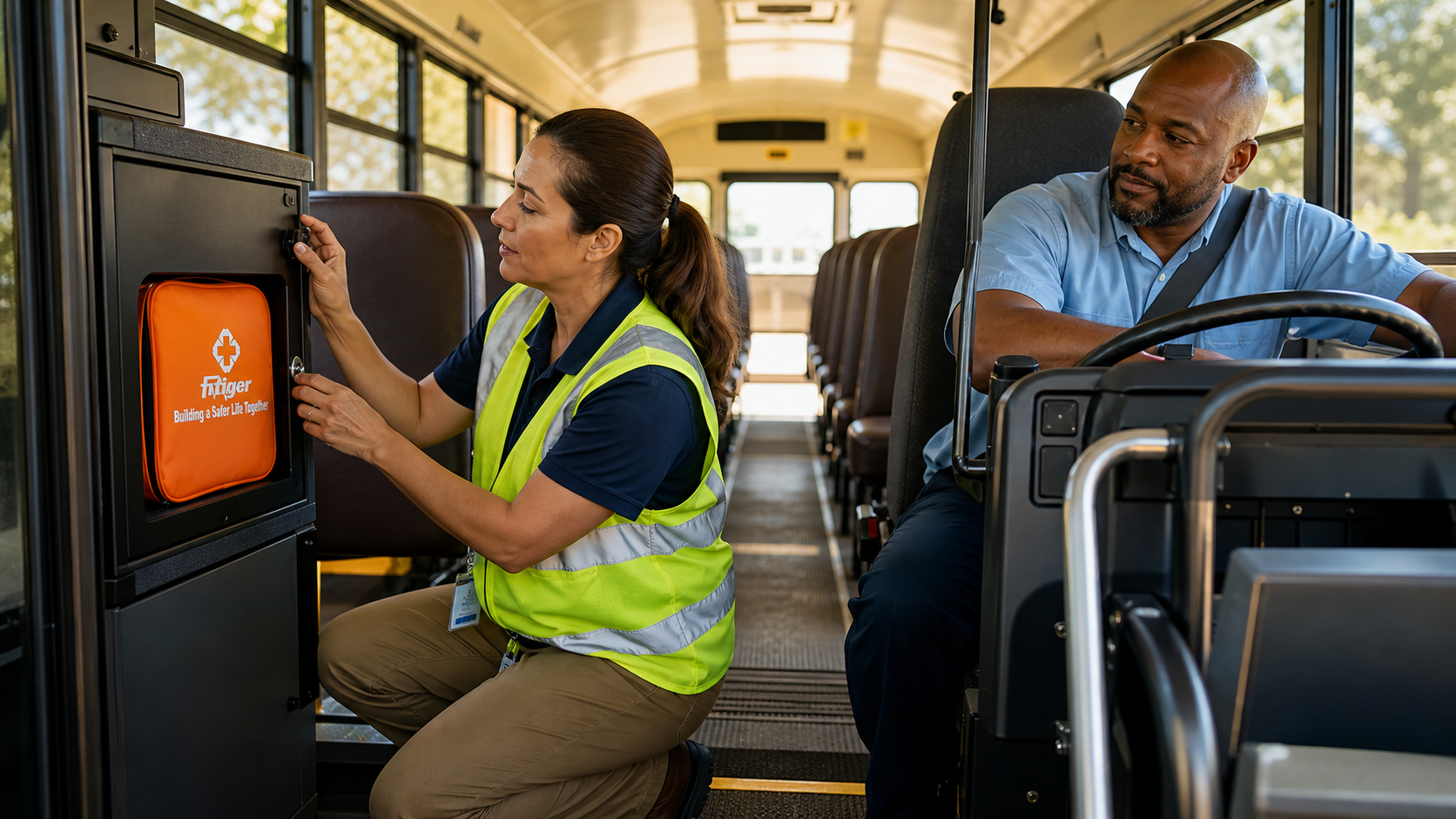
Emergency equipment must be accessible without becoming a loose object or obstructing driver controls. It should not sit on the dashboard, in the aisle, near pedals, against an emergency exit, beneath unsecured student belongings, or in a compartment that requires unloading unrelated equipment.
A suitable location is secured, labeled, visible to authorized staff, reachable after the bus is stopped, protected from routine damage, compatible with emergency exits, and included in the inspection process.
A driver or attendant should not need to climb over seats, open an exterior luggage bay, or move several student bags to retrieve the equipment. Test the route using the normal bus layout, including seat assignments, mobility devices, student belongings, seasonal clothing, and activity equipment.
A school bus can become extremely hot or cold when parked. The district should compare the vehicle environment with the manufacturer's storage requirements and review summer heat, freezing conditions, direct sunlight, humidity, condensation, heater vents, roof leaks, and cleaning chemicals.
The transportation department should decide whether the kit belongs to a specific bus, route, student program, driver, or transportation team. Each approach creates a different transfer process. The chosen model should be written, trained, and audited.


A substitute-bus transfer record should identify the date, original bus, substitute bus, route, kit identifier, person transferring it, contents verified, storage location, driver notification, return date, and final inspection. Without that record, staff may assume equipment moved with the route when it remained in the maintenance yard.
A daily presence check may confirm that the kit is present, the compartment is closed, the seal is intact when used, the label is visible, access is not blocked, and communication equipment is working. A separate scheduled inspection should review the product, masks, packaging, instructions, storage conditions, replacement information, and corrective actions.
Every bus kit needs a primary management owner and a backup. Possible owners include a transportation safety coordinator, fleet manager, lead driver, school nurse assigned to transportation support, special education transportation coordinator, or district risk-management employee.
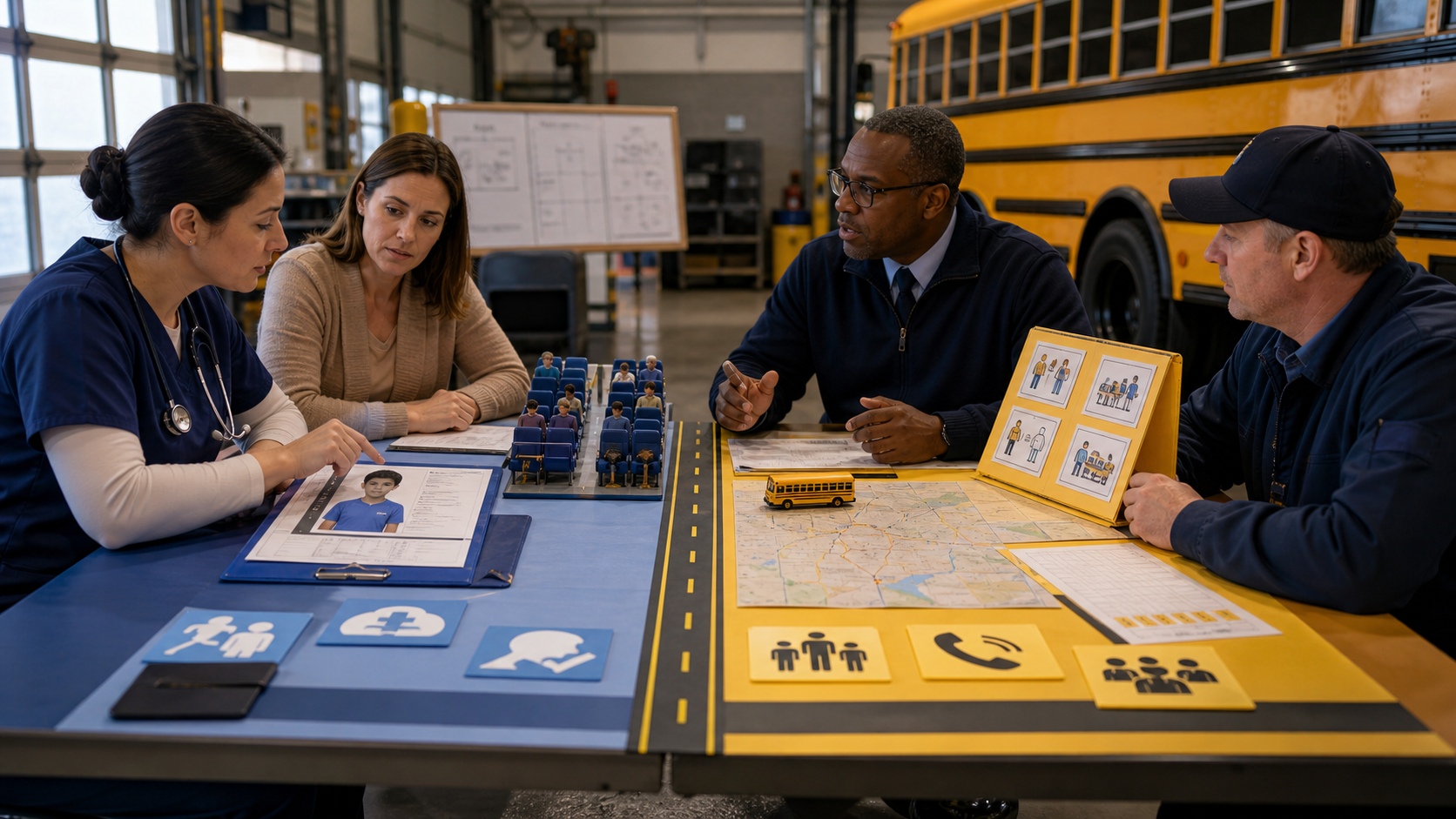
Some students travel with individual transportation or health plans related to tracheostomy, enteral feeding, swallowing difficulties, neuromuscular conditions, mobility limitations, communication differences, seizures, or medically fragile status. A general bus choking plan cannot replace an individualized plan.
A student with a tracheostomy may have specialized suction equipment and an individualized airway-management plan. That equipment serves a different purpose from a general anti-choking device. Transportation teams must not assume one substitutes for the other.
A field-trip record should identify the trip date, destination, vehicle, staff custodian, equipment identifier, components verified, storage location, emergency contact method, return date, and post-trip inspection. The kit should not remain on a bus because no one knew who was supposed to return it.
An access drill should test the safe-stop procedure, dispatch communication, location reporting, equipment retrieval, aisle access, response card, role assignment, and EMS arrival instructions. Do not use a student as a simulated choking victim or apply a device during a general access drill.
After use, the device and affected components should be removed from service, preserved when reporting may be required, documented, handled under infection-control precautions, replaced as appropriate, and formally returned to service. The driver should not clean and return the device without an approved procedure.
A school should not request bus equipment without defining which buses or routes need coverage, whether each bus has an attendant, the equipment assignment model, secured storage, temperature controls, inspection ownership, substitute-bus transfer, dispatch communication, post-use replacement, training status, and district approval.
Schools with an approved transportation plan can nominate a school for transportation equipment support through the FITIGER Donation Program.
Submitting a nomination does not guarantee approval, quantity, training, product selection, shipment, or delivery by a requested date.
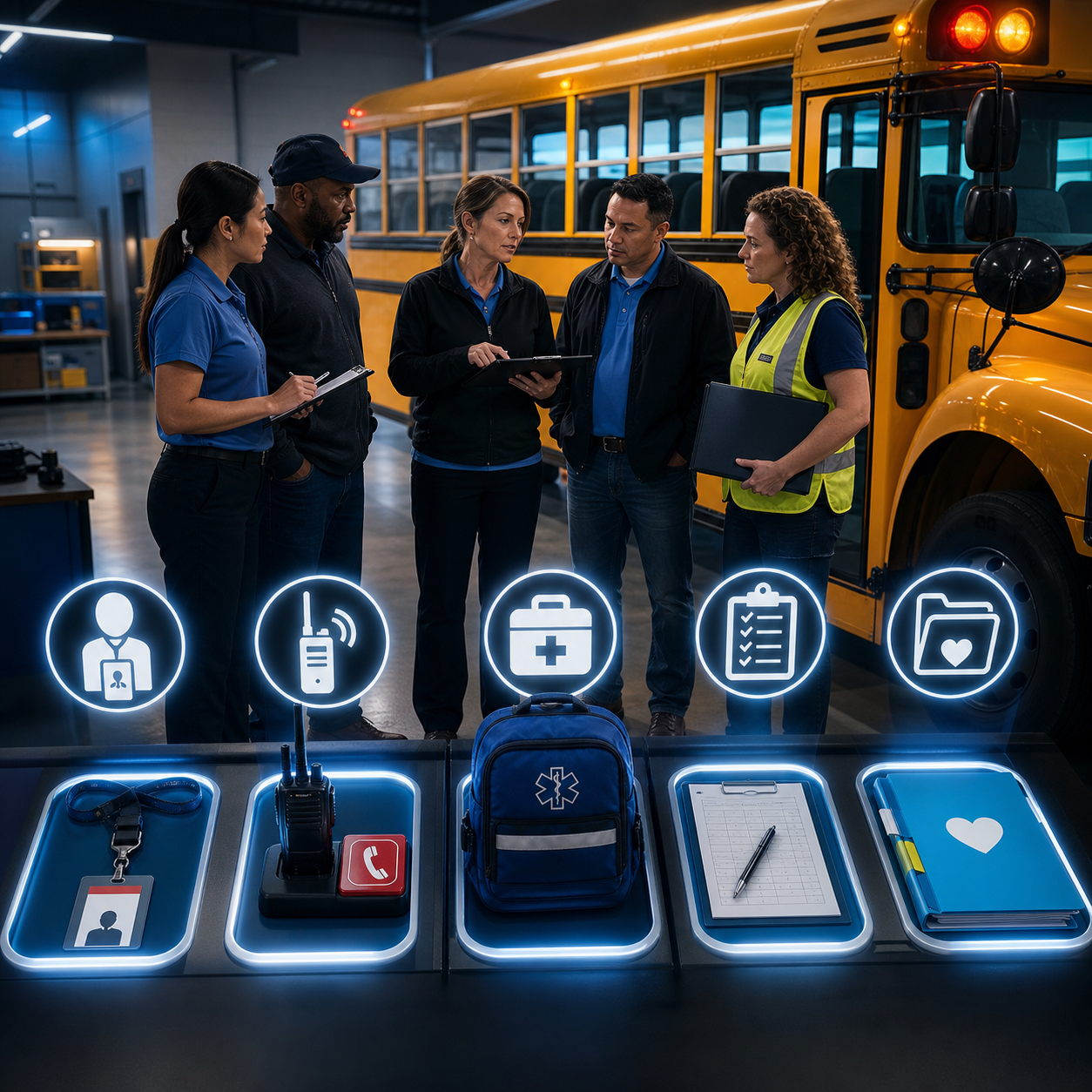
| Checklist area | Required checks |
|---|---|
| Response sequence | Driver and attendant roles are defined. | Vehicle stopping procedure is documented. | 911 or dispatch activation is clear. | Standard choking rescue remains first-line. | CPR escalation is included. | Second-line equipment does not delay first aid. |
| Communication | Primary and backup communication methods are identified. | Route location can be reported. | GPS or dispatch systems are tested. | Radio dead zones are documented. | Substitute drivers receive the procedure. |
| Placement and ownership | Equipment is secured and exits remain clear. | The kit does not obstruct driving controls. | The aisle route is usable. | Primary and backup owners are named. | Drivers know how to report defects. |
| Inspection and transfer | Daily presence check is defined. | Detailed inspection interval is defined. | Temperature exposure is reviewed. | Substitute-bus transfer is documented. | Field-trip check-out is recorded. | Corrective actions are closed. |
| Special health needs | Individual plans are reviewed separately. | Specialized suction equipment is not confused with an anti-choking device. | Required trained personnel are identified. | Private medical information is protected. |

For related planning context, review the anti-choking device buyer evidence checklist.
For related planning context, review the rural routes.
It should be secured in a district-approved location that is accessible after the vehicle is stopped, does not block exits or driver controls, remains visible to authorized staff, and protects the equipment from damage and environmental exposure.
Not automatically. The district should review route length, staffing, student needs, storage, temperature, communication, inspection, substitute vehicles, product labeling, and applicable policy before deciding.
No. The driver should stop and secure the vehicle according to the approved transportation procedure before providing or supporting care.
The district should use a documented transfer or permanent spare-bus system. Drivers should not assume emergency equipment automatically moved with the route.
No. Tracheostomy suction equipment and a general anti-choking device serve different purposes. Specialized equipment must follow the student's individual medical and transportation plan.
Not automatically. Product instructions or orientation do not equal certified first-aid or CPR training. The district should confirm what is included and arrange qualified training separately.
No. Staff should activate EMS and follow established first-line choking rescue. A suction-based anti-choking device belongs only in a second-line role after unsuccessful standard rescue.
National Highway Traffic Safety Administration School Bus Safety - Supports general school transportation safety context; local and district requirements must still be reviewed.
American Red Cross Adult and Child Choking First Aid - Supports established choking first-aid response principles.
U.S. Food and Drug Administration, 2026 Safety Communication - Supports the first-line rescue priority and second-line boundary for suction anti-choking devices.
This article is for general education, school transportation planning, and emergency preparedness. It is not medical advice, legal advice, a transportation regulation, or a substitute for certified first-aid training, manufacturer instructions, district policy, an individualized student health plan, or professional review.
In a choking emergency, stop and secure the vehicle, call 911 or follow the approved emergency dispatch procedure, follow dispatcher instructions, and use the established choking rescue procedure appropriate to the person's age and condition. If the person becomes unresponsive, begin CPR when indicated. A suction-based anti-choking device should not replace standard first-line choking rescue or delay professional emergency care.


