Teen choking risk often comes from the setting around the bite: rushing through food after practice, eating in a car, talking over hard candy, gaming with snacks, or trying to hide distress in front of friends. If a teen can't speak, cough effectively, or breathe normally, call 911 and begin choking first aid immediately.
For a household checklist, see Fitiger's child and home choking safety readiness plan.
Practice ends late. Everyone is hungry.
A teenager drops a sports bag near the kitchen door, grabs a sandwich, and starts eating before sitting down. The first few bites disappear quickly. A teammate is texting. Someone makes a joke. The teen laughs with food still in the mouth.
Then the room goes quiet.
The teen tries to answer but can't. A hand moves toward the throat. For a second, the people nearby hesitate because the whole scene looked normal a moment ago.
Teen choking emergencies often begin inside ordinary routines. The food may not look unusual. The risk builds from speed, distraction, fatigue, and the instinct to act as if nothing is wrong.
Parents usually associate choking hazards with younger children: whole grapes, hot dog rounds, small toys, and food cut into unsafe shapes.
Teenagers face a different pattern.
They may take oversized bites because they are hungry after exercise. They eat while walking, texting, talking, driving, gaming, or getting ready for the next activity. They may keep gum or hard candy in their mouths during sports. They may try to swallow too quickly because a group of friends is waiting.
The food still matters. The situation around the food matters just as much.
A sandwich eaten slowly at a table is not the same meal when a teenager is standing in the kitchen, still winded from practice, talking through the first few bites.
Post-practice hunger changes the pace of eating.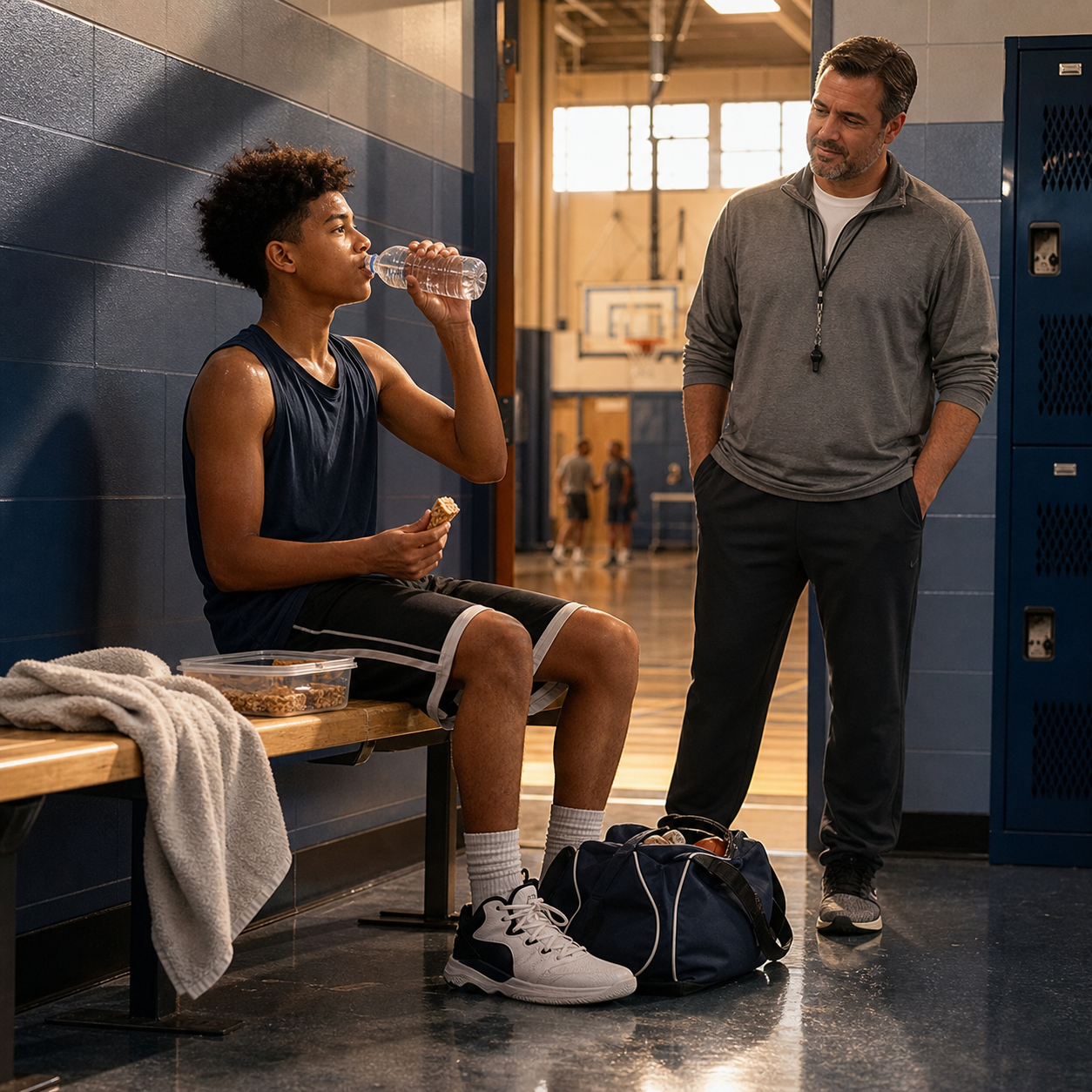
A teen may be thirsty, tired, and ready to eat whatever is closest. Dense bread, meat, pizza crust, protein bars, and large sandwich bites can become harder to manage when the mouth is dry and the meal starts too quickly.
The rule does not need to be complicated:
|
Drink some water. Sit down. Slow down the first few bites. |
Coaches and parents do not need to monitor every snack. They do need to recognize the short window when teens are most likely to eat as if the meal is a race.
A five-minute reset after practice can remove a preventable risk without turning food into a lecture.
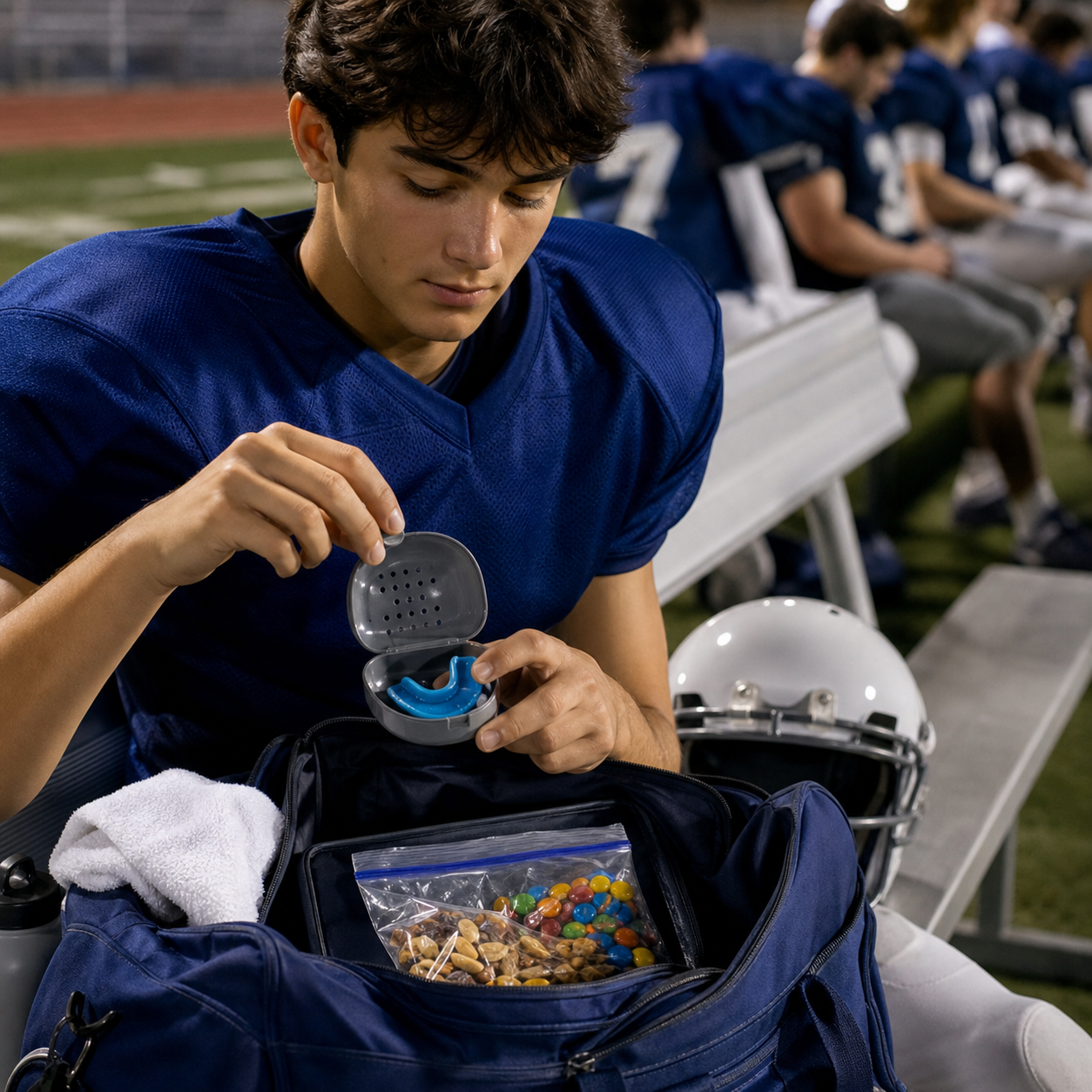
Teens often treat gum and hard candy as background habits.
During sports, those habits create unnecessary problems. Running, sudden breathing changes, shouting, physical contact, and quick movements are poor conditions for anything loose inside the mouth.
Mouthguards need a clear rule too:
|
Take the mouthguard out before eating or drinking. |
Do not combine food, gum, hard candy, and active movement. Keep those items out of practices, warmups, drills, and games.
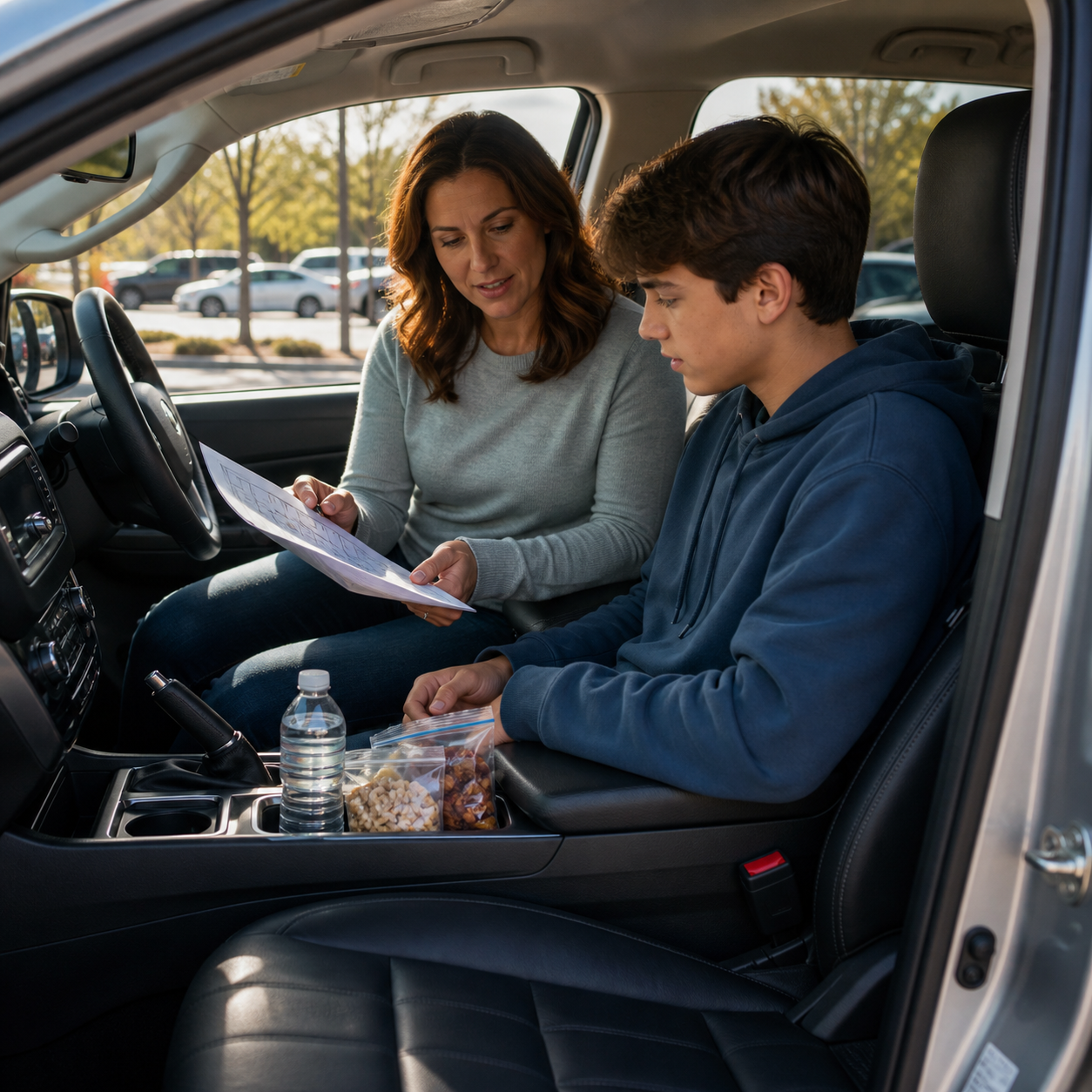
A snack in the car can feel harmless, especially after a long school day or evening practice.
The problem is access.
A parent may be driving. A teen may be seated in the back. Traffic may make it difficult to stop immediately. Friends may be talking loudly enough to miss the moment when a cough turns weak or disappears.
Avoid gum and hard candy in the car. Be cautious with dense, dry, or oversized snacks. If the teen is driving, eating should wait.

Gaming changes the way some teens eat.
The attention stays on the screen. Bites become larger. Chewing becomes less deliberate. A teen may talk through a headset, laugh suddenly, react to the game, and reach for another handful without noticing that the previous bite is not fully cleared.
Sitting down is not enough if the teen is eating on autopilot.
|
Pause for the bite. Finish chewing before speaking. Keep water nearby. |
Teens do not always want help quickly.
A younger child may show obvious distress. A teenager may try to stay quiet, leave the room, wave people away, or keep attempting to swallow because drawing attention feels embarrassing.
Those seconds matter.
A strong cough may clear an obstruction. A weak, ineffective, or silent cough is different. Friends, siblings, coaches, and parents need permission to stop the moment and act.
|
If you can't speak, the joke is over. Everyone acts. |
A teen who is coughing forcefully is still moving air.
Stay close. Encourage continued coughing. Watch carefully. Do not offer food or water. Do not reach blindly into the mouth.
Treat the situation as severe choking if the teen:
For a responsive teen with severe choking:

Only remove an object from the mouth if you can clearly see it. Do not perform a blind finger sweep.
Teen choking emergencies often create a few seconds of confusion.
Someone assumes the teen is joking. A friend offers water. A parent keeps asking, 'Are you okay?' even though the teen physically cannot answer. A teammate searches online instead of calling 911. A bystander reaches blindly into the mouth.
Point to one person and say, 'Call 911 now.'
At a sports facility, send someone to get the AED while another person stays with the teen. At home, make sure somebody unlocks the front door. In the car, pull over as soon as it is safe and call 911.
A suction anti-choking device does not replace 911, manual choking rescue, CPR, an AED, or first-aid training.
If standard choking rescue does not clear the obstruction, an eligible FITIGER device may be kept as a second-line backup within the product-specific instructions for use. For teen households that move between home, practices, car rides, and weekend travel, FoldPumpVac Series is the more practical fit: its foldable design supports compact storage in an emergency bag, vehicle readiness kit, or other clearly marked location close to the places where food actually appears.
Portability only helps when the retrieval plan is realistic. Do not delay manual rescue while searching through a backpack or a car trunk. Confirm the product-specific age, size, and use requirements before adding any device to a family or team readiness plan.
|
Manual rescue first. FoldPumpVac Series is a second-line backup after unsuccessful standard rescue. |
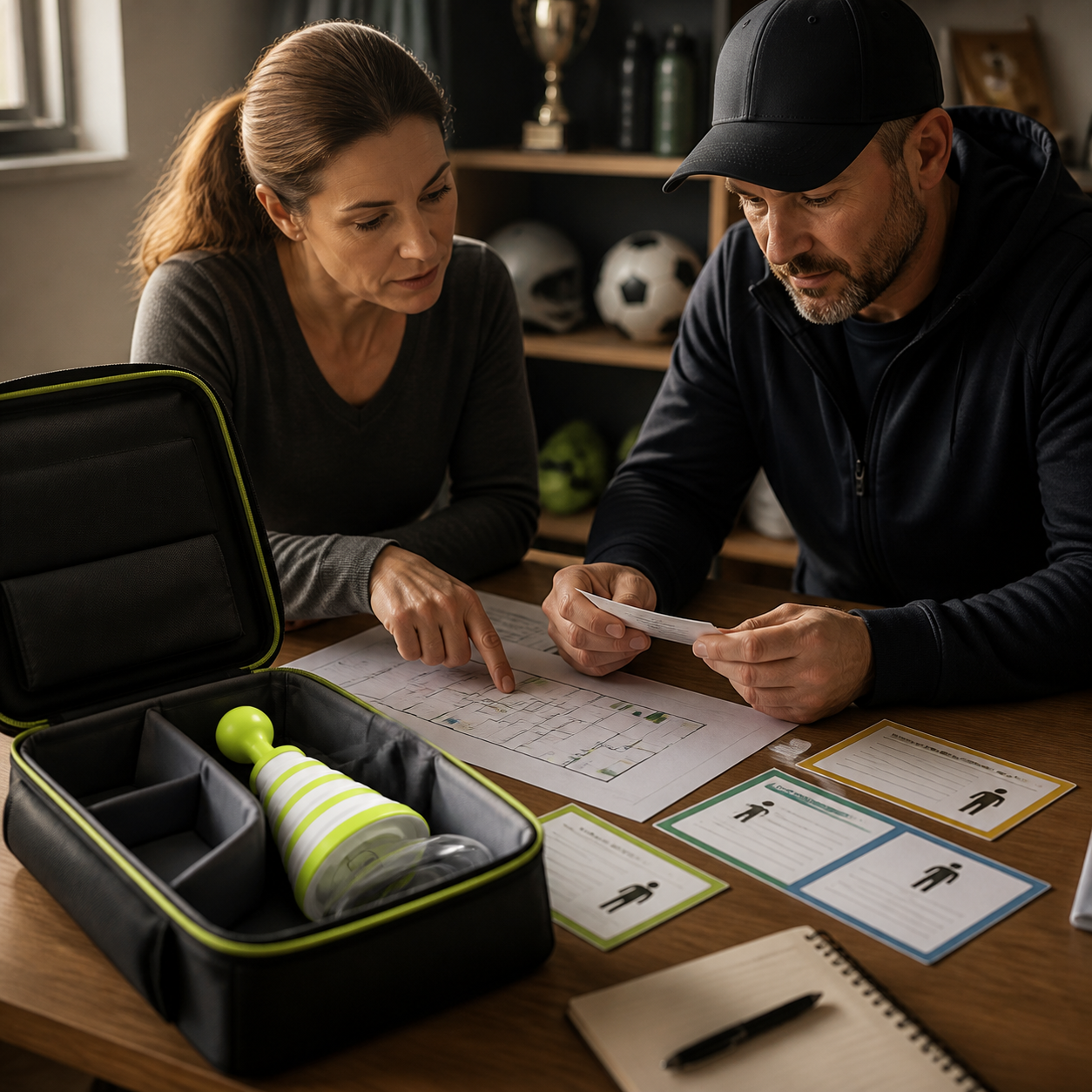
Look at the moment when food usually appears.
Is it the car after practice? A kitchen island before homework? A drive-through meal eaten on the way home? A gaming desk with an open snack bag and no water nearby?
Choose one weak point and fix it.
Put water where it is needed. Move the snack to a table. Remove gum from sports bags. Make sure the family knows that a strong cough and a silent teen are not the same situation.
If your household chooses FoldPumpVac Series as a second-line backup, decide exactly where it will be stored and who is expected to retrieve it only after standard rescue has been attempted without success.
When the room goes quiet, nobody should need to debate what happens next.
For a product-specific backup option, review the FoldPumpVac Series.
The problem is often pace. A teen may be thirsty, tired, distracted, and eating large bites too quickly. Sitting down, drinking water, and slowing the first few bites can reduce avoidable risk.
Avoid it. Running, shouting, sudden breathing changes, physical contact, and fast movements are poor conditions for gum or hard candy.
No. Remove the mouthguard before eating or drinking.
Stay close and encourage continued coughing. A forceful cough usually means air is still moving. If the cough becomes weak, ineffective, or silent, or the teen cannot speak or breathe normally, treat it as severe choking.
Call 911. Give 5 back blows followed by 5 abdominal thrusts. Continue alternating until the object clears or the teen becomes unresponsive. Begin CPR if the teen becomes unresponsive and follow dispatcher instructions.
No. Water will not clear a blocked airway and may waste time during a severe choking emergency.
No. Call 911 and begin trained manual choking rescue first. If standard rescue is unsuccessful, an eligible FoldPumpVac Series device may be considered as a second-line backup within the product-specific instructions for use. Do not delay manual rescue while retrieving equipment.
A teen may try to hide distress or avoid making a scene in front of friends. If the teen cannot speak, cough effectively, or breathe normally, bystanders should act immediately rather than waiting for permission.
American Heart Association - Part 6: Pediatric Basic Life Support
American Heart Association - 2025 CPR and ECC Guidelines
This article explains teen choking-risk situations, prevention habits, response sequence, and readiness boundaries. It does not replace age-appropriate first-aid training, CPR training, emergency services, professional medical advice, or current product instructions, and it does not prove that any device improves clinical outcomes.
This content is for general education and emergency-preparedness planning only. It does not replace medical advice, diagnosis, treatment, certified first-aid or CPR training, dispatcher instructions, EMS or 911, professional care, or product-specific instructions for use. Call 911 immediately for severe choking. Begin trained manual choking rescue first. If the teen becomes unresponsive, begin CPR and follow dispatcher guidance. Any FITIGER suction anti-choking device belongs in a second-line backup role only after unsuccessful standard rescue and only within the applicable product-specific age, size, and instructions-for-use boundaries.


