An evidence-based FITIGER regulatory and preparedness guide explaining the 2025 AHA adult choking sequence, FDA's 2026 Class II QXN category, product-specific authorization, facility verification, and the proper second-line role of suction anti-choking devices.
Authored by George KingR&D Manager & Emergency Preparedness Specialist at Fitiger Life LLC.Medically Reviewed by Michael J. Bullock, DNP, MSN, RN
What matters first
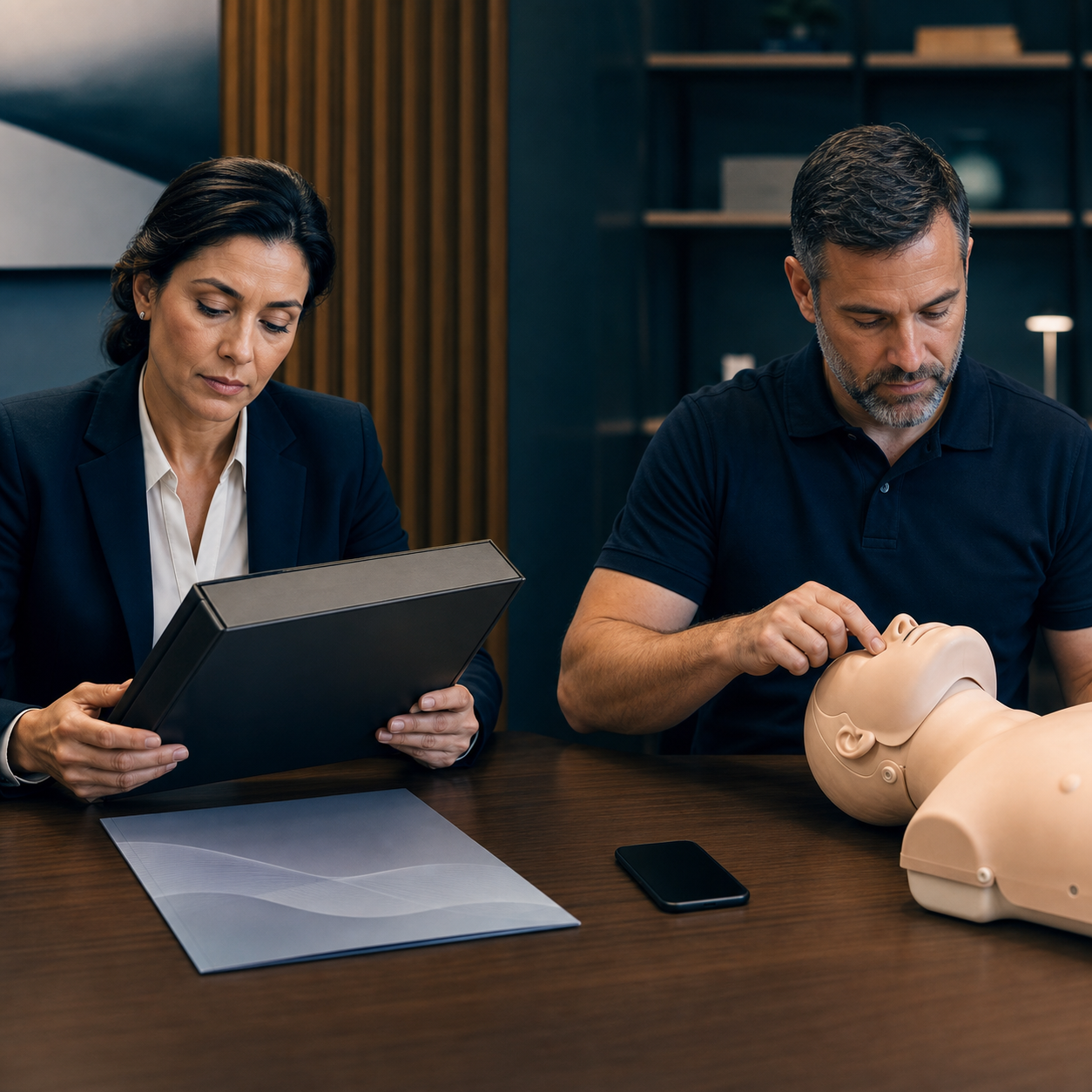
| FDA's creation of 21 CFR 874.5400 did not replace established choking first aid, and it did not authorize every suction anti-choking device on the market. |
| Before choosing equipment, review Fitiger's anti-choking device buyer evidence checklist for FDA wording, testing, seller traceability, and kit-selection questions. |
| The regulation created a Class II device category, product code QXN, for a suction anti-choking device used as a second-line treatment during complete airway obstruction after an unsuccessful basic life support choking protocol. |
| The sequence still starts with recognition, emergency activation, and immediate hands-on rescue. For a responsive adult with severe choking, current American Heart Association guidance calls for repeated cycles of 5 back blows followed by 5 abdominal thrusts. If the person becomes unresponsive, begin CPR with chest compressions. |
| A suction device belongs after those steps have failed, not before them. |
Why the 2026 regulatory change is easy to misunderstand
| The March 2026 FDA decision changed the legal and regulatory landscape for anti-choking devices in the United States. It did not settle every medical, purchasing, or training question surrounding them. |
| Before the De Novo decision, consumers could find many suction devices online, often accompanied by phrases such as "FDA registered," "FDA listed," or "medical device registered." Those phrases created the impression that every product had passed a product-specific FDA review. |
| They had not. |
| FDA establishment registration identifies a facility in an agency database. Device listing identifies a product associated with that establishment. Neither process, by itself, means FDA has approved, cleared, or authorized that product for marketing. |
| The 2026 De Novo order was different. FDA reviewed one specific device and created a new generic Class II category for that device type. The decision established the regulatory pathway and special controls that substantially equivalent devices must address before lawful U.S. marketing. |
| This distinction matters for families, school districts, nursing homes, restaurants, and procurement teams. A category now exists. That does not mean every product claiming to belong to the category has completed the required pathway. |
What 21 CFR 874.5400 actually created

| The regulation name is: |
| Suction anti-choking device as a second-line treatment. |
| The classification is: |
| Regulation number: 21 CFR 874.5400. | Regulatory class: Class II. |
| Product code: QXN. | Intended emergency: Complete airway obstruction. |
| Position in the response sequence: Second-line treatment. |
| Required prior step: Unsuccessful use of a basic life support choking protocol. |
| The wording is narrow for a reason. |
| The device category is not intended for a person who can still cough forcefully. It is not a first response to every episode of coughing during a meal. It is not a replacement for trained choking rescue, 911 activation, or CPR. |
| The category applies when an object or food is producing a complete airway obstruction and an established BLS choking protocol has already been attempted without success. |
| That boundary should appear in product labeling, facility policy, staff training, purchasing reviews, and public-facing education. |
A De Novo authorization is product-specific
| FDA granted the De Novo request for LifeVac on March 4, 2026. The order classified that device, and substantially equivalent devices of the same generic type, into Class II. |
| That sentence is frequently misunderstood. |
| It does not automatically authorize every existing suction device. It means the first authorized device established the classification against which later products may be compared. |
| A different manufacturer intending to market a substantially equivalent device in the United States generally needs to submit a premarket notification, commonly called a 510(k), and receive FDA clearance before marketing. |
| A product cannot claim the benefit of another company's De Novo authorization merely because it uses a mask, creates suction, looks similar, or appears under the same marketplace search term. |
| Product-specific verification remains essential. |
What Class II and special controls mean
| Class II does not mean the device is risk-free. It means FDA determined that general controls, together with special controls, can provide reasonable assurance of safety and effectiveness for the intended use. |
| The De Novo order identifies risks that include: |
| Delayed initiation of standard choking rescue. | Use error. |
| Inadequate suction. | Device failure. |
| Injury or death from unresolved choking. | Injury to oral or throat tissue. |
| Adverse tissue reactions. |
| The required controls extend beyond a bench test showing that a device can generate negative pressure. |
| They include areas such as: |
| Clinical information. | Postmarket surveillance when required. |
| Non-clinical performance testing. | Human factors and usability testing. |
| Training. | Product labeling. |
| Biocompatibility. | Device and material durability. |
| Information about delays to BLS choking rescue. |
| Rates of successful and unsuccessful use. |
| Adverse events and device malfunctions. |
| This is why a generic suction-pressure claim is not enough to establish regulatory equivalence. |
| The regulator is not only asking whether the device can pull. It is asking whether the complete product, instructions, training, materials, user interface, and real-world use pattern are controlled well enough for its intended emergency role. |
What the 2025 AHA choking guidance says to do first
| FDA regulates medical devices. The American Heart Association develops resuscitation and first-aid guidance from the available evidence. |
| Those functions are related, but they are not the same. |
| For an adult with mild or partial foreign-body airway obstruction, the AHA recommends allowing the person to cough while watching closely for signs that the obstruction is becoming severe. |
| A forceful cough means air is still moving. |
| Severe or complete airway obstruction may show up as: |
| Weak or absent coughing. | Inability to speak. |
| Little or no useful sound. | Pale, blue, or gray color. |
| Altered awareness. | Apnea. |
| Collapse. |
| For a responsive adult with severe obstruction, the first-line sequence is repeated cycles of: |
| 1. Give 5 back blows. |
| 2. Give 5 abdominal thrusts. |
| 3. Repeat until the object is expelled or the person becomes unresponsive. |
| 4. Activate the emergency response system. |
| If the rescuer cannot encircle the abdomen, or the person is in the late stages of pregnancy, use 5 back blows followed by 5 chest thrusts instead. |
| If the person becomes unresponsive: |
| Begin CPR with chest compressions. |
| Activate emergency assistance if this has not already been done. |
| Look for a visible object when opening the airway before breaths. |
| Remove the object only if it is clearly visible. |
| Do not perform a blind finger sweep. |
| A device search should not interrupt this sequence. |
FDA authorization and AHA recommendation answer different questions
| An FDA marketing authorization asks whether a specific device can be lawfully marketed for a defined intended use under applicable controls. |
| An AHA recommendation asks whether the available evidence is strong enough to support including an intervention in clinical or public rescue guidance. |
| Those are different thresholds. |
| The 2025 AHA adult BLS guidance states that the effectiveness and safety of suction-based airway clearance devices have not been established sufficiently in adults to support a recommendation. |
| At the same time, FDA authorized one device and created a regulated second-line category. |
| These positions are not necessarily contradictory. |
| FDA's decision means a specific device met the regulatory requirements for its stated intended use and controls. It does not mean the device has been shown to outperform back blows, abdominal thrusts, CPR, or every competing product. |
| The AHA's position means the broader evidence base is still insufficient for a guideline recommendation. |
| A responsible article, training program, or facility policy should present both facts. |
The layered choking response model
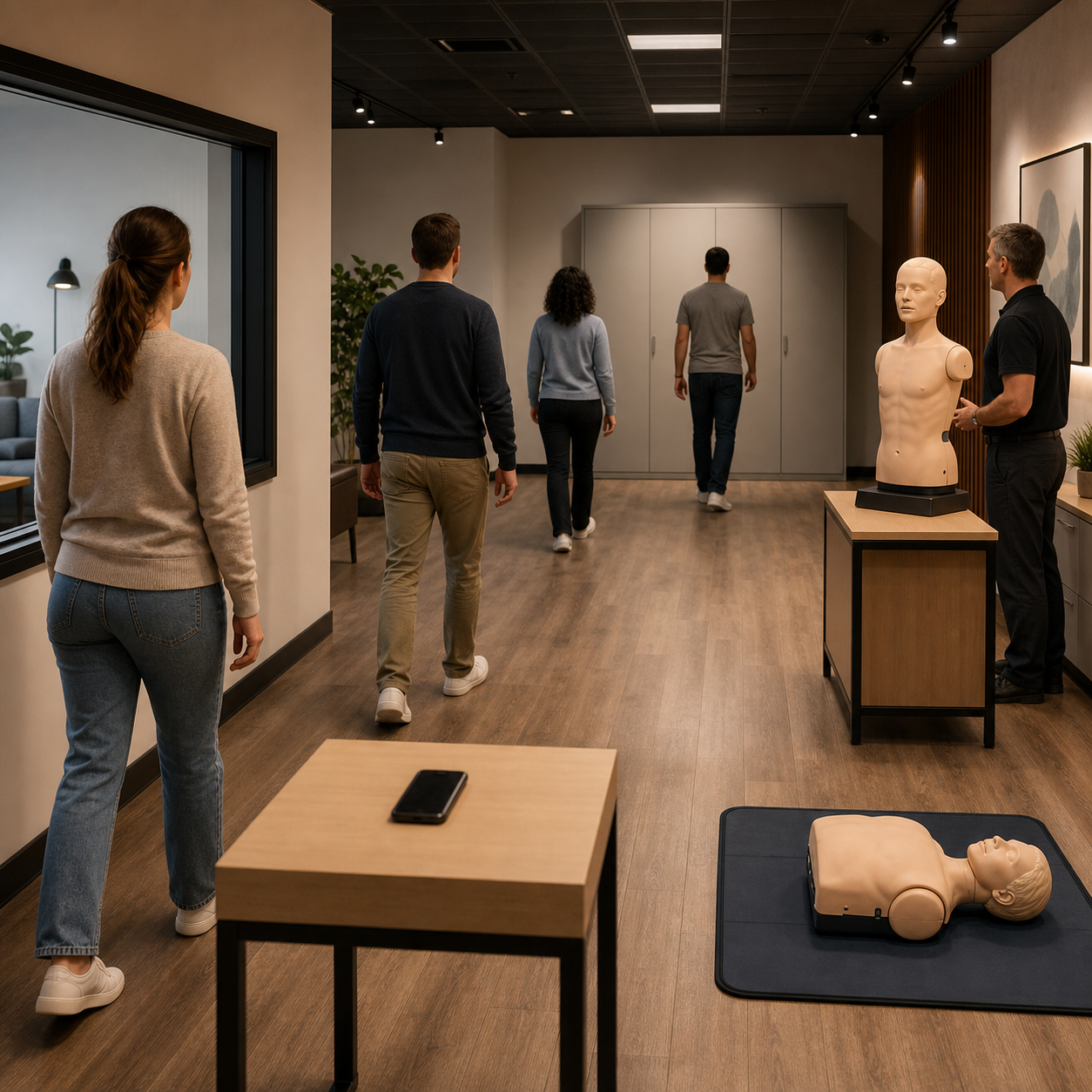
The safest way to understand the 2026 landscape is as a sequence of layers.
Layer 1: Recognize the type of obstruction
| First decide whether air is still moving. |
| If the person can cough forcefully or speak, encourage coughing and observe closely. Do not automatically begin forceful interventions for a partial obstruction. |
| If the person cannot cough effectively, speak, or breathe, treat the event as a severe or complete airway obstruction. |
Layer 2: Activate emergency assistance
| Call 911 or direct a specific person to call. |
| Avoid vague instructions such as, "Someone call for help." Assign the task clearly: |
"Alex, call 911 and return with the phone on speaker."
In a school, restaurant, or care facility, another person should guide EMS to the exact location and open access points.
Layer 3: Begin established choking rescue
| For a responsive adult, use repeated cycles of 5 back blows and 5 abdominal thrusts. |
| Use chest thrusts instead of abdominal thrusts when the abdomen cannot be encircled or during late pregnancy. |
| First-line rescue begins immediately. It should not wait for a nurse, manager, device, policy binder, or specialized employee to arrive. |
Layer 4: Transition to CPR if the person becomes unresponsive
| Begin CPR with chest compressions. |
| Check for a visible object when opening the airway before breaths. Do not perform blind finger sweeps. |
| The transition needs to be rehearsed because a choking event can move quickly from a standing rescue to an unresponsive patient on the floor. |
Layer 5: Use a verified second-line device only after manual rescue fails
| A suction anti-choking device may enter the response only after an unsuccessful BLS choking protocol, when the person has a complete airway obstruction and the device is appropriate under its current instructions. |
| The product should be: |
| Lawfully marketed in the jurisdiction. | Verified through the applicable regulatory database. |
| Used within its labeled age range. | Operated by an eligible user. |
| Complete and undamaged. |
| Stored close enough to retrieve without delaying care. |
| Supported by current instructions and training. |
| The device does not replace the earlier layers. |
The sequence at a glance
|
Situation
|
Immediate response
|
Device role
|
|
Person can cough forcefully or speak
|
Encourage coughing and monitor closely
|
No device intervention for a partial obstruction
|
|
Adult cannot cough, speak, or breathe effectively
|
Call 911 and begin 5 back blows followed by 5 abdominal thrusts
|
Do not delay manual rescue to retrieve a device
|
|
Abdomen cannot be encircled or person is in late pregnancy
|
Use 5 back blows followed by 5 chest thrusts
|
Second-line only after the BLS sequence fails
|
|
Person becomes unresponsive
|
Begin CPR with chest compressions and remove only a visible object
|
Follow product instructions only if a trained rescuer can do so without interrupting CPR and emergency care
|
|
Complete obstruction persists after unsuccessful BLS choking rescue
|
Continue emergency response and prepare for EMS handoff
|
A verified, appropriately labeled suction device may be used as second-line treatment
|
What this means for schools
| A school choking policy cannot begin and end with buying equipment. |
| A cafeteria emergency may involve a lunch monitor, teacher, coach, nurse, substitute, bus driver, or after-school employee. The person standing closest to the student may not be the person formally assigned to manage first aid. |
| The policy should answer: |
| Who begins first-line rescue? | Who calls 911? | Who alerts the nurse? |
| Who retrieves second-line equipment? | Where is the device stored? | Is the cabinet unlocked? |
| Can it be reached without leaving the student? | Which staff members are trained? | How are school buses, field trips, sports events, and after-school programs covered? |
| How is the device inspected and replaced? |
| Age-specific rescue remains essential. Infant, child, and adult choking pathways are not interchangeable. |
| A device placed only in the nurse's office may create a false sense of coverage if meals occur several corridors away. |
What this means for eldercare
| Older-adult choking risk often combines swallowing difficulty, dentures, dry mouth, neurologic disease, fatigue, mobility limitations, and slower recognition. |
| A care facility needs more than a dining-room device. |
| The response plan should connect: |
| Individual swallowing plans. | Texture-modified diets. | Staff handoff. |
| Seating and supervision. | Recognition of silent choking. | Immediate manual rescue. |
| 911 activation. | CPR readiness. | Second-line device placement. |
| Post-incident evaluation and documentation. |
| Staff must know the difference between coughing during a meal and complete airway obstruction. |
| A resident who coughs forcefully may still be moving air. A resident who goes quiet, cannot speak, and produces no useful cough needs immediate rescue. |
| The presence of a suction device should not encourage staff to skip that assessment or move directly to the product. |
What this means for restaurants and workplaces
| In a restaurant, the person who notices the emergency may be a server, host, kitchen employee, coworker, or another guest. |
| Management should not assume that a wall poster creates readiness. |
| Useful planning includes: |
| Training several employees on every shift. | Assigning 911 and entrance-access roles. |
| Keeping aisles clear. | Avoiding locked or distant equipment storage. |
| Including break rooms and staff dining areas. |
| Reviewing how booths, tight spaces, or fixed seating affect rescue access. |
| Recording inspection and replacement dates. |
| Maintaining current instructions with the device. |
| The response should work during the busiest shift, not only during a scheduled safety meeting. |
What this means for families
| A home plan should be simple enough to remember under stress. |
| Family members should know: |
| How to distinguish forceful coughing from severe choking. |
| How to perform the correct age-based rescue sequence. |
| Where phones are normally kept. |
| How to activate 911 on speaker. |
| Where any second-line device is stored. |
| Whether the package is intact. |
| Whether the correct mask is present. |
| Whether the instructions have been reviewed. |
| What to do if the person becomes unresponsive. |
| When to seek medical evaluation after the object clears. |
| A device in an unopened shipping box, a basement cabinet, or another floor is not meaningfully staged. |
How to verify an anti-choking device before purchase

| Marketing language should never substitute for regulatory verification. |
| Before a U.S. purchase, identify the exact product name and manufacturer, then search FDA's product-specific authorization databases. |
| Look for: | A De Novo authorization. | A 510(k) clearance. |
| A PMA approval, if applicable. | The exact manufacturer. | The exact device name. |
| The intended use. | Age limitations. | Operator requirements. |
| Single-use or reusable status. | Current labeling and instructions. | Do not rely on: |
An FDA logo on a marketplace image.
"FDA registered."
"FDA listed."
| A facility registration number. |
| A seller's certificate. |
| Marketplace availability. |
| A product that resembles an authorized device. |
| A claim that every Class II device is automatically cleared. |
| Reviews or rescue stories without product-specific authorization evidence. |
| If the device cannot be found under the claimed pathway, ask the manufacturer for the authorization number and verify it independently. |
What procurement teams should keep on file
| A school district, care organization, restaurant group, camp, or workplace should maintain a product-specific purchase file. |
| That file should include: |
| Exact device and model name. |
| Manufacturer and authorized seller information. |
| FDA De Novo or 510(k) record, when U.S. authorization is claimed. |
| Current instructions for use. | Current product label. | Intended age range. |
| Operator requirements. | Contraindications and warnings. | Training materials. |
| Placement map. | Staff role card. | Inspection log. |
| Replacement and expiration records. | Incident documentation form. | Complaint and adverse-event reporting process. |
This documentation should be reviewed whenever the product, label, packaging, ownership, or regulatory status changes.
Placement is part of compliance
| A product can meet its regulatory requirements and still be poorly deployed. |
| Retrieval latency is the time between recognizing the emergency and having the correct device ready to use. Every locked door, cabinet, hallway, unopened package, missing mask, and unfamiliar step adds delay. |
| FDA specifically identifies delay to BLS rescue as a risk. That makes placement and training more than convenience issues. |
| A facility should test actual retrieval time from: |
| Cafeterias. | Classrooms where snacks are served. | Dining rooms. |
| Resident rooms. | Break rooms. | Kitchens. |
| Sports areas. | Buses. | Field-trip staging points. |
| Outdoor meal areas. |
The person giving back blows and thrusts should not abandon the patient to retrieve equipment. Another trained person should bring the second-line device while first-line rescue continues.
Training should preserve the order of operations
| Poor training can unintentionally turn a backup product into the first move. |
| Every training session should repeat the same sequence: |
| 1. Is the person coughing forcefully? |
| 2. If not, identify severe choking. |
| 3. Call 911. |
| 4. Begin the correct manual rescue sequence. |
| 5. Transition to CPR if unresponsive. |
| 6. Use a verified suction device only after unsuccessful standard rescue and within the current instructions. |
| Device training should cover more than mechanical operation. |
| It should also cover: |
| When not to use the device. | How to recognize complete airway obstruction. |
| Who is allowed to operate it. | How to select the correct mask. |
| How to avoid delaying manual rescue. |
| What to do if the device does not work. |
| When to resume or continue CPR. |
| How to report a malfunction or injury. |
| What components must be replaced. |
| A rescuer who knows how to pull a plunger but does not know when the product belongs in the sequence is not fully trained. |
FDA authorization does not prove superiority
FDA marketing authorization is important. It establishes that a specific product completed the applicable review for its intended use.
| It does not establish that the device: | Works in every choking emergency. |
| Is superior to standard rescue. | Has been endorsed by the AHA. |
| Is appropriate for every age. | Can be used by every person. |
| Can replace CPR. | Can replace EMS. |
| Has the same status as another device in the category. |
| Guarantees a successful outcome. |
| Similarly, the absence of an AHA recommendation does not erase the FDA authorization of a specific product. It means the guideline evidence remains limited. |
| Both statements can be true at the same time. |
Where FITIGER products fit in this framework
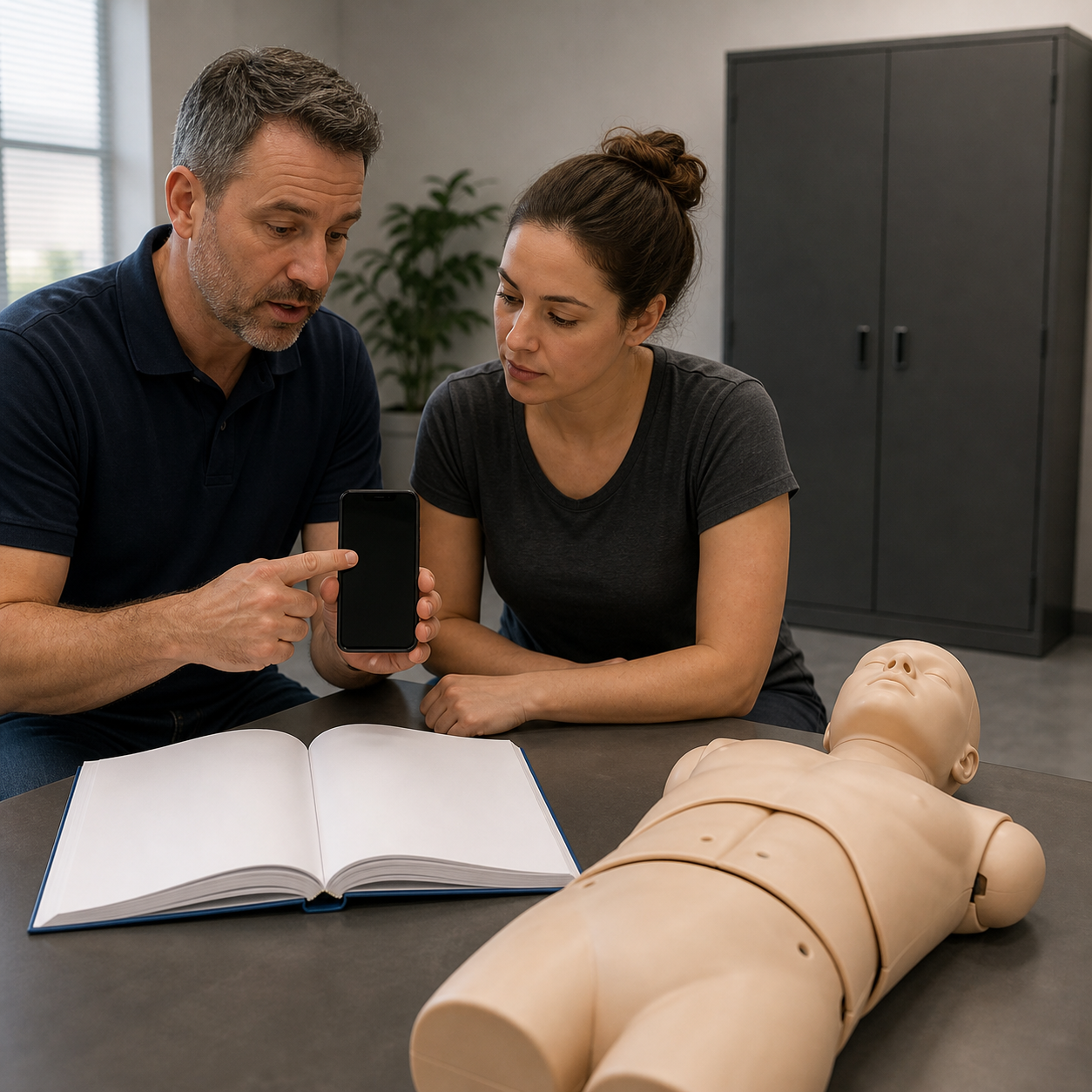
| A FITIGER product recommendation must begin with regulatory honesty. |
| FITIGER establishment registration, device listing, engineering reports, marketplace availability, or product design features do not by themselves establish FDA marketing authorization for a specific model. |
| For U.S. use, buyers should verify the current product-specific FDA pathway before treating a FITIGER device as part of a facility or household choking response plan. |
| In a market where the specific product is lawfully offered and used within its current instructions: |
| The FITIGER EasyPumpVac Series may be considered for fixed-location staging in homes, school stations, restaurants, caregiver environments, or eldercare dining areas. |
| The FITIGER FoldPumpVac Series may be considered when compact storage, travel access, field trips, vehicles, caregiver bags, or multi-location readiness are the main operational concerns. |
| Those recommendations are based on staging and retrieval needs, not on a claim that either product should replace first-line rescue. |
| The sequence remains unchanged: |
| Recognize complete airway obstruction. |
| Call emergency services. |
| Begin established choking rescue. |
| Start CPR if the person becomes unresponsive. |
| Use a lawfully marketed, appropriately labeled device only as a second-line option after standard rescue has failed. |
What organizations should change now
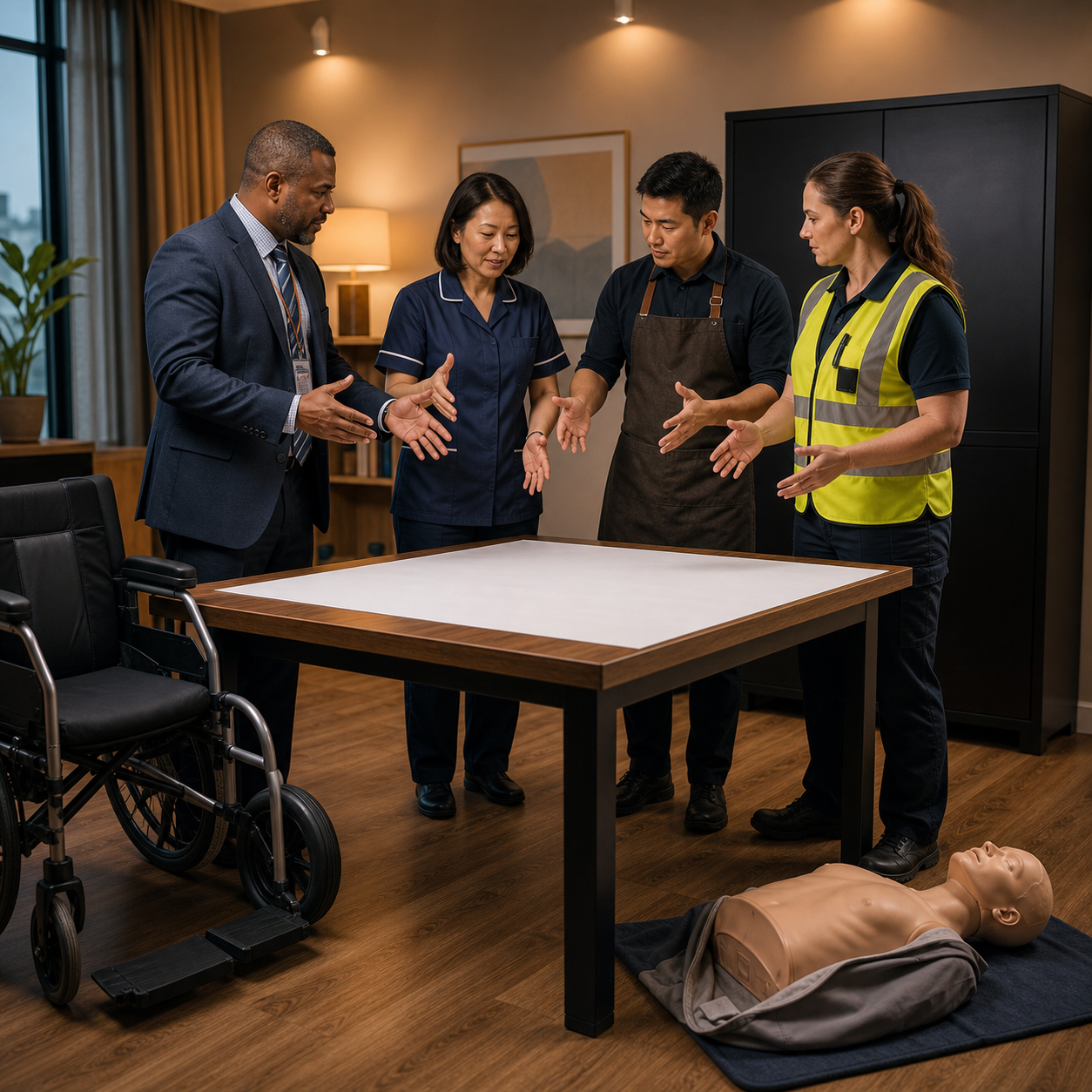
| The 2026 regulatory milestone should trigger a policy review, not a rushed product order. |
| A useful review asks: |
| Does our choking protocol reflect the current 5 back blows and 5 thrusts sequence? |
| Do we distinguish partial from complete obstruction? |
| Is 911 activation assigned clearly? |
| Does the protocol explain the CPR transition? |
| Does it state that suction devices are second-line? |
| Have we verified each product's specific authorization? |
| Are age and operator requirements documented? |
| Can the device be reached without interrupting manual rescue? |
| Have staff practiced the actual retrieval route? |
| Is the package inspected regularly? |
| Do we have an incident and malfunction reporting process? |
| Does the purchasing file contain the current IFU and label? |
| The strongest policy is not the one with the most equipment. It is the one that still works when the room is noisy, the nearest trained person is not a nurse, and the first attempt does not clear the airway. |
What to remember
| The most important change in 2026 is not that suction devices became the new first response. They did not. |
| The change is that the United States now has a defined Class II pathway for a suction anti-choking device used as second-line treatment after unsuccessful BLS choking rescue. |
| That pathway brings clearer requirements for evidence, human factors, training, labeling, durability, surveillance, and product-specific authorization. |
| The AHA sequence still comes first. FDA authorization remains product-specific. Registration and listing are not approval. A Class II category is not a blanket endorsement. A device should never delay back blows, thrusts, CPR, or 911. |
| Preparedness works best in layers, and the order of those layers matters. |
| For related planning context, review the anti-choking device buyer evidence checklist. |
FAQ
What is 21 CFR 874.5400?
21 CFR 874.5400 is the FDA regulation for a suction anti-choking device used as a second-line treatment during complete airway obstruction after an unsuccessful basic life support choking protocol. The category is Class II and uses product code QXN.
Does 21 CFR 874.5400 authorize every anti-choking device?
No. The regulation creates a device category. Each product must have the appropriate product-specific FDA marketing authorization before lawful U.S. marketing. A similar appearance, FDA registration, or device listing is not enough.
What is product code QXN?
QXN is the FDA product code assigned to the Class II category called "suction anti-choking device as a second-line treatment." A product code helps identify the regulatory category, but it does not independently prove that a specific product is authorized.
Should a suction device be used before back blows and abdominal thrusts?
No. Established choking rescue comes first. For a responsive adult with severe choking, current AHA guidance uses repeated cycles of 5 back blows followed by 5 abdominal thrusts. A suction device belongs only after an unsuccessful BLS choking protocol.
What if the abdomen cannot be encircled?
For a responsive adult whose abdomen cannot be encircled, or a person in late pregnancy, current AHA guidance uses repeated cycles of 5 back blows followed by 5 chest thrusts.
What happens if the person becomes unresponsive?
Begin CPR with chest compressions and activate the emergency response system if this has not already happened. Check for a visible object when opening the airway before breaths, and do not perform a blind finger sweep.
Did the AHA endorse suction anti-choking devices in 2025?
No. The AHA states that the effectiveness and safety of suction-based airway clearance devices have not been established sufficiently in adults to support a recommendation.
How can a buyer verify FDA authorization?
Search FDA's De Novo, 510(k), or PMA databases using the exact device and manufacturer name. Match the authorization record to the product, intended use, age range, and labeling. Do not rely only on registration, listing, seller certificates, or marketplace claims.
Does FDA authorization mean the device is better than standard first aid?
No. Authorization does not establish superiority over back blows, abdominal thrusts, chest thrusts, CPR, or every other device. It means the specific product met the applicable regulatory requirements for its intended use.
Can a school or care facility buy any product labeled Class II?
No. Class II describes a regulatory category. The facility must verify that the exact product has the necessary authorization and that its labeling, intended use, age range, operator requirements, and instructions match the planned setting.
Where should a second-line device be placed?
Place it close to the areas where choking risk occurs, in protected and visible storage that trained staff can access quickly. First-line rescue must continue while another person retrieves the device.
How should FITIGER products be described in a U.S. article?
Describe product design and readiness features accurately, but do not claim FDA authorization unless the specific FITIGER model has a verifiable product-specific authorization. Any recommendation must remain second-line and subject to current labeling, instructions, and applicable regulatory status.
Resources
| American Heart Association: Adult Basic Life Support - Supports the 2025 adult severe foreign-body airway obstruction sequence, special circumstances, CPR transition, visible-object check, and the conclusion that suction-device evidence is insufficient for an adult recommendation. |
| American Heart Association: Adult FBAO Algorithm - Provides the visual 5 back blows plus 5 abdominal thrusts sequence and CPR transition for adults. |
| U.S. Food and Drug Administration: Safety Communication - Supports established rescue protocols first, product-specific authorization verification, and the distinction between registration, listing, clearance, approval, and authorization. |
| FDA De Novo Order DEN250012 - Supports the March 4, 2026 LifeVac De Novo authorization, creation of the Class II category, intended use, risks, and special controls. |
| FDA Product Classification: QXN - Supports regulation number 21 CFR 874.5400, Class II classification, product code QXN, and the second-line treatment definition. |
| FDA Medical Device Databases - Supports product-specific verification through De Novo, 510(k), and PMA records. |
Medical and regulatory disclaimer
This article is for educational and preparedness-planning purposes only. It does not constitute medical, legal, regulatory, or procurement advice. It does not replace certified first-aid or CPR training, EMS activation, calling 911, professional medical care, facility legal review, or current product-specific instructions for use.
Regulatory classifications and product authorization status can change. Before purchasing, distributing, recommending, or using any anti-choking device, verify the exact product in the applicable FDA database and review its current labeling, intended use, age limitations, operator requirements, warnings, contraindications, and instructions.
A suction anti-choking device should not replace established choking rescue protocols. Manual rescue first. Backup second.


