|
TL;DR / What matters most |
|
In a suction anti-choking device, the mask is the flexible interface that closes the pressure circuit. Aging changes that interface from compliant contact into rigid failure: edge lift, memory set, and leak paths. Under the 2026 FDA QXN framework, second-line suction performance depends on a fast, sealed negative-pressure loop inside the 4-minute hypoxia window. Before choosing equipment, review Fitiger's anti-choking device buyer evidence checklist for FDA wording, testing, seller traceability, and kit-selection questions. |
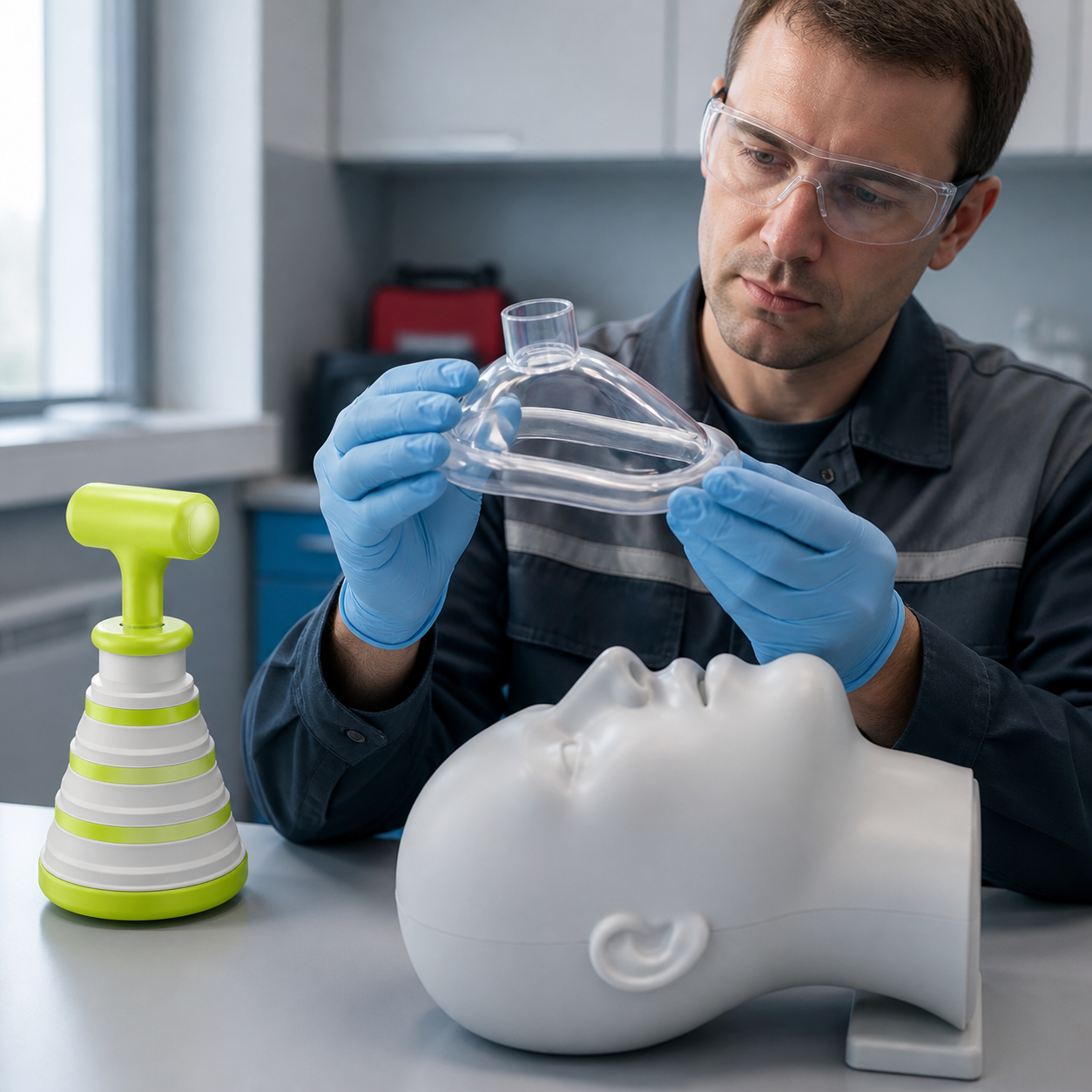
| A suction-based rescue device can only move air and obstruction material through the pressure path it can actually seal. The handle, valve, and chamber matter, but the mask decides whether that pressure reaches the face or escapes around the nose, cheek, chin, or beard line. |
| This is the part people tend to underestimate. A stored device can look clean and complete while the mask edge has already lost enough flexibility to lift during a rapid pull. The failure is quiet. Nothing snaps. Nothing falls off. The user only discovers the loss when the device has to work under stress. |
| Biological reality rejects the static storage model: the mask is an active component that dictates pressure transfer. Replacement timing exists because soft materials age even when the device stays untouched on a shelf. |
| A mask seal is not the same thing as a mask touching the face. A seal has to stay closed while the chamber generates negative pressure. That brief pull changes the load on the mask edge. If the rim is supple, it follows facial contour and helps keep the circuit closed. If the rim is hardened or deformed, it can lift at the exact moment suction needs continuity. |
| The FDA De Novo summary for the QXN category describes the device with the attached mask placed over the nose and mouth to create a mask seal, followed by a rapid pull that generates negative pressure. That sequence makes the mask a functional part of the device, not a replaceable comfort item. |
| Medical-grade silicone and similar soft elastomers are durable materials. Durable does not mean permanent. Heat exposure, compression during storage, cleaning chemistry, ultraviolet exposure, ozone, packaging stress, and long periods under folded or squeezed conditions can change the way the edge behaves. |
| Published silicone-aging literature shows that Shore A hardness, tear behavior, color stability, and viscoelastic response can change with storage and accelerated aging. The exact direction and speed depend on formulation, filler chemistry, storage temperature, and exposure conditions. From a rescue-readiness standpoint, the risk is not whether every mask ages at the same rate. The risk is that users usually cannot detect small compliance loss by sight. |
| A new mask can compress, recover, and conform. An aged mask can develop memory set, a stiffer rim, micro-cracking, or a flattened edge. Those changes create leak paths long before the mask looks obviously broken. |

|
Material variable |
New mask / controlled storage |
Aged mask / high-stress storage |
Rescue consequence |
|
Shore A hardness |
Soft range selected for facial contact and seal formation; many facial silicone references target about 25-35 Shore A for tissue-like compliance |
Hardness can shift with aging, fillers, cleaning, storage, and heat exposure; the rim may feel less compliant even without visible damage |
Edge lift can appear during a rapid pull, especially around the nose, chin, or beard line |
|
Tensile and tear behavior |
Higher elasticity and better rebound at the mask edge |
Reduced tear margin, micro-cracking, or fatigue after compression and environmental exposure |
Seal can collapse or open during the negative-pressure phase |
|
Edge compliance |
Conforms to facial contour and rebounds after compression |
Memory set, flattened rim, localized warping, or reduced recovery |
Persistent leak paths form around difficult facial geometry |
|
Pressure circuit |
A sealed circuit can preserve the negative-pressure profile generated by the device |
Leak paths dilute pressure; counterfeit-device testing illustrates how low-performing circuits can fall below 62 mmHg |
Less usable suction is available to mobilize a solid bolus |
|
Readiness evidence |
Purchase date, replacement date, storage conditions, and IFU kept with the device |
No date label, unknown storage history, or expired mask |
Maintenance uncertainty becomes a failure-to-rescue variable |
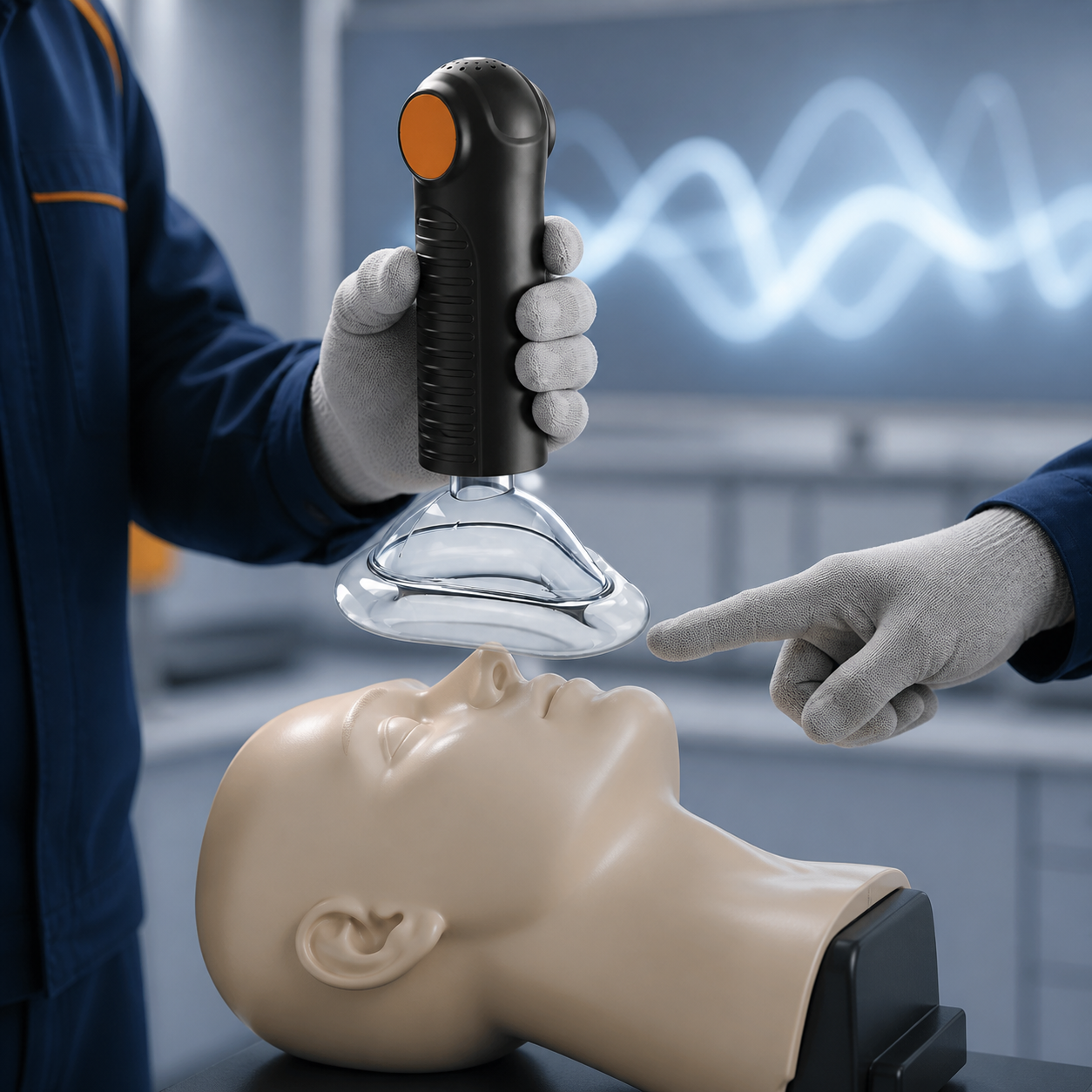
| Negative pressure is only useful if it survives the path from the device chamber to the airway interface. A leak path around the mask edge reduces usable suction before the obstruction moves. The operator may feel the pull and still fail to deliver the pressure profile the device was designed to generate. |
| One 2025 bench comparison found that a certified suction-based anti-choking device produced a much higher negative pressure profile than visually similar counterfeit devices. The figures commonly cited from that work are roughly 154 +/- 57 mmHg for the certified device and values below 62 mmHg for lower-performing counterfeit alternatives. The same lesson applies to aging: when the seal leaks, the pressure circuit is diluted. |
| Food bolus mechanics explain why this matters. A mechanical tongue-palate simulator found that clearing a starch-based bolus required 5.4 kPa, compared with 1.7 kPa for a gum-based sample of similar apparent viscosity. That study was not testing anti-choking devices. It does show that solid, sticky, starch-heavy material can demand much more clearing pressure than softer gel-like material. A leaky mask reduces the margin right where the obstruction may be hardest to mobilize. |
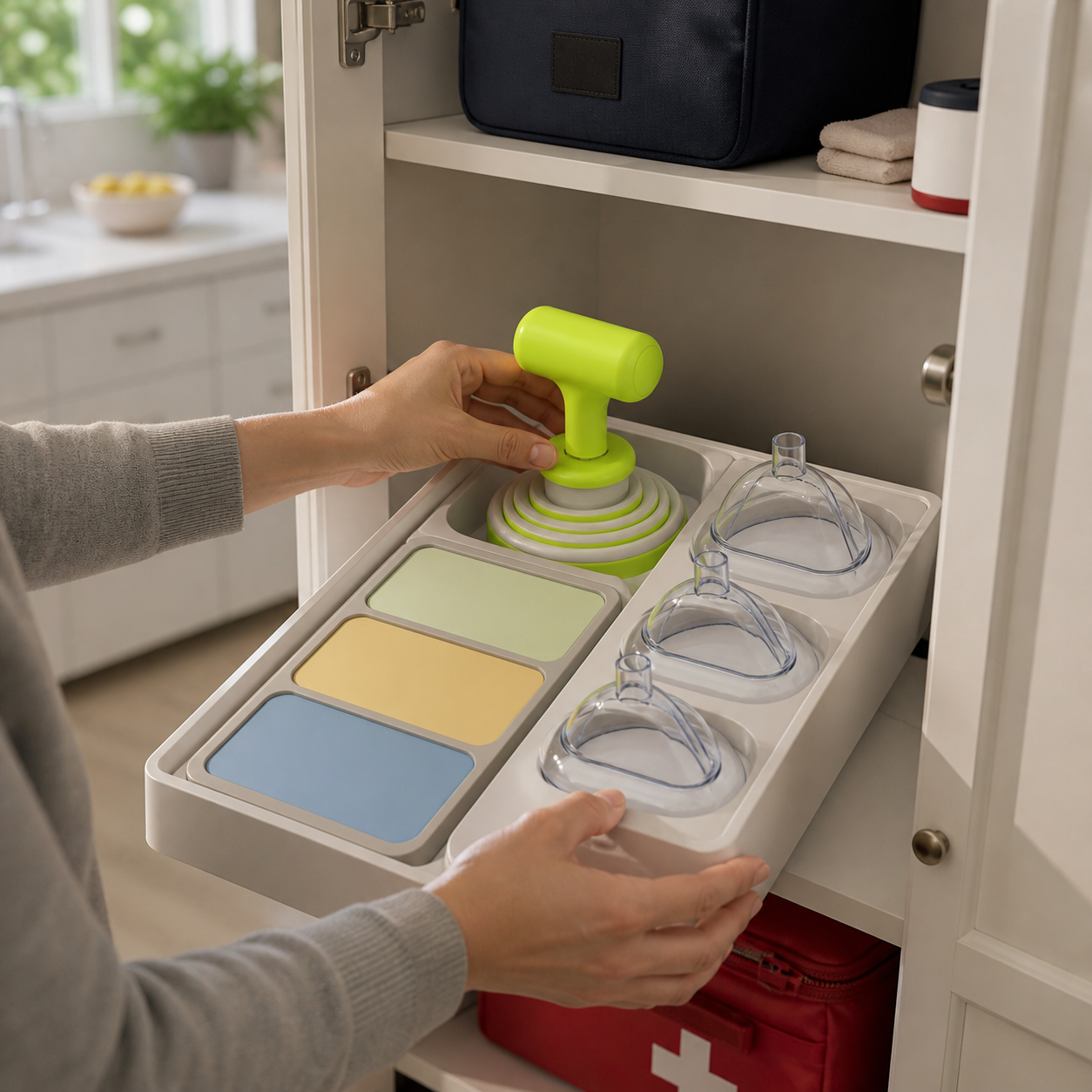
| A replacement interval is a readiness control. It does not claim every mask fails on the same date. It gives families, schools, restaurants, fleets, and care facilities a simple maintenance rule before hidden material drift becomes a rescue variable. |
| Two to three years is a reasonable operational window for parts that depend on softness, rebound, and edge contact rather than simple visual integrity. A mask stored in a cool, dry, stable environment may age more slowly than one left in a hot vehicle, sunny kitchen, humid cabinet, or compressed emergency bag. The replacement rule should follow the manufacturer's instructions for use, and the storage environment should be documented in any institutional program. |
| The practical question is not, 'Does the mask still look okay?' The better question is, 'Would we trust this edge to hold a seal during a fast pull on a moving, frightened, hard-to-fit person?' |
| Mask aging matters more when the face already challenges the seal. Older adults may have altered facial contour. Edentulous users may have reduced midface support. Facial hair can interrupt the rim. Small pediatric faces can make mask selection less forgiving. A person who is panicking, seated awkwardly, or being supported by one rescuer may shift during the pull. |
| A fresh mask does not guarantee a perfect seal in every case. An aged mask removes more margin from faces that had little margin to spare. In failure-to-rescue review, this is the kind of hidden variable that rarely appears in the incident narrative unless the organization has already built a maintenance record. |
| The 2026 FDA framework for suction anti-choking devices is narrow and specific. Under 21 CFR 874.5400, product code QXN, the device type is a Class II suction anti-choking device as a second-line treatment after unsuccessful use of a basic life support choking protocol. The category is not a general first-aid shortcut, and it is not a substitute for first-line choking rescue. |
| The FDA De Novo summary identifies inadequate suction, device failure, use error, delayed BLS choking protocol, biocompatibility, human factors, labeling, and durability as core risk-control areas. Mask replacement belongs inside that same logic. A second-line device cannot be treated as ready if its face-interface component is outside the replacement window or stored in a condition that may weaken seal performance. |
| Terminology also matters. In procurement, school, restaurant, or facility files, use 'FDA-authorized' only when the specific device record supports it. Do not treat FDA registration, marketplace listing, or generic advertising language as proof of QXN authorization. |
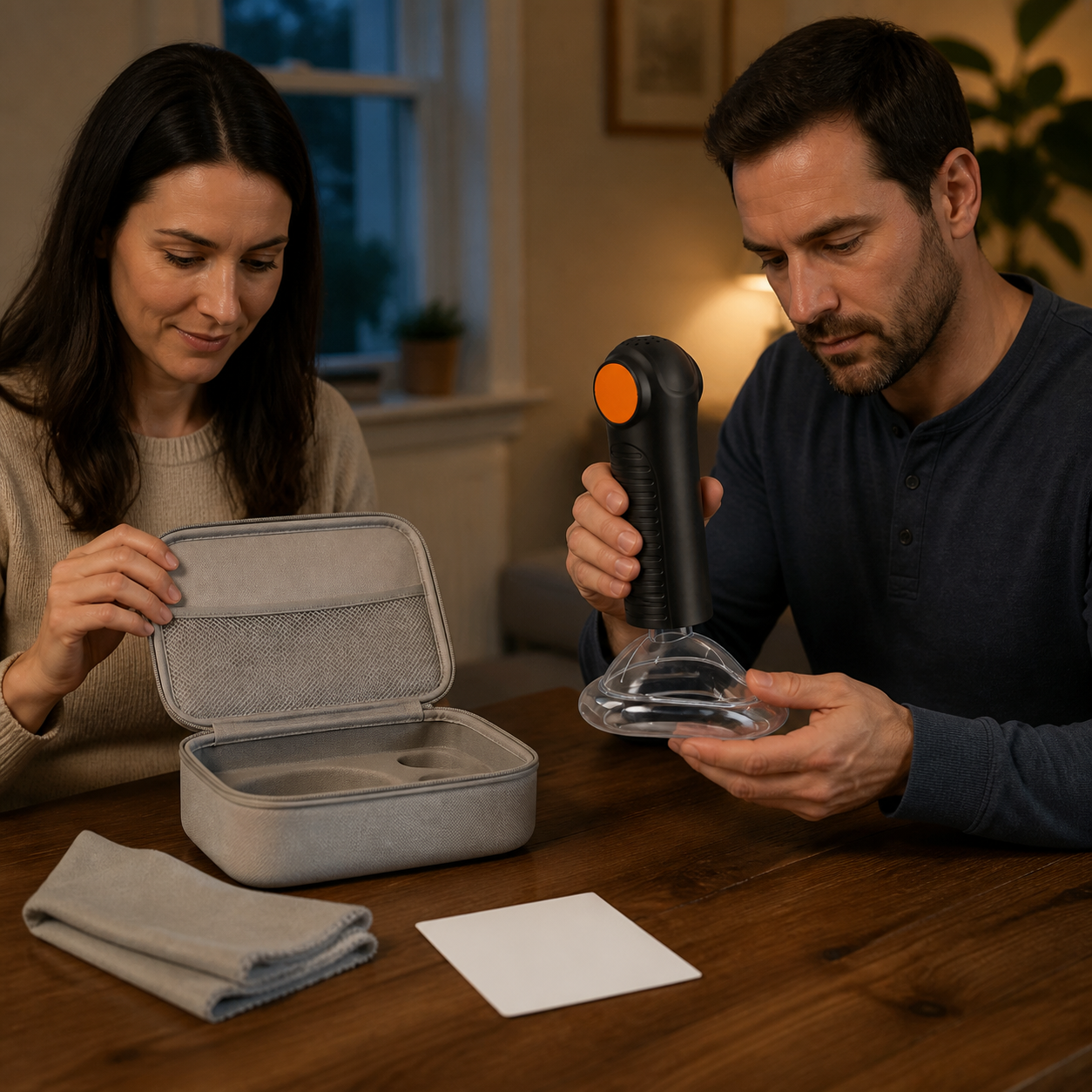
| A home kit should be easy to audit without turning the cabinet into a compliance binder. Write the purchase date and mask replacement date on the storage card. Check the mask during seasonal safety reviews, after moving homes, after heat exposure, and before travel. Replace the mask on schedule even when it appears intact. |
| Store the device away from extreme heat, direct sunlight, chemical cleaners, and compression under heavy objects. Keep the instructions with the device. Make sure the person most likely to use it has watched the manufacturer training and still understands that standard choking rescue protocols come first. |
| Institutional programs need a stronger record. The readiness file should include device model, mask sizes, purchase date, lot or batch information when available, IFU, training record, inspection dates, replacement date, storage location, and the person responsible for reset after drills or incidents. |
| Inspection should not stop at visible cracks. Staff should look for rim flattening, tackiness, discoloration, tears, odor, loss of rebound, warped packaging, missing size labels, and any sign the mask has been stored compressed. The facility should also define who can remove a mask from service. Waiting for committee review during an emergency-tool audit is poor design. |
|
Inspection item |
Pass condition |
Remove from service if... |
Record to keep |
|
Mask age |
Within manufacturer replacement interval |
Past replacement date or unknown purchase date |
Purchase date and replacement due date |
|
Rim shape |
Even edge, no flattening, no warping |
Rim has memory set, edge lift, or uneven compression marks |
Inspection initials and date |
|
Surface condition |
Clean, dry, no cracks, no tackiness |
Cracking, sticky surface, odor, discoloration, or residue |
Photo if used in facility audit |
|
Storage |
Cool, dry, visible, not compressed |
Hot vehicle, direct sun, chemical storage, heavy compression |
Storage location and responsible owner |
|
Training status |
User understands first-line rescue first and second-line device boundary |
Device exists without current training or IFU access |
Training date and responsible trainer |

| Replace the mask before the routine 2-3 year interval if it has been used in an incident, used in hands-on practice without being designated for practice, exposed to high heat, stored compressed, cleaned with non-approved chemicals, visibly cracked, sticky, deformed, or missing labeling. Replace it if the rim no longer rebounds cleanly after light compression. |
| For schools and care facilities, a mask used on a person should not be returned to emergency service unless the manufacturer instructions clearly allow it and the facility policy supports the cleaning or reset process. Many emergency systems perform better when real-use components are treated as single-event consumables. |
| We treat mask replacement as pressure-circuit maintenance. The device body may look like the main mechanism, but rescue performance depends on the entire loop: recognition, first-line action, retrieval, correct mask size, face seal, one-way suction path, and post-event reset. |
| The mask is where a stored product becomes a working interface with a human face. Edge compliance is not a design detail for engineers to admire. It is the hidden variable that decides whether the negative-pressure event reaches the obstruction or leaks into the room. |
| Record the mask age. Check the rim. Confirm the replacement date. Keep the device out of heat and compression. Review the training. Keep first-line choking rescue first. |
| An anti-choking device mask does not have to look broken to become weaker. In a second-line rescue tool, that distinction is operational. A fresh, compliant mask protects the pressure circuit before an emergency forces the issue. |
Follow the manufacturer instructions for the specific device. As a general readiness rule, many programs treat 2-3 years as a practical replacement window for soft masks because seal quality depends on edge compliance, rebound, and storage history, not just visible damage.
Yes. A mask can lose compliance, develop memory set, or form small leak paths before cracks are obvious. Visual inspection helps, but it is not a full pressure-performance test.
The mask closes the pressure circuit. If the edge leaks during a rapid pull, usable negative pressure can drop before the obstruction moves. The problem is pressure transfer, not appearance.
No. Under the 2026 FDA QXN framework, suction anti-choking devices are second-line tools after unsuccessful basic life support choking protocols. Mask maintenance supports readiness only within that second-line role.
Yes. Institutional files should include purchase date, replacement due date, inspection records, storage location, IFU, training record, and the person responsible for removing expired or damaged masks from service.
| FDA De Novo Summary - Supports QXN, 21 CFR 874.5400, Class II, second-line treatment, mask seal, verification of pressures, durability, and biocompatibility requirements. Full link |
| FDA Safety Communication - Supports the first-line rescue boundary and FDA language that anti-choking devices may be used as a second option if standard protocols are unsuccessful. Full link |
| FDA TPLC Product Code QXN - Supports the regulatory identity of product code QXN, regulation number 874.5400, Class II, and second-line definition. Full link |
| Redfearn et al. - Supports the 5.4 kPa versus 1.7 kPa bolus clearing pressure comparison for starch-based and gum-based samples. Full link |
| Fijacko et al. - Supports the negative-pressure performance comparison used to discuss pressure dilution and counterfeit or low-performing suction circuits. Full link |
| Cevik et al. - Supports silicone hardness discussion over 2-year dark storage and material-dependent changes in soft silicone performance. Full link |
| Esmael et al. - Supports the 25-35 Shore A tissue-like compliance reference and material-aging discussion. Full link |
| American Heart Association Newsroom - Supports updated choking guidance for children, adults, and infants. Full link |
This article is for emergency preparedness planning and product maintenance education. It is not medical advice, legal advice, diagnosis, or treatment. Follow current training from qualified CPR and first-aid organizations, local emergency protocols, and the manufacturer instructions for the specific device. Suction anti-choking devices should not delay established first-line choking rescue protocols, 911 activation, or CPR when indicated. Verify FDA authorization, device labeling, replacement schedules, and local policy before procurement or deployment.


