Alarm fatigue creates recognition delay. In a severe airway emergency, schools do not have much time to waste. Brain injury risk rises quickly when oxygen delivery is interrupted, so the alert system has to do three things fast: signal the right people, attach location, and confirm activation without adding hesitation. If standard basic life support fails, second-line suction devices under FDA's QXN category belong later in that chain, not at the beginning.
Before choosing equipment, review Fitiger's anti-choking device buyer evidence checklist for FDA wording, testing, seller traceability, and kit-selection questions.

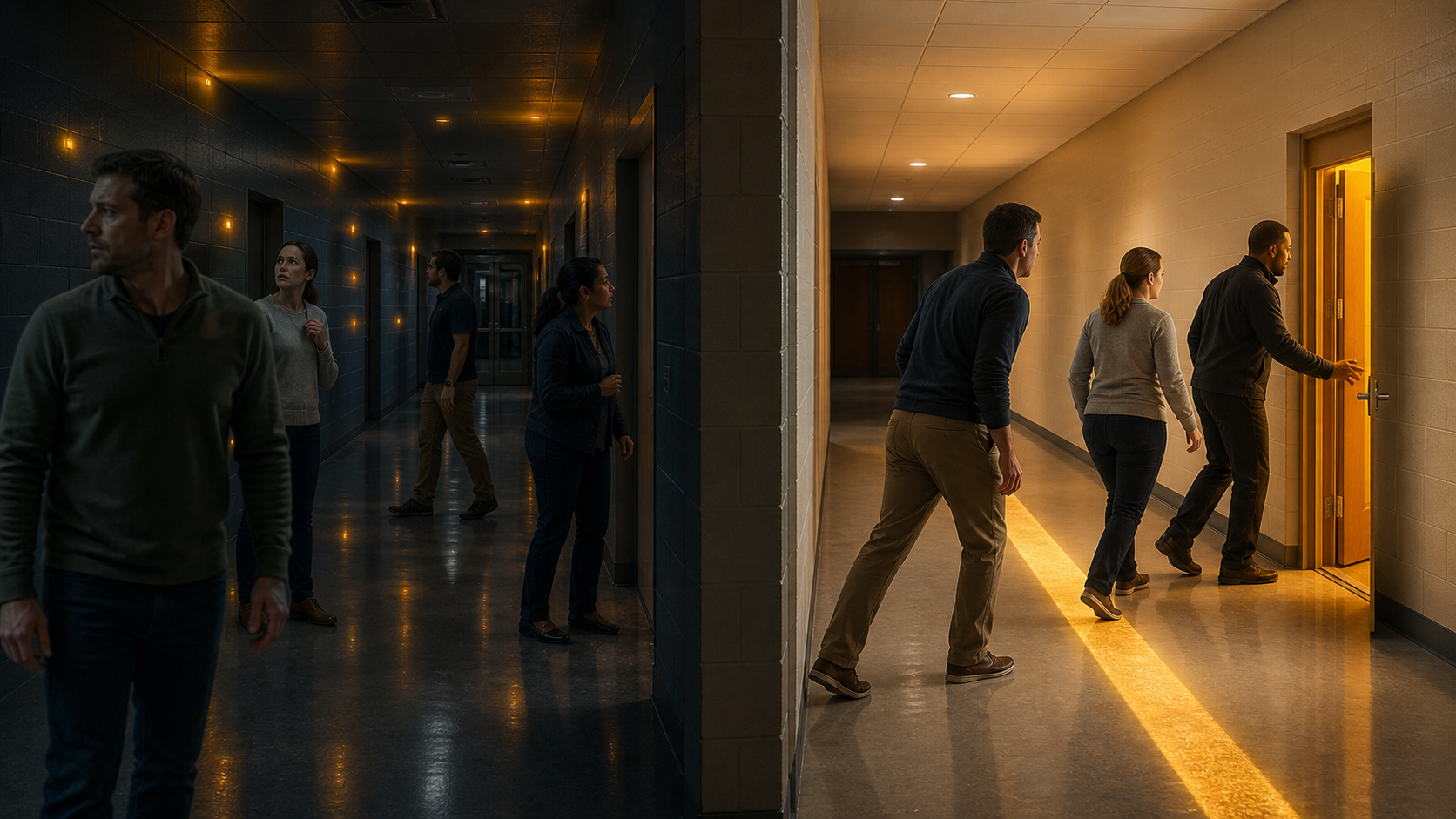
A school medical alert system works only if staff still trust the signal enough to move. That means fewer low-value alerts, clearer event categories, immediate confirmation, room-level location, and routing that reaches the nearest trained responders instead of flooding the whole building with noise.
Alarm fatigue starts as a design flaw and ends as a response failure.
Too many alerts. Too many duplicates. Too many notifications sent to people who cannot act on them. Staff adapt. The tone still sounds. The message still appears. Urgency fades.
In a school, that shift is easy to miss because it rarely looks dramatic. No one announces that they have stopped trusting the system. They simply hesitate more. They wait for confirmation. They assume somebody closer is already moving. In a severe airway emergency, those pauses burn through the first minute before the next pair of hands even starts walking. Alarm fatigue directly erodes the 180-second operational response window by adding cognitive friction during recognition and movement.
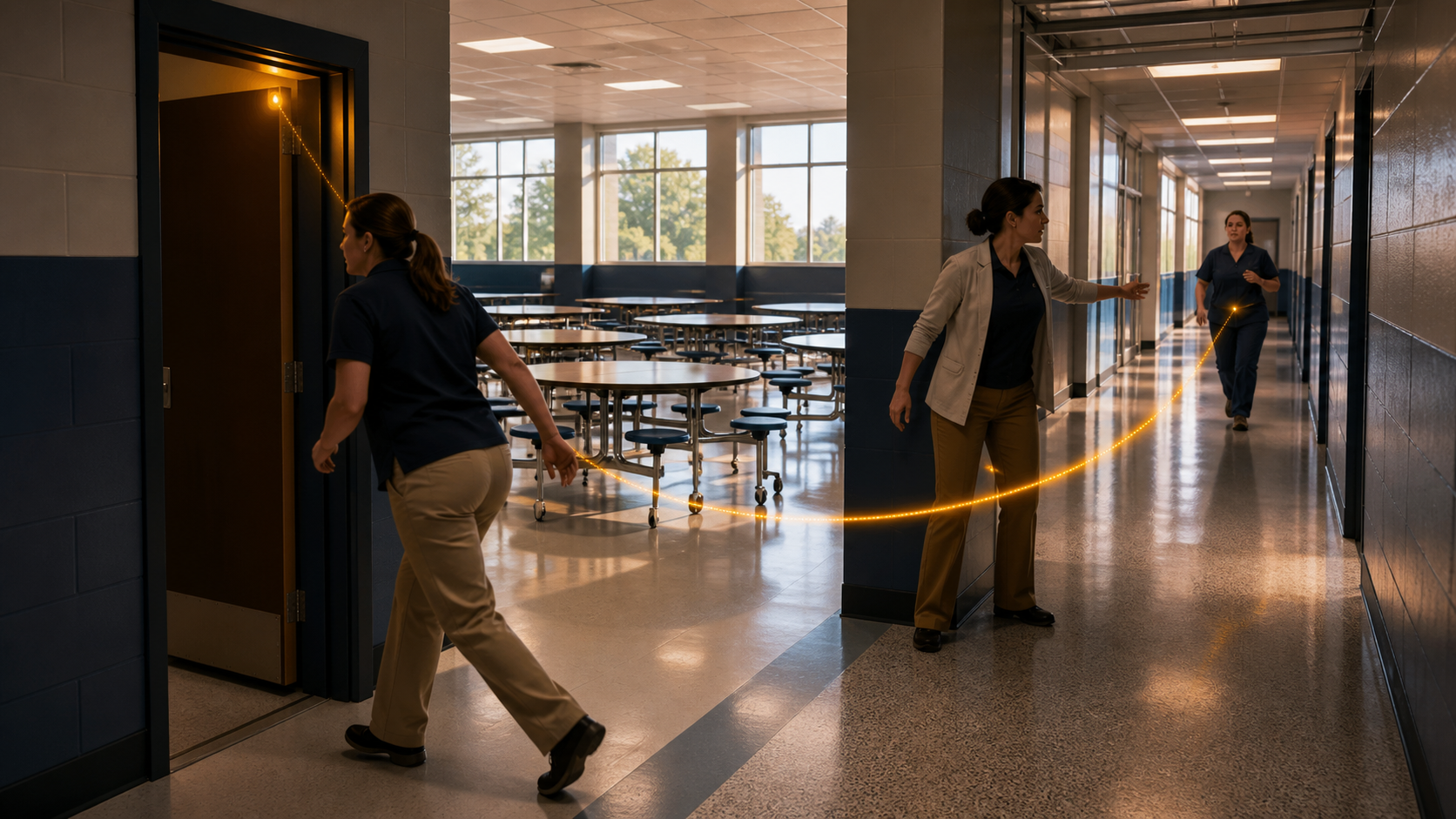
A staff member presses for medical help. Three adults receive the alert. One assumes the nurse is already going. Another thinks it may be a duplicate because a similar message came through earlier in the day. A third opens the notification and still cannot tell whether this is choking, a fainting student, a seizure, or a low-acuity office request.
Nothing has failed at the hardware level. The breakdown happens in meaning.
That is what makes alarm fatigue so expensive in school environments. A loud building already forces staff to sort signal from noise. When the alert layer adds more ambiguity instead of removing it, the system starts delaying the very movement it was meant to trigger.
In airway emergencies, the rescuer's dilemma is usually framed as a painful choice: stay hands-on with the student, or leave the scene to find help.
Alarm fatigue creates the same dilemma one layer farther out.
The adult at the scene is asking whether they can keep rescuing without losing backup. The adult receiving the alert is asking whether this is the message that requires immediate movement or just another interruption that will resolve before they arrive.
Good system design removes both dilemmas.
The person at the scene should be able to stay with the student and begin the physical rescue sequence. The people receiving the alert should know, within seconds, whether they need to move, where they need to go, and how serious the event is. That is first-minute engineering.
Schools often flatten medical emergencies into one vague category: medical assist.
That label is too broad to carry real urgency.
A severe airway obstruction is not the same as a student with nausea, a low-priority office request, or a nonurgent health-room call. If the system does not distinguish event type early, the receiver has to spend precious time interpreting the message before acting on it. In a real airway emergency, that extra mental step is enough to slow down the next responder.
High-value alert design starts with specificity.
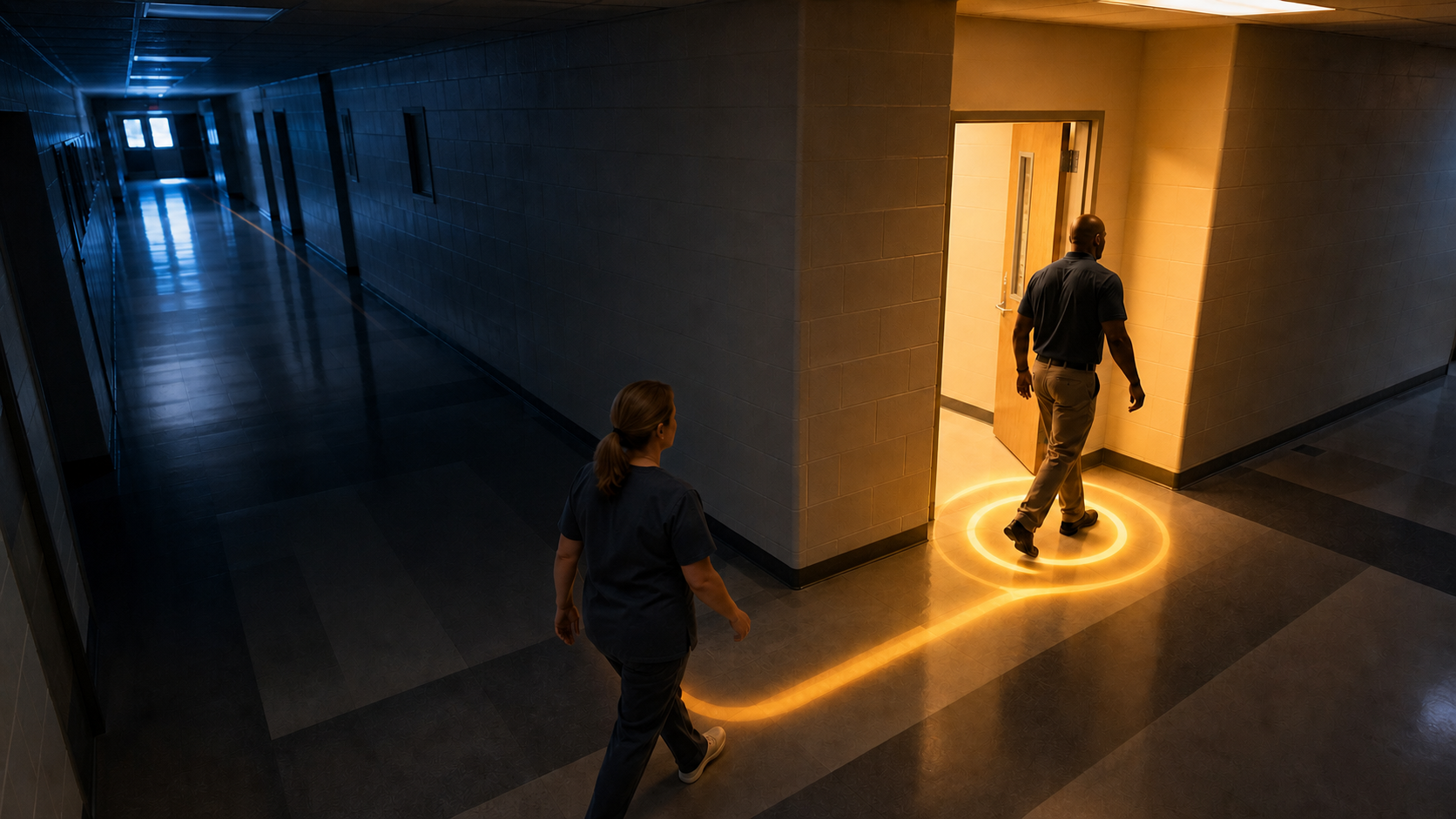
Training stops at the door; if the backup team cannot find that door, the first minute is already lost.
This is why location cannot be treated as a nice extra. In a crisis, room-level awareness is the only metric that matters. Centimeter precision is a luxury schools do not need. What they need is enough indoor accuracy to stop hallway searching, repeated radio clarification, and wrong-door arrival. BLE-based location systems have gained traction for exactly that reason: they offer practical room-level positioning with lower infrastructure cost than more hardware-intensive alternatives.
In a severe choking event, the adult performing 5 back blows and 5 abdominal thrusts should not also be trying to explain building geography over a radio.
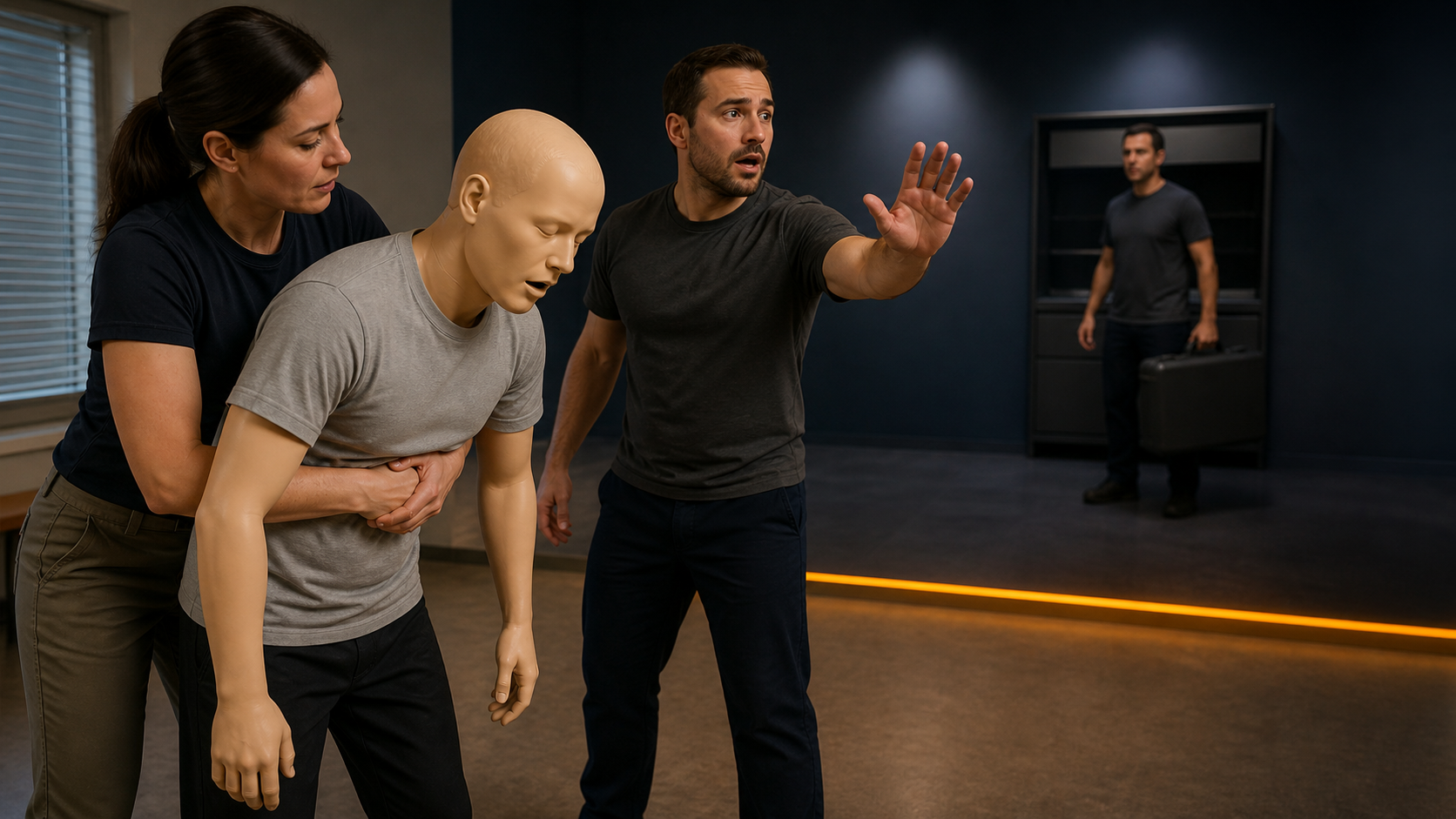
The physical rescue sequence still comes first. Current AHA guidance for a conscious child with severe foreign-body airway obstruction is repeated cycles of 5 back blows followed by 5 abdominal thrusts until the object is expelled or the child becomes unresponsive. American Red Cross public guidance uses the same 5-and-5 approach for adults and children, with infants treated differently.
Second-line suction devices belong later in the chain. FDA's March 4, 2026 De Novo classification established QXN under 21 CFR 874.5400 as a Class II device category for a suction anti-choking device used as a second-line treatment after unsuccessful use of a basic life support choking protocol. That boundary matters operationally. Alert systems should support first-line rescue without distracting from it, while still making sure traceable, compliant second-line equipment can be located and retrieved quickly if standard measures fail.
Most schools do not need more alerts. They need fewer bad ones.
Start with a noise audit this week.
How many medical notifications go out in an average day?How many require actual movement?How many are duplicates?How many reach people who cannot act?How often does the receiver know the event type and room immediately?How often does the person who triggered the alert get clear confirmation?
If staff are receiving more than a handful of medical notifications per day that do not require action, the system is already training them to hesitate in the moments that do.
A school medical alert system should do one thing above all else: protect urgency.
When a student is choking, the building does not need more sound. It needs a signal people still believe, a location they can move toward without search time, and a response path that does not compete with the rescue already happening in the room.
That standard is not abstract. It can be audited. It can be measured. It can be fixed.
Alert Component | Low-Value Design (Fatigue Trigger) | High-Value Design (Rescue Ready) |
|---|---|---|
Event Specificity | Generic 'Medical Assist' | Specific 'Severe Airway/FBAO' or equivalent high-acuity category |
Recipient Logic | Building-wide broadcast | Targeted routing to nearest trained responders and designated clinical staff |
Location Data | Room number only or verbal description | Map-aware, room-level location attached to the alert |
Feedback Loop | Blind trigger with no reassurance | Immediate activation confirmation to the person who triggered the alert |
For related planning context, review the anti-choking device buyer evidence checklist.
Alarm fatigue happens when staff receive so many low-value, duplicate, or poorly categorized alerts that they stop reacting with urgency. The system still sends signals, but the response slows down.
A severe airway obstruction has very little tolerance for delay. If the alert system adds cognitive friction or uncertainty, backup staff arrive later and the first-minute rescue window narrows.
At minimum: event category, location, recipient targeting, and immediate confirmation to the person who triggered the alert.
They belong as second-line backup only after unsuccessful basic life support choking measures, consistent with FDA's QXN / 21 CFR 874.5400 Class II device classification.
AHA Child FBAO Algorithm (2025) - Supports Confirms 5 back blows followed by 5 abdominal thrusts for conscious children with severe FBAO.
American Red Cross Adult & Child Choking - Supports Confirms 5 back blows followed by 5 abdominal thrusts in public first-aid guidance for adults and children.
FDA De Novo DEN250012 / QXN - Supports Establishes suction anti-choking device as a Class II second-line treatment after unsuccessful BLS choking protocol.
Cleveland Clinic: Cerebral Hypoxia - Supports Supports that brain injury risk rises quickly when oxygen delivery is interrupted and helps frame the 180-second operational response window.
Alarm Fatigue Scoping Review (2025) - Supports Supports alarm fatigue as a significant patient-safety risk linked to excessive or low-value alerts.
Indoor Localization Review (Wi-Fi, BLE, UWB, IMU) - Supports Supports comparison of indoor location technologies and tradeoffs among BLE, Wi-Fi, and UWB.
Bluetooth vs UWB for Indoor Location - Supports Supports practical contrast between BLE and UWB for indoor location deployments.
This article is for educational and preparedness purposes only. It does not replace professional medical advice, training, or emergency clinical judgment. In a real choking emergency, activate emergency medical services immediately and follow current accredited first-aid guidance. Second-line suction devices, where used, should only be considered after unsuccessful standard basic life support choking measures and within applicable regulatory boundaries.


