Choking preparedness is no longer just a family safety topic. It belongs in homes, schools, restaurants, workplaces, and elder-care settings. The strongest plans recognize severe choking fast, train age-specific first aid, reduce food and supervision risks, and place any anti choking device only as a second-line backup after manual rescue fails.
For a household checklist, see Fitiger's child and home choking safety readiness plan.
Choking rarely enters the room as a headline. It enters through an ordinary bite. A toddler laughs with food still in their mouth. A student turns silent in the cafeteria. A grandfather keeps clearing his throat through dinner, then one night cannot move enough air to cough. A restaurant server notices a guest halfway out of the booth, eyes wide, unable to answer.
Those scenes turn choking preparedness into a practical question. The problem is not only knowing what choking is. It is finding the next preventable delay before an ordinary meal becomes an emergency.
This report is a readiness map for families, schools, elder-care teams, workplaces, restaurants, and community spaces that need a clearer way to prepare before the first minute gets chaotic.

Public attention often starts with young children, and for good reason. Babies and toddlers explore with their mouths, chew less consistently, and can choke on foods that look harmless to adults. Parents worry about grapes, hot dogs, popcorn, toy parts, coins, balloons, and the moment a noisy snack turns strangely quiet.
The fatality picture also forces attention toward older adults. Swallowing problems, dentures, dry mouth, neurologic disease, dementia, frailty, medication effects, and eating alone can turn an ordinary meal into an airway event. Families often miss the early pattern because it looks small at first: slower meals, more water at the table, coughing after thin liquids, or avoiding meat and bread.
A useful annual choking preparedness report does not rank one group as more worthy of attention. It separates the work. Child safety leans heavily on prevention and supervision. Older-adult readiness leans heavily on swallowing risk, meal support, and fast response when the cough disappears.
Population | Common risk pattern | What preparedness should look like |
|---|---|---|
Infants | Small airways, immature feeding skills, inability to explain distress. | Infant-specific training: 5 back blows + 5 chest thrusts; no abdominal thrusts. |
Toddlers and young children | Round, sticky, hard, or oversized foods; toys and household objects; distracted eating. | Food modification, seated eating, close supervision, and age-specific choking first aid. |
School-age children | Cafeteria noise, fast eating, peer distraction, after-school snacks, delayed recognition. | School choking emergency plan, staff role clarity, cafeteria response drills, and accessible safety equipment. |
Healthy adults | Large bites, rushed meals, alcohol, restaurant settings, eating while distracted. | Basic choking first aid knowledge, 911 delegation, and clear home or workplace response roles. |
Older adults | Dysphagia, dentures, dry mouth, cognitive decline, fatigue, eating alone. | Meal observation, swallowing-risk review, caregiver training, and reachable backup tools where policy permits. |
Families usually think about choking safety in the kitchen. That is a good start, but not enough. The living room snack, the car-seat cracker, the birthday-party grape, and the grandparent eating alone all deserve a place in the family choking emergency plan.
For parents, the most useful prevention still looks ordinary: cut high-risk foods, keep young children seated, avoid eating while running or lying down, and watch snacks that older siblings hand to younger children. A whole grape, a hot dog round, or a thick spoonful of peanut butter can behave very differently in a toddler airway than it does on an adult plate.
For families with older adults, the warning signs are less likely to look like a dramatic emergency at first. Pay attention when meals take longer, coughing becomes frequent, food gets left unfinished, denture fit changes, or an older parent quietly starts avoiding foods they used to enjoy.

School choking preparedness is not only a nurse-office issue. Choking usually starts where students eat: cafeterias, classrooms during snack time, after-school programs, buses, sports concessions, and field trips. A device or first-aid kit stored far from those places may satisfy a purchase order and still fail the first-minute test.
A school choking emergency plan should answer practical questions. Who starts care? Who calls 911? Who gets the nurse? Who moves students back? Which door should EMS use? Where is the choking first aid kit or second-line device staged? Does cafeteria staff know the same plan as teachers and substitutes?
For schools, the operational problem is real. They describe the work of turning a policy into a reachable action.
Campus zone | Risk variable | Preparedness move |
|---|---|---|
Cafeteria | High noise, high density, fast eating, limited line of sight. | Train lunch staff to recognize silent choking; stage equipment within a realistic retrieval path. |
Classroom snacks | Small groups, mixed supervision, allergy and choking confusion. | Post a simple response card and assign call/care roles. |
Playground and bus loop | Distance from nurse office; food may be present after school. | Map EMS access and after-hours staff roles. |
Special education settings | Higher feeding support needs for some students. | Use student-specific care plans and avoid generic lunchroom assumptions. |
Sports and events | Concessions, crowds, non-school-hour staffing. | Extend choking emergency planning beyond the regular cafeteria schedule. |

In senior care, choking safety starts before the tray reaches the table. Dysphagia, modified diets, staff handoff, supervision level, room visibility, and response distance all matter. A resident can have the right care plan and still receive the wrong texture if the assessment does not reach the plate.
Care teams should be careful with a false sense of calm. An older adult who coughs at lunch every day may not look like an emergency until one meal goes silent. A resident with dementia may not report swallowing trouble. A person eating alone may lose the best rescue window before anyone notices.
The strongest choking safety in senior care is not one product or one policy. It is a daily routine: know who is high risk, prepare the correct food texture, supervise the meal proportionally, train staff on severe choking signs, and keep emergency response tools where staff can reach them without leaving the resident alone.
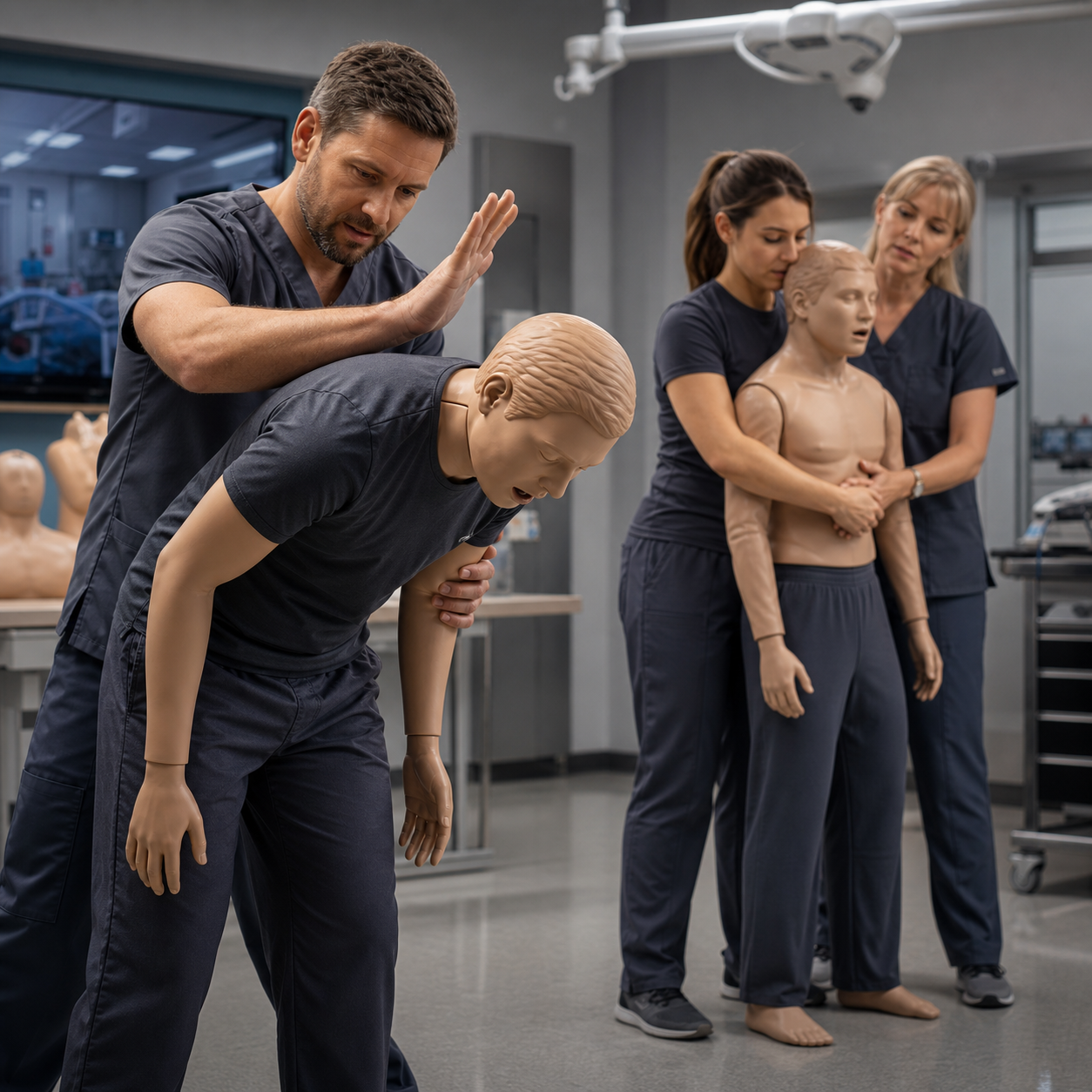
The 2025 American Heart Association update gives schools, families, workplaces, and care teams a clearer public baseline. For conscious adults and children with severe choking, the recommended sequence is repeated cycles of 5 back blows followed by 5 abdominal thrusts until the object comes out or the person becomes unresponsive. For infants, the sequence is 5 back blows followed by 5 chest thrusts. Abdominal thrusts are not recommended for infants.
That update matters because many people still use older shorthand. They say Heimlich maneuver and imagine one move. The practical response now needs more precision: age, responsiveness, cough strength, and whether the person becomes unresponsive all change the next step.
Person choking | Current first-line response | Do not do this |
|---|---|---|
Adult or child over age 1, responsive, severe choking | Alternate 5 back blows and 5 abdominal thrusts; call 911 if severe or unresolved. | Do not wait for the scene to get louder. Do not use blind finger sweeps. |
Infant under age 1, responsive, severe choking | Alternate 5 back blows and 5 chest thrusts while supporting head and neck. | Do not use abdominal thrusts on an infant. |
Any age, becomes unresponsive | Lower to a firm surface, call 911, start CPR, check only for visible object before breaths. | Do not keep repeating standing maneuvers after collapse. |
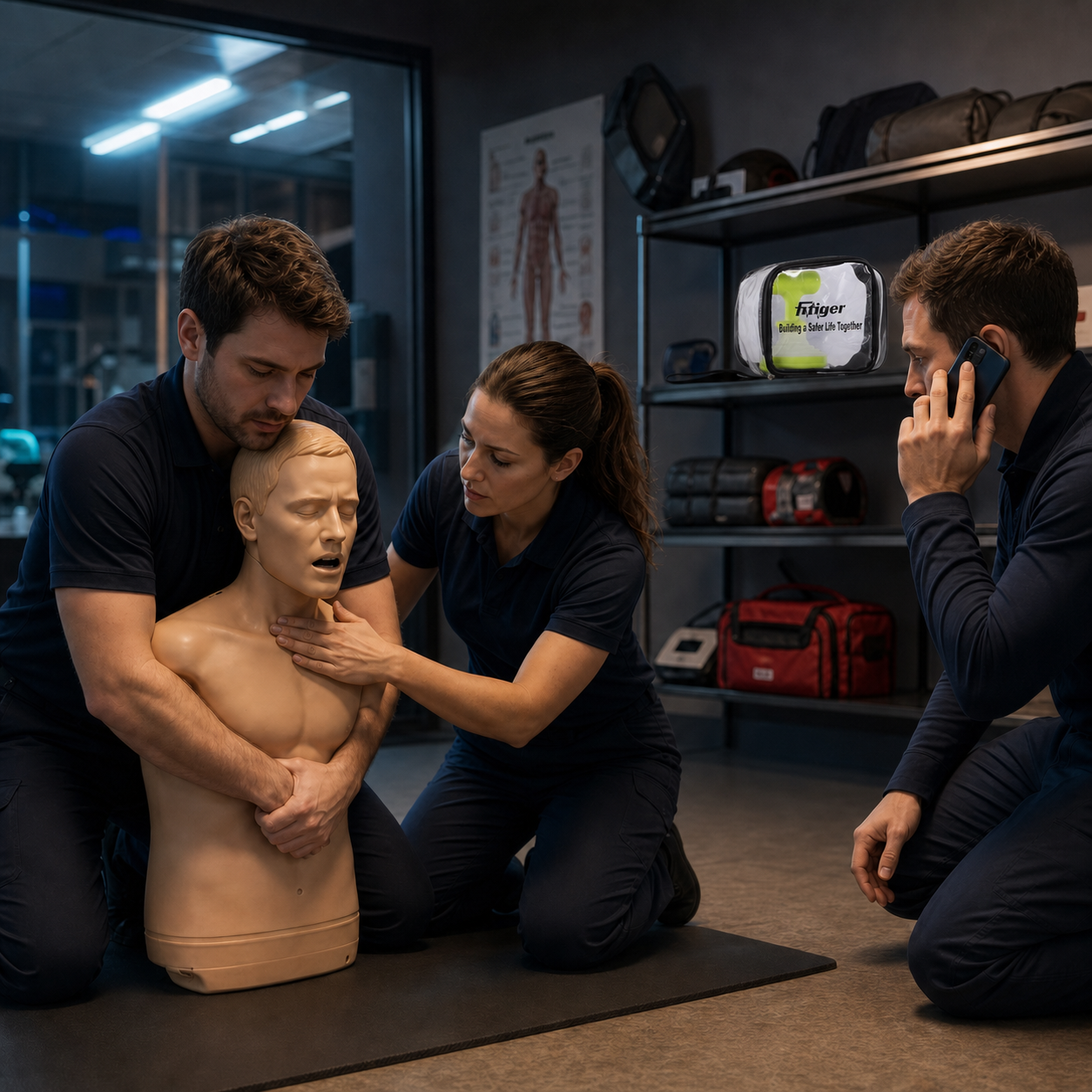
Many readers come to this topic because they are already considering an anti choking device, choking rescue device, airway clearance device, choking suction device, portable airway rescue device, or choking emergency kit. The buying concern is human: what happens if I do the right manual steps and the object still does not come out?
That is a valid question, but it needs the right boundary. FDA created 21 CFR 874.5400 for a suction anti-choking device as a second-line treatment. The QXN device category is tied to complete airway obstruction after unsuccessful use of a basic life support choking protocol. That means the device sits after manual first aid, not in front of it.
For a home, school, restaurant, workplace, or care facility, a choking rescue device can make sense as physical redundancy only if it is placed where choking risk actually occurs and people know when not to use it. A device in a locked cabinet or a box nobody has opened is not readiness. It is inventory.
People do not buy choking safety equipment because they love devices. They buy it because they imagine a real person: a child at dinner, a spouse eating alone, a parent with swallowing trouble, a student in the cafeteria, or a customer in a restaurant booth.
The questions behind the purchase should be answered plainly.
Buyer concern | Plain answer |
|---|---|
Does an anti choking device replace first aid? | No. Manual first-line care and 911 remain part of the response. The device is backup after unsuccessful manual rescue. |
Should every family buy one? | A device may be useful for some households, but it does not replace safe food habits, training, or a plan. |
Where should it be stored? | Near the real risk: kitchen, dining area, cafeteria, care dining room, restaurant station, or workplace break area. |
What if I panic? | Practice the sequence before the emergency. The device should not be the first time you think through the response. |
Can it be used for infants? | Do not assume infant use. Infants follow a specific 5 back blows + 5 chest thrusts protocol, and device labeling must be followed exactly. |
| Update family and staff training to reflect the 2025 choking guidance. | Teach the cough distinction: strong cough means monitor; weak or absent cough means act. |
| Cut high-risk foods for young children and keep meals seated and supervised. | Review swallowing warning signs for older adults and residents in care settings. |
| Create a home choking emergency plan with roles for calling 911, starting care, and clearing space. | Map school and cafeteria response paths, not just nurse-office storage. |
| Stage any choking rescue device where retrieval time makes sense. | Document training, placement, drills, and post-event review in schools and care facilities. |
Choking preparedness is not one skill, one product, or one annual reminder. It is a set of small decisions made before the room goes quiet: food cut the right way, staff trained in the current sequence, a phone within reach, a device placed where it can be used, and a family or team that knows who moves first.
The year ahead should push families, schools, workplaces, restaurants, and care teams toward the same standard: recognize severe choking faster, act within the first minute, and treat any airway clearance device as backup after manual rescue fails.
Explore Fitiger airway safety resources, family choking emergency kits, school readiness tools, and second-line choking-readiness options for homes, schools, restaurants, workplaces, and care settings after standard manual rescue fails.
For related planning context, review the child and home choking safety readiness plan.
The most important step is recognizing severe choking quickly. If a person can cough forcefully, monitor and encourage coughing. If the cough becomes weak or absent, speech disappears, or breathing fails, begin age-appropriate choking first aid and call 911.
Young children and older adults need special attention for different reasons. Children face food size, shape, and supervision risks. Older adults face swallowing problems, dentures, dry mouth, frailty, cognitive decline, and eating alone.
The AHA update recommends alternating 5 back blows and 5 abdominal thrusts for conscious adults and children with severe choking. Infants use 5 back blows and 5 chest thrusts. If the person becomes unresponsive, CPR begins.
No. A choking rescue device or airway clearance device is a second-line backup after unsuccessful manual first aid for complete airway obstruction. It does not replace 911, CPR, EMS, or age-appropriate choking rescue steps.
Schools that choose to stage choking safety equipment should place it near where students eat and train staff on when and how it fits. A device far from the cafeteria or locked away may not help during the first minute.
Elder-care teams should connect swallowing assessments to real meals, verify texture requirements, supervise high-risk residents, train staff on silent choking signs, and define what happens if manual rescue fails.
A practical kit may include emergency contact instructions, a visible response card, first-aid training reminders, and, for appropriate ages and settings, a properly labeled second-line choking rescue device. The kit should never replace training.
Families can review the plan whenever feeding stages or household risks change. Schools, restaurants, workplaces, and care teams should review placement, training, and response roles at least annually and after any choking incident or near miss.
American Heart Association 2025 CPR and ECC Guidelines Update - Supports the updated choking first-aid baseline for adults, children, and infants.
FDA 2026 Safety Communication - Supports the boundary that established choking rescue protocols remain primary.
FDA De Novo DEN250012 - Supports 21 CFR 874.5400, product code QXN, and second-line suction anti-choking device category.
National Safety Council Injury Facts - Supports U.S. choking death and age-pattern interpretation.
HealthyChildren.org American Academy of Pediatrics - Supports child choking prevention, food-shape risk, and family safety guidance.
MedlinePlus Choking First Aid - Supports choking warning signs and emergency response guidance.
This article is for general education and emergency preparedness only. It does not replace professional medical advice, certified CPR or first-aid training, emergency medical services, school policy, care-facility policy, or device instructions for use. In a choking emergency, call 911 or your local emergency number and follow dispatcher instructions.


