Since July 1, 2025, California LEAs have been required to include an Instructional Continuity Plan, or ICP, in the Comprehensive School Safety Plan, or CSSP. Airway-safety procurement now has to function inside that planning system. If the file can't show logical placement, response sequence, and record maintenance, the purchase is harder to defend in compliance review.
Before choosing equipment, review Fitiger's anti-choking device buyer evidence checklist for FDA wording, testing, seller traceability, and kit-selection questions.

California's current framework doesn't read like a device mandate. It still changes how districts should buy and defend second-line airway equipment.
CDE's guidance says each local educational agency must include an ICP in the CSSP by July 1, 2025, under Education Code Section 32282(a)(3). The requirement applies to school districts, county offices of education, and charter schools. The CSSP still has to be reviewed, updated, and adopted by March 1 each year. A device purchase that sits outside that annual review cycle now looks weaker than it did a few years ago.
The operational point is simple. A second-line device isn't just a budget line anymore. It becomes part of the campus safety file: where the unit sits, who can reach it, which room drives the risk, how the record stays current, and what happens when staffing or room use changes.

Instructional continuity sounds academic until a district tries to separate planning from operations.
The ICP requirement pulls communication, emergency disruption, and operational readiness into the same planning environment. CDE's guidance says the plan must establish communication with pupils and families and provide instruction when in-person instruction is disrupted by an emergency, with pupil engagement procedures beginning as soon as practicable and no later than five calendar days after the emergency. That is a continuity rule. It still raises the bar for safety coordination.
A district that buys second-line airway equipment now has to keep health staff, safety leads, facilities, procurement, and site administration on the same page. Separate assumptions create drift. The nurse thinks the backup unit is still outside the cafeteria. Facilities moved it during a summer repaint. Procurement has the invoice. The CSSP map never changed. A purchase can be real and still be operationally wrong.
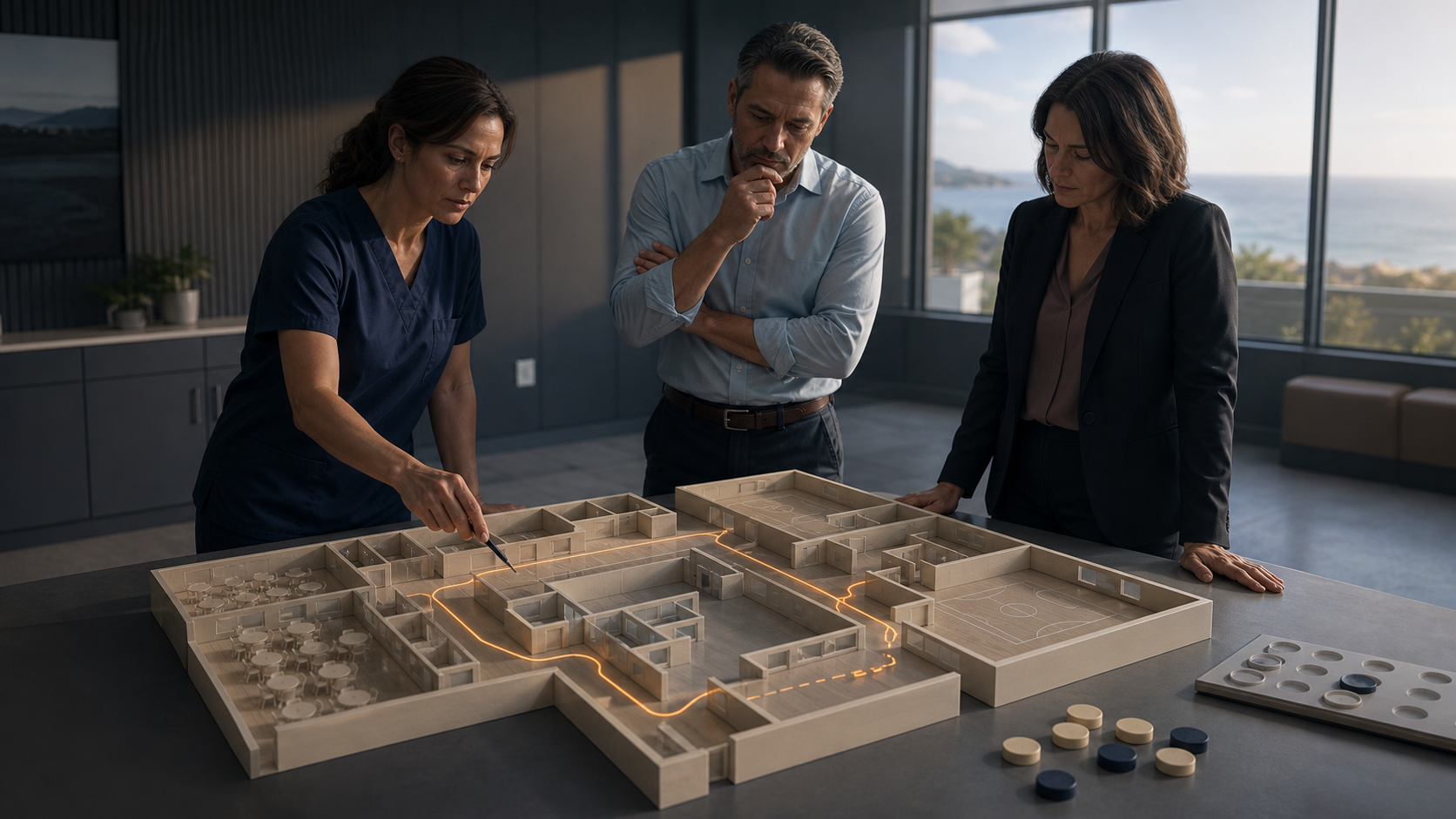
| Hardware is the easy part. The floor plan is where the argument either holds or falls apart. | Cafeterias are obvious. Nurse offices are obvious. Special education classrooms, adaptive meal settings, and transition spaces get missed more often. California does not tell districts exactly where to mount a second-line airway device. That leaves campuses with more discretion and more responsibility. |
| From our engineering and product safety perspective, map logic is not a decorative planning exercise. It is a latency problem. When we look at response paths, a 30-second retrieval delay can decide whether second-line intervention even enters the useful part of the event window. A clean campus map reduces response latency. A pretty but generic map doesn't. | Annual reviews catch operational drift; static plans create latency in real emergencies. One unit can still be visible, funded, and fully authorized while sitting in the wrong part of the building for the student population most likely to expose the weakness first. |
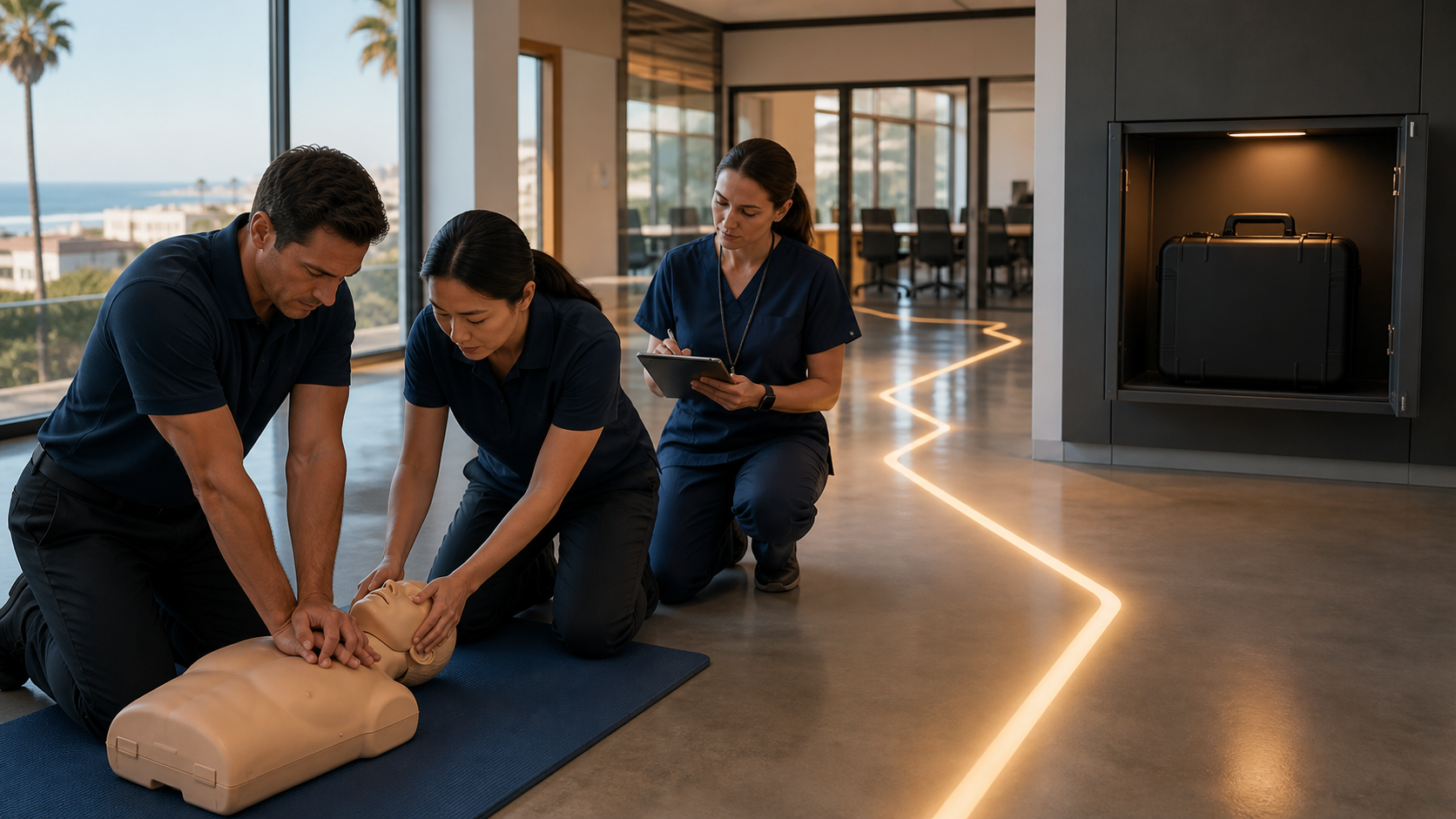
California's CSSP and ICP rules do not replace the federal device framework. They sit next to it.
FDA's March 4, 2026 safety communication said one anti-choking device had been authorized for marketing and distribution in the United States. The De Novo order DEN250012 created 21 CFR 874.5400 for a 'suction anti-choking device as a second-line treatment.' The category is Class II, product code QXN, and it is limited to complete airway obstruction after unsuccessful use of a BLS choking protocol.
A district can buy an authorized device and still deploy it badly. A district can also build a polished campus memo and still buy the wrong product. California review now happens on both sides at once: device status and safety-plan logic. Procurement has to survive both.

| California's accounting structure makes the file easier to organize if the district actually uses it. | The California audit guide and the current CSAM framework distinguish between lower-cost materials and supplies, non-capitalized equipment, and capitalized equipment. That matters because anti-choking device purchases are often small enough to look simple while still creating reporting and support-record obligations. |
| The core object-code split is easier to read in a table than in a paragraph: |
Object Code | Category | Compliance Requirement |
|---|---|---|
4300 | Materials and Supplies | Use for lower-cost materials and supply purchases, including non-capitalized items treated as supplies under district policy. |
4400 | Non-capitalized Equipment | Use when the district treats the purchase as equipment but not as a capitalized asset. |
6400 | New Equipment | Use for capitalized equipment purchases that meet the district's capitalization threshold. |
6500 | Replacement Equipment | Use for capitalized replacement equipment when district policy and the underlying transaction fit that treatment. |
California's 2025 audit guide shows the same practical split: non-capitalized equipment is reported in Objects 4300 or 4400, while capitalized equipment belongs in 6400 or 6500. Districts still need current code tables and local policy alignment.
For related planning context, review the anti-choking device buyer evidence checklist.
California LEAs were required to include an Instructional Continuity Plan in the Comprehensive School Safety Plan. That moved more operational detail into the same annual safety-planning structure districts already use for emergencies.
No. The ICP and CSSP framework does not create a direct device-purchase mandate. It does make procurement harder to defend if placement, access, response sequence, and records sit outside the safety plan.
Because ownership doesn't reduce response latency by itself. The useful question is how long it takes the right adult to reach the unit from the room where the risk is most likely to unfold.
DEN250012 is the FDA De Novo order that created 21 CFR 874.5400 for a 'suction anti-choking device as a second-line treatment.' It gives districts a defined federal device category instead of a vague product market.
For most districts, the practical decision is whether the purchase belongs in Object 4300, 4400, 6400, or 6500. The code path depends on district policy, capitalization treatment, and how the asset is being managed.
California Education Code Section 32282 - Supports Comprehensive School Safety Plan content requirements, including instructional continuity planning language tied to the CSSP framework.
California SB 153 Bill Text - Supports the 2025 instructional continuity planning update that moved ICP language into California school safety planning.
California Education Code Section 41010 - Supports California school accounting classification authority and the state school accounting manual framework.
FDA Safety Communication, March 4, 2026 - Supports FDA's statement that one anti-choking device was authorized for U.S. marketing and distribution and that established choking rescue protocols remain first-line.
FDA De Novo Order DEN250012 - Supports the creation of 21 CFR 874.5400 for a 'suction anti-choking device as a second-line treatment,' Class II, product code QXN.
This article is for educational and operational planning purposes only. It does not provide medical, legal, or accounting advice. Schools should follow current choking-response guidance, district policy, California planning requirements, and the latest federal and state rules. In any real emergency, call 911 and begin trained first-line response immediately.


