A Fitiger buyer-safety guide explaining why cheap or unverified anti-choking devices can create risk through unclear FDA status, weak pressure evidence, poor valve behavior, mask leak paths, seller anonymity, and missing replacement support.
Authored by George KingR&D Manager & Emergency Preparedness Specialist at Fitiger Life LLC.Medically Reviewed by Michael J. Bullock, DNP, MSN, RN
What matters first
| TL;DR: Cheap anti-choking devices create risk when low price hides unknown pressure output, valve direction, mask material, seal integrity, storage damage, seller traceability, or FDA-status confusion. Within the four-minute oxygen window, QXN-type suction devices belong only as second-line backup after unsuccessful BLS choking protocol, never as substitutes for first-line rescue. |
| The primary risk is not financial cost. It is the systemic operational uncertainty introduced by untraceable supply chains. |
| Before choosing equipment, review Fitiger's anti-choking device buyer evidence checklist for FDA wording, testing, seller traceability, and kit-selection questions. |
| A low-cost device may be responsibly made, clearly labeled, and traceable. A higher-priced product may still require careful review. Price alone does not decide readiness. The dangerous pattern is different: vague manufacturer identity, borrowed FDA language, no pressure evidence, unknown mask material, no replacement path, and product photos that imitate a tested device without proving pneumatic performance. |
| A choking device is not a kitchen gadget. It is a pressure-and-seal system used during a biological deadline. Full airway obstruction does not wait for a buyer to discover that the valve sticks, the mask edge lifts, or the instructions do not match current rescue guidance. |
Brand and evidence note
| LifeVac, Dechoker, Prepared Hero, Amazon, and other product names may appear in buyer searches around anti-choking devices, reviews, and low-cost safety products. They are trademarks of their respective owners. This article is an independent Fitiger buyer-education guide about cheap anti-choking devices, copies, testing evidence, and procurement risk. |
| This article does not claim that every lower-priced product is counterfeit or unsafe. It does not claim Fitiger is clinically superior to any named product. It does not imply Fitiger product-specific FDA authorization unless an exact FDA record supports that claim. It does not replace first-aid training, emergency activation, product instructions, or current choking rescue guidance. |

Unknown supply chains create the real risk
A buyer cannot evaluate an emergency device through listing photos. The questions need to be audit questions, not shopping questions.
| Buyer question |
Why it matters |
| What is the exact manufacturer? |
Anonymous supply chains weaken quality control, traceability, replacement access, and post-use reporting. |
| Is the seller official, authorized, or traceable? |
Copy and counterfeit risk rises when seller identity changes between listings. |
| What is the FDA status of this exact product? |
FDA registration or listing is not the same as product authorization, clearance, approval, or De Novo classification. |
| Is it labeled as second-line after failed BLS choking protocol? |
Device-first language can delay first-line rescue inside the oxygen window. |
| What pressure or performance data exists? |
Product photos cannot prove suction output or seal performance. |
| What material touches the face and mouth? |
Mask safety, skin contact, and seal reliability depend on documented material quality. |
| Are replacement masks and parts available? |
A device with no traceable parts may become unusable after storage or use. |
| Is the IFU available before purchase? |
Buyers should know the response sequence before panic, not during it. |
The safest buyer is the one who refuses to buy an emergency device with missing identity, missing evidence, and vague medical claims.
First-line rescue stays first
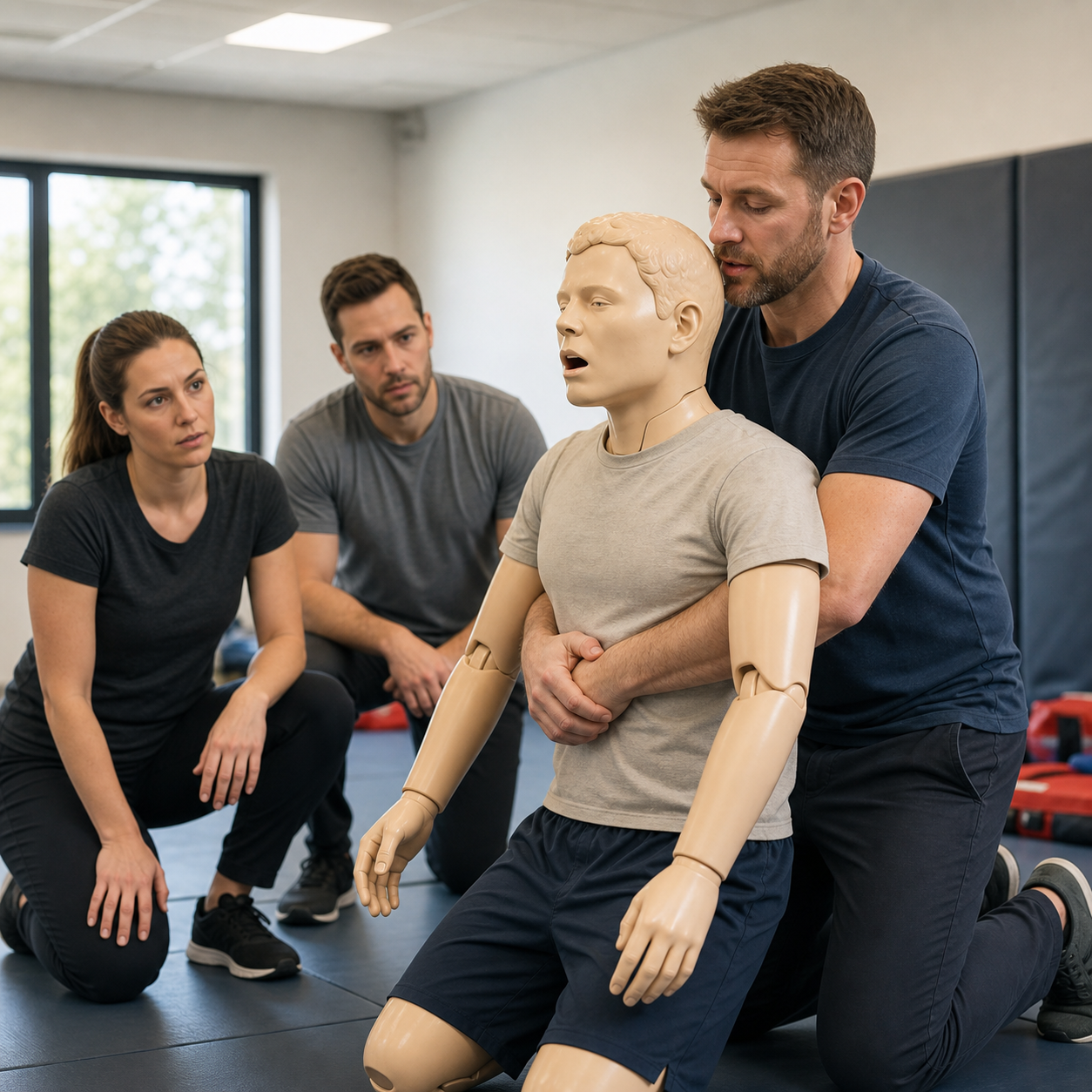
| Cheap-device listings often skip the rescue sequence. Choking response cannot skip it. |
| For conscious adults and children with severe choking, current AHA/AAP guidance uses repeated cycles of 5 back blows followed by 5 abdominal thrusts until the object is expelled or the person becomes unresponsive. Infants use 5 back blows followed by 5 chest thrusts; abdominal thrusts are not recommended for infants. |
| A suction anti-choking device belongs later, after standard measures are unsuccessful and within its instructions for use. FDA's 2026 safety communication states that established choking rescue protocols remain first-line and that anti-choking devices may be used as a second option if standard protocols are unsuccessful. |
| A low-cost device with device-first marketing is not a bargain. It is a sequence risk. |
What 21 CFR 874.5400 / QXN changed for buyers
| The 2026 FDA De Novo decision created a clearer U.S. reference point for suction anti-choking devices. The public record identifies 21 CFR 874.5400, product code QXN, Class II classification, and a second-line treatment role after unsuccessful use of a basic life support choking protocol. |
| That record does not authorize every similar-looking product. It does not turn "FDA registered" into authorization. It does not transfer LifeVac's product-specific De Novo decision to Fitiger, Dechoker, marketplace copies, or generic listings. |

| Claim seen online |
Safer buyer interpretation |
| FDA registered |
Administrative establishment registration or device listing does not prove product authorization. |
| FDA listed |
Listing alone is not an FDA safety or effectiveness decision. |
| FDA compliant |
Too vague unless tied to exact records, labeling, and applicable requirements. |
| CE marked |
A CE mark is not U.S. FDA authorization. It does not substitute for 21 CFR 874.5400 / QXN verification in U.S. procurement. |
| Same as original |
Visual similarity is not evidence of valve, seal, material, pressure, or labeling equivalence. |
| Powerful suction |
Requires defined pressure data, leak-control context, and evidence boundaries. |
Terminology belongs in procurement files because it changes behavior. Bad wording encourages unsafe assumptions before the device is ever opened.
Cheap copies fail where the eye cannot see
| Most marketplace photos show the outside of the device. Choking performance depends on hidden variables: valve geometry, airflow direction, plunger seal, mask edge compliance, face-contact material, pressure leak paths, material aging, packaging deformation, storage heat exposure, fit across different faces, and whether the sequence can be completed under panic. |
| Visual similarity fails to predict dynamic pneumatic sealing during negative-pressure events. A copy can match the silhouette of a tested device while losing output through valve sticking, stiff mask edges, poor molding, loose connections, or pressure leakage. |
| Visual aesthetics do not correlate with pneumatic performance: unverified valve geometry and edge-lift collapse the pressure gradient during the pull phase. |
Negative pressure is not a marketing adjective
| A suction device needs measurable pressure reserve. A 2025 study comparing a certified suction-based device with a counterfeit suction-based alternative found a large negative-pressure difference: about 154 +/- 57 mmHg versus 62 +/- 29 mmHg under study conditions. The certified device produced roughly 2.5 times higher suction than the counterfeit alternative. |
| That result does not guarantee rescue in every choking event. It does show why photos and reviews cannot substitute for performance evidence. |
| Food mechanics make the margin tighter. Bolus research has reported that clearing starch-based solid food material can require about 5.4 kPa, roughly 40.5 mmHg, while gel-like material may require about 1.7 kPa. A counterfeit device producing 62 mmHg under ideal bench conditions may appear above the 5.4 kPa figure on paper, but real emergencies add mask leakage, beard gaps, edentulous facial collapse, panic, poor angle, storage deformation, and inconsistent valve behavior. Actual delivered pressure can fall below the mechanical demand of a solid food plug. |
| A tested device that generates about 154 mmHg under defined conditions keeps a wider mechanical reserve. The reserve is not a survival guarantee. It is an engineering buffer that a copy may not have. |

| Engineering variable |
Verified / tested product expectation |
Cheap or unverified copy risk |
Rescue consequence |
| Negative pressure |
Measured output under defined conditions, with limits stated. |
No data, borrowed data, or weak output such as 62 +/- 29 mmHg in counterfeit comparison. |
Reduced reserve after leak losses. |
| Bolus resistance |
Evidence discussed against food texture and pressure demands. |
No connection between suction claim and obstruction mechanics. |
Starch-based bolus may require around 5.4 kPa. |
| Seal integrity |
Mask, valve, and pull phase evaluated as a pressure circuit. |
Edge lift or valve leak not visible in photos. |
Delivered pressure falls below useful range. |
| Regulatory status |
Exact product record can be checked. |
FDA registered, CE, or "same as" language used as confidence substitute. |
Buyer may overtrust an unauthorized product. |
| Use sequence |
Second-line after unsuccessful BLS choking protocol. |
Device-first language or vague rescue claims. |
Delay consumes the four-minute oxygen window. |
Food bolus mechanics expose the copy problem
| Choking is not one mechanical event. A grape, bread bolus, meat plug, candy, nut butter mass, rice clump, hot dog segment, or watermelon piece can behave differently inside the airway. |
| The 5.4 kPa versus 1.7 kPa finding is not a universal clinical threshold for every choking event. It is a mechanical warning: some foods behave like resistant plugs, not soft material. A weak device that loses output through an unverified valve or poor seal can fail at the exact point where reserve matters. |
| "Looks like the original" tells the buyer almost nothing about bolus clearance. |
The mask is the pressure circuit
| The mask is not a cosmetic part. It closes the pressure circuit at the face. |
| A usable mask has to conform across nose bridges, cheeks, chin, facial hair, dentures, loose skin, pediatric faces, older faces, and irregular posture during panic. If the edge lifts during the pull, the device draws air from the room instead of building a useful pressure gradient at the airway opening. |
| Mask variable |
Copy risk |
Rescue consequence |
| Silicone identity |
Unknown formulation, fillers, odor, or residue. |
Skin-contact uncertainty and unpredictable flexibility. |
| Edge compliance |
Stiff edge or poor molding. |
Leak path around nose, cheeks, beard, or dentures. |
| Sizing |
One mask sold as universal. |
Poor fit across children, older adults, or edentulous users. |
| Storage protection |
Shipping compression, heat exposure, or deformation. |
Mask shape may not recover when needed. |
| Replacement access |
No official replacement masks or lot traceability. |
Old, contaminated, or deformed masks remain in service. |
Fitiger's medical-grade silicone positioning should be used as material-contact and seal-design evidence, not as a clinical superiority claim. The auditable question is whether the face-contact system is documented, inspectable, replaceable, and protected during storage.
Material aging changes the seal before the mask looks broken
| Silicone is durable. It is still a polymer. |
| Emergency masks may sit for months or years in drawers, cars, school kits, care carts, wall stations, or storage cabinets. Heat cycles, compression, cleaning residues, skin oils, dust, oxygen exposure, and time can shift material behavior. Silicone-rubber aging studies show changes in hardness, tensile properties, elongation at break, and brittle behavior under accelerated aging conditions. |
| For a face mask, the critical field variable is edge compliance. Shore A hardness drift away from an ideal soft-contact range, lower elongation, compression set, and surface contamination can turn a flexible interface into a leakage path during a fast pull. The device may look complete while the pressure circuit fails dynamically. |

| Material variable |
New silicone (0-2 years) |
Aged or poorly stored silicone (3+ years) |
Rescue consequence |
| Shore A hardness |
Soft-contact range often around 25-35 units for face-seal applications, depending on design. |
Increased stiffness or hardening under aging, heat, oil, or compression exposure. |
Edge lift occurs under rapid pull. |
| Tensile strength |
High elasticity with strong recovery. |
Reduced strength can occur under accelerated aging conditions. |
Seal may distort during vacuum phase. |
| Elongation at break |
Higher stretch margin and flexibility. |
Lower elongation and more brittle behavior reported in aging studies. |
Mask cannot conform as well to complex facial geometry. |
| Edge compliance |
Conforms around nose, cheeks, beard, and edentulous facial contours. |
Memory set, stiffness, or deformation. |
Persistent leak paths reduce delivered negative pressure. |
| Pressure circuit |
Designed to support useful pressure transfer. |
Leak path collapses pressure gradient. |
Bench suction no longer represents face-level output. |
A cheap product with no replacement path is not cheaper after the mask ages. It is harder to audit.
Cheap device vs tested product: 2026 buyer matrix
| Buying dimension |
Cheap or unverified device risk |
Tested product expectation |
| Regulatory language |
"FDA registered," "CE marked," or "FDA listed" used as if it proves U.S. authorization. |
Exact product status can be checked through official records. |
| Rescue sequence |
Device-first language. |
First-line choking rescue remains first; device is second-line. |
| Pressure output |
No defined pressure data, or borrowed data from another product. |
Measured output under stated test conditions, with limits. |
| Valve behavior |
Unknown airflow direction, sticking risk, or inconsistent molding. |
Valve logic is documented, inspectable, and matched to the IFU. |
| Mask material |
Unknown face-contact material. |
Material-contact evidence and traceable replacement parts. |
| Seal integrity |
Stiff edge, poor fit, or packaging deformation. |
Edge compliance, sizing, and inspection guidance. |
| Storage readiness |
No heat, aging, packaging, or replacement information. |
Storage instructions and replacement schedule. |
| Seller traceability |
Anonymous or changing seller accounts. |
Official or authorized channel. |
| Instructions |
Minimal insert, poor translation, missing contraindications. |
IFU available before purchase. |
| Evidence boundary |
Reviews and claims treated as proof. |
Bench, usability, post-use, and regulatory evidence kept separate. |
A tested product does not mean guaranteed survival. It means the buyer has something to audit before an emergency.
Marketplace reviews can mislead
| Reviews often describe price, delivery, packaging, or emotional reassurance. They rarely prove pressure output, valve direction, mask seal, FDA status, or correct rescue sequence. |
| A cheap device can collect positive reviews because it arrived quickly, looked professional, or made the buyer feel prepared. A five-star review does not show whether the device can maintain a pressure circuit under panic. It does not confirm that the seller is authorized. It does not confirm that the mask material is safe or that the valve works correctly. |
| Weak reviews often say "looks like the expensive one," "great price," "seems sturdy," "hope I never use it," or "same thing for less." Those comments may be sincere. They do not answer the engineering questions. |
Counterfeit and unbranded risk is documented
| Regulators have warned about counterfeit and unbranded anti-choking products. The UK MHRA warned in 2024 that counterfeit and unbranded copies of LifeVac anti-choking devices may fail to work correctly or may worsen choking incidents if used. |
| The warning should change how buyers read low-cost listings. The risk is not only that a copy saves money. The risk is that a buyer may unknowingly replace an auditable emergency device with an unverified pressure object. |
| A copy does not need to look crude to be risky. The failure can be hidden inside the valve, mask, seal, material, packaging, or instructions. |
High-risk settings cannot absorb weak design
Cheap-device uncertainty becomes more dangerous where recognition, force, and access are already limited.
| High-risk setting |
Existing constraint |
Why unverified copies are worse here |
| Eldercare dining |
Frailty, dentures, dysphagia, reduced cough strength, seated posture. Food-choking mortality in older adults is reported as much higher than in young children, with some summaries citing a roughly seven-fold difference from ages 1-4. |
Poor mask fit and weak suction reduce an already thin margin. |
| School cafeteria |
Noise, crowding, staff rotation, distance from health office. |
Confusing IFU or unclear seller support weakens training. |
| Special education setting |
Recognition latency, feeding plans, neurologic or developmental risk. Pediatric aspiration can be silent; studies report high silent-aspiration rates in affected cohorts. |
One-size masks and unclear boundaries create unsafe assumptions. |
| Childcare / daycare |
Small children, high supervision demand, fast recognition decay, food-size control. Georgia HB 118 was introduced after Jamal Bryant Jr.'s death and would require portable airway clearance devices in child care settings; verified reporting describes CPR certification timing moving from 90 to 45 days, not 30 days. |
Equipment without training and sequence control can add delay instead of resilience. |
| Wheelchair use |
Backrest, armrests, tray, and room access can block manual thrust mechanics. |
Retrieval and seal must be faster, not more uncertain. |
| Home alone |
No second rescuer, panic, reduced coordination. |
Device simplicity, staging, and IFU clarity matter more than price. |
The Jamal Bryant Jr. case illustrates why latency is not abstract. News4JAX reported 2-inch watermelon pieces in the room and a delayed escalation pattern based on state documents. A choking plan that depends on visual observation alone can lose time before the adult recognizes the biological deadline.

The Georgia HB 118 signal: equipment without sequence is not enough
| Georgia HB 118 is useful for buyers because it connects product purchasing with system design. Representative Rick Townsend introduced the bill after the death of Jamal Bryant Jr. The proposal would require child care learning centers and family child care learning homes to maintain at least one portable airway clearance device, and reporting described a reduction in the time new staff would have to obtain CPR certification from 90 days to 45 days. |
| That verified public reporting does not support the 30-day figure sometimes repeated in secondary summaries. Fitiger should not use the 30-day claim unless a current official bill version supports it. |
| The procurement lesson is narrow and important: airway clearance devices do not remove the need for CPR training, choking recognition, first-line response, 911 activation, and post-incident documentation. Legislation can require equipment. Survival still depends on sequence and latency control. |
Unauthorized-device structural failure points
A buyer-friendly failure map should show where copies break the physics: air leakage at the mask rim, valve sticking inside the airflow path, edge lift from excessive Shore A hardness, poor connector fit, weak packaging, and no replacement-mask pathway.
| Failure point |
What happens |
Why the buyer may miss it |
| Leak path at mask edge |
Negative pressure escapes around nose, beard, dentures, or cheeks. |
Listing photos show shape, not edge compliance. |
| Valve sticking or wrong direction |
Airflow may fail to support outward removal logic. |
Valve geometry is hidden inside the device. |
| Hard mask edge |
High Shore A stiffness prevents conformity during fast pull. |
Mask may look clean and unused. |
| Loose connector |
Pressure drops before reaching the mask. |
A weak connection may only fail under pull load. |
| Missing replacement path |
Old mask remains in kit too long. |
Low price hides lifecycle cost. |
Fitiger's place in a tested-product comparison
| Fitiger should not frame the issue as "cheap bad, Fitiger good." That is too blunt for a medical-adjacent emergency category. |
| The defensible standard is harder: first-line rescue comes first; second-line devices need defined use boundaries; pressure and seal are measurable engineering questions; materials should be documented; storage and aging should be planned; replacement masks should be traceable; sellers should be official or authorized; reported use should be bounded; product claims should not outrun evidence. |
| Fitiger evidence points can be used inside that standard: medical-grade silicone, 19 kPa to 42 kPa pressure/testing range under defined conditions, FoldPumpVac portability, EasyPumpVac short pull path, storage-readiness work such as -20°C 72 hours and 100°C boiling-water exposure when supported by Fitiger documentation, and post-use reporting files when described with limits. |
| Those points are not guaranteed-rescue claims. They are evidence layers buyers can compare against vague marketplace products. |
What buyers should check before choosing a low-cost anti-choking device
| - Exact product name and model. |
| - Exact manufacturer. |
| - Official or authorized seller. |
| - FDA status for the exact product, not a category claim. |
| - IFU available before purchase. |
| - First-line-first language. |
| - Age, weight, and mask-size boundaries. |
| - Pressure or performance evidence. |
| - Valve-direction explanation. |
| - Material-contact evidence. |
| - Mask replacement plan. |
| - Storage instructions. |
| - Cleaning or single-use instructions. |
| - Post-use reporting process. |
| - Clear evidence boundary. |
| A product that cannot pass this audit may still look affordable. It does not look ready. |
What buyers should not assume
| - Do not assume a cheap anti-choking device is equivalent because it looks similar. |
| - Do not assume "FDA registered" means FDA-authorized, FDA-cleared, FDA-approved, or De Novo classified. |
| - Do not assume a CE mark means U.S. FDA authorization. |
| - Do not assume LifeVac's De Novo status applies to copies, generic products, or Fitiger. |
| - Do not assume Fitiger is FDA-authorized unless a current product-specific FDA record verifies the exact device. |
| - Do not assume reviews prove pressure output. |
| - Do not assume a mask that looks intact can seal under a fast pull. |
| - Do not assume lower price matters more than seller traceability, IFU quality, and replacement access. |
| - Do not assume any suction device replaces 5 back blows, 5 abdominal thrusts, chest thrusts when appropriate, CPR, 911, or EMS care. |
Before you go
| A cheap anti-choking device is not dangerous because it costs less. It becomes dangerous when the low price comes with unverifiable pressure output, unclear valve behavior, weak mask evidence, missing instructions, borrowed FDA language, anonymous sellers, or no replacement path. |
| Choking readiness is built from sequence, access, seal, pressure, documentation, and training. Product photos do not carry that load. |
| For related planning context, review the anti-choking device buyer evidence checklist. |
FAQ
Are cheap anti-choking devices safe?
A low price alone does not prove a device is unsafe. Risk rises when the product has unclear FDA status, unknown manufacturer identity, no pressure data, weak instructions, unverified mask material, no replacement parts, or a non-traceable seller.
Does a CE mark mean a choking device is FDA authorized?
No. A CE mark is not U.S. FDA authorization. In the U.S., buyers should verify the exact product through FDA records such as De Novo, 510(k), or PMA databases. For suction anti-choking devices, the relevant 2026 category reference is 21 CFR 874.5400 / QXN.
Is FDA registered the same as FDA-authorized?
No. FDA registration and listing are administrative concepts. They do not, by themselves, prove that an anti-choking device is FDA-authorized, FDA-cleared, FDA-approved, or De Novo classified for a specific medical use.
Why can two similar-looking anti-choking devices perform differently?
Performance can depend on valve geometry, mask seal, pressure output, material quality, storage condition, and manufacturing consistency. A 2025 negative-pressure comparison found about 154 +/- 57 mmHg for a certified suction-based device versus 62 +/- 29 mmHg for a counterfeit alternative under study conditions.
Do anti-choking device reviews prove performance?
No. Reviews may show buyer experience, packaging, seller trust, or perceived ease of use. They do not prove pressure output, valve quality, FDA status, clinical effectiveness, or correct rescue sequence.
What is the biggest warning sign in a cheap anti-choking device listing?
The biggest warning sign is missing traceability: no clear manufacturer, no IFU, no exact FDA record, no pressure or material data, no official replacement parts, and vague claims such as "FDA registered" or "same as the original."
Does Fitiger replace first-line choking rescue?
No. Fitiger should be understood as a second-line backup in a broader choking response plan. Established choking rescue protocols come first, and emergency activation should not be delayed.
Resources
| FDA Safety Communication - Established Choking Rescue Protocols: Supports first-line choking rescue, March 4, 2026 authorization update, unauthorized device risk, import alert, DeChoker warning letter, and registration/listing boundary. |
| FDA De Novo Decision - DEN250012: Supports LifeVac De Novo decision, 21 CFR 874.5400, product code QXN, Class II classification, intended second-line use after unsuccessful BLS choking protocol, and age boundary. |
| FDA Device Databases / De Novo Record: Supports buyer verification of exact product status rather than relying on registration or marketplace language. |
| FDA - Are There FDA Registered or FDA Certified Medical Devices?: Supports the distinction between establishment registration/listing and FDA approval, clearance, or authorization. |
| Fijacko et al., Resuscitation Plus 2025 - Counterfeit Anti-Choking Suction Devices: Supports counterfeit prevalence and negative-pressure comparison, including approximately 154 +/- 57 mmHg for a certified device and 62 +/- 29 mmHg for a counterfeit alternative under study conditions. |
| Mechanical Simulator of Tongue-Palate Compression: Supports bolus mechanics discussion, including higher pressure for starch-based solid food material than gel-like material. |
| MHRA / GOV.UK Product Safety Recall - Counterfeit Anti-Choking Devices: Supports warning that counterfeit and unbranded anti-choking devices may fail to work correctly or worsen choking incidents. |
| GOV.UK Device Safety Information - Counterfeit Anti-Choking Devices: Supports one-way valve and counterfeit-device warning language. |
| American Heart Association Newsroom - 2025 CPR Guideline Updates: Supports 2025 choking response update and first-line choking rescue sequence. |
| Cleveland Clinic - Cerebral Hypoxia: Supports oxygen-deprivation timing and the statement that brain damage can begin within minutes without enough oxygen. |
| MedlinePlus - Cerebral Hypoxia: Supports the biological sensitivity of brain cells to oxygen loss. |
| Kramarow et al. / Injury Prevention - Food-Related Choking Deaths Among the Elderly: Supports elevated food-choking mortality risk in older adults. |
| Risk Factors and Prevention of Choking - PMC Review: Supports choking-risk discussion for older adults and vulnerable populations. |
| Weir et al., Chest - Oropharyngeal Aspiration and Silent Aspiration in Children: Supports 81% silent aspiration finding among children with aspiration and associations with neurologic impairment and developmental delay. |
| Velayutham et al., PubMed - Silent Aspiration: Who Is at Risk?: Supports pediatric silent aspiration discussion and 81% thin-fluid silent aspiration in a clinical cohort. |
| Kashi et al. - Mechanical, Thermal, and Morphological Behavior of Silicone Rubber During Accelerated Aging: Supports silicone aging discussion, including hardness behavior, reduced elongation at break, tensile-property changes, and brittle behavior under accelerated aging. |
| Primasil - Medical Material Liquid Silicone Rubber: Supports the statement that hardness, elongation, modulus, tensile, and tear properties can be affected by processing or sterilization conditions and should be tested when conditions vary. |
| Georgia General Assembly / LegiScan - HB 118: Supports Georgia HB 118 introduced status and bill scope requiring portable airway clearance devices in child care settings. |
| The Current - House Bill Proposed After Child Dies at Daycare: Supports Rick Townsend authorship, Jamal Bryant Jr. context, and proposed portable airway clearance device requirement. |
| News4JAX - Documents Detail Jamal Bryant Jr. Case: Supports reported 2-inch watermelon pieces and response timeline context from DECAL documents. |
| WTOC - New Bill Would Require Anti-Choking Devices in Georgia Daycares: Supports reporting that HB 118 would reduce CPR certification timing from 90 to 45 days and require portable airway clearance devices; note that this source does not support a 30-day claim. |
Evidence boundary
This article compares cheap or unverified anti-choking devices with tested-product decision criteria: regulatory status, pressure output, mask seal, valve behavior, material-contact evidence, storage readiness, seller traceability, IFU quality, and response-sequence discipline. It does not prove clinical superiority of Fitiger or any named product. It does not imply Fitiger product-specific FDA authorization unless an exact FDA record supports that claim.
Medical Disclaimer
This article is for emergency preparedness education and buyer decision support. It is not medical advice, legal advice, diagnosis, treatment, or FDA compliance advice. Follow current CPR and choking first-aid training, product instructions for use, school or facility policy, local regulations, and emergency dispatcher instructions. Call emergency services immediately for a severe choking emergency.


