What matters first: Complete airway obstruction means a person cannot move enough air to breathe, speak, cry, or cough effectively. In FDA's 2026 second-line framework, that threshold matters: established choking rescue protocols come first. A suction anti choking device may enter only after standard BLS choking rescue is unsuccessful and only within the device's current instructions.
| Before choosing equipment, review Fitiger's anti-choking device buyer evidence checklist for FDA wording, testing, seller traceability, and kit-selection questions. | The phrase sounds simple. It is not. |
| Most people hear "choking" and picture one emergency. | Someone coughs. Someone grabs the throat. Someone looks scared. A child gags on food. An adult struggles during dinner. A caregiver hears a wet cough after a meal. In ordinary speech, all of those moments may be called choking. |
| FDA's 2026 second-line framework is narrower than ordinary speech. | The key phrase is complete airway obstruction. It does not mean any scary meal moment. It does not mean every cough. It does not mean a child gagged and recovered. It does not mean a person needed water to swallow bread. It means the airway is blocked badly enough that air movement is no longer effective. |
| That distinction matters because the device sequence depends on it. | A suction anti choking device should not be treated as a first-use tool for every choking scare. FDA's framework places this device category in a second-line role after unsuccessful use of a basic life support choking protocol for complete airway obstruction. The sequence is not decoration. It is the safety boundary. |
| For families, schools, eldercare teams, restaurants, and B2B buyers comparing choking rescue devices, the practical question is not only "Does the product have suction?" It is: | When is the person truly in the condition the device is intended for, and what must happen before the device enters the response? |
| That is where complete airway obstruction becomes more than a medical phrase. It becomes an operating rule. |

A person with a forceful cough is still moving air. That does not mean the situation is harmless, but it is different from a person who cannot breathe, speak, cry, or cough effectively.
Partial airway obstruction may look frightening. The person may cough hard, tear up, lean forward, gag, or feel panicked. If the cough is forceful and the person can still make sound, the airway is not fully blocked. In that situation, many first-aid instructions tell bystanders to encourage coughing and monitor closely for worsening signs.
Complete or severe airway obstruction is different. The body loses the ability to clear the obstruction with an effective cough. The person may be silent. They may clutch the throat. Their cough may become weak or disappear. They may be unable to speak or cry. Their face or lips may change color. They may become confused, weak, or unresponsive if the obstruction continues.
| For schools, this distinction matters during lunch. A child coughing loudly at a cafeteria table may still be moving air. A child who suddenly goes silent and cannot cry, speak, or cough effectively has crossed into a different emergency. | For adult care settings, the distinction matters too. An older adult who coughs repeatedly with meals may need clinical attention, texture review, or dysphagia evaluation. A person who cannot move air during a meal needs immediate emergency response. |
| A responsible choking rescue device page should not blur those states. Blurring them invites device-first behavior in moments where monitoring, coughing, medical evaluation, or first-line rescue may be the correct response. |

In real rooms, nobody has time to debate terminology. Adults need observable signs.
A possible complete or severe airway obstruction may show:
| Weak or absent cough. | Inability to speak. |
| Inability to cry in a child. | Inability to breathe effectively. |
| Hands to the throat. | Panic with little or no sound. |
| High-pitched or ineffective breathing sounds. |
| Blue, gray, or pale color change around the lips or face. | Altered mental status. |
| Collapse or unresponsiveness. | The most dangerous sign is often silence. |
| A loud cough gets attention. A silent child in a cafeteria can be missed. A quiet adult at a restaurant may stand up and walk toward the restroom because they are embarrassed. A senior eating alone may not be seen at all. | That is why choking first aid training should teach recognition, not only technique. A responder who knows abdominal thrusts but misses the transition from effective cough to severe obstruction may still lose valuable time. |
| A simple public-facing rule works well: | If the person can cough forcefully, encourage coughing and watch closely. |
| If the person cannot breathe, speak, cry, or cough effectively, call 911 and start age-appropriate choking rescue immediately. | That rule is not a full medical algorithm, but it gives families, schools, and community sites a safer starting point than "use the device when choking looks scary." |
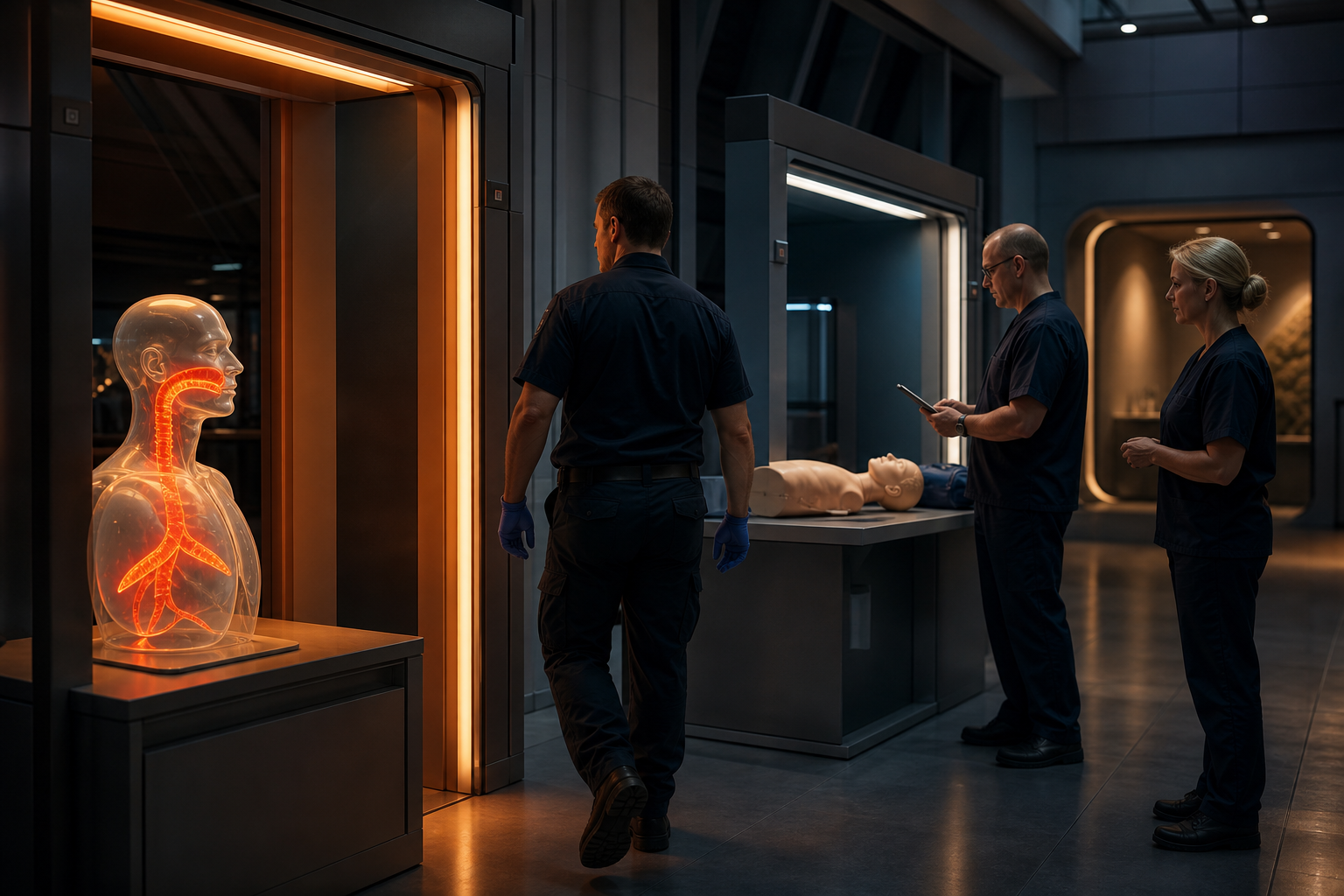
| The FDA second-line framework is built around two practical gates. | The first gate is the condition: complete airway obstruction. |
| The second gate is the sequence: unsuccessful use of a basic life support choking protocol. | Both gates matter. |
| A person must be in the right emergency condition. A suction device is not for every cough, gag, swallow difficulty, or feeding concern. Complete airway obstruction is the threshold. | Then the first-line protocol must be attempted. For a responsive adult or child with severe choking, that means established manual rescue steps according to current first-aid training. If the person becomes unresponsive, CPR and dispatcher instructions take over. The suction device category does not erase that sequence. |
| In plain English: | Complete obstruction is the emergency state. |
| BLS choking rescue is the first-line action. | A suction device is second-line backup only after the standard action is unsuccessful. |
| For procurement teams, this should shape policy language. A school choking rescue device, church emergency kit, senior care airway device, or home anti choking device should never be described as "use first." It should be placed inside a written response plan that protects the manual-first sequence. | For Fitiger, the safest language is clear: Fitiger products are second-line backup tools for appropriate users under current instructions, not replacements for BLS, 911, CPR, EMS, training, or clinical care. |
| High-intent shoppers often search phrases like "FDA approved anti choking device," "FDA authorized choking rescue device," "LifeVac FDA approved," "anti choking device FDA status," or "best FDA choking rescue device." Those searches are understandable. People want reassurance. | The problem is that FDA language is precise, and marketing language is often not. |
| "FDA registered" is not the same as FDA authorized. | "FDA listed" is not the same as FDA authorized. |
| A product category under 21 CFR 874.5400 does not mean every suction-looking product is equivalent. | A product code such as QXN does not turn every marketplace device into a lawful, evaluated, second-line choking rescue device. |
| A De Novo decision for one product does not automatically authorize other brands, other models, or generic copies. | This is where complete airway obstruction language protects buyers. The authorized framework is not broad permission to use any suction device whenever someone is scared at the table. It is a bounded second-line role for a specific device category, under specific conditions, after standard rescue steps are unsuccessful. |
| A serious buyer should verify: |
| Exact product name. | Exact manufacturer. | Current FDA marketing authorization status. |
| Product code and device category. | Instructions for use. | Age and user limits. |
| Mask sizes. | Replacement parts. | Storage requirements. |
| First-line rescue sequence language. |
If a seller uses "FDA registered" as if it means "FDA authorized," the buyer should slow down.
Emergency products deserve slower reading before faster response.
| At home, confusion often comes from fear. | A parent sees a child gag and panics. A spouse hears coughing and reaches for a device. An adult child sees an older parent struggle with meat and wonders whether this is the moment to intervene. The fear is reasonable. The sequence still matters. |
| A home choking response should be built around recognition first. | If the person can cough forcefully, speak, cry, or breathe, encourage coughing and monitor. Do not turn a partial obstruction into a more dangerous situation by unnecessary force or device use. |
| If the person cannot breathe, speak, cry, or cough effectively, call 911 or send someone to call immediately. Begin age-appropriate first-line choking rescue according to training. If standard steps are unsuccessful and the person fits the current product instructions, a staged second-line device may be considered. | For families that keep Fitiger at home, the device should be stored complete, visible, and near likely eating areas. It should be stored with the correct masks and instructions. Everyone who may respond should understand the order before the emergency: |
| First-line rescue first. | Fitiger second-line backup only if standard steps fail. |
| That order should be decided before dinner, not during panic. | What complete obstruction means in schools and daycare |
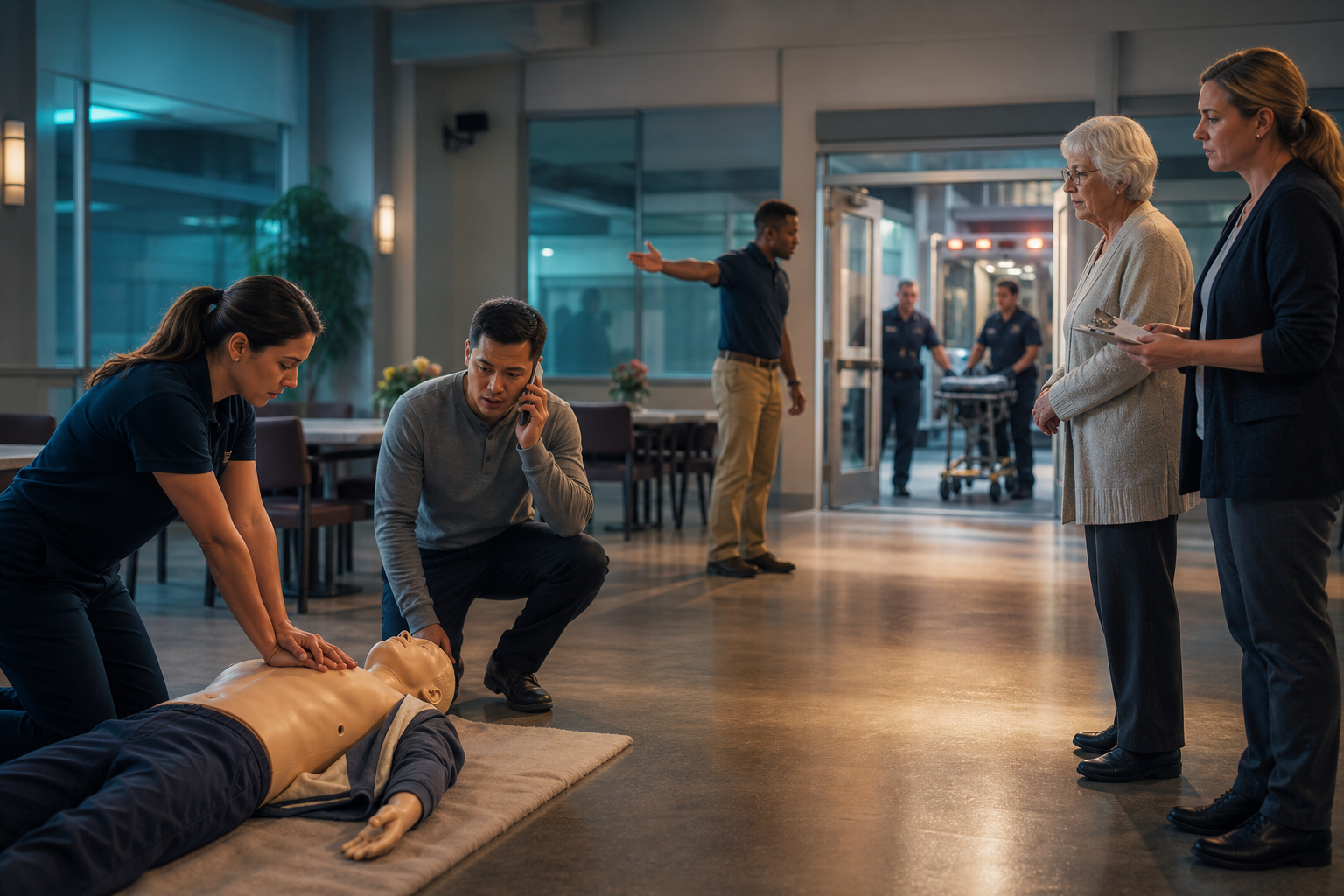
Schools and daycare centers need special clarity because children create both recognition difficulty and policy risk.
A child who is coughing loudly may draw attention. A child who suddenly cannot cry may be missed in a noisy classroom or cafeteria. A preschooler may show panic without words. A student with developmental or communication differences may not signal distress in a typical way. A child with oral-motor or swallowing concerns may have repeated mealtime red flags long before complete obstruction occurs.
| A school choking emergency plan should separate three categories: | Repeated mealtime warning signs. |
| Partial obstruction with effective coughing. | Severe or complete obstruction requiring immediate response. |
| Those are not the same event. | Repeated coughing, pocketing, wash-down drinking, texture refusal, or mealtime fatigue should trigger observation, documentation, parent communication, nurse review, or clinical referral when appropriate. It is a readiness issue, not necessarily a device moment. |
| Effective coughing should be monitored carefully. | Severe obstruction should trigger 911 activation and first-line choking rescue immediately. |
| If a school permits a second-line anti choking device, staff training must protect the threshold. The device should not be used simply because a child gagged or coughed. It should be staged and used only within policy, instructions, age limits, and the manual-first sequence. | Fitiger devices should not be used on infants under 1 year old. Daycare and preschool staff must know infant-specific first aid and avoid treating all pediatric choking as one category. |
| In eldercare and dysphagia settings, the challenge is different. The danger may build slowly before the emergency. | An older adult may cough with meals, need repeated water to swallow, pocket food, avoid meat, develop a wet voice, or fatigue halfway through a tray. Those signs may suggest swallowing difficulty, aspiration risk, dental problems, medication effects, or texture mismatch. They should not be ignored, but they are not automatically complete airway obstruction. |
| A complete obstruction event is the moment the person cannot move air effectively. At that point, the response shifts from observation to emergency action. | Senior care teams should build two parallel systems: |
| A mealtime observation system for recurring swallowing warning signs. | An emergency response system for severe choking. |
| The first system helps prevent emergencies. The second system handles the moment prevention fails. | A second-line suction device belongs only in the emergency response system after standard rescue steps are unsuccessful. It should not replace dysphagia screening, texture modification, denture checks, medication review, seated eating, staff monitoring, 911 activation, CPR readiness, or EMS. |
| This matters because "choking rescue device for elderly" is a high-conversion search term. The correct answer must be useful without overselling. Families and facilities need to know when the device fits, but also when the problem is actually a swallowing-care issue that should be addressed earlier. |
| Public venues face a recognition problem. | A person choking in a restaurant may be embarrassed. A guest at a church dinner may step away quietly. A spectator at a sports event may be surrounded by noise. A volunteer may not know whether they are allowed to act. A crowd may gather before anyone calls 911. |
| The right public-venue plan is simple but strict: | Train staff or volunteers to recognize severe choking. |
| Assign a 911 caller. | Start first-line rescue when severe signs appear. |
| Clear space. | Retrieve second-line backup only if standard rescue steps fail. |
| Guide EMS to the exact location. | A choking rescue device for restaurants, churches, or community events should be positioned inside that sequence. If it sits in a manager's office, locked kitchen, or equipment closet with no assigned runner, it may create symbolic readiness without practical readiness. |
| Complete obstruction is a time-critical event. Public venues need fewer assumptions and clearer roles. |
Situation | Common signs | Safer response direction |
|---|---|---|
Mild or partial obstruction | Forceful cough, can speak, can cry, can breathe | Encourage coughing, monitor closely, seek help if symptoms continue or worsen |
Severe or complete obstruction | Weak or absent cough, cannot speak or cry, poor or no breathing, color change, panic, collapse risk | Call 911 and begin age-appropriate first-line choking rescue immediately |
Unresponsive choking victim | Loss of consciousness, not breathing normally | Begin CPR according to training and dispatcher instructions |
Repeated meal warning signs | Coughing with meals, wet voice, pocketing, food avoidance, wash-down drinking | Document patterns, review food texture, consult clinicians when appropriate |
Second-line device consideration | Complete obstruction and standard rescue steps unsuccessful | Use only if the person fits the current product instructions and device is staged without delaying care |
This table is not a substitute for first-aid training. It is a language check. It helps prevent people from using one word, "choking," for five different situations.

| Fitiger should be explained with discipline. | Fitiger is not a first-line rescue replacement. It is not a substitute for calling 911. It is not a replacement for CPR readiness, EMS, manual rescue training, clinical swallowing care, school policy, or facility procedures. |
| Fitiger may belong as a second-line backup when: | The person is within the current product instructions. |
| The event is a severe or complete airway obstruction. | Standard choking rescue steps have been attempted and are unsuccessful. |
| The device is nearby, complete, and ready. | The correct mask is available. |
| Using it does not interrupt 911 activation, first-line rescue, CPR, or EMS handoff. | FoldPumpVac may support mobile and portable readiness where backup has to move with the caregiver, school kit, travel bag, stroller, vehicle, or community event. EasyPumpVac may support home, car, bedside, eldercare, fixed dining-area, and long-term standby placement where easier handling and stable staging matter. |
| Both products still sit in the same sequence. | Manual-first. Backup second. |
| That is the only positioning that builds durable trust. |
Schools, care facilities, community centers, restaurants, and family readiness pages should avoid sloppy wording.
Avoid:
| "Use the device if someone is choking." | "Device replaces Heimlich." |
| "FDA approved choking solution." | "Works for any choking emergency." |
| "Keep one on site and you are covered." | Better: |
| "Follow established choking rescue protocols first." | "Call 911 immediately for severe choking." |
| "Use any authorized suction anti choking device only as second-line backup after standard rescue steps are unsuccessful." | "Device use must follow current product instructions, age limits, mask selection, and facility policy." |
| "Equipment placement should reduce retrieval delay without interrupting first-line rescue." | Good policy language does not sound as exciting as marketing language. It is safer because it keeps the first minute clean. |
| Complete airway obstruction is not a marketing phrase. It is the threshold where the person cannot move enough air to breathe, speak, cry, or cough effectively. | FDA's 2026 second-line framework does not erase first aid. It strengthens the sequence around it. Manual rescue comes first. 911 comes early. CPR readiness remains essential. EMS still matters. A suction device enters only as backup after standard steps fail, and only when the person and situation fit the instructions. |
| For families, this means learning the signs before storing the product. | For schools, it means training staff before staging equipment. |
| For senior care, it means separating dysphagia warning signs from complete obstruction events. | For community venues, it means assigning roles before the meal starts. |
| For Fitiger, it means staying exactly where a responsible product should stay: ready, reachable, documented, and second-line. | For related planning context, review the anti-choking device buyer evidence checklist. |
Complete airway obstruction means the airway is blocked enough that the person cannot move air effectively. Common signs include inability to breathe, speak, cry, or cough effectively, weak or absent cough, panic, color change, and possible collapse if the obstruction continues.
No. Choking is a broad word people use for many events, including coughing, gagging, partial obstruction, or severe obstruction. Complete airway obstruction is narrower and means air movement is critically blocked. It is the key threshold in FDA's 2026 second-line device framework.
Partial obstruction usually means the person can still cough forcefully, speak, cry, or breathe. Complete or severe obstruction means the person cannot move air effectively and may be unable to speak, cry, breathe, or cough. Partial obstruction is monitored differently from severe choking.
Call 911 or send someone to call immediately. Begin age-appropriate first-line choking rescue according to recognized training. If the person becomes unresponsive, begin CPR according to training and dispatcher instructions.
A second-line suction anti choking device may be considered only after standard choking rescue steps are unsuccessful, the person is experiencing complete airway obstruction, and the device use fits current product instructions, age limits, mask selection, and setting policy.
No. FDA's 2026 framework does not make suction devices first-use tools. The public should follow established choking rescue protocols first. A suction anti choking device may be considered only as second-line backup after standard steps are unsuccessful.
21 CFR 874.5400 is the FDA regulation for the suction anti-choking device category created through the 2026 De Novo framework. It describes a second-line device type for complete airway obstruction after unsuccessful basic life support choking protocol, not a first-line replacement.
QXN is the FDA product code associated with the suction anti-choking device classification. Buyers should not rely on marketplace claims alone. They should verify the exact product, manufacturer, authorization status, and instructions.
Fitiger should not be used simply because someone is coughing, gagging, or experiencing a partial obstruction with effective air movement. Any use must follow the current product instructions and remain second-line after standard rescue steps are unsuccessful for severe or complete airway obstruction.
Fitiger devices should not be used on infants under 1 year old. Infants require infant-specific choking first aid, including back blows and chest thrusts, and emergency services should be called when severe choking occurs.
U.S. FDA - Update: FDA Encourages the Public to Follow Established Choking Rescue Protocols - the first-line rescue first, second-line suction anti-choking device boundary, and public warning against device-first delay.
FDA De Novo Summary DEN250012 - the complete airway obstruction and second-line treatment language for the suction anti-choking device classification.
21 CFR 874.5400 - Suction Anti-Choking Device - the FDA device classification framework and product category boundary.
American Heart Association - CPR and First Aid Training Resources - current CPR, BLS, and age-appropriate choking response education.
American Red Cross - Adult and Child Choking First Aid - established first-line choking rescue education for adults and children.
HealthyChildren.org - Choking Prevention - pediatric choking prevention, infant/child distinction, and family safety education.
This article is for general education, product-comparison planning, and emergency preparedness only. It is not medical advice, diagnosis, treatment, legal advice, or a substitute for recognized first-aid training. In a choking emergency, call 911 or your local emergency number immediately and follow dispatcher instructions. Learn age-appropriate choking first aid and CPR from recognized training providers. Any anti choking device should be treated as second-line backup only after standard rescue steps are unsuccessful and only within the current product instructions.


