Toddler choking prevention starts before the emergency: cut round foods lengthwise, soften firm foods, avoid sticky or hard foods, keep children seated, and supervise meals closely. If severe choking happens, call 911, use age-appropriate choking first aid, and treat any anti choking device as second-line backup only after standard rescue steps fail.
For a household checklist, see Fitiger's child and home choking safety readiness plan.
A toddler does not eat like a small adult.
That sounds obvious, but most choking emergencies begin when adults forget it for a few seconds. A grape looks harmless on a plate. A hot dog slice looks small. A spoonful of peanut butter looks soft. A chunk of apple looks healthy. Then a child laughs, stands up, turns toward the TV, runs toward a sibling, or stuffs too much food into one cheek.
The risk is not only the food. It is the food plus the toddler's airway size, chewing ability, attention span, body position, and speed.
That is why searches like toddler choking hazard foods, foods toddlers choke on, choking prevention toddlers, and safe food prep for toddlers matter. Parents are not only looking for a list. They are trying to understand what turns a normal snack into a choking emergency at home.
The highest-risk toddler foods usually share one of five traits: they are round, firm, sticky, hard, or compressible enough to mold into the airway.
Whole grapes and hot dog coins are risky because their shape can plug the airway. Nuts and raw carrots are risky because they are hard and difficult to chew. Marshmallows and gummy candy are risky because they can compress and stick. Thick nut butter is risky because it can coat the mouth and form a sticky bolus that is hard for a young child to manage.
Good choking prevention for toddlers does not mean turning every meal into fear. It means changing the food before it reaches the child. Cut it differently. Cook it longer. Spread it thinner. Serve smaller portions. Keep the child seated. Watch the first few bites. Slow the room down.
A home choking safety plan should start at the cutting board, not in the emergency drawer.

This list is not meant to scare parents away from feeding normal foods. It is meant to make food shape and texture obvious. In real homes, the highest-risk moment is often the most ordinary one: lunch before preschool, a snack in the stroller, a birthday party, a restaurant table, or a rushed dinner when everyone is tired.
Whole grapes may be the classic toddler choking hazard because they combine the two worst traits: round shape and firm skin. Cherry tomatoes create a similar risk. If a toddler inhales sharply, laughs, or swallows before chewing, a round food can block the airway like a plug.
Safer prep: cut grapes and cherry tomatoes lengthwise into quarters. For very young toddlers or children who tend to stuff food, make the pieces even smaller. Do not cut them into coin-shaped rounds.
Better rule: if it is round and firm, cut it lengthwise first. This rule also helps grandparents, babysitters, and daycare staff remember the danger without memorizing a long list.
Hot dogs are soft enough to seem safe, but coin-shaped slices are one of the worst shapes for a small airway. Sausage pieces, meat sticks, and similar processed meats create the same problem.
Safer prep: slice hot dogs lengthwise first, then cut them into small irregular pieces. Avoid thick coin-shaped rounds. For toddlers who are still learning to chew, serve smaller pieces and keep the meal calm.
A useful lunchbox habit: never pack round hot dog slices for toddlers. If a food looks like a little wheel, change the shape.
Whole nuts are hard, small, and easy to inhale before chewing is complete. Mixed nuts, peanuts, almonds, cashews, and large nut fragments can all cause trouble. Toddlers may not grind them well enough before swallowing.
Safer prep: avoid whole nuts for toddlers. Use thinly spread nut butter when age-appropriate and allergy-safe. If a clinician or pediatrician gives specific advice for a child with feeding concerns or allergy history, follow that guidance.
Parents often ask whether chopped nuts are safer. Smaller does not always mean safe. Small hard pieces can still be inhaled. For toddlers, the safest routine is usually avoiding whole nuts and large nut pieces entirely.
Popcorn looks light, but it is dry, irregular, and easy to inhale. Pieces can break apart unpredictably, and toddlers may eat it fast during movies, parties, or car rides.
Safer prep: avoid popcorn for toddlers. Choose softer, age-appropriate snacks instead.
Popcorn is also a supervision problem. Children often eat it while watching a screen, laughing, moving around, or sharing from a bowl. Those behaviors raise choking risk even when the food itself seems small.
Hard candy is smooth, hard, and designed to stay in the mouth. A toddler can slip, laugh, inhale, or swallow suddenly. Lollipops add another problem: a child may run or fall with the stick in the mouth.
Safer prep: avoid hard candy, lollipops, lozenges, gum balls, and similar sweets for toddlers. Choose age-appropriate treats that do not require prolonged sucking or hard chewing.
This is one of the simplest choking prevention rules for toddlers: hard candy is not toddler food.
Meat can be difficult because risk changes with cooking method. A tender shredded piece is very different from a firm cube of steak or a chewy sausage chunk. Toddlers may swallow before chewing enough, especially when hungry or distracted.
Safer prep: cook meat until tender, shred it finely, cut across the grain, moisten dry pieces, and serve small portions. Avoid thick cubes, chewy strips, and dry chunks.
At family dinners, adults often serve toddlers a smaller version of the adult plate. That is not always safe. A toddler's food needs its own texture plan.
Cheese can be rubbery, dense, and difficult for toddlers to break down. Cubes of cheese are especially risky because they hold shape and can become slippery.
Safer prep: cut cheese into thin strips or very small pieces. Avoid large cubes. For younger toddlers, softer cheese textures may be easier to manage than firm chunks.
Cheese is common in lunchboxes and snack cups, so this change has high payoff. The goal is not to eliminate cheese. The goal is to avoid thick, rubbery blocks.
Raw carrots and apple chunks look healthy, but hard produce can be difficult for toddlers to chew into safe pieces. A child may bite off a piece that is too large and too firm.
Safer prep: steam carrots until soft, grate firm produce, cut apples into very thin slices, or cook them down. Avoid large raw chunks.
For toddlers, healthy and safe texture have to travel together. A hard carrot stick may be nutritious, but it can still be a choking hazard.
Marshmallows and gummy candies are risky because they are soft in a misleading way. They compress, stretch, and stick. Once wet, they can mold to the airway or become difficult to clear.
Safer prep: avoid marshmallows, gummy candies, fruit snacks with gummy texture, and similar sticky sweets for toddlers.
These foods often show up at parties, daycare celebrations, holidays, and grandparents' houses. A simple family rule helps: sticky candy waits until the child is older and can chew reliably.
Nut butter is soft, but a thick spoonful can form a sticky mass in the mouth. It may cling to the palate, tongue, or throat, especially if the toddler takes too much at once.
Safer prep: spread nut butter thinly on bread, crackers, banana slices, or other age-appropriate foods. Never offer a toddler a large spoonful of thick nut butter.
If a child tends to pocket food in the cheeks, take extra care with sticky textures. Pocketing increases the chance that food moves suddenly toward the airway.
Food lists help, but rules protect better because real meals are messy. A parent can memorize the top 10 choking hazard foods and still miss the risk if the child eats while walking, laughing, crying, or riding in a stroller.
The best choking prevention tips for parents are simple enough for a tired adult to follow.

A seated-only eating rule reduces risk immediately. Toddlers should not walk, run, climb, play, or lie down with food in their mouths. Eating in a stroller, car seat, or shopping cart can also make supervision and intervention harder.
The rule should be plain: food stays at the table.
That rule is useful for homes, daycare rooms, grandparents' houses, and birthday parties. It is easier to enforce one simple rule than to debate every snack.
Many choking incidents happen when a child is hungry and eats too fast. The first bites are often the largest and least controlled.
Serve small portions. Encourage one bite at a time. Keep the plate simple. Do not hand a toddler a pile of cut food and walk away.
If a toddler stuffs food into the mouth, serve fewer pieces at once. Smaller portions slow the pace without turning the meal into a lecture.
This single habit prevents many obvious hazards. Grapes, cherry tomatoes, hot dogs, sausage, baby carrots, and similar foods should be cut lengthwise first. Coin-shaped pieces are not ideal for toddlers.
A good kitchen rule: if it rolls, split it.
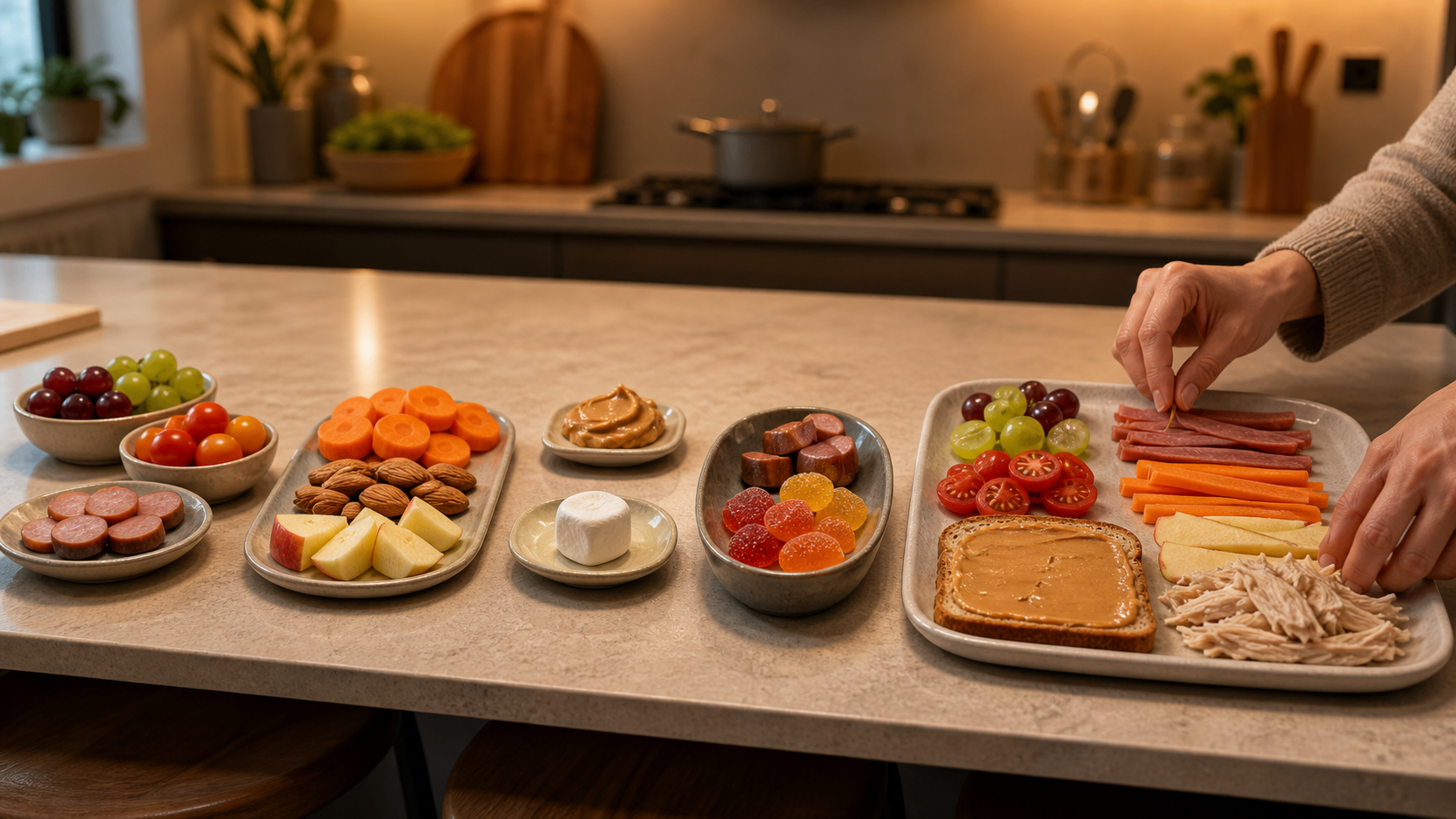
Some toddlers chew well early. Others need more time. Children with developmental delays, oral-motor issues, sensory feeding challenges, or prior choking events may need extra caution.
Watch how the child handles food. Do they chew? Do they pocket food? Do they swallow large bites? Do they cough during meals? Do they rush when distracted?
The safest food prep for toddlers follows the child in front of you.
Screens, laughing, running siblings, pets under the table, and rushed transitions all increase risk. A toddler who is turning, giggling, or reaching for a toy is not focused on chewing.
Calm does not mean silent. It means seated, supervised, and not chaotic.

Parents often ask what to do if a toddler is choking, but the first step is deciding whether the child is truly choking or still moving air.
A toddler who can cough strongly, cry, breathe, or make sound may be partially blocked. Encourage coughing and watch closely. Do not blindly slap the back of a child who is coughing effectively.
Severe choking looks different. A toddler may suddenly stop making sound, be unable to cry or cough effectively, grab the throat or look panicked, make weak high-pitched or no breathing sounds, turn pale, bluish, or gray around the lips, or become limp if the airway remains blocked.
If severe choking is suspected, call 911 or send someone to call 911 immediately. Begin age-appropriate choking first aid. Do not search online. Do not drive the child yourself unless a dispatcher tells you to. Do not waste time looking for a product before first-line rescue begins.
For children over 1 year old, many first-aid programs teach cycles of back blows and abdominal thrusts for severe choking. Infants under 1 year old require infant-specific back slaps and chest thrusts, not abdominal thrusts.
A parent does not need to become a paramedic to prepare. But every caregiver should know the difference between coughing and silence.
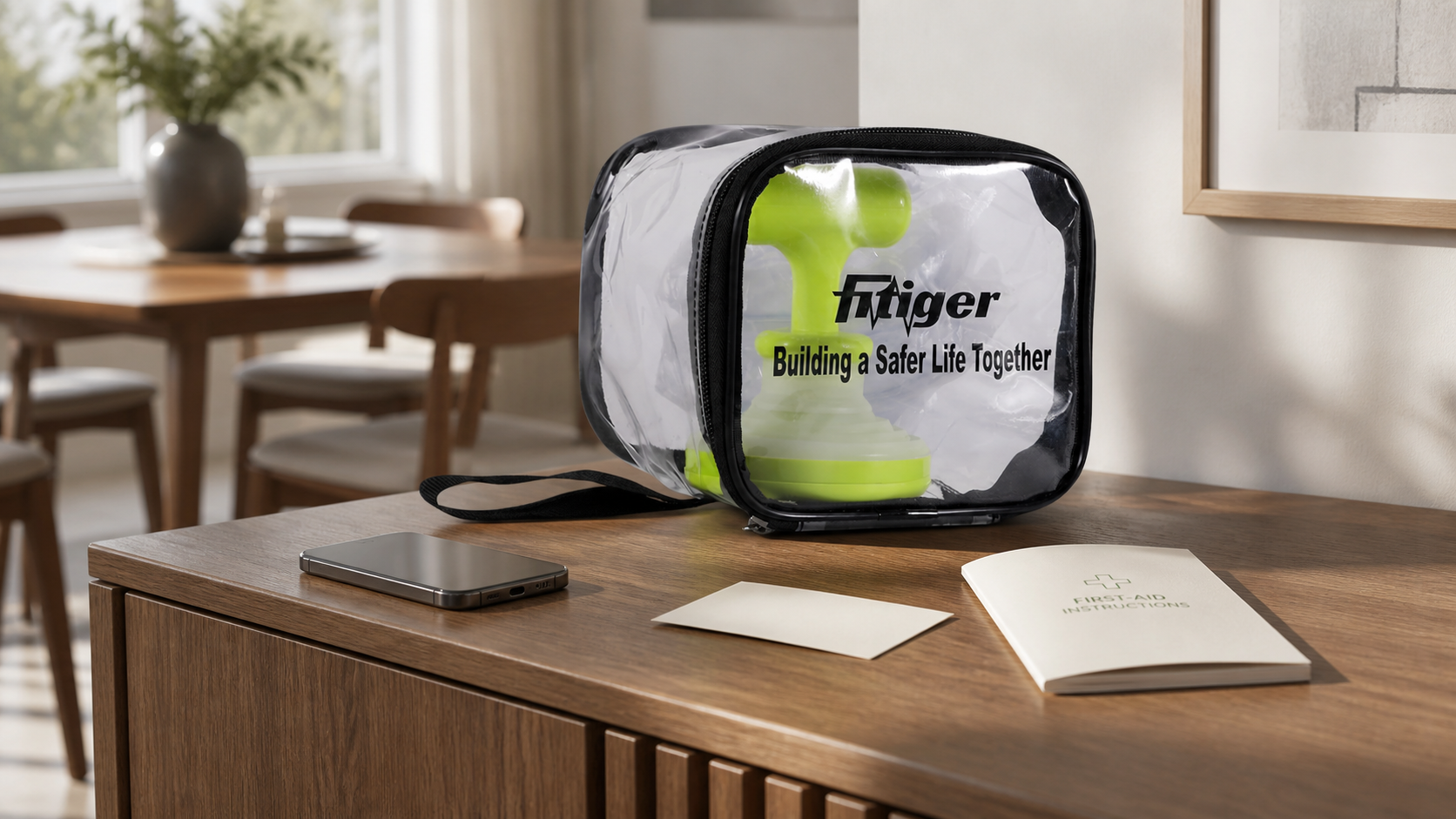
This is where many product pages get the order wrong.
A choking rescue device for home may have a place in family readiness, but it should never replace prevention, supervision, 911, or choking first aid. FDA's 2026 suction anti-choking device framework describes this type of tool as second-line backup after standard choking rescue protocols are unsuccessful. That order matters.
| Prevent the hazard with safer food prep. | Recognize severe choking quickly. |
| Call 911 or have someone call. | Begin age-appropriate first-line choking rescue. |
Use a staged second-line backup only if standard steps are unsuccessful and the child fits the device's current instructions for use.
Continue care until EMS or medical help takes over.
An anti choking device should not be the first thing a parent grabs while the child is silently choking. The first response must be recognition, emergency activation, and trained first aid.
Fitiger's role in this kind of plan is preparedness support. A Fitiger device can be staged near the dining area as a second-line backup for children over 1 year old, teenagers, and adults according to the current product instructions. It should not be used on infants under 1 year old. For infants, caregivers should follow infant choking first aid, including back slaps and chest thrusts, and call emergency services.
For families comparing choking rescue device for children, portable anti choking device, or choking emergency kit for family, the buying question should be practical:
| Can caregivers find it fast? | Is it stored with the correct mask? |
| Have adults read the instructions before an emergency? | Does everyone understand that first-line rescue comes first? |
| Will it be inspected and replaced according to the product instructions? | |
A device does not make a home prepared by itself. A visible plan does.
A home choking emergency kit for families with toddlers
A choking emergency kit for home should be built around speed and clarity. It should not be a random drawer full of mixed items.
| A one-page choking first aid card. | Emergency contact information. |
| A charged phone nearby during meals. | A small flashlight if the dining area is dim. |
| A second-line anti choking device if the family chooses one and the child fits the IFU. | Correct masks stored with the device. |
| Product instructions kept in the same bag or location. | A simple inspection date card. |
Place the kit near the eating area, not in a bathroom cabinet or upstairs closet. If the family eats in the kitchen, stage it there. If meals happen at a dining table, stage it nearby. If a grandparent cares for the child often, show them where it is.
FoldPumpVac may make sense for families who want portable readiness for travel, stroller storage, school pickup, restaurants, or family outings. EasyPumpVac may make sense for home, car, and long-term standby placement where easier handling and a short two-step operation path matter. Both should remain second-line backup, not first-line replacement.
This distinction is important for SEO, but it is more important for the parent in the room. Search terms like baby choking rescue device, anti choking device for kids, and choking rescue device for home bring anxious buyers to product pages. The page has to guide them toward safer sequence, not only purchase.

Toddlers do not only eat at the kitchen table. They eat at daycare, grandparents' homes, restaurants, parks, cars, birthday parties, playdates, hotel rooms, and preschool events.
Each setting changes the risk.
Daycare choking prevention should focus on food shape, seated eating, supervision ratios, and clear emergency roles. Staff should know which foods are not allowed, how foods must be cut, who calls 911, and where emergency tools are kept.
If a daycare or preschool keeps a choking rescue device, it should be part of a written choking emergency plan, not a loose item in a cabinet.
Restaurants create distraction. Adults talk. Toddlers graze. Food arrives in adult shapes. Hot dogs, grapes, meat, bread, cheese, and raw vegetables may appear on plates without toddler-safe preparation.
Parents should cut food before the child starts eating. Do not let a hungry toddler begin with a whole grape or thick chunk while adults are still settling in.
Eating in cars and strollers is common, but it is not ideal for choking prevention. The child may be reclined, strapped in, facing away, or hard to reach quickly. Supervision is weaker.
For high-risk foods, wait until the child is seated upright and watched closely.
Grandparents may rely on older food habits. They may offer grapes, candies, nuts, popcorn, or thick peanut butter without realizing how choking guidance has changed.
A short printed list helps more than a long lecture. Tape it inside a cabinet or keep it with the high chair.
Food | Why it is risky | Safer toddler prep |
|---|---|---|
Whole grapes | Round, firm, airway-plug shape | Cut lengthwise into quarters |
Cherry tomatoes | Round, slippery, firm skin | Cut lengthwise into quarters |
Hot dogs | Coin slices match airway size | Slice lengthwise, then small pieces |
Nuts | Hard, small, difficult to chew | Avoid whole nuts; use thin spreads when appropriate |
Popcorn | Dry, irregular fragments | Avoid for toddlers |
Hard candy | Smooth, hard, long mouth time | Avoid |
Meat chunks | Dense, chewy, hard to break down | Cook tender, shred, moisten |
Cheese cubes | Rubbery, dense, slippery | Thin strips or very small pieces |
Raw carrots | Hard, breaks into firm chunks | Steam, grate, or thinly slice |
Apple chunks | Firm, uneven chewing demand | Thin slices, grated, or softened |
Marshmallows | Sticky, compressible | Avoid |
Gummy candy | Sticky, elastic, hard to clear | Avoid |
Thick nut butter | Sticky, coats mouth and throat | Spread thinly |
Use this table as a kitchen reference, but do not let the table replace supervision. The adult watching the meal is part of the safety system.
Toddlers do not learn safe eating from a lecture. They learn from repeated rules.
Use short, consistent language:
| Sit to eat. | Small bites. |
| Chew first, then talk. | Food stays at the table. |
| One bite at a time. | |
The goal is not to make children anxious about food. The goal is to build habits before preschool, school lunch, sports snacks, and birthday parties add more distraction.
Older toddlers can learn to hand food back when it is too big. They can learn to wait while an adult cuts grapes. They can learn that running with food is not allowed. These habits may feel small, but small habits prevent emergency decisions.
Call 911 immediately if a toddler cannot breathe, cannot cry, cannot cough effectively, turns blue or gray, becomes weak, or loses consciousness. If another adult is present, one person should call while the other starts age-appropriate first aid.
If you are alone, start rescue immediately and call as soon as possible. Many phones allow speaker mode. If you have a smart speaker, emergency button, or wearable alert device, know how it works before an emergency.
Do not wait to see whether a silent child figures it out. Silence during choking is a danger signal.
Even if the object comes out and the child seems better, medical evaluation may still be needed, especially if there was loss of consciousness, color change, persistent coughing, vomiting, trouble breathing, or any concern that food or liquid may have entered the airway.
The strongest toddler choking safety plan is not complicated.
Cut round foods lengthwise. Avoid hard, sticky, gummy, and coin-shaped foods. Keep toddlers seated. Watch the first bites. Learn choking first aid. Know when to call 911. Stage any backup device where meals happen, not where storage looks neat.
For families who choose Fitiger, the device belongs as a second-line backup inside that larger system. FoldPumpVac may support portable readiness during travel and outings. EasyPumpVac may support home, car, and long-term standby placement. Neither product replaces prevention, supervision, age-appropriate first aid, 911, CPR readiness, or EMS.
A safe meal does not begin when something goes wrong. It begins when an adult slices the grape the long way.
For related planning context, review the child and home choking safety readiness plan.
The biggest toddler choking hazard foods are round, firm, hard, sticky, rubbery, or difficult to chew. Common examples include whole grapes, cherry tomatoes, hot dog coins, nuts, popcorn, hard candy, chunks of meat, cheese cubes, raw carrots, apple chunks, marshmallows, gummy candy, and thick nut butter.
Cut grapes lengthwise into quarters. Do not cut grapes into round slices. The goal is to break the round airway-plug shape and make each piece easier to chew and swallow safely.
Hot dogs can be served more safely only if prepared correctly. Avoid coin-shaped slices. Slice hot dogs lengthwise first, then cut them into small irregular pieces. Watch the child closely while eating.
Popcorn is not a good toddler snack. It is dry, irregular, and easy to inhale, especially during movies, parties, or distracted eating. Choose softer, age-appropriate snacks instead.
If your toddler is coughing forcefully, crying, breathing, or making sound, encourage coughing and monitor closely. Do not start forceful rescue actions unless the child cannot cough effectively, cannot breathe, cannot cry, or shows signs of severe choking.
Call 911 or send someone to call immediately. Begin age-appropriate choking first aid. For children over 1 year old, many first-aid programs teach back blows and abdominal thrusts for severe choking. If the child becomes unresponsive, begin CPR according to training and dispatcher guidance.
A suction anti choking device should only be considered for children who meet the current product instructions for use, and only after standard choking rescue steps are unsuccessful. Fitiger devices should not be used on infants under 1 year old. For infants, use infant choking first aid and call emergency services.
The best home choking readiness setup is not only a device. It includes safer food prep, seated eating, supervision, first-aid training, fast 911 access, and a visible second-line backup if the family chooses one. A device should be staged near the dining area and stored with the correct masks and instructions.
Grandparents can help by following simple rules: cut grapes lengthwise, avoid hot dog coins, avoid hard candy and nuts, keep toddlers seated while eating, and supervise closely. A printed high-risk food list near the kitchen can prevent mistakes.
Adults and caregivers do. Parents, grandparents, babysitters, daycare staff, and anyone regularly feeding toddlers should learn age-appropriate choking first aid and CPR from a recognized training provider. Practice reduces panic.
CDC - Supports safer food preparation guidance for choking hazards in infants and young children.
American Red Cross - Supports child and baby first aid training resources and choking readiness education.
American Heart Association - Supports CPR and choking response education for caregivers and families.
FDA - Supports the boundary that established choking rescue protocols should come before suction device use.
HealthyChildren.org - Supports pediatric choking prevention education for parents and caregivers.
This article is for general education and emergency preparedness only. It is not medical advice, diagnosis, or treatment. In a choking emergency, call 911 or your local emergency number immediately and follow dispatcher instructions. Learn age-appropriate choking first aid and CPR from recognized training providers. Any anti choking device should be treated as a second-line backup, not a replacement for prevention, supervision, first-line rescue, CPR, EMS, or professional medical care.


