A donated anti-choking device should be placed where trained staff can reach it quickly without delaying 911 or established first-line choking rescue. The best location depends on where people eat, who is present, whether doors or cabinets are locked, storage conditions, after-hours access, and who is responsible for inspection.
The most visible location is not always the most useful. The most secure location is not always the most accessible.
A school, shelter, community center, or care facility should not choose a location by asking only:
| Where is there an empty wall? | The better questions are: | Where are choking emergencies most likely to be noticed? |
| Who is trained to respond in that area? | Can someone call 911 immediately? | Can first-line rescue begin without waiting for equipment? |
| How far away is the proposed storage point? | Is the route open during normal operations? | Who can access the cabinet? |
| Who inspects the device? | Are the storage conditions appropriate? | Does the location remain available after hours? |
A device should support the emergency plan. It should not become the emergency plan.
For a responsive person with severe airway obstruction, trained responders should activate emergency medical services and begin the applicable established choking first-aid procedure. If the person becomes unresponsive, CPR and dispatcher instructions become part of the response.
A suction-based anti-choking device belongs only in a second-line backup role after standard choking rescue has been attempted without success.
Its location should never encourage staff to delay those first actions.
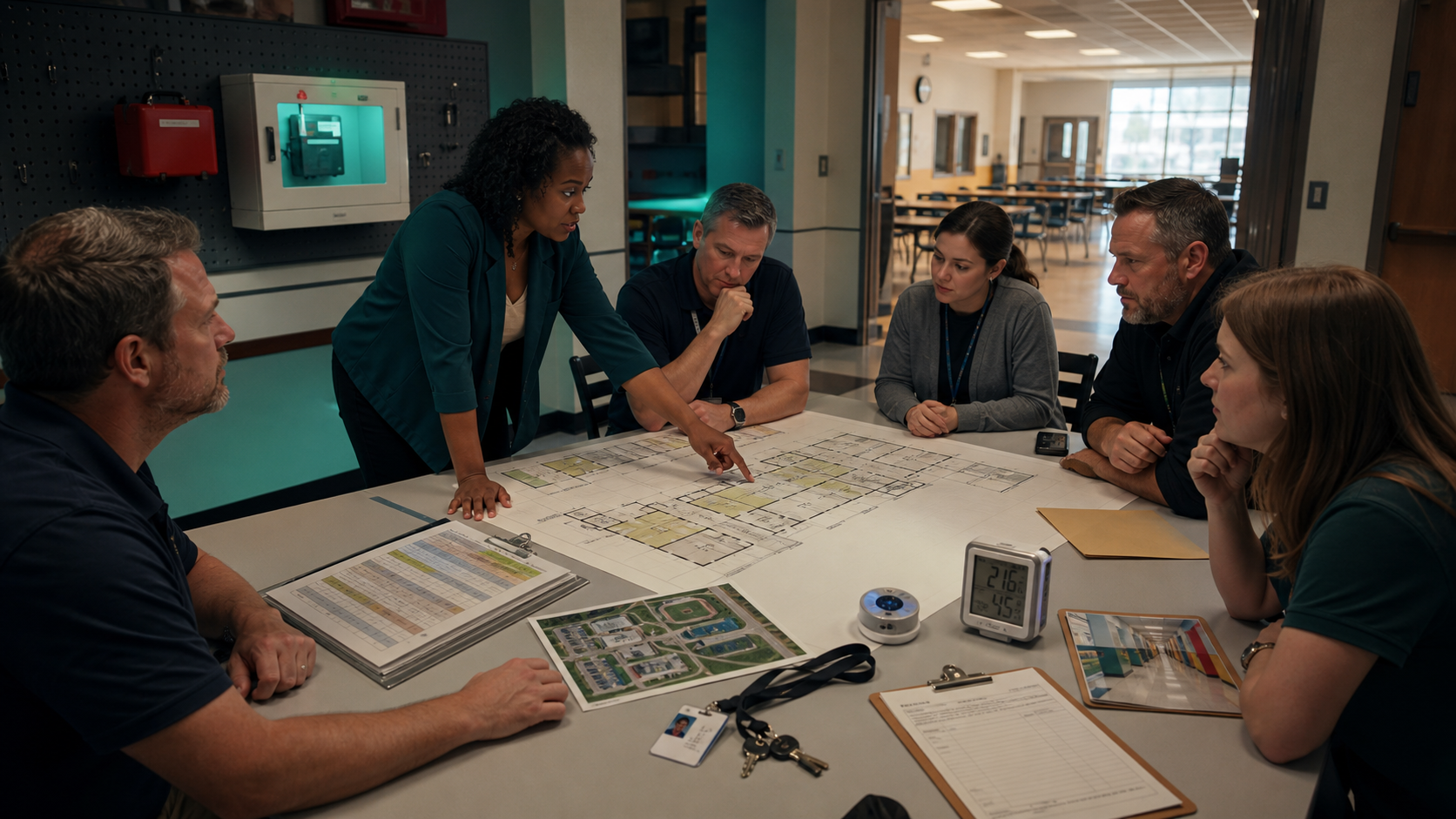
A practical placement decision can follow six questions.
| 1. Is the area regularly occupied? | The device should support a real operating area, not a room that looks central on a building plan but is rarely staffed. Common areas to review include: Cafeterias Dining rooms Kitchens Nurse stations Gyms Athletic buildings Community meal spaces Resident lounges School buses Reception areas After-school rooms Activity centers Mobile service vehicles |
|---|---|
| 2. Is food regularly consumed there? | Food service is an important factor, but it is not the only one. A cafeteria may be an obvious location. A gym may also sell food during evening events. A community room may host weekly meals. A school bus may allow food during long field trips. An eldercare facility may serve snacks in several lounges. The location review should follow actual use, not the room label. |
| 3. Can trained staff reach the device? | A cabinet near the activity area may still be inaccessible when: It is locked Only one person has the key A badge is required The office closes early Furniture blocks the route The equipment is stored behind unrelated supplies Staff do not know it exists The device is inside another department's secure room If access depends on one person being present, the location is fragile. |
| 4. Is the storage environment suitable? | The device and required components should be stored within the manufacturer's labeled conditions. Review: Temperature Direct sunlight Humidity Steam Grease Cleaning chemicals Dust Water exposure Vehicle heat Freezing conditions Repeated vibration Risk of tampering A location close to the kitchen may reduce walking distance but expose the equipment to heat and cleaning chemicals. |
| 5. Who owns the location? | Every device needs a primary owner and a backup owner. The owner should know: What belongs in the kit How often it is inspected Where the record is kept How missing components are replaced What happens after use Who can authorize return to service Whether the device may be moved Which donation conditions apply A wall cabinet cannot own itself. |
| 6. Does the location still work when conditions change? | Test the location during: Lunch service Evening programs Weekend events Nurse absence Substitute staffing Building rentals Bus reassignment Severe weather Construction Room reconfiguration |
A location that works only on a quiet weekday morning is not a reliable location.

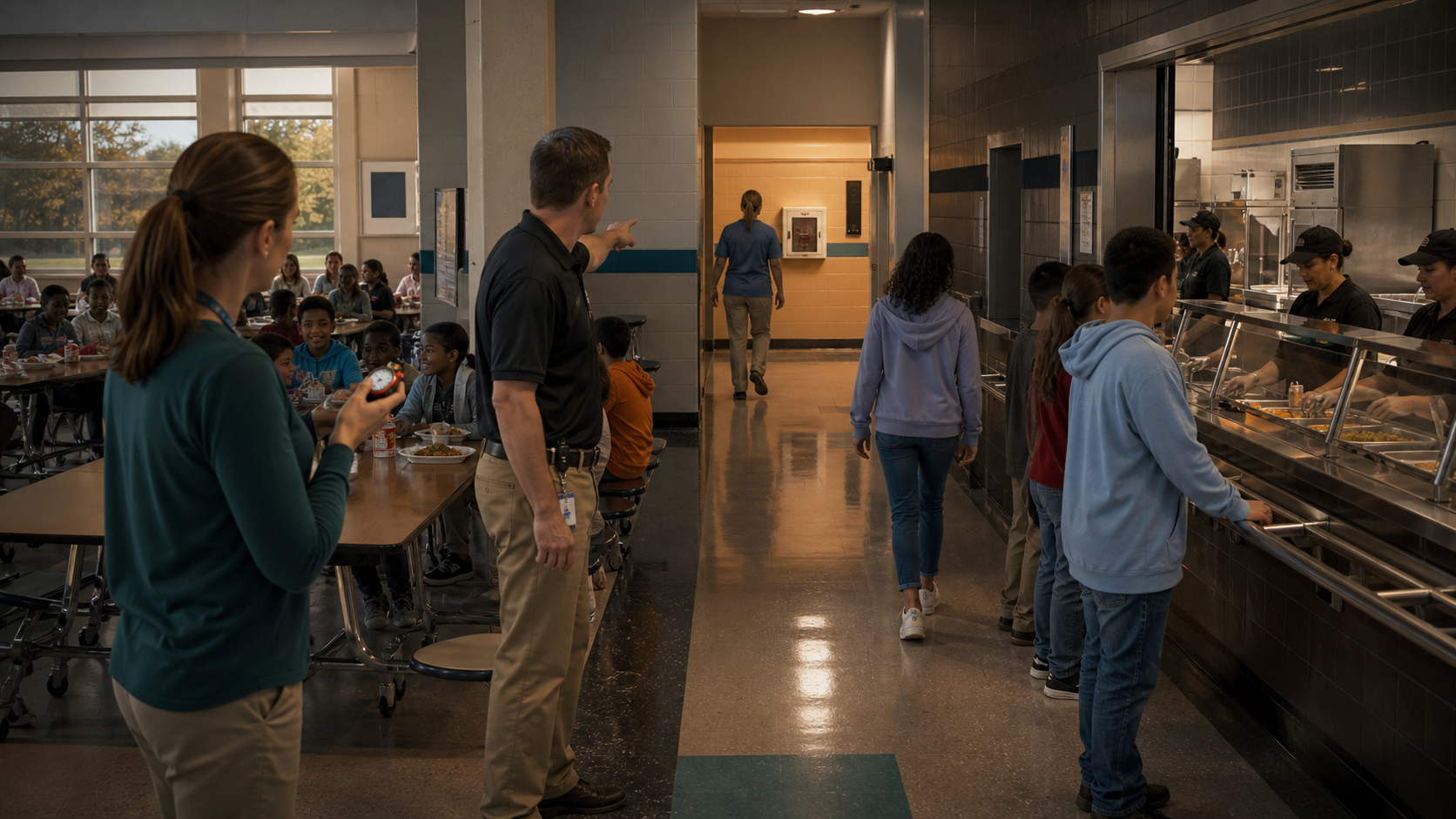
A cafeteria is frequently one of the first areas considered because large groups eat there at predictable times.
Advantages may include:
| Staff presence | Defined meal schedule |
| Existing safety procedures | High visibility |
| Clear room ownership | Proximity to food service |
But the location still needs careful review.
| Ask: | Is the cabinet accessible from every dining zone? | Does the room have more than one entrance? |
| Is equipment stored inside a locked kitchen office? | Is the serving line a barrier? | Are tables or carts placed in front of the cabinet? |
| Does the room host evening or weekend events? | Who inspects the device during school breaks? | Is the area exposed to steam, grease, or cleaning chemicals? |
A cabinet beside the cafeteria entrance may be visible but far from the rear dining area.
A cabinet inside the kitchen may be close to staff but inaccessible to teachers or event supervisors.
The school should walk the route during actual meal service.
The nurse's office often provides:
| Controlled storage | Health staff oversight | Inspection records |
| Product instructions | Secure access | Coordination with incident documentation |
| Those are real advantages. | The problem is distance and availability. | The nurse's office may be: |
| In another building | Closed after school | Locked when the nurse is absent |
| Behind a reception area | Difficult for substitute staff to locate | Far from the cafeteria or gym |
| Unavailable during weekend programs |
A nurse's office may be appropriate for one unit while other occupied areas need separate review.
The choice should follow access, not tradition.
A gym may remain active long after the main office closes.
It may host:
| Team practices | Tournaments |
| Parent meetings | Community recreation |
| Graduation | Concessions |
| Weekend rentals | Summer programs |
A device stored in the nurse's office may not support those activities.
Possible gym locations include:
| Near an existing first-aid or AED station | Inside a staff-accessible equipment room |
| Beside the event entrance | Near the concession area |
| In a supervised wall cabinet |
The location should not be hidden behind retractable bleachers, sports equipment, or locked storage.
If the gym shares a cabinet with an AED, the labels and instructions must remain separate. The devices serve different purposes and response sequences.
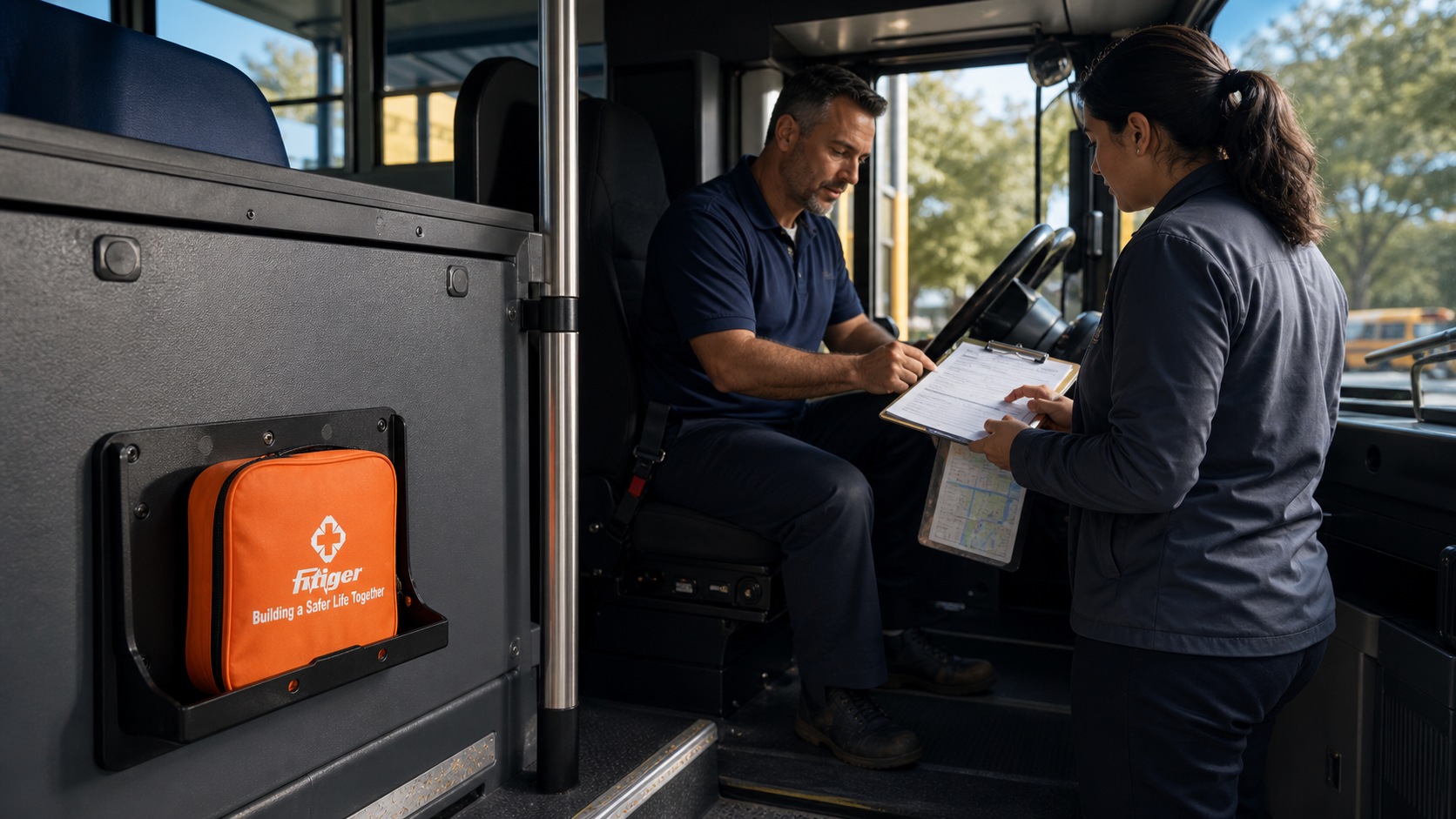
A device on a school bus should not sit loose near the driver.
It should be:
| Secured | Accessible after the bus stops | Clear of emergency exits |
| Away from pedals and controls | Protected from student belongings | Visible to authorized staff |
| Included in the pre-trip check | Reviewed for heat and cold exposure | Assigned to a specific vehicle, route, or program |
The district also needs a transfer process for substitute buses.
A device assigned to a route can disappear from coverage when the regular bus enters maintenance and the equipment remains behind.
Vehicle placement is a custody problem as much as a location problem.
Food banks, shelters, churches, and community kitchens may rely on rotating volunteers and different staff on each shift.
A placement plan should answer:
| Who opens the cabinet? | Who is present during evening meals? |
| Does the administrative office close before service ends? | Can volunteers identify the location? |
| Is the equipment near the dining area or hidden in a manager's office? | Who inspects it? |
| Who manages the overnight shift? | Are translated instructions needed? |
A location known only to permanent staff may not work during volunteer-led service.
The program should include equipment location in shift orientation.
An eldercare facility may serve meals in:
| Main dining room | Memory-care unit |
| Resident lounge | Private room |
| Activity room | Rehabilitation area |
| Outdoor patio | Separate floor dining spaces |
One central nurse station may not provide equal access to every area.
Placement decisions should coordinate with:
| Nursing leadership | Facility administration |
| Dining services | Infection control |
| Risk management | Resident-care procedures |
The general placement plan should not include unnecessary resident medical details.
Individual support needs belong in the appropriate clinical record, not on a public cabinet label.
A reception desk may look like a logical central point.
It can provide:
| Staff presence | Visitor visibility | Security |
| Phone access | Clear building entrance | It may also create problems: |
| The desk closes early | The equipment is behind a locked partition | Reception staff are not present during meal programs |
| The dining area is on another floor | Visitors block access | The cabinet is treated as general storage |
Centrality should be measured by the route from occupied areas, not by the building entrance.
The kitchen may be close to meal service and staffed by people who can notice an emergency.
It may also expose equipment to:
| Heat | Steam |
| Grease | Cleaning chemicals |
| Water | Food debris |
| Repeated cabinet opening | Restricted access |
A safer location may be just outside the kitchen in a staff-accessible corridor or dining-area cabinet.
The final decision should follow the product's labeled storage conditions and the facility's safety policy.
A device may be difficult to retrieve when it is:
| Under bandages | Behind medications |
| Inside a sealed supply case | Mixed with unrelated tools |
| Stored in a cabinet without a label | Placed inside a locked office drawer |
The equipment needs a defined location and inventory record.
This does not mean it needs a dramatic sign or promotional display.
A simple, accurate label is enough.
For example:
Call 911 and follow trained first-aid procedures.
Use according to product instructions and organizational policy.
Avoid labels stating:
| Use first | Guaranteed rescue |
| Replaces the Heimlich maneuver | No training needed |
| Works for all ages | Officially approved by an agency unless the exact claim is supported |
Open access can increase visibility but also create:
| Tampering | Missing components | Unsupervised handling |
| Damage | Theft | Misuse |
| Excessive security can create delay. | Possible controls include: | Supervised wall cabinet |
| Tamper-evident seal | Staff-only cabinet with broad access | Clear location signage |
| Backup key or badge access | Inspection after a broken seal | Camera coverage where appropriate |
| Inventory control | The goal is not maximum security. |
It is reliable authorized access with reasonable protection.
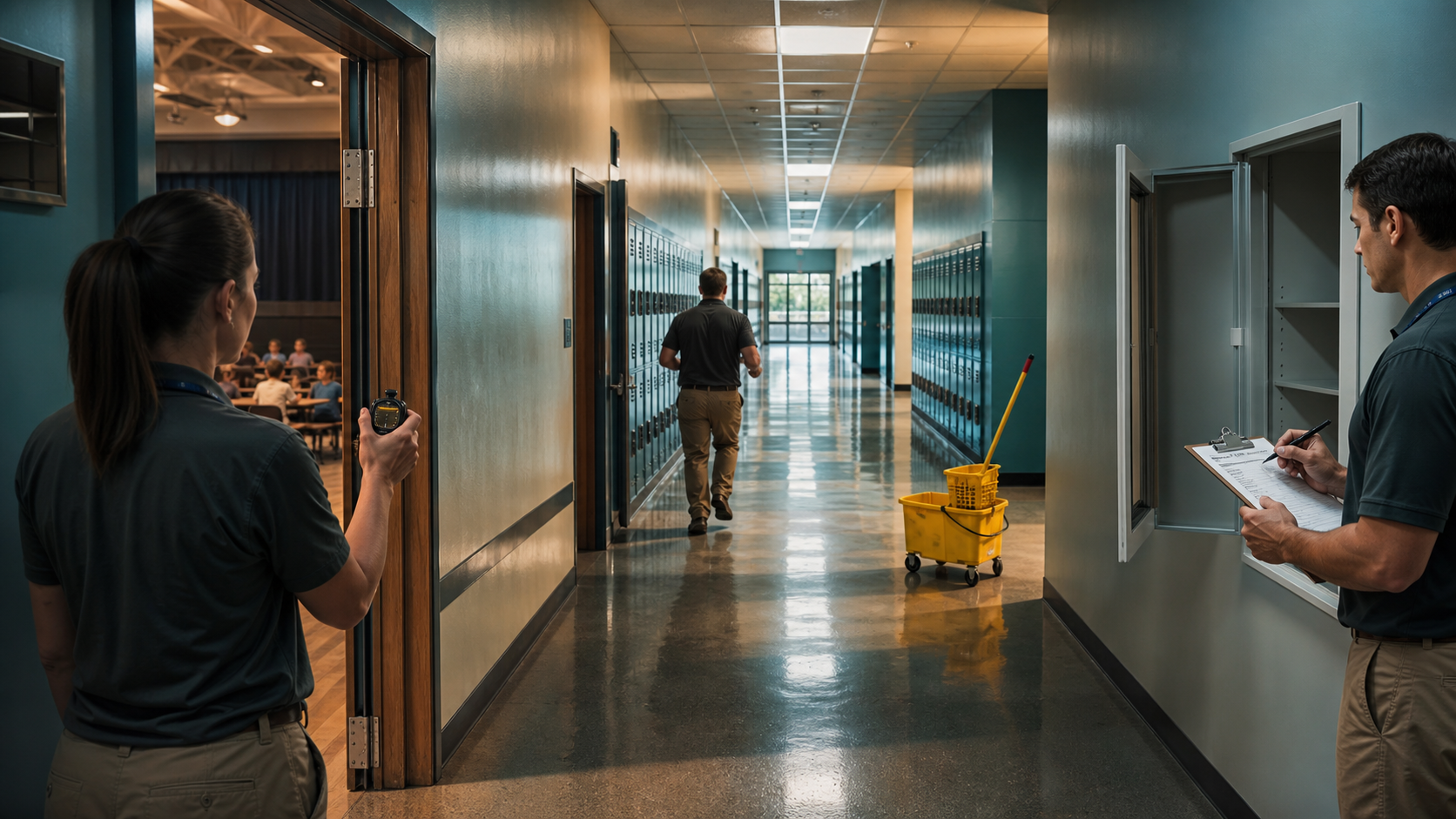
A placement should be tested from the area it is intended to serve.
For a cafeteria, begin at the farthest table.
For a gym, begin at the opposite bleachers.
For a resident floor, begin at the farthest occupied lounge.
For a shelter, test during the overnight shift.
For a bus, test from the driver's seat after the vehicle is secured.
Record:
| Starting point | Storage point | Route |
| Locked doors | Obstacles | Need for keys or badges |
| Staff familiarity | Whether another person had to leave the area | Corrective action |
This is an equipment-access test, not a clinical simulation.
Do not use a person as a choking victim or place the device on someone during a general location audit.
A slow route is evidence of an access problem.
It does not mean staff should wait for the device before beginning standard care.
During an actual emergency:
| Call 911 | Begin established choking rescue |
| Follow dispatcher instructions | Use CPR when indicated |
| Retrieve second-line equipment without interrupting necessary first-line action |
A good plan assigns different roles when enough trained adults are present.
One person may begin first-line care while another calls 911 and another retrieves the device.
Where only one responder is present, the procedure must reflect that limitation.
If the current device is difficult to reach, the organization should first ask whether the problem can be solved by:
| Moving it | Removing an unnecessary lock | Adding another key |
| Improving signage | Updating staff orientation | Clearing the route |
| Changing cabinet height | Assigning an after-hours owner | Updating the building map |
| Correcting the inventory record | A second device may be justified when: | Buildings are detached |
| Dining areas operate simultaneously | The campus is large | Different floors are independently occupied |
| A bus or mobile program cannot access building equipment | After-hours programs use separate spaces | Access barriers cannot be removed |
The number of devices should follow the location plan.
The location plan should not be invented to justify more devices.
A cabinet can be visible and still be poorly placed.
Review whether it is:
| Too high | Too low | Behind furniture |
| Inside a narrow space | Difficult to open | Blocked by a door |
| Inaccessible to staff with mobility limitations | Mounted where equipment may fall | In conflict with building or accessibility requirements |
The organization should involve facilities staff before installation.
A device should not be mounted using an improvised hook, unstable shelf, or unsecured bracket.
A facility may move equipment without updating:
| Wall signs | Campus map |
| Staff handbooks | Emergency binders |
| Bus records | Inspection logs |
| Online plans | Training materials |
The result is a device in one room and a response plan pointing to another.
Every relocation should trigger updates to:
| Inventory | Map |
| Inspection owner | Signage |
| Staff orientation | Access test |
| Donation record | Post-use plan |
A moved device is not fully redeployed until the records match.
A primary owner and backup owner should be recorded for every placement.
Possible owners include:
| School nurse | Cafeteria manager | Athletic director |
| Shelter manager | Program nurse | Transportation coordinator |
| Facilities manager | Floor supervisor | Principal's designee |
| Community kitchen manager | The owner should manage: | Routine inspection |
| Access issues | Missing components | Replacement |
| Current instructions | Post-use quarantine | Return-to-service documentation |
| Location changes | Donation conditions |
The person who inspects the device may not be the person who uses it.
Those roles should not be confused.
A free device is not exempt from:
| Procurement review | Product verification | Storage requirements |
| Placement approval | Inspection | Training review |
| Documentation | Replacement planning | Post-use procedure |
| Non-resale conditions | The organization should record: | Donation source |
| Date received | Product name and model | Quantity |
| Lot or serial information when applicable | Assigned location | Primary owner |
| Backup owner | Instructions received | Inspection schedule |
| Transfer restrictions | Replacement responsibility |
Receiving the product is the start of management, not the end.
A simple placement record may include:
| Device identifier | Building | Floor |
| Room or area | Cabinet or storage point | Primary owner |
| Backup owner | Date placed | Last inspection |
| Next inspection | Access restrictions | Storage conditions |
| People or program served | Status | Last relocation date |
| Status should be precise: | Received | Awaiting approval |
| Assigned | Placed | In service |
| Removed from service | Quarantined | Replaced |
A delivered device is not automatically in service.
A donation application is stronger when the applicant can explain exactly where each requested unit would go.
A school might state:
One unit is requested for the detached cafeteria, where approximately 420 students eat each school day. The cafeteria manager will serve as primary owner and the assistant principal as backup.
A shelter might state:
One unit is requested for the overnight dining room, which remains occupied after the administrative office closes. The evening supervisor will manage access and inspection.
A transportation program might state:
One secured unit is requested for each of two rural bus routes, with transfer records required when substitute vehicles are used.
These descriptions allow the request to be evaluated.
They also reduce the chance that donated equipment will arrive without an approved destination.
Organizations should complete the location review before submitting a quantity request.
| Prepare: | Organization or school identity | Exact proposed location |
| People served | Hours occupied | Current equipment |
| Access gap | Requested quantity | Primary owner |
| Backup owner | Inspection plan | Training status |
| Shipping contact | Non-resale acknowledgment |
Eligible organizations can apply for donated choking emergency equipment after identifying a clear placement need and a responsible management plan.
Submitting a request does not guarantee approval, product selection, quantity, training, shipment, or delivery by a requested date.
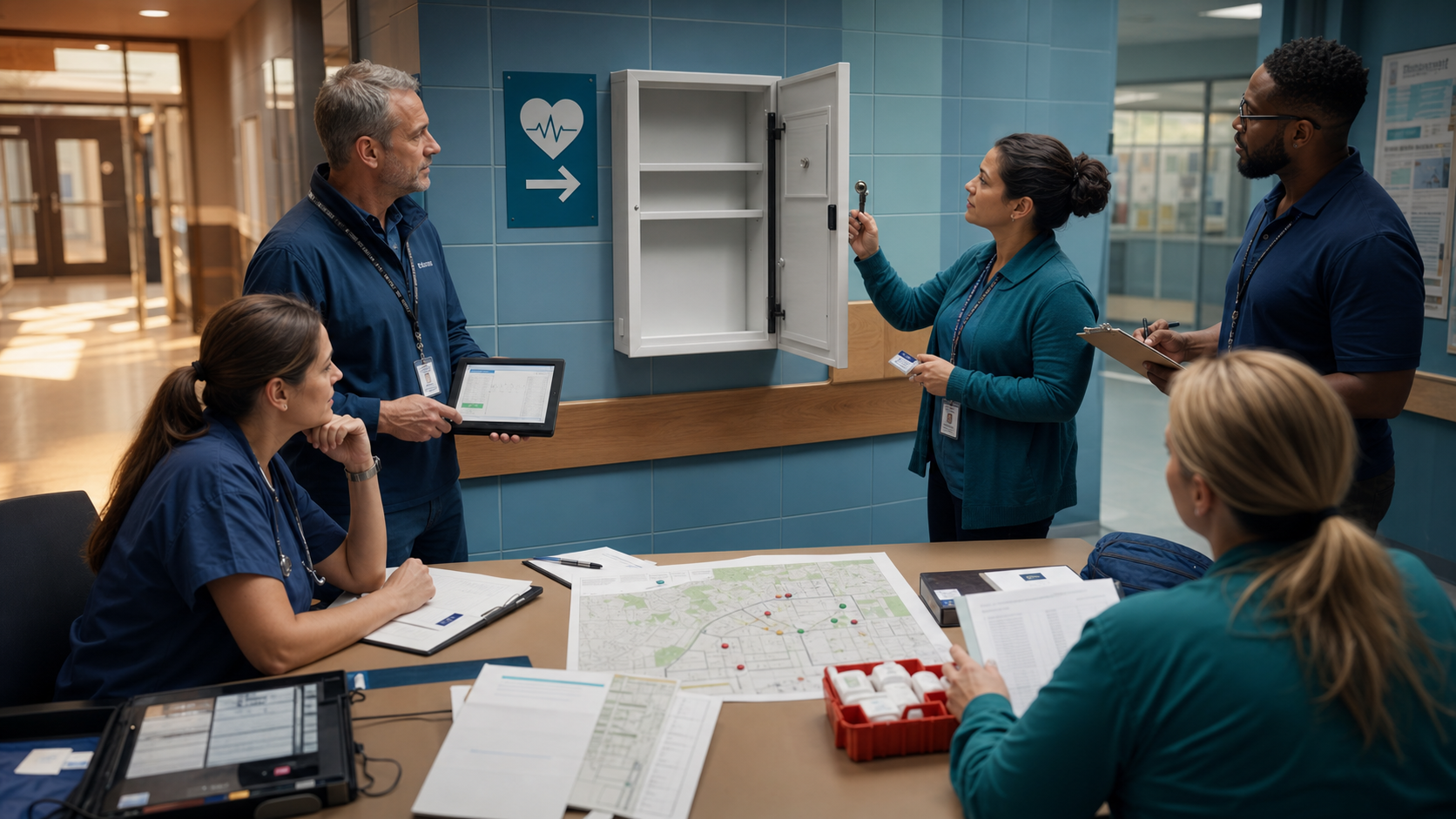
| Location | The area is regularly occupied; food or relevant activities occur there; the device supports a real access gap; the storage point is exact and documented. |
| Access | Trained staff can reach it; the cabinet is not dependent on one key holder; the route is clear; after-hours access has been tested; substitute staff can identify the location. |
| Storage | Temperature is appropriate; sunlight, water, grease, steam, and chemicals are controlled; the device is secured; emergency exits and pathways remain clear; components are protected from tampering. |
| Ownership | Primary owner is named; backup owner is named; inspection frequency is defined; replacement authority is clear; post-use responsibility is assigned. |
| Response sequence | 911 activation remains immediate; standard choking rescue remains first-line; CPR escalation is included; the device is identified as second-line backup equipment; signage does not make unsupported claims. |
| Documentation | Product and model are recorded; donation source is recorded; location map is updated; inspection log is active; relocation history is maintained; status is reported accurately. |
The right location is not simply close, central, visible, or secure. It is the location where access, storage, ownership, and the emergency response sequence work together.

Start with the Fitiger donation program when placement planning shows an eligible equipment need.
There is no universal best location. The device should be placed near the area it is intended to support, where trained staff can reach it, storage conditions are appropriate, access is reliable, and inspection responsibility is assigned.
A cafeteria may be appropriate because people regularly eat there, but the organization should review room size, separate dining zones, staff access, cabinet security, storage conditions, and after-hours use.
It may provide strong inventory control and health oversight, but it may be too far away or unavailable after hours. Access should be tested from the areas the device is intended to support.
Yes, when authorized staff can access it without preventable delay and a backup key or access method exists. A lock controlled by one absent employee creates a weak system.
It may be appropriate when the shared location is visible, accessible, suitable for storage, and included in routine inspection. The two devices need separate labels and response instructions.
Only when a real access review shows that trained staff can retrieve it reliably without creating avoidable delay. Detached buildings or independently occupied areas may need separate locations.
Yes, but the organization should approve and document the relocation, update maps and signs, assign ownership, inspect the new storage environment, and notify relevant staff.
No. Staff should call emergency medical services and begin established first-line choking rescue. A suction-based anti-choking device belongs only in a second-line role after unsuccessful standard rescue.
The organization should review it on a regular schedule and after construction, staffing changes, room reassignment, access problems, environmental exposure, an incident, or relocation.
No. Equipment placement alone does not establish compliance with laws, policies, training requirements, product instructions, inspection duties, or professional standards.
FITIGER Donation Program - Target page for eligible school and organizational donation requests.
American Red Cross - Adult and Child Choking - Supports established first-line choking response education.
U.S. Food and Drug Administration - Supports the second-line-use boundary and the need to follow established choking rescue protocols first.
This article is for general education, equipment-placement planning, and emergency preparedness. It is not medical advice, legal advice, a mandatory placement standard, or a substitute for certified first-aid training, manufacturer instructions, organizational policy, or professional review.


