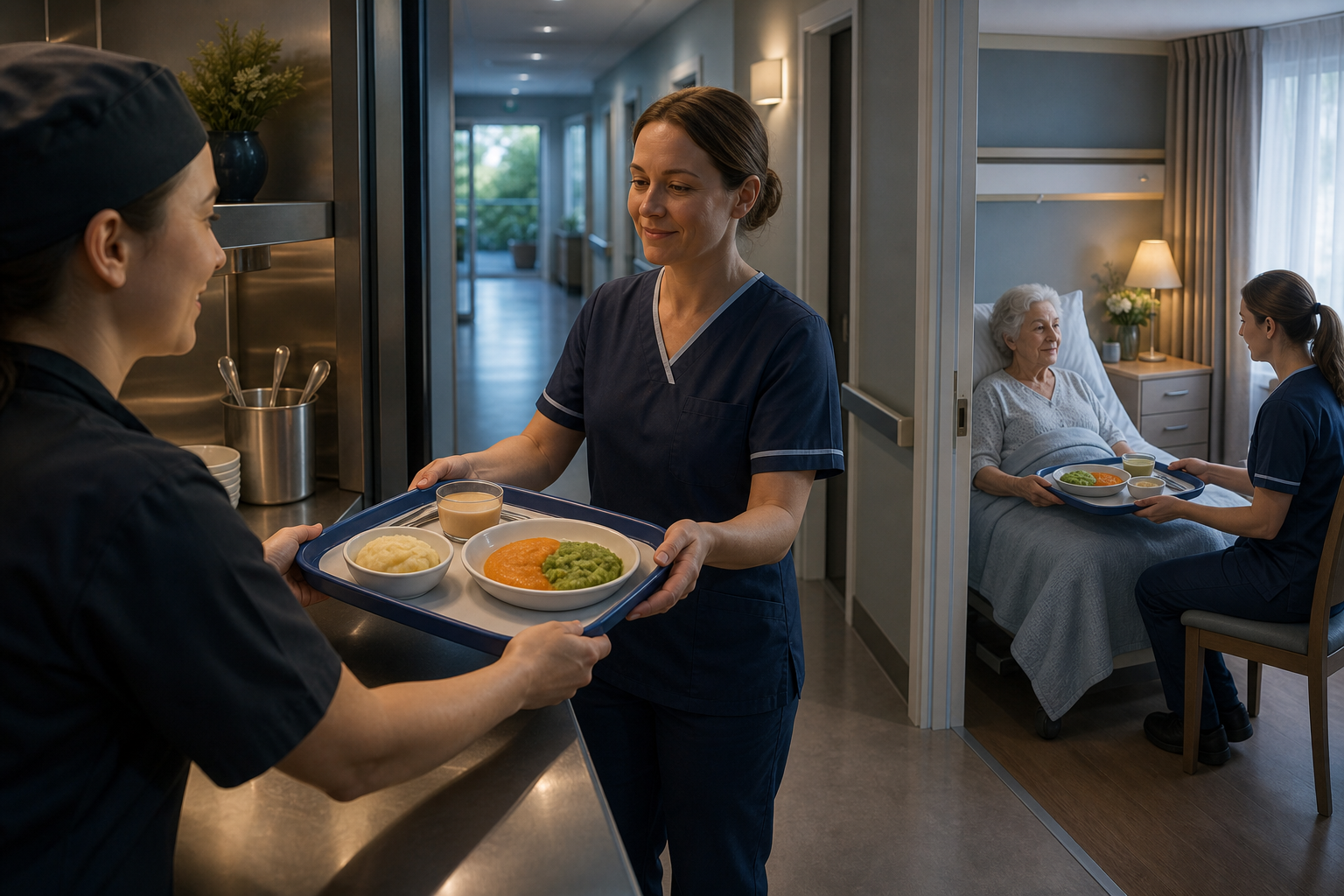
In 2026, mealtime safety is judged by the evidence chain, not the inspection folder. CQC SAF 2026 and CMS data validation force care teams to prove that the chart, IDDSI test, tray, bedside verification, DSCR timestamp, and rescue pathway matched the same resident on the same shift.
Before choosing equipment, review Fitiger's anti-choking device buyer evidence checklist for FDA wording, testing, seller traceability, and kit-selection questions.
For years, many care providers prepared for inspection days as if safety lived in a folder. Policies were refreshed. Training logs were gathered. Managers checked whether the right documents could be produced. The home looked ready because the paperwork looked tidy.
A dysphagia meal does not wait for that rhythm. A resident with a texture-modified diet sits at the table now. A drink has already been thickened. A tray is leaving the pass. A temporary worker is covering the dining room while the regular carer is helping another resident. The question is not whether the policy exists. The question is whether the food, liquid, posture, assistance level, and record still agree before the first bite or sip.
That is where CQC SAF 2026 and CMS data validation change the conversation. They push mealtime safety away from static reassurance and toward live operational proof. If the home cannot connect the resident, the tray, the liquid test, the bedside check, and the response log in real time, the evidence chain is already weaker than the care plan suggests.
CQC's Single Assessment Framework is not simply a new filing system. It looks at quality statements, evidence categories, people's experience, and what care looks like in practice. For mealtime safety, that matters because dysphagia risk often hides in routine work: the tray line, the thickened drink, the bedside handoff, and the delayed note written after lunch service ends.
A provider may be able to say, "We follow IDDSI." That is not enough. A stronger evidence path shows that the current IDDSI level was visible to the kitchen, the correct tray was assembled, the thickened drink was tested with the right tool, the bedside worker confirmed the match, and the Digital Social Care Record captured the event before the shift had to reconstruct it from memory.
The gap between those two positions is the difference between compliance and robustness. Compliance says the home has a standard. Robustness shows the standard survived a busy meal service.
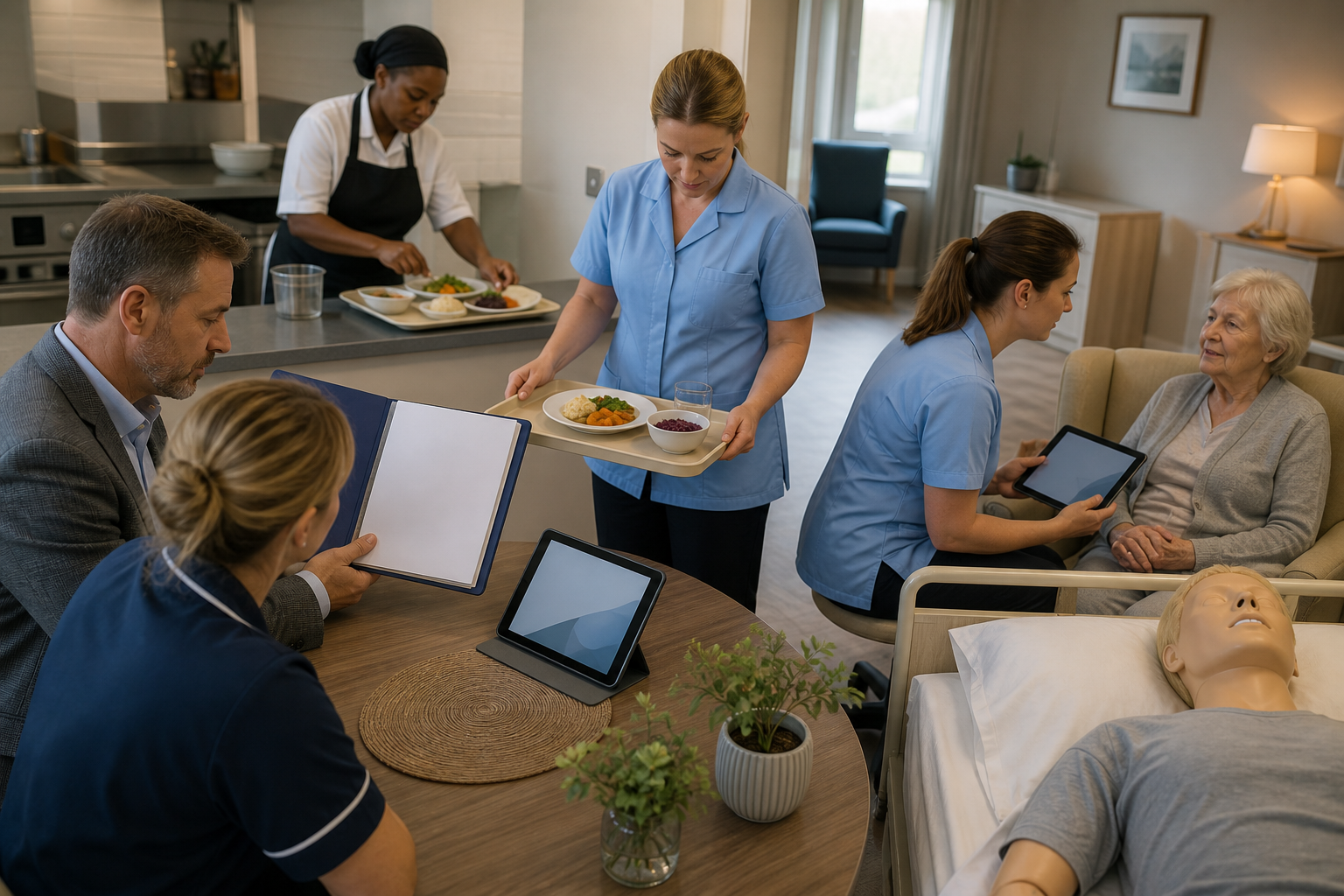
A closed evidence path begins with assessment and stays intact through preparation, service, feeding, escalation, and documentation. The chart names the resident's texture level. The kitchen prepares to that level. The tray label matches the chart. The bedside worker verifies the food, liquid, posture, alertness, and assistance plan. If something fails, the rejection or escalation is recorded while the event is still fresh.
Break the chain once and the claim of safety gets harder to defend. The chart can be correct while the tray is wrong. The liquid can be mixed correctly while the wrong syringe is used for the IDDSI Flow Test. The bedside instruction can be accurate while the resident is fed slouched in a chair. A second-line airway device can be staged nearby while nobody records the delay between first compromise and first action.
This is why DSCR dysphagia audit evidence matters. Digital Social Care Records do not make meals safe by themselves. They make mismatch harder to hide. A live record can show whether the current order was visible on the shift, whether the tray match was confirmed, and whether the incident timeline survives a cross-check.
Audit Point | Evidence Needed | Why It Matters |
|---|---|---|
Texture order | Current IDDSI level visible to kitchen and bedside team | The resident eats the current order, not last month's printed instruction. |
Tray verification | Tray label, resident, food texture, and care plan match before feeding | A correct assessment fails if the wrong tray reaches the table. |
Liquid testing | IDDSI Flow Test performed with the correct 61.5 mm reference syringe | Wrong syringe geometry can misclassify thickened drinks. |
Bedside check | Posture, alertness, pacing, and assistance level confirmed at point of service | Swallowing safety changes when the resident is tired, slouched, or unsupported. |
Response path | First-line action, 911 or EMS activation, and second-line backup timing documented | A late note cannot close the oxygen gap retroactively. |
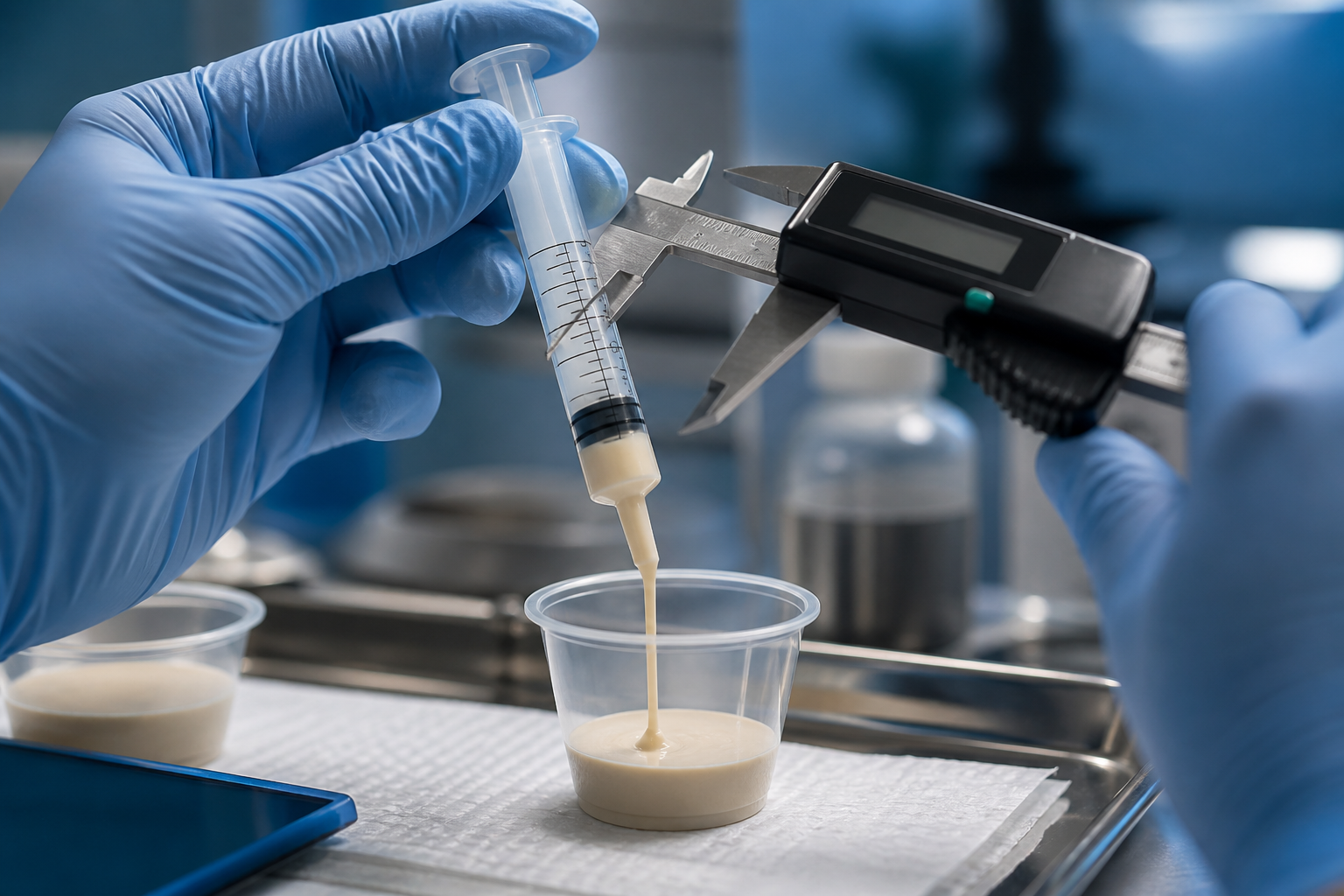
In thickened-liquid testing, a few millimeters can change the evidence. The IDDSI Flow Test depends on a 10 mL slip-tip syringe with a measured barrel length of 61.5 mm from the zero line to the 10 mL line. ISO 7886-1 standardizes key syringe features, including the nozzle system, but it does not make every 10 mL syringe share the same internal barrel length.
If the barrel length changes, the liquid column height changes. If the height changes, the hydrostatic pressure changes. In plain terms, a worker can follow the steps correctly and still get the wrong IDDSI result because the tool changed the test.
That belongs in an audit conversation because it separates "we checked it" from "we checked it with the right tool." A thinner-than-intended drink can raise aspiration risk. An over-thick drink can increase residue, effort, fatigue, and poor intake. For a frail resident who already struggles to swallow, the cup is not a side detail. It is part of the airway safety system.
Control Area | What to Verify | Failure Mode |
|---|---|---|
IDDSI Flow Test | 61.5 mm syringe length from 0 to 10 mL | Wrong geometry alters the flow result. |
Level 5 food | Adult particle size remains within 4 mm x 15 mm | Oversized particles increase choking risk. |
Level 4 food | No lumps, smooth and cohesive texture | Lumps or separation can break swallow control. |
DSCR timestamp | Verification recorded before feeding, not reconstructed later | A late record may describe intent rather than the real event. |
Incident timeline | Recognition, escalation, and action are traceable | Delay becomes invisible if timing is missing. |
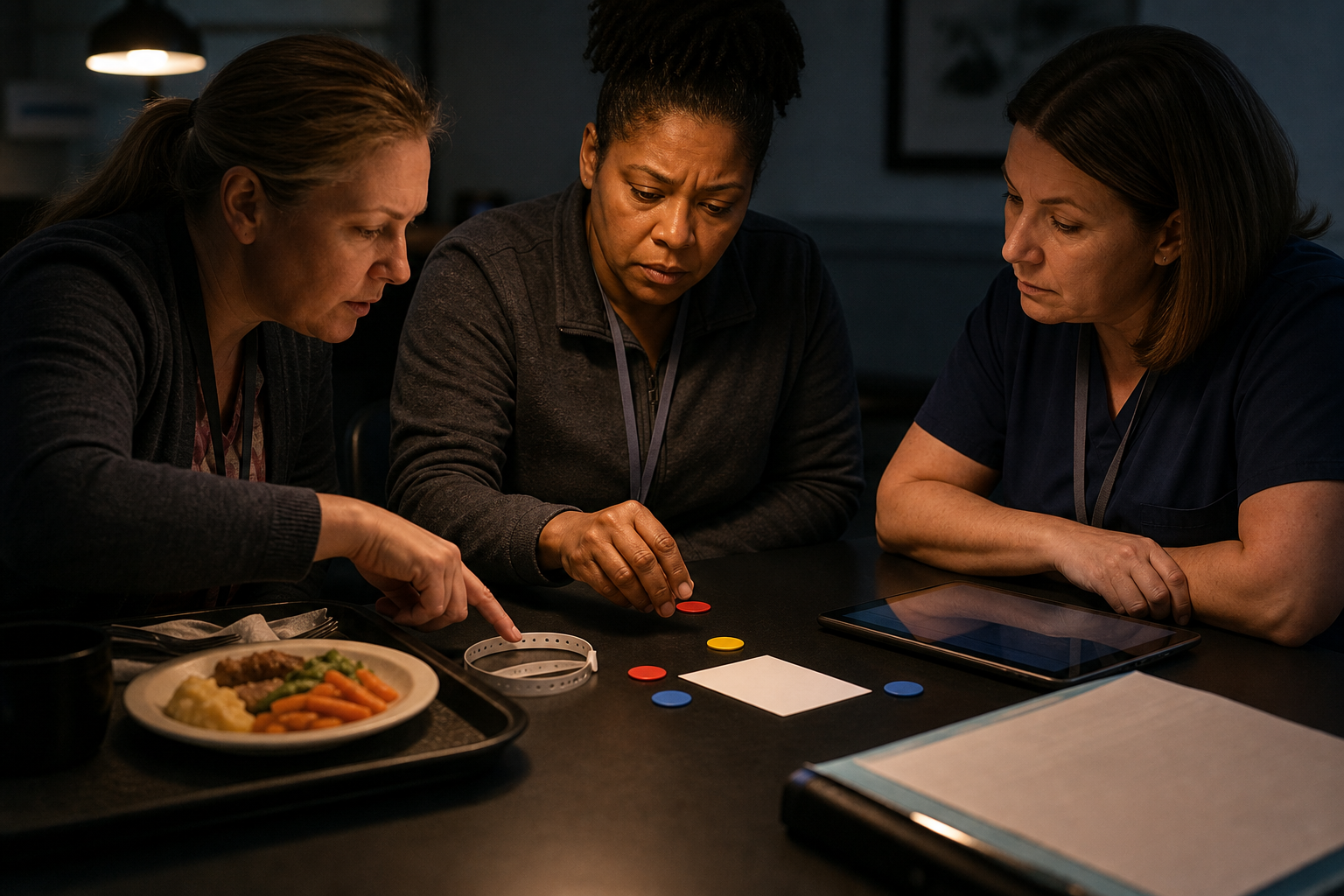
CMS makes the pressure practical. Under the Skilled Nursing Facility Quality Reporting Program, facilities that do not meet reporting requirements may receive a 2.0 percentage point reduction in the Annual Payment Update. That turns documentation integrity into a financial and operational concern, not a clerical chore.
Mealtime safety sits inside that pressure because dysphagia care depends on detail. The MDS, care plan, bedside note, texture order, liquid protocol, and incident report need to describe the same reality. If the record says one thing and the tray line shows another, the home is carrying clinical risk and reporting risk at the same time.
Operators should be careful here. CMS does not need every dysphagia workflow to fail dramatically before the signal matters. Repeated inconsistencies, late documentation, missing verification, and unexplained incident timing all weaken the home's evidence position.
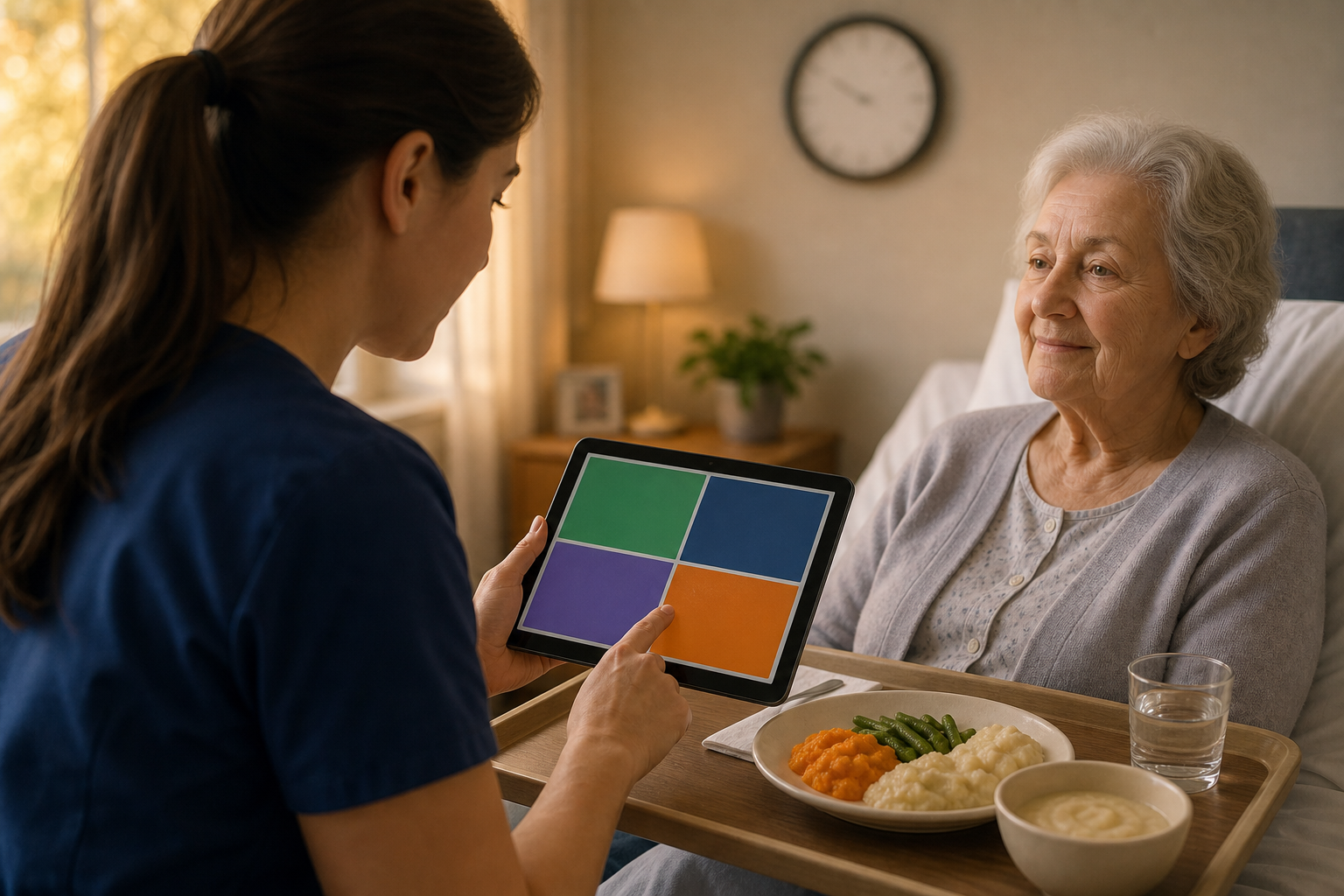
A paper binder can show intent. A DSCR can show whether the resident's current swallowing plan was active on the shift, whether the kitchen saw the same instruction, whether the bedside worker confirmed it, and whether the incident log matches the real timeline.
This matters most during ordinary pressure: staff shortages, agency coverage, late trays, breakfast service, memory-care dining, and residents who eat slowly. Those are not rare conditions. They are the everyday environment where mealtime safety either holds or drifts.
A strong DSCR workflow does not feel like a software project. It feels like fewer guesses. The kitchen sees the current level. The bedside worker sees the same level. A mismatch can be rejected. A delay can be timestamped. A manager can review drift patterns before they become serious incidents.
Static Folder Weakness | DSCR Advantage | Mealtime Safety Impact |
|---|---|---|
Old diet order remains in circulation | Current texture level visible across teams | Fewer tray-to-chart mismatches |
Bedside check depends on memory | Verification can be timestamped | Audit trail shows when safety checks happened |
Incident narrative written after the shift | Response timing can be logged closer to the event | Recognition and escalation gaps become visible |
Repeated small errors look isolated | Patterns can be detected across shifts | Managers can correct drift earlier |
Inspection prep happens later | Evidence already exists inside routine care | Audit readiness becomes daily work |
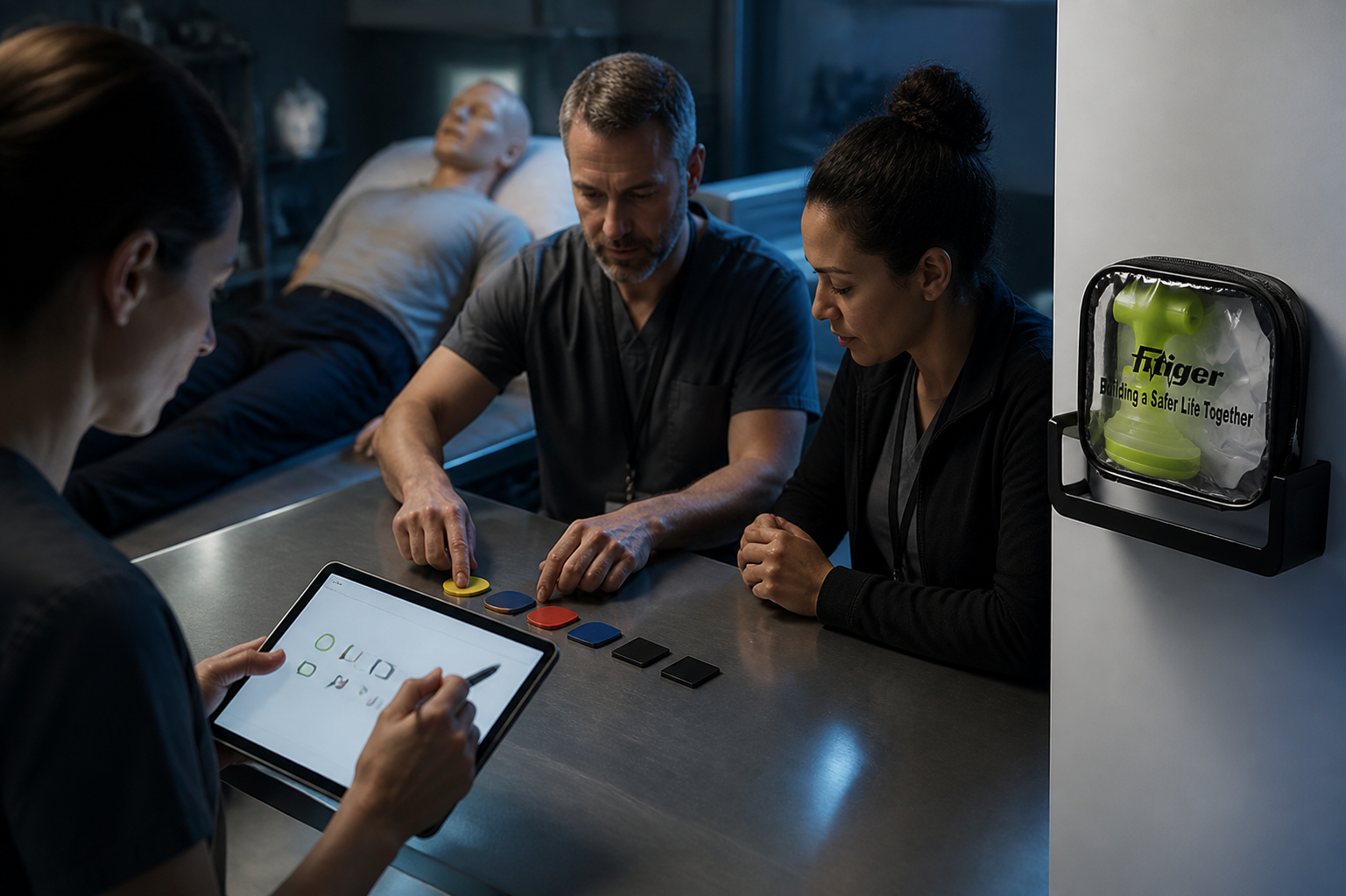
Airway safety does not end at the tray, but it should not begin with a device either. FDA's De Novo order for DEN250012 created 21 CFR 874.5400, product code QXN, for a suction anti-choking device as a second-line treatment. That means it belongs after unsuccessful first-line BLS choking response in complete airway obstruction, not as a substitute for texture control, liquid verification, supervision, 911, or CPR.
For care facilities, that boundary matters. A device mounted on a wall does not prove readiness if the tray system failed earlier, the first-line response sequence is unclear, or the retrieval path adds new delay. A strong airway safety file connects the tray, record, staff role, and backup layer into one evidence path.
This is where high-conversion buyer questions should be answered honestly. A nursing home may ask whether it needs an anti choking device, choking rescue device, or airway clearance device for elder care. The answer is not "buy one and the risk is solved." The safer answer is: first prove the mealtime controls work; then place second-line redundancy where it can be reached if first-line rescue fails.
Walk the dining room with the chart in your hand. Check what the resident is supposed to receive. Look at what actually leaves the pass. Measure the syringe. Watch the bedside confirmation. Review the DSCR timestamp. Then time the route from the resident's chair to emergency activation and any second-line airway backup.
The audit should answer simple questions that become difficult during an emergency:
| Can the kitchen see the current IDDSI level without relying on memory | Can staff prove the thickened drink was tested with the correct 61.5 mm syringe |
| Does the tray label match the resident and the bedside care instruction | Is the resident positioned and supported according to the care plan |
| Can a first witness call for help without abandoning the resident | Is the second-line device, if used by the facility, reachable from the dining room |
| Can the DSCR show what happened before, during, and after the event | |
That kind of audit is not paperwork theater. It is how a provider learns whether the care system still works when the meal is already in front of the resident.
CQC SAF 2026 and CMS data validation are pushing care homes toward the same operational standard: prove the meal, not just the policy. A dysphagia plan is only strong when the tray, liquid test, bedside verification, DSCR timestamp, and rescue pathway match in the same resident's timeline.
If your record cannot follow the meal from assessment to bedside, the evidence chain is incomplete. If your second-line backup cannot be reached after first-line action fails, the response chain is incomplete. The safest systems do not wait for an inspector, a surveyor, or a choking event to reveal the gap.
For related planning context, review the anti-choking device buyer evidence checklist.
The audit logic moved from static documentation toward live operational evidence. Care homes need to show that the chart, tray, liquid test, bedside check, digital record, and response workflow match in real time, not just in policy language.
CQC SAF refers to the Care Quality Commission's Single Assessment Framework. For mealtime safety, it pushes providers to demonstrate how safe care works in practice through quality statements, evidence categories, and real-world proof.
CMS data validation links documentation quality to payment and accountability. Under SNF QRP rules, reporting failures can carry a 2.0 percentage point Annual Payment Update reduction, making record accuracy a financial as well as safety issue.
The IDDSI Flow Test depends on a 10 mL slip-tip syringe with a 61.5 mm measurement from the zero line to the 10 mL line. A different syringe geometry changes liquid flow and can misclassify thickness.
They do not make meals safe by themselves, but they expose whether the texture order, tray match, bedside verification, incident log, and response timeline stayed aligned. That makes drift easier to detect before it becomes routine harm.
It fits as second-line airway redundancy after unsuccessful first-line BLS choking response for complete airway obstruction. It does not replace tray accuracy, liquid verification, posture control, staff supervision, 911, CPR, or first-line rescue.
Start with the meal pass. Follow a modified tray from kitchen to bedside, measure the IDDSI syringe, check DSCR timestamping, and time the route from the dining room to emergency activation and any second-line backup.
CQC Assessment Framework - Supports the Single Assessment Framework, quality statements, and evidence categories used in provider assessment.
CQC - Our New Single Assessment Framework - Supports provider-side understanding of the SAF model and quality-statement structure.
CQC I Statements - Supports the use of I statements in the people's experience evidence category.
FDA De Novo Order DEN250012 - Supports 21 CFR 874.5400, product code QXN, and the regulatory category suction anti-choking device as a second-line treatment.
FDA Safety Communication, March 4, 2026 - Supports the sequence that established choking rescue protocols remain first-line and anti-choking devices belong after unsuccessful standard protocols.
IDDSI Testing Methods and Syringe Guidance - Supports use of correct testing methods and syringe geometry concerns in thickened-liquid verification.
This article is for educational and preparedness-planning purposes only. It does not replace accredited dysphagia assessment, speech and language therapy, clinical judgment, emergency medical advice, current first-aid training, facility policy, or product-specific instructions for use. In a real choking emergency, follow established first-line rescue protocols, activate emergency medical services, and use any device only within its labeled instructions and second-line position.


