Last updated: October 8, 2026
Authored by George KingThe future of choking preparedness will not be one dramatic invention. It will be faster recognition, better first-minute training, reachable emergency tools, and second-line airway rescue planning after manual care fails. Homes, schools, restaurants, and care facilities need response plans built around real rooms, real delays, and real people under stress.
For a household checklist, see Fitiger's child and home choking safety readiness plan.
The old version of choking preparedness was easy to summarize: know the Heimlich maneuver, hope someone nearby remembers it, and call 911 if things go badly.
That is not enough anymore.
A parent may be standing at the sink while a toddler goes silent at the table. A cafeteria monitor may be watching 100 students, not one. A restaurant server may be the first person to notice that a guest cannot answer. A caregiver in assisted living may have a resident who coughs often enough that the warning signs start to feel normal.
Those are not rare edge cases. They are the places where choking emergencies actually begin.
The practical concern is the same: people do not want a slogan. They want to know what they can prepare before the first minute disappears.
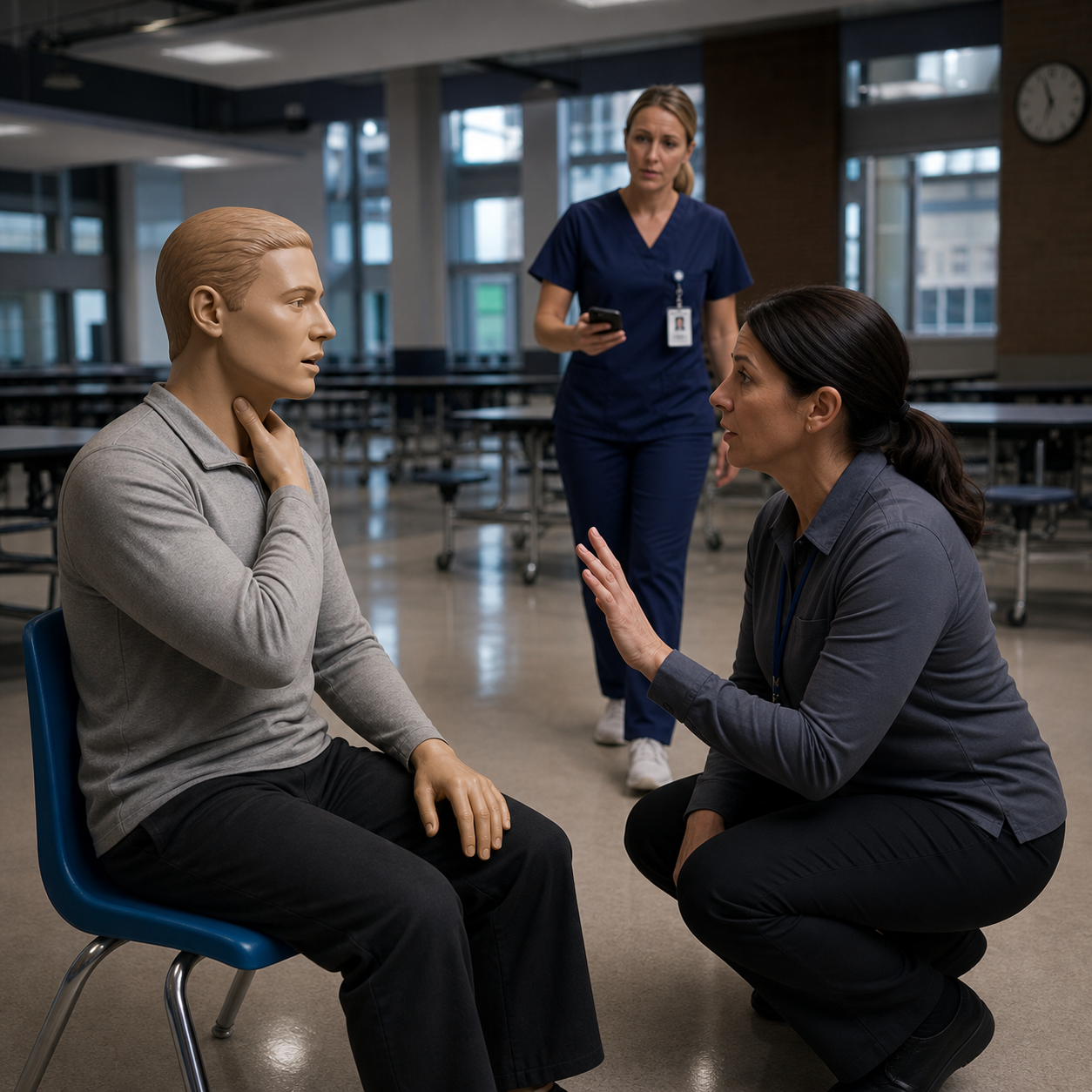
Choking response starts before anyone touches the person. It starts with one fast question: is air still moving?
If the person can cough forcefully, air is still moving. Stay close, encourage coughing, and watch for change. If the cough is weak or gone, speech disappears, the person makes little or no useful sound, or the face begins to lose color, the emergency has shifted.
The 2025 AHA update moved public choking guidance toward a clearer sequence. For conscious adults and children, the recommended first-line pattern is 5 back blows followed by 5 abdominal thrusts, repeated until the object is expelled or the person becomes unresponsive. For infants, the pattern is 5 back blows followed by 5 chest thrusts.
That update matters, but recognition still comes first. A beautiful poster on the wall does not help if the adult nearby misreads silent choking as embarrassment, drama, or a child refusing to answer.
Future preparedness will put more attention on silent choking symptoms because silence is where delay hides. A person who cannot speak is not being difficult. A baby who suddenly stops crying is not calming down. A resident who stops clearing their throat and goes still may have crossed into a true airway emergency.
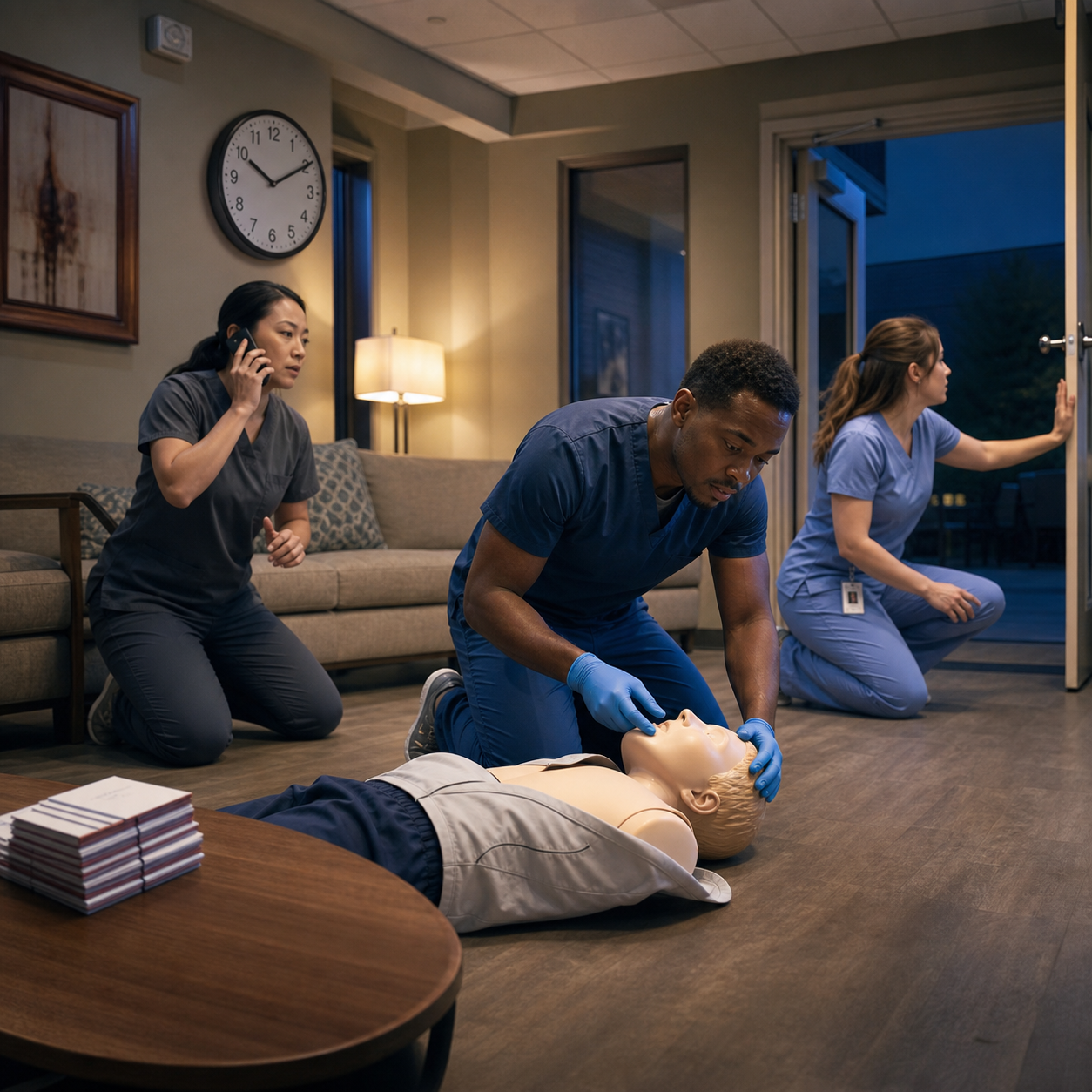
Long training days have a place. Families, school staff, restaurant teams, and caregivers still need certified CPR and first-aid instruction whenever possible.
The missing piece is repetition.
People forget what they only see once. A lunch aide who attended a training last August may still freeze in May if no one has rehearsed the first 30 seconds. A parent may remember the idea of abdominal thrusts but not the difference between an infant and a child over age 1. A grandparent may know where the choking emergency kit is stored but not what to do before reaching for it.
The next phase of choking preparedness should include shorter drills that people can repeat without turning every session into a full class.
At home, that can mean a five-minute family reset: where is the phone, who calls 911, which foods are cut differently for toddlers, and where is the choking first aid device or emergency kit kept?
At school, it can mean a cafeteria drill before the lunch rush: who starts care, who calls 911, who gets the nurse, who moves students back, and where is the second-line device if the district has one?
In eldercare, it can mean a dining-room walkthrough: who watches residents with dysphagia, who stays with the person, who brings backup equipment, and who documents the event afterward.
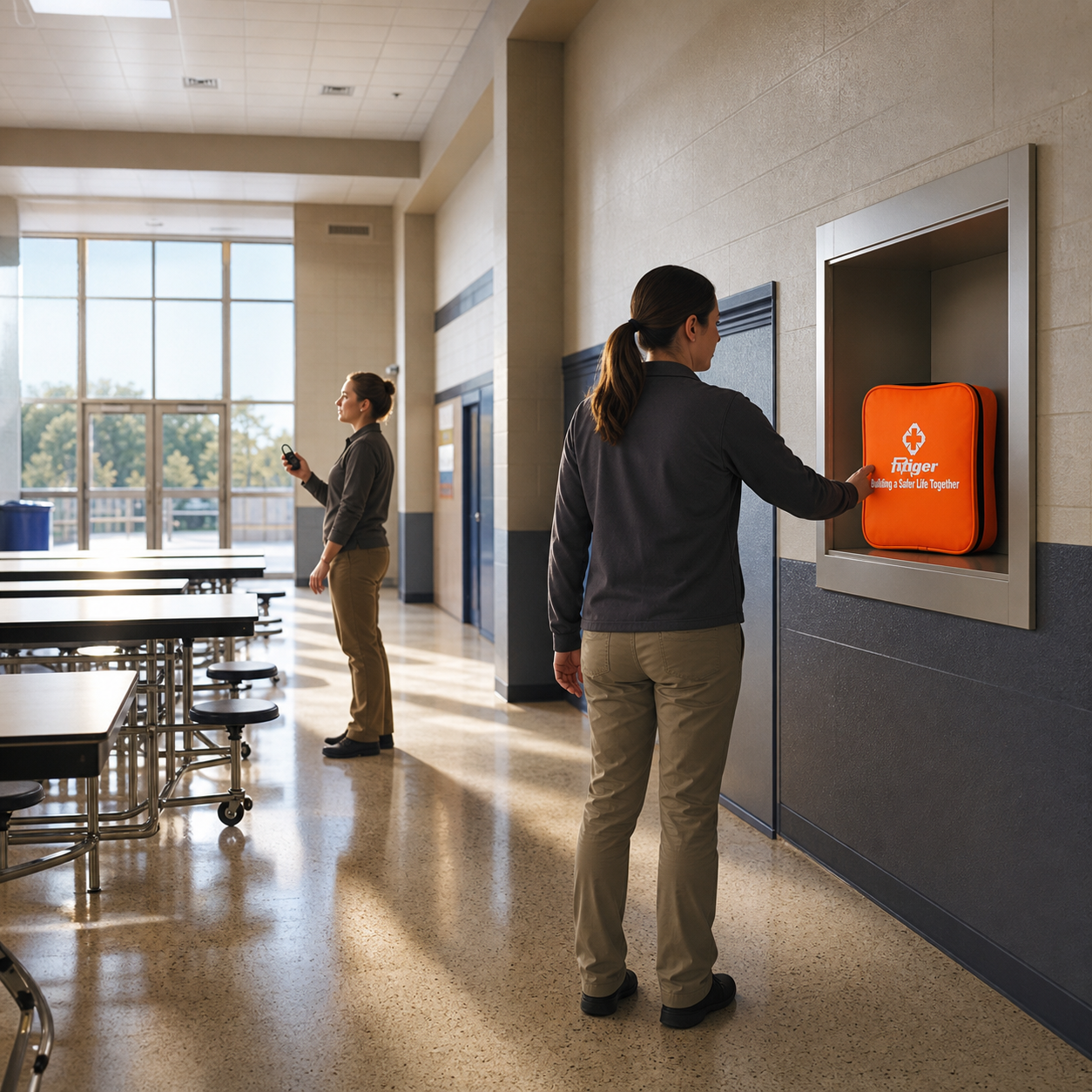
A device can exist in a building and still be unavailable during the emergency.
That is the uncomfortable truth behind a lot of preparedness purchasing. A school may own choking safety equipment for schools, but if it is locked in the nurse's office during lunch, the cafeteria still has a retrieval problem. A family may buy a choking rescue device for home, but if it lives in a box in the garage, it will not help at the kitchen table. A restaurant may add a choking emergency device to a safety cabinet, but if only the manager knows it exists, the first server at the booth is still alone.
Future airway emergency response will measure access, not just inventory.
For homes, access means the emergency kit is near eating areas, not buried with old batteries and holiday candles. For schools, access means cafeteria, snack, gym, after-school, and bus-loop plans are not treated as the same location. For assisted living and nursing homes, access means dining rooms, memory-care units, and night-shift staffing patterns are part of the map.
A portable airway rescue device can be useful only if it is close enough, visible enough, and familiar enough to be used without creating a new delay.
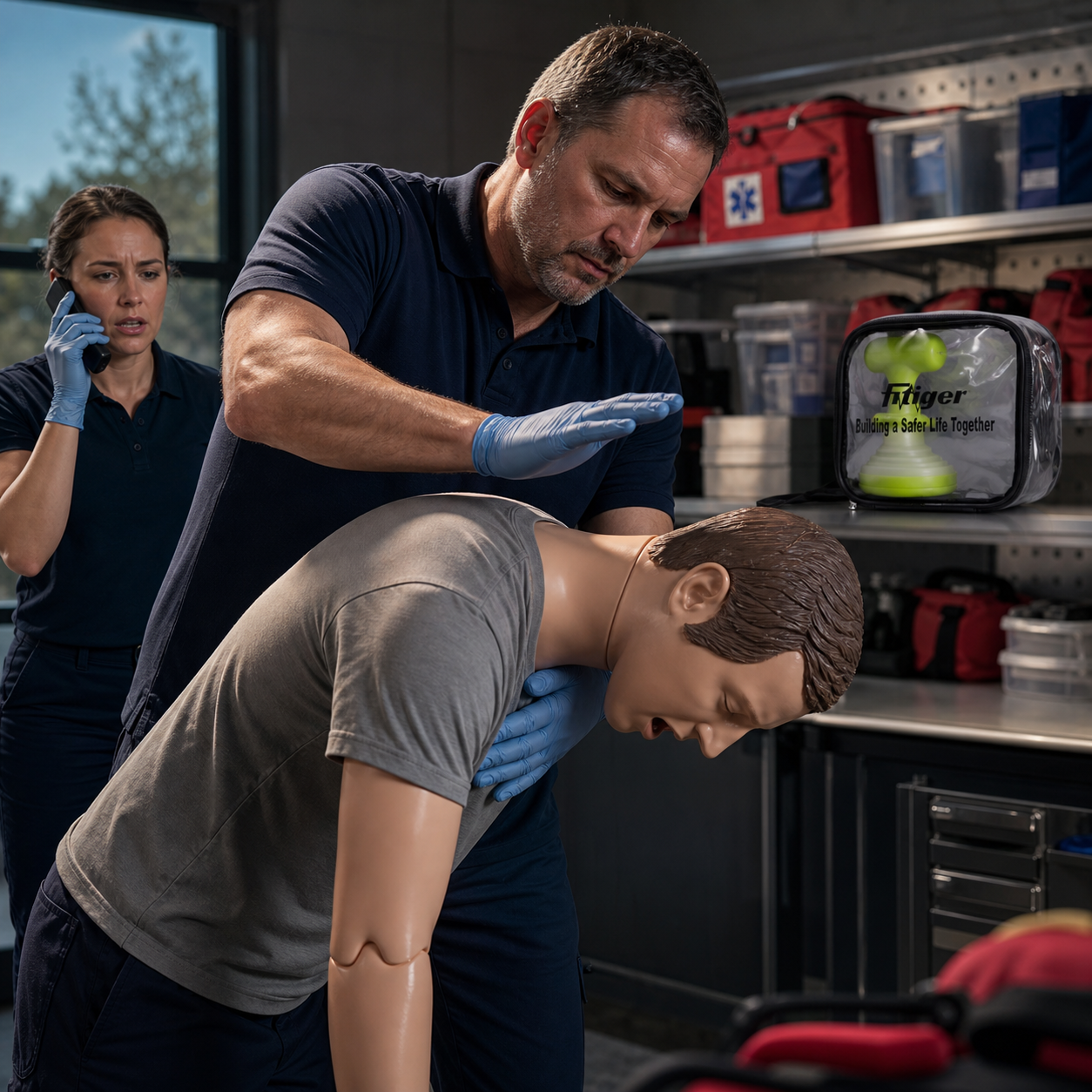
People shopping for an anti choking device, choking rescue device, airway clearance device, choking suction device, or emergency airway suction device often have the same private fear: what if the standard steps do not work?
That fear is reasonable. It should not be used to sell panic.
In March 2026, FDA created 21 CFR 874.5400 for a suction anti-choking device as a second-line treatment under product code QXN. The regulatory language places this type of device after unsuccessful basic life support choking protocol in complete airway obstruction. That boundary is important. A second-line device is not the first reach. It is not a reason to skip 911. It is not a replacement for CPR when the person becomes unresponsive.
The cleaner way to think about it is redundancy.
Manual first aid remains the first line. Calling 911 remains part of the response. CPR begins if the person becomes unresponsive. A QXN-type airway clearance device, if available and appropriate for the person, belongs in the backup layer after standard manual care fails.
That makes second-line planning less like a gadget purchase and more like a response design decision: who can reach it, who is trained, what age range applies, what happens if it fails, and how do responders avoid losing time?
Families do not usually shop for choking preparedness because they enjoy buying emergency gear. They shop because they have seen a child stuff food too quickly, watched an older parent cough through dinner, or imagined what would happen if nobody knew what to do.
A good choking emergency kit for home should not be built around one item. It should include the basics people forget under stress: emergency numbers, current first-aid training, food-cutting habits for young children, a clear plan for eating alone, and any backup tool stored where people actually eat.
If you are considering a choking rescue device for home, ask practical questions before you buy.
| Who in the house knows the first-line steps? | Is the device intended for the age group in your home? |
| Where will it be kept? | Can a babysitter, grandparent, or older child find it quickly? |
Would reaching for it delay back blows, abdominal thrusts, chest thrusts for infants, 911, or CPR?
The best purchase is the one that fits into a practiced response. The weakest purchase is the one that creates confidence without changing behavior.
Schools are not homes with more children. They are distributed campuses with noise, blind spots, substitute staff, lunch periods, after-school activities, and students who may eat in more than one place.
A school choking emergency plan should reflect that geography.
A cafeteria is different from a classroom snack table. A gym concession stand is different from the nurse's office. A daycare room with toddlers eating fruit is different from a middle-school lunchroom where students trade snacks.
Future school choking preparedness will likely move away from a single-device mindset. The stronger model is layered: prevention, supervision, role assignment, first-line care, 911, second-line backup if permitted, and post-event review.
Schools asking about choking safety equipment for schools should also ask about distance. How many seconds from the nearest meal area? Who has access? Is the cabinet unlocked during lunch? Do cafeteria workers, teachers, substitutes, and after-school staff know the plan?
In a choking emergency in a school cafeteria, the device location is not a facilities detail. It is part of the oxygen timeline.
Older adults bring a different risk picture. Swallowing difficulty, dentures, dry mouth, fatigue, cognitive decline, stroke history, and eating alone can change a normal meal into a high-risk setting. Choking safety in senior care belongs in dining-room operations, not just nurse training.
Care facilities should know which residents have swallowing precautions, where they sit, who supervises meals, and what happens if the first manual response fails. A choking rescue device for elderly care, if used by the facility, should be part of a written escalation pathway, not a box added after a scare.
Restaurants and workplaces have their own version of the same issue. People eat in break rooms, conference rooms, booths, cafeterias, and outdoor event spaces. The first responder may be a coworker, host, server, security guard, or manager.
A workplace choking emergency plan or restaurant choking emergency plan does not need to be complicated. It needs roles people remember: recognize, call, start care, clear space, bring equipment, guide EMS.

The future of choking preparedness will be more useful if it can be checked in ordinary rooms, not just described in policy language.
|
Setting |
Likely failure point |
Preparedness shift |
|---|---|---|
|
Home kitchen or dining room |
Confusion over who acts first |
Simple family choking emergency plan and reachable kit |
|
School cafeteria |
Noise, crowding, device stored too far away |
Role drill and equipment staged near eating areas |
|
Daycare or preschool |
Age-specific steps are forgotten under pressure |
Infant vs child protocol training and snack supervision |
|
Assisted living or nursing home |
Known swallowing risk is treated as routine |
Dining-room observation, dysphagia awareness, backup escalation |
|
Restaurant or workplace |
First responder is not medically trained |
Short staff script: recognize, call, care, clear space |
Preparedness will also become more measurable.
A good plan should track more than whether equipment was purchased. It should ask whether people recognized severe choking quickly, whether 911 was called without delay, whether the device was reachable, whether first-line care started, and whether the event produced a training fix afterward.
Useful preparedness guidance answers practical questions clearly: What do I do first? What changes for infants? Where does a choking rescue device fit? Should schools keep one in the cafeteria? What should nursing homes document after a choking incident?
Future-facing choking guidance needs plain language and auditable structure. A parent needs a sequence they can remember. A school safety officer needs a table. A care facility needs a checklist. Each format should help people act and document what happened.
The future of choking preparedness is not device-first, training-only, or policy-only. It is the point where those pieces meet in a real room.
A parent needs to recognize silence before it becomes collapse.
A cafeteria monitor needs to start care before waiting for the nurse.
A caregiver needs to know when a resident's repeated coughing is no longer routine.
A restaurant manager needs to know who calls 911 and who clears the aisle.
A backup device, including an FDA-authorized QXN suction anti-choking device, can support the plan after manual first-line care fails. It cannot repair a slow response, a locked cabinet, or a team that never practiced.
The next phase of airway emergency preparedness belongs to people who reduce delay before the emergency starts.
Build a choking preparedness plan that works in the room where food is served. Explore Fitiger airway emergency resources, family choking emergency kits, school readiness tools, and second-line choking-readiness options for homes, schools, restaurants, and care settings.
The future of choking preparedness is moving toward faster recognition, repeated short training, reachable emergency tools, and second-line backup planning after manual first aid fails. It is less about owning one product and more about reducing delay in the first minute.
The 2025 AHA guidance recommends 5 back blows followed by 5 abdominal thrusts for conscious adults and children with severe choking. For infants, the sequence is 5 back blows followed by 5 chest thrusts. If the person becomes unresponsive, CPR begins.
An anti choking device or airway clearance device fits as a second-line backup after unsuccessful manual choking first aid in a complete airway obstruction, if the person is within the device's intended use and the device is used according to instructions.
A choking rescue device for home can be part of a broader family choking emergency plan, but it should not replace first-aid training, safe food habits, 911 access, CPR readiness, or clear caregiver roles.
A school choking emergency plan should include recognition training, 911 delegation, cafeteria and snack-area role assignments, device placement if used, nurse and EMS routing, and drills that include cafeteria staff, teachers, substitutes, and after-school teams.
Care facilities should identify residents with dysphagia or swallowing risk, supervise meals based on risk, train staff to recognize quiet airway obstruction, stage backup equipment where meals occur, and document what happens after every choking event or near miss.
Equipment that cannot be reached quickly may not help during a choking emergency. A device stored far from the dining area, locked away, or known only to one staff member can add delay instead of reducing it.
American Heart Association - 2025 CPR Guideline Update - Supports the updated choking response sequence for adults, children, and infants.
FDA De Novo DEN250012 - Supports the QXN suction anti-choking device category and second-line treatment boundary.
FDA Safety Communication on Choking Rescue Protocols - Supports following established choking rescue protocols first and treating devices as a second option when appropriate.
American Red Cross - Choking First Aid - Supports public-facing choking recognition and response education.
HealthyChildren.org / American Academy of Pediatrics - Supports child choking prevention, food risk, and family safety education.
This article is for general education and emergency preparedness only. It does not replace professional medical advice, certified CPR or first-aid training, emergency medical services, school policy, facility protocols, or device instructions for use. In a choking emergency, call 911 or your local emergency number and follow dispatcher instructions.


