
A suction choking rescue device works only if the pressure circuit holds: the mask seals, the chamber creates negative pressure, and the one-way valve prevents the wrong airflow path. Suction power alone is not the real test. First-line choking rescue and 911 still come first; a device is second-line backup only after standard steps fail.
For a household checklist, see Fitiger's child and home choking safety readiness plan.
Before choosing equipment, review Fitiger's anti-choking device buyer evidence checklist for FDA wording, testing, seller traceability, and kit-selection questions.
Most buyers start with the wrong question.
They ask, "How strong is the suction?"
That question sounds technical, but it is incomplete. A choking suction device is not just a pump. It is a pressure circuit made from several working parts: the face interface, the mask edge, the chamber, the valve, the handle or pull path, the user's hand motion, and the airway opening. If one part leaks or behaves unpredictably, the number printed in a product claim loses meaning.
The better question is:
Can the device create a usable pressure difference at the face, in the real position, under stress, with the correct mask, without sending air in the wrong direction?
That is the engineering question behind every serious airway clearance device.
A person searching "how suction choking devices work" may want a simple explanation. A school buyer searching "choking rescue device testing" may want a procurement answer. A parent comparing an anti choking device may want to know whether one-way valve design matters. The answer is yes, but not because a valve sounds impressive. It matters because airflow direction matters when an airway is blocked.
A suction device works by lowering pressure on the mouth side of the obstruction. If the seal holds, the pressure difference can help pull the obstructing object outward. If the seal breaks, the pressure difference collapses. If the valve allows the wrong flow path, the circuit may lose efficiency or create unwanted pressure movement. If the user hesitates, assembles the device too late, or uses it before first-line rescue, the best mechanism still arrives late.
That is the point buyers often miss. Engineering and emergency timing cannot be separated.
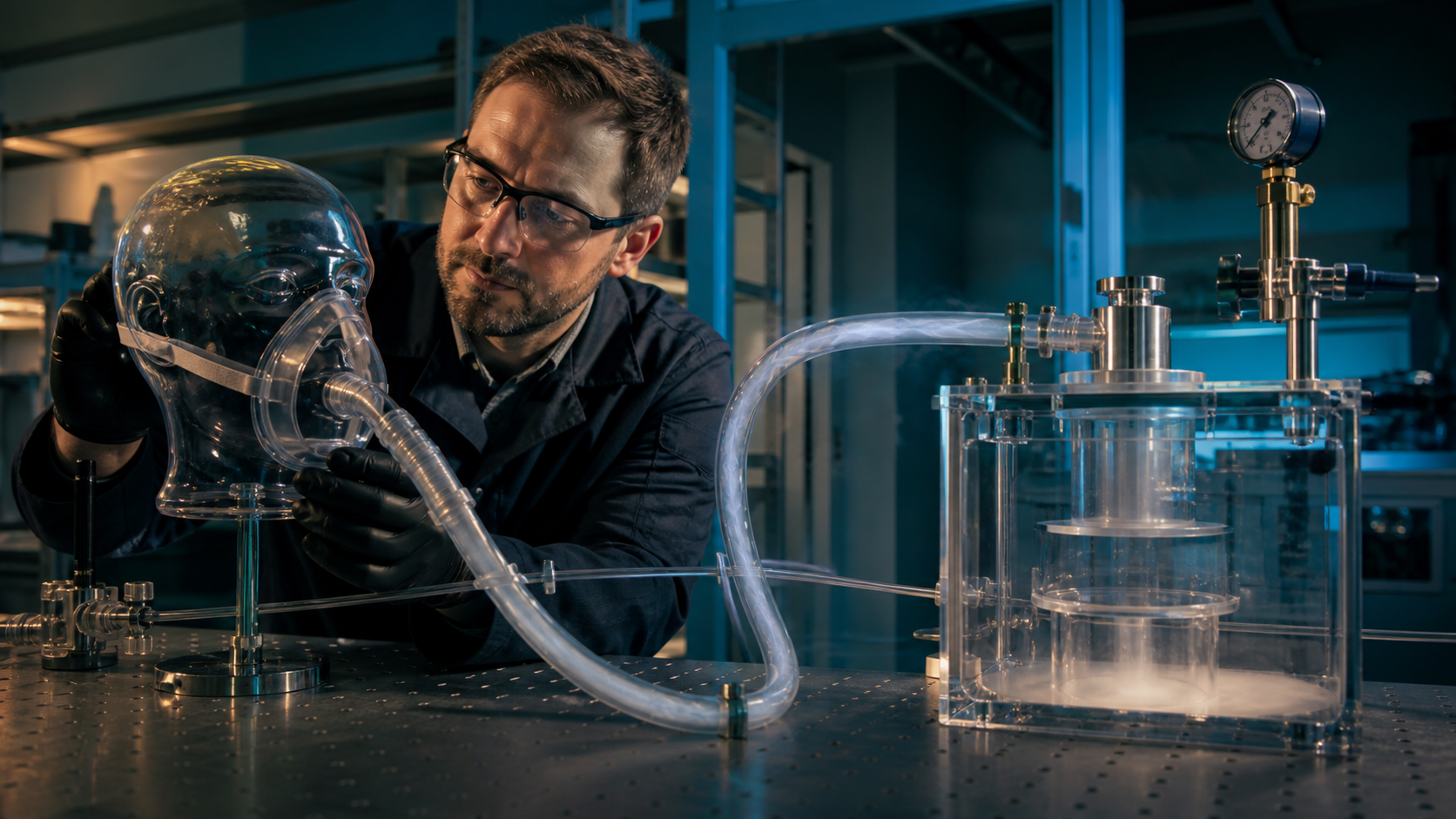
Negative pressure means the device creates a lower pressure zone compared with the surrounding air or airway side. In ordinary language, people call that "suction."
A manual suction choking device usually works by creating a sealed connection over the mouth and pulling a chamber or plunger. That movement increases internal volume or shifts air out of the chamber, lowering pressure inside the device. If the mask seal is strong enough, air and the obstruction are pulled toward the lower-pressure zone.
The simplified physics is:
Force equals pressure difference times area.
That equation is not a marketing slogan. It is a warning. The force available to move an obstruction depends on pressure difference and the effective area of contact. If the mask leaks around the cheeks, chin, nose bridge, beard, dentures, or facial contours, the pressure difference drops. When pressure drops, extraction force drops.
This is why "negative pressure airway clearance" should never be discussed as a single number outside the real system.
A device may generate a strong value in a controlled setup. Real use adds skin, panic, poor posture, saliva, food, facial hair, loose dentures, small faces, larger faces, weak hand position, and a responder who has never used the device before. The lab number matters, but the seal and use path decide how much of that number survives the emergency.
This is also why a good article about an emergency airway suction device should spend as much time on mask fit and handling as on suction strength.
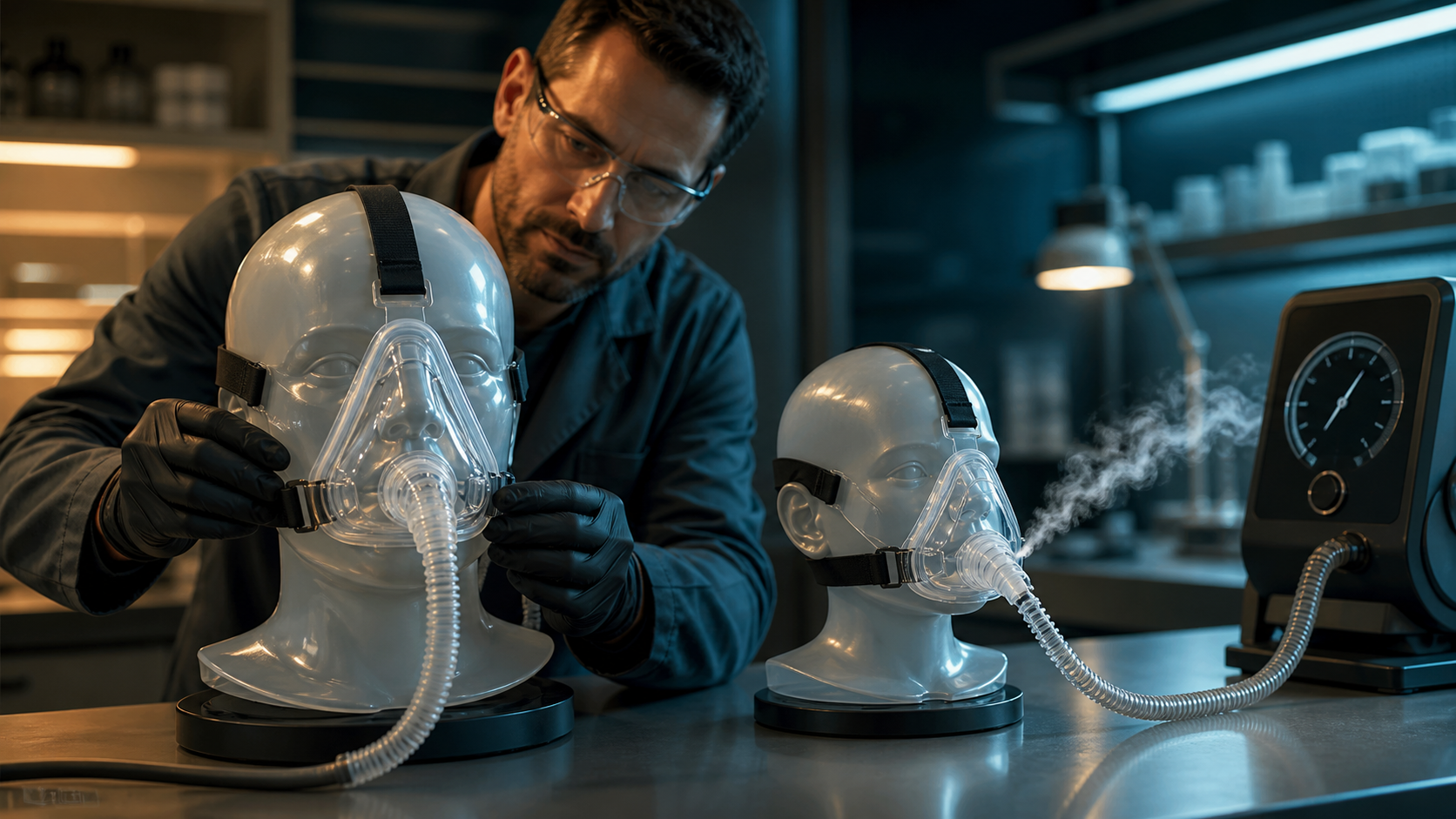
Buyers often treat the mask like a replaceable cup. It is not.
The mask is the boundary of the pressure circuit. It decides whether the device can hold negative pressure long enough for the pull to matter. A mask that is too large can leak along the chin or cheeks. A mask that is too small can sit poorly over the mouth. A stiff edge may fail to conform to the face. A warped or aging cushion can lift during the pull. A third-party replacement mask can look similar while behaving differently.
This is why mask seal importance belongs near the top of any airway clearance engineering discussion.
A good seal depends on:
| Correct size. | Soft enough edge compliance. |
| Clean face contact. | Stable hand position. |
| Proper mask placement. | |
No major edge lift during the pull.
No mismatch between mask connector and device.
The seal problem is more obvious in real care settings. Older adults may have loose dentures, sunken cheeks, facial hair, or reduced facial tone. Children have smaller faces and less tolerance for poor positioning. Schools may have multiple student ages and need clear mask organization. Care facilities may store devices for months or years before use.
A mask is not only a consumable. It is the pressure gate.
For Fitiger, this is where product education matters. The device should stay stored with the correct masks and instructions. Replacement parts should be traceable. Staff and families should understand that using a random lookalike mask is not a harmless shortcut. It may change the pressure circuit before the device ever touches a face.
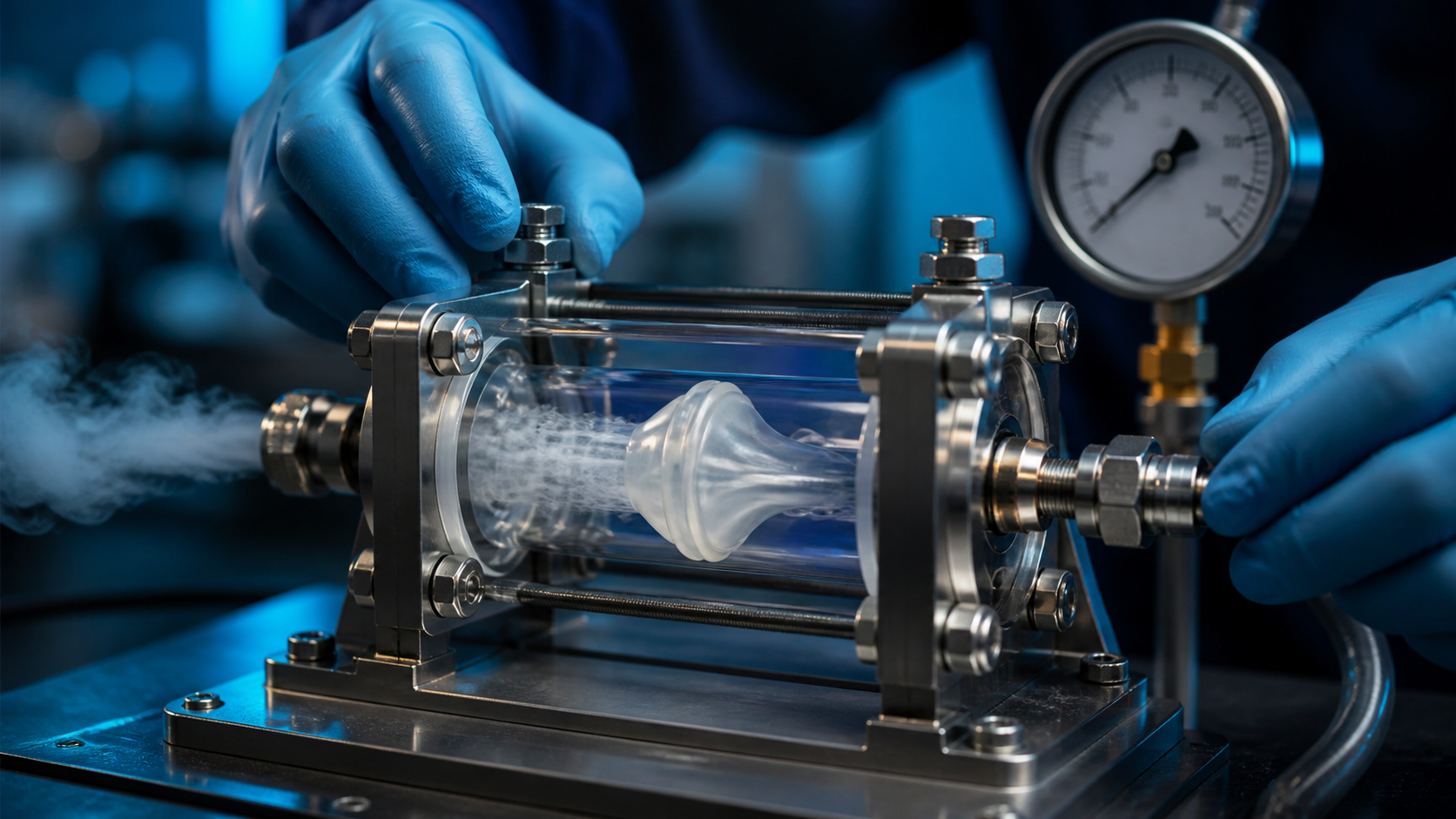
A one-way valve controls direction.
In a suction choking device, the design goal is simple: allow air movement in the intended direction during the suction stroke and reduce unintended reverse or positive-pressure pathways during reset or handling. In practical terms, the valve helps the device behave more like a controlled pull system and less like an unpredictable squeeze-and-blow object.
That distinction matters because buyers worry about a fair question:
Could a device push the object deeper?
A properly designed one-way airflow path is meant to reduce that risk. A poorly designed or counterfeit device may not. If the valve is missing, stuck, misaligned, poorly sealed, or built from weak material, the device can lose suction performance or behave unpredictably.
This is where a one-way valve suction device should be evaluated as a system, not as a label. A product page can say "one-way valve." The real questions are:
| Does the valve seat correctly? | Does it open and close at the right time? |
| Does it maintain direction during rapid use? | Does it hold up after storage? |
| Does the instruction sequence prevent user-created positive pressure? | Can buyers verify the manufacturer and replacement parts? |
For schools, nursing homes, restaurants, and businesses, these are procurement questions. For families, they are trust questions.
A one-way valve is small, but it carries a large safety burden.
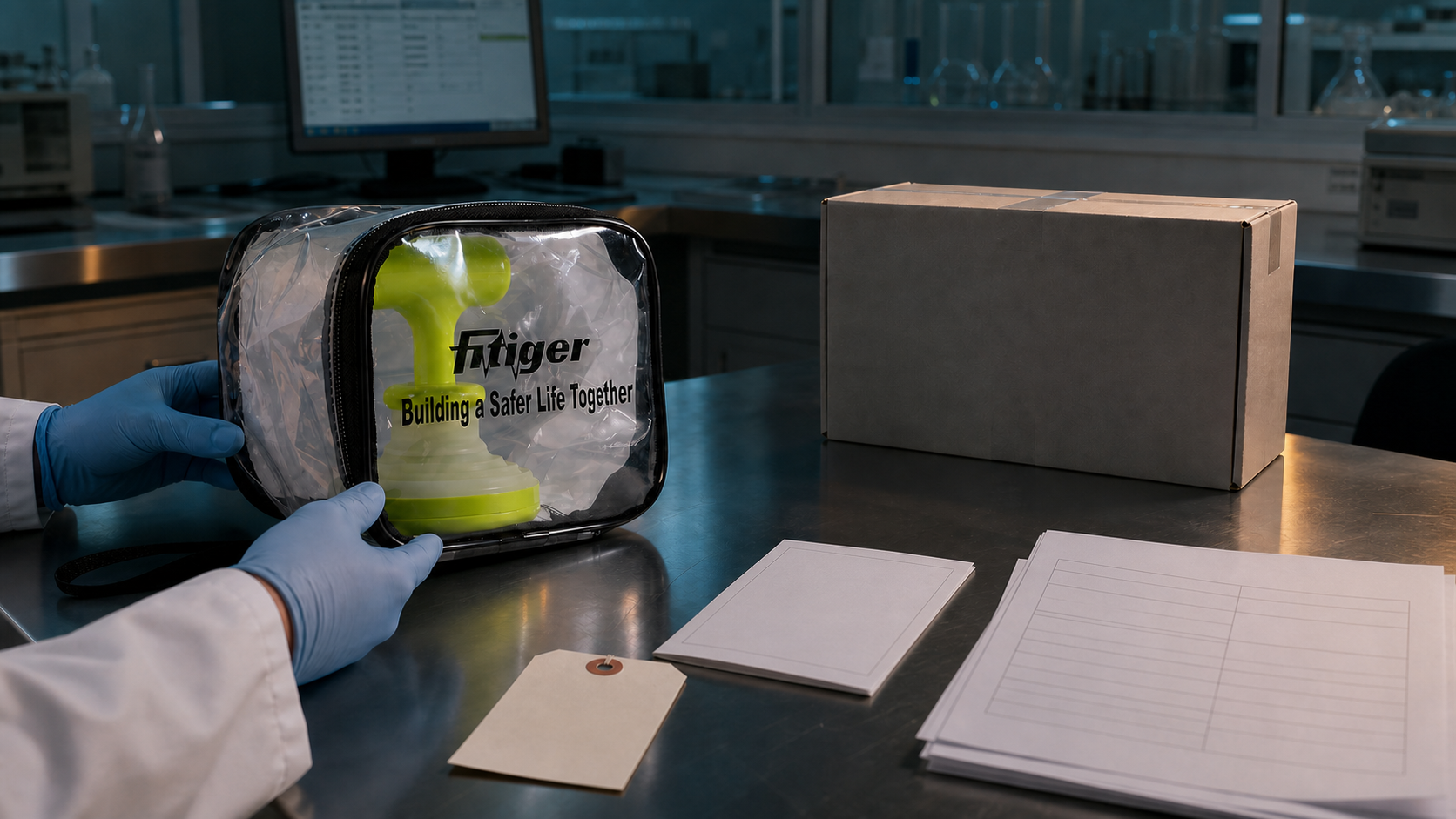
The outside of a suction device is easier to copy than the pressure behavior inside it.
A counterfeit or generic anti choking device may look acceptable in a marketplace photo. It may have a mask, a chamber, a handle, and printed instructions. That does not prove its valve alignment, seal behavior, material performance, airflow direction, or pressure consistency.
The failure modes can be invisible:
| A valve that does not seat. | A chamber that rebounds poorly. |
| A mask edge that hardens or lifts. | A connector that leaks. |
| Instructions that place the device before first-line rescue. | Packaging that hides missing components. |
| No traceable manufacturer. | No current FDA marketing authorization. |
The FDA has warned the public about unauthorized anti-choking devices and states that establishment registration or device listing is not approval, clearance, or authorization. That matters because buyers often search "FDA registered anti choking device" and assume they found proof. They may not have.
The serious comparison is not "Does it look like a choking rescue device?"
The serious comparison is "Can this device prove its regulatory status, pressure circuit design, valve logic, materials, instructions, and replacement pathway?"
A low-cost device with weak valve geometry can fail quietly. Under stress, quiet failure is the worst kind. The responder may think the tool is working while the pressure gradient collapses.
A suction device is not operated by a robot. It is operated by a frightened person.
That person may be a parent, teacher, restaurant manager, spouse, caregiver, adult child, or coworker. Their hands may shake. They may pull at an angle. They may choose the wrong mask. They may press too hard or not hard enough. They may forget the instructions. They may be trying to listen to a 911 dispatcher at the same time.
That is why human factors matter.
The pull path should be understandable. The device should not require a long sequence of assembly steps during a choking emergency. The mask should be obvious. The direction of motion should be intuitive. The device should be stored in a way that keeps the instructions and correct masks with the body.
Fitiger's product logic can be explained within this human-factors frame. FoldPumpVac is built around compact staging and portable readiness, making it easier to place in travel kits, stroller baskets, caregiver bags, school bags, and vehicle kits. EasyPumpVac is built around easier handling and short-path operation for home, car, bedside, and long-term standby. Those differences matter because response delay is not only medical. It is mechanical and spatial.
Still, the emergency sequence does not change.
First-line rescue comes first. A device enters only after standard steps are unsuccessful and the user can apply it without delaying critical action.
A device claim that focuses only on suction power can mislead buyers.
Too little effective negative pressure may fail to move an obstruction. But more force is not automatically better in every real-world condition. The system must balance seal, pressure, valve direction, tissue contact, user control, and second-line timing. A face interface that bruises easily, a mask that leaks under faster pulling, or a device that requires confusing reset steps can all weaken the practical result.
The better public language is:
| Controlled negative pressure. | Maintained mask seal. |
| One-way airflow design. | Short operation path. |
| Traceable components. | Clear second-line instructions. |
| Evidence boundaries. | |
This is why "airway clearance device testing" should not be reduced to a single suction number. A better test question asks whether the whole pressure circuit stays intact through the use cycle.
For a school or care facility, this becomes a policy question. Does the product have documentation? Are staff trained? Are masks replaced when needed? Is the device inspected? Is it stored near food-risk zones? Does the written protocol prevent device-first delay?
Engineering without workflow is incomplete.
A family buying an anti choking device for home usually wants reassurance. That is understandable. But reassurance should be earned by readiness.
Before storing a device, check:
| Is the product from the real manufacturer or authorized seller? | Is the current FDA status clear? | Are all masks included? |
| Do the masks match the intended users? | Is the instruction manual present? | Does the device require assembly before use? |
| Can the likely responder understand the sequence quickly? | Is the device stored near the dining area? | Is 911 access available? |
| Does everyone know first-line rescue comes first? | ||
The last question is the most important. A home choking emergency kit should not teach the family to reach for a device before recognizing the emergency and starting standard rescue. The FDA warns that using an anti-choking device before established protocols can delay lifesaving action. That warning belongs on the same shelf as the device.
For parents, the decision is especially sensitive. Fitiger devices should not be used on infants under 1 year old. For infants, caregivers need infant choking first aid, including back slaps and chest thrusts, and emergency activation. For children over 1 year old, use must follow the current product instructions and still remain second-line.
A device stored in the home should reduce panic, not reorder the emergency.

In schools, nursing homes, assisted living, restaurants, and workplaces, the engineering question expands. A device has a pressure circuit. The building has a response circuit.
The pressure circuit asks:
| Does the mask seal? | Does the valve work? |
| Does the chamber generate negative pressure? | Does the airflow move in the right direction? |
| The response circuit asks: | |
|---|---|
| Who recognizes severe choking? | Who calls 911? |
| Who starts first-line rescue? | Who retrieves backup? |
| Where is the device stored? | Who checks the device monthly? |
| Who documents the incident? | |
A school choking rescue device stored in a nurse's office may be too far from the cafeteria. A nursing home device locked in a supply room may be useless during dinner service. A restaurant device behind the manager's desk may not help a guest choking on the dining floor. A workplace kit that nobody has practiced with can create hesitation.
For B2B buyers, "choking safety equipment" should be evaluated by both circuits. The device must be mechanically credible, and the facility must be operationally ready.
That is the difference between buying equipment and building preparedness.
Second-line does not mean unimportant. It means correctly sequenced.
In engineering terms, a second-line device is redundancy. It exists because first-line actions may fail, may be delayed, may be physically difficult, or may not fully clear the obstruction. Redundancy is valuable only when it supports the primary system instead of replacing it.
In choking response, the primary system is:
| Recognition. | 911 activation. |
| Age-appropriate first-line rescue. | CPR if unresponsive. |
| EMS handoff. | |
The second-line device is a backup layer if standard steps are unsuccessful.
This framing is useful because it avoids both extremes. One extreme says every suction device is a miracle product. The other says no backup should ever be considered. Neither is serious enough. The better question is how a device is regulated, tested, staged, taught, and used without delaying the established rescue sequence.
Fitiger's safest public position is exactly there: a second-line readiness layer inside a larger airway safety system.
|
Engineering area |
What to ask |
Why it matters |
|---|---|---|
|
Mask seal |
Does the mask match the user's face size and shape? |
Leakage collapses negative pressure |
|
Valve design |
Does the airflow path prevent unintended reverse flow? |
Direction control affects safety and efficiency |
|
Chamber mechanics |
Does the device create controlled negative pressure? |
The pressure circuit depends on chamber behavior |
|
Operation path |
How many steps are needed under stress? |
Extra steps can increase delay |
|
Replacement parts |
Are masks and components traceable? |
Lookalike parts can change performance |
|
Storage |
Is the device complete and easy to reach? |
Retrieval delay can defeat the purpose |
|
Instructions |
Do they preserve first-line rescue first? |
Device-first use can delay lifesaving action |
|
Regulatory status |
Can current authorization be verified? |
Registration/listing is not the same as authorization |
|
Training |
Has the likely user practiced the sequence? |
Human factors decide real emergency use |
This is not a technical buying luxury. It is basic due diligence for a product intended for a time-critical airway emergency.
Fitiger should not try to win trust by saying every detail is better than every competitor. That sounds like marketing and weakens the medical tone.
The stronger explanation is product-specific.
FoldPumpVac emphasizes portable readiness. Its folding compressed design supports smaller storage and a shorter second-line setup path: attach the correct mask, then pull upward to generate negative pressure. It does not need a separate push-down setup sequence before suction begins. That matters for travel, school bags, stroller storage, caregiver bags, vehicle kits, and mobile readiness.
EasyPumpVac emphasizes easier handling and standby placement. Its mechanical design is intended to reduce pulling burden, which may be useful for older adults, caregivers, users with limited hand strength, home storage, vehicle storage, bedside readiness, and self-rescue planning when the device is staged within reach.
Both product lines still depend on the same safety boundary: prevention, recognition, first-line rescue, 911, CPR readiness, EMS, then second-line backup if standard steps are unsuccessful.
The device can support the system. It should not become the system.
A suction choking rescue device is not just a suction number. It is a pressure circuit, a valve system, a mask seal, a user's hand motion, and a response plan.
The one-way valve matters because airflow direction matters. The mask matters because leakage destroys pressure. The chamber matters because negative pressure has to be generated predictably. Placement matters because a device that arrives late does not help. Training matters because stress makes simple tasks harder.
| For families, that means the device belongs near meals, with the correct masks and instructions. | For schools, it means the device belongs near food-risk zones, inside a written response plan. |
| For senior care, it means the device belongs beside texture planning, dysphagia awareness, and staff training. | For Fitiger, it means product education should stay honest: engineered backup, not first-line replacement. |
The pull only matters if the system around it is ready. For related planning context, review the child and home choking safety readiness plan. For related planning context, review the anti-choking device buyer evidence checklist.
A suction choking rescue device creates negative pressure through a sealed mask and chamber. If the mask seal holds, the pressure difference may help pull an airway obstruction outward. The device should be used only as second-line backup after first-line choking rescue steps are unsuccessful.
A one-way valve controls airflow direction. In a choking suction device, it is intended to support the suction stroke and reduce unintended reverse or positive-pressure pathways. Valve behavior matters because airflow direction affects both performance and safety.
The mask seal is part of the pressure circuit. If air leaks around the face, chin, cheeks, nose bridge, beard, or mask edge, negative pressure drops quickly. Without a usable seal, suction strength claims may not translate into real extraction force.
A properly designed one-way airflow system is intended to reduce unintended positive-pressure pathways. Poor design, incorrect use, or counterfeit products may create concern. This is why buyers should verify device status, instructions, valve design, and manufacturer traceability.
No. Stronger suction alone does not prove better emergency performance. A safer comparison looks at mask seal, valve direction, pressure stability, user handling, replacement parts, instructions, storage, and second-line timing.
Families should verify regulatory status, manufacturer identity, mask sizes, replacement parts, instructions, storage needs, operation path, and whether the device clearly preserves first-line rescue first. The device should be familiar before an emergency.
Schools should check device status, staff training, cafeteria placement, field trip access, mask organization, inspection schedule, emergency role assignment, 911 activation, and whether district policy allows second-line backup use.
Fitiger product education emphasizes traceable product families, second-line use boundaries, mask and placement readiness, and product-specific operation paths. FoldPumpVac emphasizes portable readiness and compact staging. EasyPumpVac emphasizes easier handling and home or vehicle standby. Both remain second-line backup devices.
No. Anti choking devices do not replace first-line rescue, 911, CPR readiness, EMS, or age-appropriate choking first aid. They may be considered only as second-line backup if standard steps are unsuccessful and the person fits the current product instructions.
Pressure loss can come from mask leakage, poor face fit, stiff or aging mask edges, incorrect mask size, weak valve seating, poor chamber rebound, connector leaks, third-party parts, or user handling errors.
FDA - Update: FDA Encourages the Public to Follow Established Choking Rescue Protocols
American Red Cross - Adult and child choking first aid
American Heart Association - CPR and first aid training resources
ILCOR CoSTR - Removal of foreign body airway obstruction
This article is for general education, product-comparison planning, and emergency preparedness only. It is not medical advice, diagnosis, or treatment. In a choking emergency, call 911 or your local emergency number immediately and follow dispatcher instructions. Established choking rescue protocols, first-line rescue training, CPR readiness, EMS, and professional medical care remain essential. Any anti choking device should be treated as second-line backup only after standard rescue steps are unsuccessful and only within the current product instructions.


