
Senior choking preparedness starts with the way the person actually lives: where meals happen, whether swallowing has changed, how often the person eats alone, and how quickly help can reach the room. Learn the current adult choking rescue protocol, call 911 early for severe obstruction, and treat any suction device only as a second-line backup.
For a household checklist, see Fitiger's child and home choking safety readiness plan.
Families usually remember the food after a choking incident. A piece of meat. A pill. A dry bite of bread. A snack eaten too quickly while watching television. The food matters, but it is rarely the whole story.
The warning pattern may have started weeks earlier. A parent begins coughing more often during meals. A spouse clears their throat after drinking water. Dentures feel loose. Pills take longer to swallow. Dinner moves from the table to a recliner because standing and walking have become tiring. A person living alone starts choosing softer foods without mentioning why.
These changes are easy to dismiss one at a time. Together, they deserve attention.
A stronger home plan begins with observation. It maps the places where eating, drinking, and medication routines really happen. It removes preventable delay. It gives family members and caregivers a clear first-minute response instead of a vague promise that someone will figure it out.

Older adults are at higher risk of airway obstruction for several reasons. Swallowing can become more difficult after a stroke, neurologic illness, dental changes, reduced chewing strength, or other health changes. Some people also eat more slowly, tire during meals, or rely on food textures that are easier to manage.
A household should not try to diagnose the reason alone. Repeated swallowing difficulty needs professional evaluation.
The useful first step is noticing the pattern.
|
What you notice |
Why it deserves attention |
Next step |
|---|---|---|
|
Repeated coughing or throat clearing during meals |
Food or liquid may not be moving normally |
Record when it happens and discuss it with a clinician |
|
A wet, gurgly, or changed voice after eating or drinking |
Swallowing may need evaluation |
Ask a healthcare professional whether a swallowing assessment is appropriate |
|
Food feels stuck in the throat or neck |
The person may be adapting around a swallowing problem |
Do not ignore repeated complaints |
|
Meals take much longer than before |
Fatigue, chewing difficulty, or swallowing changes may be affecting safety |
Review meal texture, seating, and clinical follow-up |
|
Pills become difficult to swallow |
Medication routines may need review |
Ask a clinician or pharmacist before crushing, splitting, or changing medication form |
|
Avoidance of certain foods |
The person may already be compensating for discomfort or fear |
Ask what feels difficult and bring that information to a healthcare professional |
|
Frequent meals alone |
Recognition and response may be delayed |
Improve phone access, check-in routines, and placement planning |
The aim is not to create anxiety around every cough. It is to notice repeated changes before the household is forced to learn about them during an emergency.

A dining table is only one possible risk area.
Many seniors eat breakfast at a kitchen counter, take pills beside the sofa, drink water near the bed, or have lunch in a recliner with a television tray. A formal meal plan may exist on paper while the real routine happens somewhere else.
Walk through the home and identify the places where food, drinks, and medication are used most often.
|
Red zone |
Common pattern |
What to review |
|---|---|---|
|
Dining table |
Main meals, family visits, holiday gatherings |
Phone access, caregiver roles, uncluttered path to the entry door |
|
Recliner or sofa |
Snacks, television meals, evening pills |
Stable seating, nearby phone, lighting, clear floor space |
|
Kitchen counter or breakfast nook |
Quick meals, coffee, morning medication |
Standing risk, rushed bites, easy access to help |
|
Bedside table |
Water, pills, late-night snacks |
Whether the person is fully upright and alert |
|
Patio or yard |
Outdoor meals and family events |
Phone signal, distance from the main entry, visibility |
|
Second floor |
Bedroom snacks, medication, private routines |
Whether duplicate supplies or a second phone location are needed |
|
Vehicle |
Food during travel or appointments |
Whether an emergency could be recognized and managed quickly |
Use reality, not aspiration. If most evening pills are taken in the living room, the living room belongs in the plan.
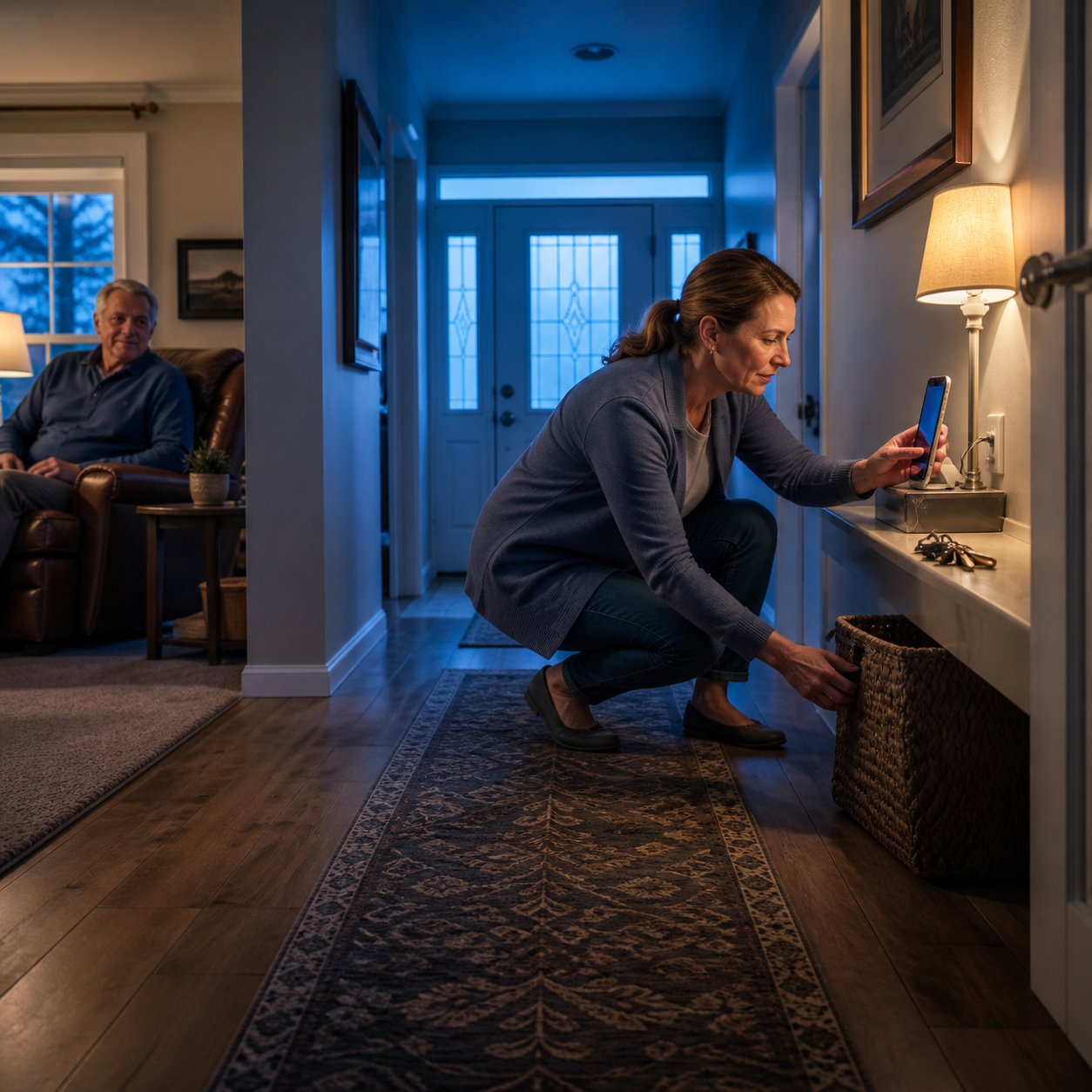
In product safety work, the failure is often not one dramatic event. It is a sequence of small delays.
The person begins choking in the recliner. The phone is charging in the kitchen. The caregiver is in the laundry room. The address is not posted. The front door is locked. The readiness setup is upstairs. The family knows where everything is, but a visiting relative does not.
Each delay looks minor on its own. Together, they consume the first minute. A useful home audit asks:
| Can the person reach a phone from the places where meals and pills actually happen? |
| Can a caregiver call 911 without leaving the person alone? |
| Is the full address posted where a visitor can read it quickly? |
| Is the path to the door clear? |
| Can EMS enter without someone searching for keys? |
| Are emergency supplies stored near the real red zones? |
| Would a caregiver know what to retrieve without opening several drawers? |
Preparedness is not about filling the house with equipment. It is about removing avoidable friction.
Not every cough is a complete airway obstruction.
A person who can cough forcefully, speak, or breathe is still moving air. Stay close. Encourage coughing. Watch for a change.
Severe choking is different. The person may have a weak or absent cough, be unable to speak, change color, become confused, or stop breathing.
|
What you observe |
What it may mean |
What to do |
|---|---|---|
|
Strong, forceful coughing |
Air is still moving |
Encourage coughing and continue to observe closely |
|
Speaking with difficulty but still moving air |
The problem may be worsening |
Stay with the person and prepare to call for emergency help |
|
Weak or absent cough |
Severe airway obstruction may be present |
Call 911 and begin the current adult choking rescue protocol |
|
Unable to speak or breathe |
Severe airway obstruction |
Act immediately and activate EMS |
|
Person becomes unresponsive |
Life-threatening emergency |
Begin CPR according to training and follow dispatcher instructions |
Do not reach blindly into the mouth. Remove an object only if it is visible when the airway is opened during care.
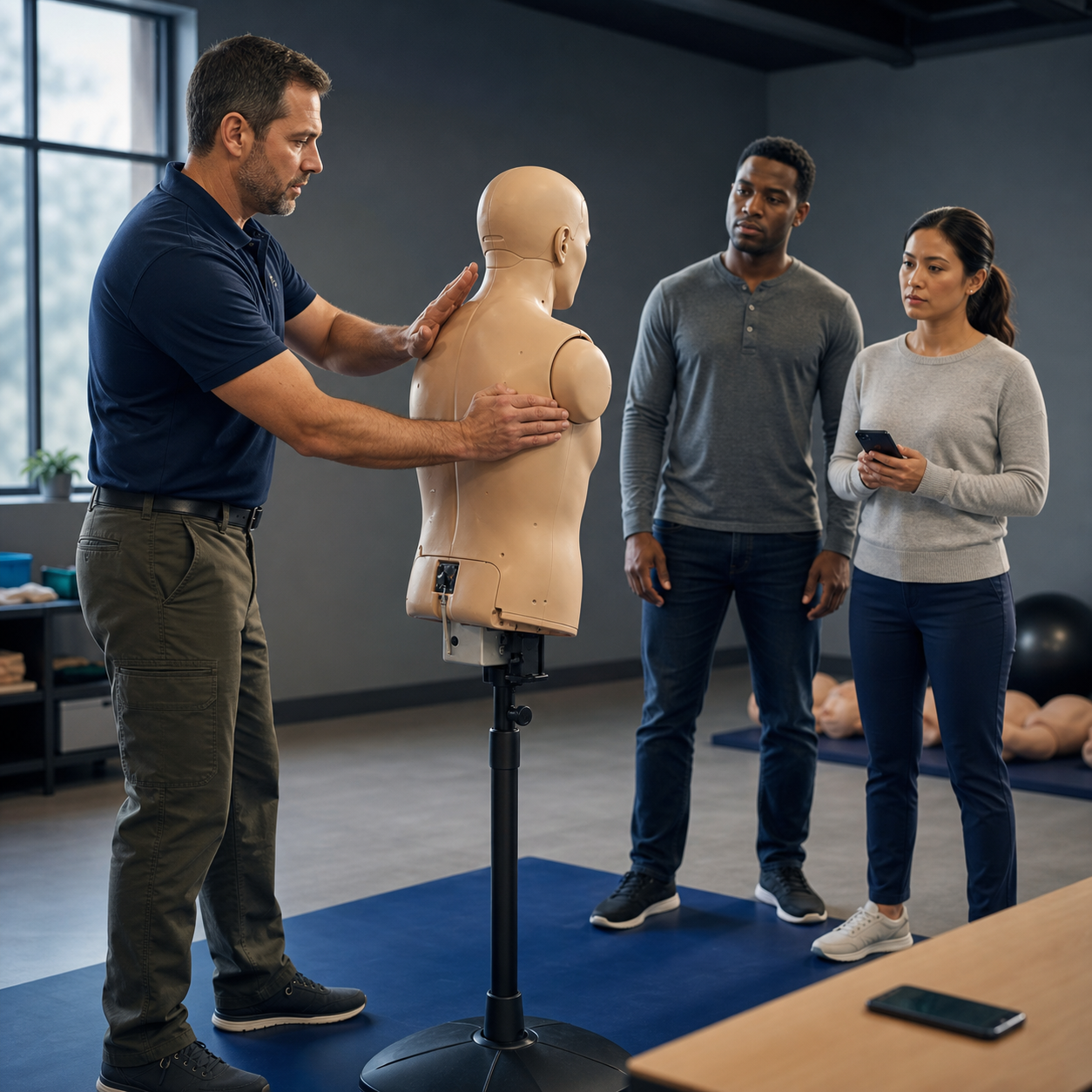
| For a responsive adult with severe foreign body airway obstruction, current guidance calls for repeated cycles of: |
|---|
| 5 back blows |
| 5 abdominal thrusts |
| Repeat until the object is expelled or the person becomes unresponsive |
Call 911 or activate EMS as early as possible. Use speakerphone when practical. Tell the dispatcher that an adult is choking, give the exact address, and state whether the person is responsive.
If the person becomes unresponsive, lower them safely to a firm, flat surface and begin CPR according to your training. Follow dispatcher instructions.
Some situations require modification. If a rescuer cannot encircle the person's abdomen, current guidance uses chest thrusts instead of abdominal thrusts. A hands-on first-aid course is the right place to learn those adjustments.
A household article can support memory. It cannot replace training.
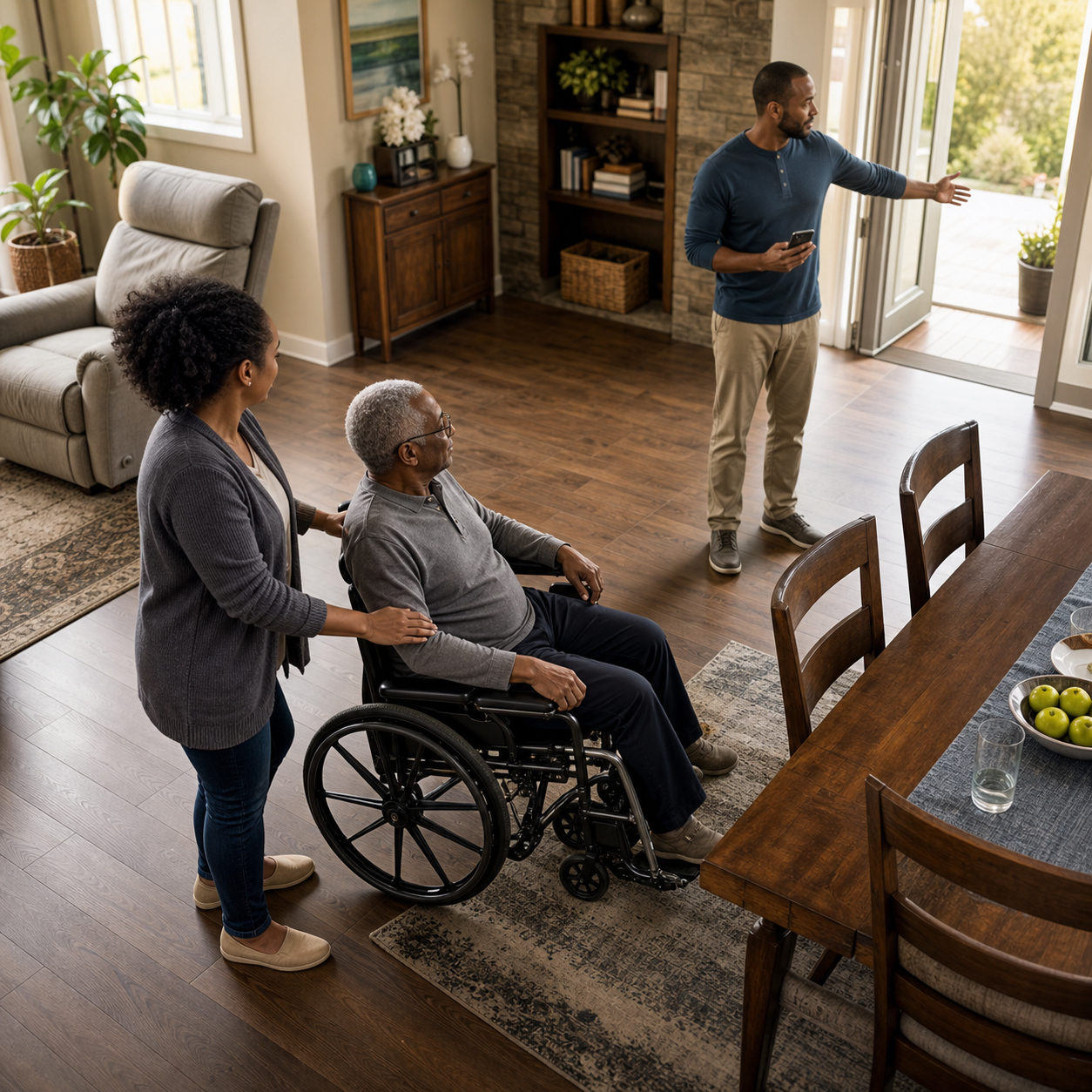
The best plan is not the same for every senior.
A person who walks independently and eats at the table has different needs from someone who uses a wheelchair, tires easily, lives alone, or depends on a part-time caregiver.
Review the plan from the person's usual position:
| Can a rescuer reach the person from behind or from the side? |
| Is there enough room around the dining chair or recliner? |
| Does a wheelchair create access limits? |
| Is the person often alone during meals? |
| Does the caregiver know which physical techniques may need modification? |
Has the household discussed unique medical restrictions with a clinician or qualified first-aid instructor? Do not improvise around mobility limits during an emergency. Identify them beforehand.
When more than one adult is present, roles reduce confusion.
|
Role |
First responsibility |
Practical details |
|---|---|---|
|
Lead responder |
Stay with the person and act according to training |
Do not leave to search for equipment |
|
Call and control |
Call 911, use speakerphone, give the address, and keep the area clear |
Move pets, furniture, and bystanders out of the way |
|
Retrieve and meet EMS |
Bring the readiness setup, unlock the door, and guide responders in |
Clear hallways and turn on exterior lighting when needed |
One caregiver may need to handle more than one role. The sequence still helps because it makes priorities visible.
Choose the top three red zones and test the path from each one.
Start at the recliner. Start again at the dining table. Start again near the bedside table if pills or snacks are used there.
| Time how long it takes to |
|---|
| Reach a phone |
| Call 911 or activate speakerphone |
| Read the posted address |
| Retrieve the readiness setup |
| Unlock the front door |
| Clear a path for EMS |
The test does not need to be dramatic. It should expose weak points.
|
Delay found during the walk-test |
Practical correction |
|---|---|
|
Phone is usually in another room |
Add a charging location or accessible phone near the main red zone |
|
Address is not posted |
Place a clear address card beside the phone and readiness setup |
|
Setup is upstairs while meals happen downstairs |
Move the setup or consider a duplicate staging point |
|
Cabinet is locked or blocked |
Choose a protected but adult-accessible location |
|
Supplies are split between rooms |
Standardize one complete setup |
|
Visiting caregiver does not know the plan |
Add a short handoff card and show the exact location |
|
Entry path is cluttered |
Clear the hallway and door area |
A household should not confuse ownership with access.
A readiness plan works best alongside prevention.
Practical questions for a clinician, dentist, pharmacist, or speech-language pathologist may include:
| Has swallowing changed? |
| Are certain textures harder to manage? |
| Are dentures fitting properly? |
| Is dry mouth affecting meals? |
| Are pills becoming difficult to swallow? |
| Is fatigue changing how long meals take? |
| Should the person receive a formal swallowing evaluation? |
Do not crush, split, or alter medication without professional guidance. A pill that has become difficult to swallow is a reason to ask for help, not a reason to improvise.
Some households choose to keep a suction anti-choking device as part of a broader home preparedness plan.
Manual rescue first. Backup second.
A suction anti-choking device should not replace back blows, abdominal thrusts, chest thrusts when indicated, CPR, calling 911, EMS, first-aid training, or professional medical care.
FDA's 2026 regulatory framework describes a suction anti-choking device as a second-line treatment for complete airway obstruction after unsuccessful use of a basic life support choking protocol. That definition does not mean every online product has the same authorization, evidence, labeling, or instructions.
The American Heart Association also states that evidence is insufficient to make a recommendation for suction-based airway-clearance devices in adult foreign body airway obstruction.
| A careful household plan should reflect both facts: |
|---|
| Standard rescue steps remain first-line. |
| Any device stays in a second-line backup role. |
| The household should verify the current regulatory status and instructions for the specific product. |
| Adults should review the instructions before an emergency. |
| The device should be stored complete, protected, and reachable near the real red zones. |
| A backup tool buried in an upstairs cabinet does not solve a downstairs response problem. |
The best second-line backup choice depends on the home layout and the places where meals, drinks, and medication routines really happen.
For many senior households, the FITIGER EasyPumpVac Series is the practical starting point. Its shorter pull path and straightforward operation sequence suit a fixed-location readiness setup near the dining table, recliner, or caregiver station. It can be staged where a trained adult can reach it quickly after unsuccessful first-line rescue for complete airway obstruction.
The FITIGER FoldPumpVac Series may be a better fit when compact storage and multi-location staging matter more. A household with meals on more than one floor, frequent travel, or several red zones may prefer a foldable second-line backup that is easier to place near the locations where risk actually occurs.
The product decision should follow the home audit, not replace it. Start with first-aid training, phone access, a visible address card, and a practiced response sequence. Then choose the second-line FITIGER option that best fits the household's retrieval path and current instructions.
A monthly inspection should take only a few minutes.
|
Inspect |
Replace or correct when needed |
|---|---|
|
Packaging or storage pouch |
Opened, torn, wet, heat-damaged, or visibly compromised |
|
Components |
Missing, damaged, loose, or stored in different rooms |
|
Instructions |
Missing, outdated, or unfamiliar to caregivers |
|
Phone access |
Phone moved away from the main red zone |
|
Address card |
Missing or outdated |
|
Entry path |
Blocked by furniture, boxes, or mobility equipment |
|
Caregiver handoff |
New caregiver has not been shown the setup |
|
Meal pattern |
The person's real red zones have changed |
After any incident, household move, new caregiver arrangement, or major health change, run the check again.
A part-time caregiver, adult child, neighbor, or visiting relative may know the person well and still know very little about the home's response plan.
| A one-page handoff card should include |
|---|
| Full name |
| Exact address |
| Emergency contact numbers |
| Main meal locations |
| Medication routine locations |
| Known swallowing concerns |
| Mobility considerations |
| Phone location |
| Readiness setup location |
| Reminder to call 911 early for severe choking |
| Reminder that standard choking rescue comes first |
Show the caregiver the actual setup. Do not rely on a quick verbal mention at the door.
A serious choking episode is not over the moment the object clears.
Seek medical evaluation after a significant incident, especially if rescue actions were performed, a suction device was used, coughing continues, breathing sounds unusual, swallowing feels painful, or the person does not return to their usual condition.
Document what happened while details are fresh:
| What food, pill, or object was involved? |
| Where did the incident happen? |
| Was the person alone? |
| Which response steps were used? |
| How long did retrieval take? |
| Did the phone, address card, or entry path create delay? |
| Does the person need swallowing evaluation? |
Replace or restage any opened, used, incomplete, or damaged preparedness item according to its instructions.
A close call should improve the system.
Walk through the home with the person who eats there. Begin at the dining table, recliner, bedside area, and medication station. Check phone access, address visibility, lighting, floor space, and the retrieval path.
For a fixed-location second-line backup near the main eating zone, review the FITIGER EasyPumpVac Series. For compact storage, travel readiness, or more than one staging point, review the FITIGER FoldPumpVac Series. Use either option only after unsuccessful first-line choking rescue for complete airway obstruction and within its current instructions.
Fix one delay today. Then run the same walk-test again next month. Manual rescue first. Backup second. For related planning context, review the child and home choking safety readiness plan.
Older adults may face a combination of swallowing changes, neurologic conditions, prior stroke, dental problems, reduced chewing strength, fatigue, mobility limits, and meals eaten alone. Repeated coughing or difficulty swallowing deserves professional attention.
Repeated coughing or throat clearing during meals, a wet or gurgly voice after eating or drinking, food sticking in the throat, longer meals, difficulty with pills, avoidance of certain textures, and fear around eating are reasons to speak with a healthcare professional.
If the person can cough forcefully or speak, encourage coughing and monitor closely. If the person has a weak or absent cough, cannot speak, or cannot breathe, call 911 and begin the current adult choking rescue protocol immediately.
For a responsive adult with severe choking, current guidance calls for repeated cycles of 5 back blows and 5 abdominal thrusts until the object clears or the person becomes unresponsive. If the person becomes unresponsive, begin CPR according to training.
Current guidance uses chest thrusts when a rescuer cannot encircle the abdomen. Learn the technique through a qualified first-aid course rather than trying to improvise during an emergency.
Yes. Repeated coughing, throat clearing, voice changes, difficulty swallowing pills, or a sensation that food is sticking can justify professional evaluation.
Do not crush, split, or alter medication without professional guidance. Ask a clinician or pharmacist whether a different formulation or swallowing plan is appropriate.
Choose a protected, adult-accessible location near the places where meals, drinks, and medication routines actually happen. Test retrieval from the dining table, recliner, bedside area, and any other real red zones.
No. A suction anti-choking device belongs only in a second-line backup role after unsuccessful standard choking rescue for complete airway obstruction and only within its current product instructions.
EasyPumpVac Series is a practical option for a fixed-location setup where a shorter pull path and straightforward operation are priorities. FoldPumpVac Series may be a better fit when the household needs compact storage, travel readiness, or multi-location staging near several red zones.
No. FDA registration and device listing do not equal FDA authorization. Verify the current regulatory status, labeling, and instructions for the specific product.
AHA Adult FBAO Algorithm, 2025 - Supports the current adult FBAO response sequence: repeated cycles of 5 back blows followed by 5 abdominal thrusts until the object is expelled or the person becomes unresponsive.
AHA Adult Basic Life Support Guideline, 2025 - Supports adult FBAO recommendations and the statement that evidence is insufficient to recommend suction-based airway-clearance devices in adults with FBAO.
FDA De Novo DEN250012 - Supports the 2026 classification for a suction anti-choking device as a second-line treatment.
FDA De Novo Database Record DEN250012 - Supports the device classification record for DEN250012.
ASHA Swallowing Disorders in Adults - Supports common signs of swallowing disorders, including coughing during or after meals, frequent throat clearing, and wet or gurgly voice.
MedlinePlus Swallowing Disorders - Supports general information on swallowing disorders and the higher prevalence among older adults.
MedlinePlus Upper Airway Obstruction - Supports risk factors for upper-airway obstruction, including older age, neurologic problems, swallowing difficulty after stroke, and lost teeth.
This article is for educational and preparedness-planning purposes only. It does not replace medical advice, legal advice, first-aid or CPR training, swallowing evaluation, medication guidance, calling 911, EMS, professional medical care, local emergency procedures, or the current product-specific instructions for use.
Use any suction anti-choking device only within its current instructions, warnings, contraindications, age limits, and applicable regulatory status. Seek emergency medical care whenever a choking incident is serious, symptoms continue, or a person becomes unresponsive.


