For a baby or child who can't cry, cough, or breathe, give five firm back blows followed by five rescue thrusts. (For children ≥1 year, use abdominal thrusts (Heimlich) with each cycle of 5 and 5; for infants under 1 year, use chest thrusts instead.) Call 911 and begin CPR if the child becomes unresponsive or the airway remains blocked.
For a household checklist, see Fitiger's child and home choking safety readiness plan.
Babies and young children often silently choke without loud coughing. Watch for sudden difficulty breathing: the child may not be able to cry, cough forcefully, or speak. Look for panicked eyes, pale or bluish skin (cyanosis), and weak high-pitched noises. Older children may clutch their throat as the universal choking sign, but infants can't do that. A baby who suddenly becomes quiet or unable to cry while eating or playing with a small object needs immediate help.
MedlinePlus notes that strong, forceful coughing usually clears a partial blockage - if the child can cough, encourage it and watch closely. But the moment coughs weaken or stop and speech disappears, switch to rescue action immediately. Remember: complete airway obstruction is life-threatening. Without oxygen, brain damage can start in about 4 minutes, so fast action is critical.

For an infant (under 1 year old) who is conscious but choking (unable to cry/sound out):
Position securely. Sit and hold the baby face-down on your forearm or lap, supporting their head and jaw so the head is lower than the body.
Give 5 back blows. Using the heel of your hand, strike the middle of the back firmly five times between the shoulder blades. Maintain support of the head and neck.
Check after each blow. If the blockage clears and the baby starts breathing, stop and monitor closely. If still blocked, continue rescue steps.
Flip and give 5 chest thrusts. Carefully turn the baby face-up on your forearm, keeping the head lower than the chest. Use the heel of one hand on the center of the chest to give five chest thrusts.
Repeat as needed. Alternate between 5 back blows and 5 chest thrusts until the object is expelled or the infant becomes unresponsive.
Caregivers often worry about doing the steps correctly. For a responsive infant with severe choking, use repeated cycles of 5 back blows and 5 chest thrusts. Do not use abdominal thrusts. If the infant becomes unresponsive, call 911 if that has not already happened and begin infant CPR according to your current training and dispatcher instructions.
Real-life scene: A mother feeding her 8-month-old in a high chair suddenly notices the baby isn't making noise. The child's face starts turning pale. The mother quickly sits down, supports the baby, gives back slaps and then chest thrusts as above, and within a few cycles the object (a small piece of food) is dislodged. She then calls 911 to be sure the baby is checked by professionals.
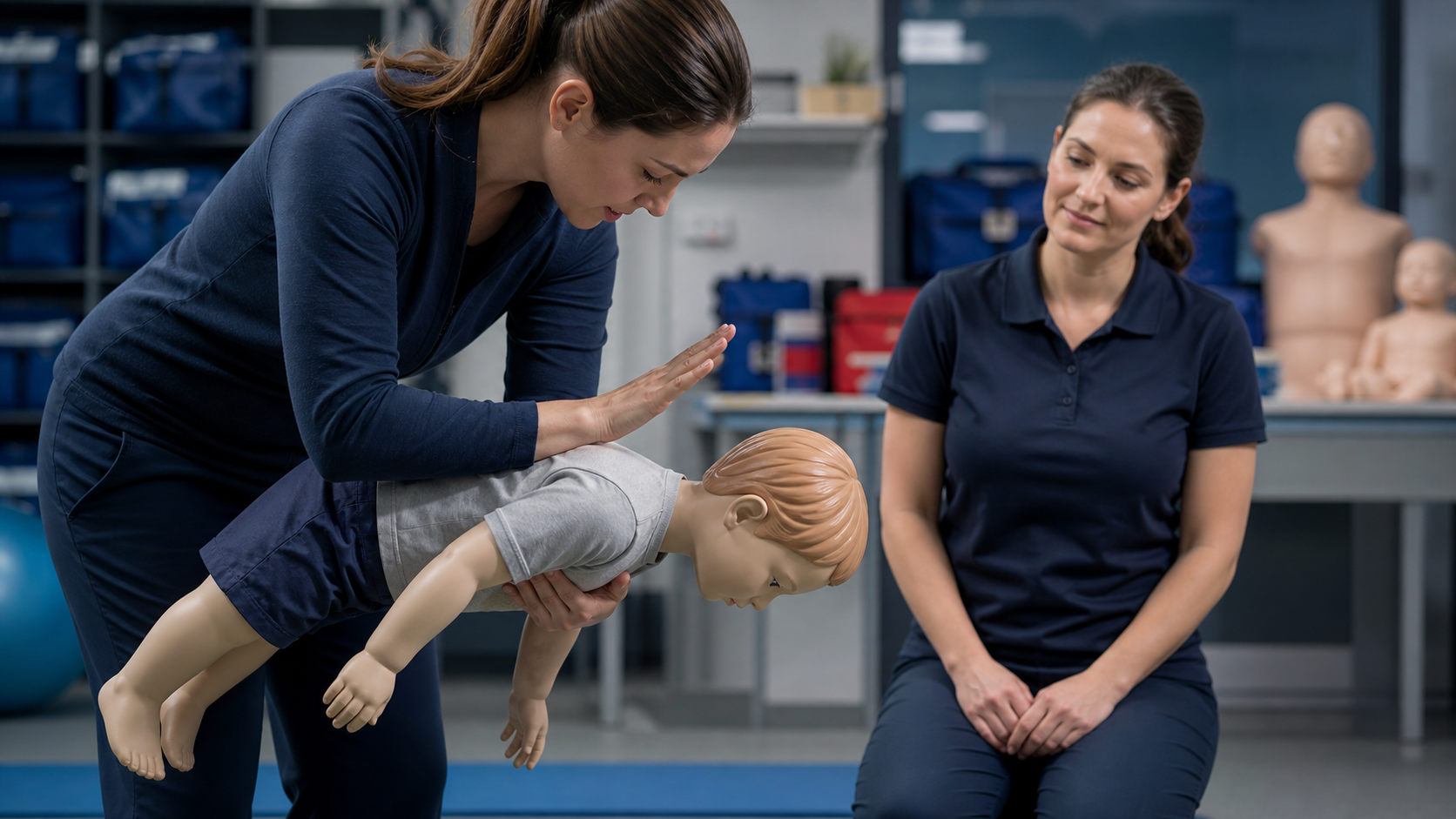
For a choking child (over 1 year old) who is conscious but unable to breathe or speak:
Position yourself. Stand or kneel behind the child. If they are a smaller toddler, kneel. Wrap your arms around their waist and tilt the child slightly forward.
Alternate back blows and thrusts. Deliver 5 back blows between the shoulder blades with the heel of your hand. Then move behind the child and give 5 abdominal thrusts (Heimlich) - make a fist above the navel, grasp it with your other hand, and pull sharply inward and upward.
Repeat until cleared. Continue cycles of 5 back blows and 5 abdominal thrusts until the object is expelled or the child can breathe/cough or becomes unresponsive.
Older children may protest the Heimlich maneuver or crouch down. Encourage them gently to stand if safe. If the child is very overweight, pregnant, or if you cannot get around their waist, use chest thrusts instead of abdominal thrusts. (For example, if a large child is seated, lean them forward and push on the lower half of the breastbone.) Always make each thrust forceful and deliberate, as mild efforts often fail to dislodge a solid object.
Parents often worry that abdominal thrusts may hurt a child. Severe choking is an emergency. For a responsive child over age 1 who cannot cough, speak, cry, or breathe effectively, use the recommended sequence of 5 back blows followed by 5 abdominal thrusts. Follow your current first-aid training, call 911 early, and seek medical evaluation after a serious choking event.
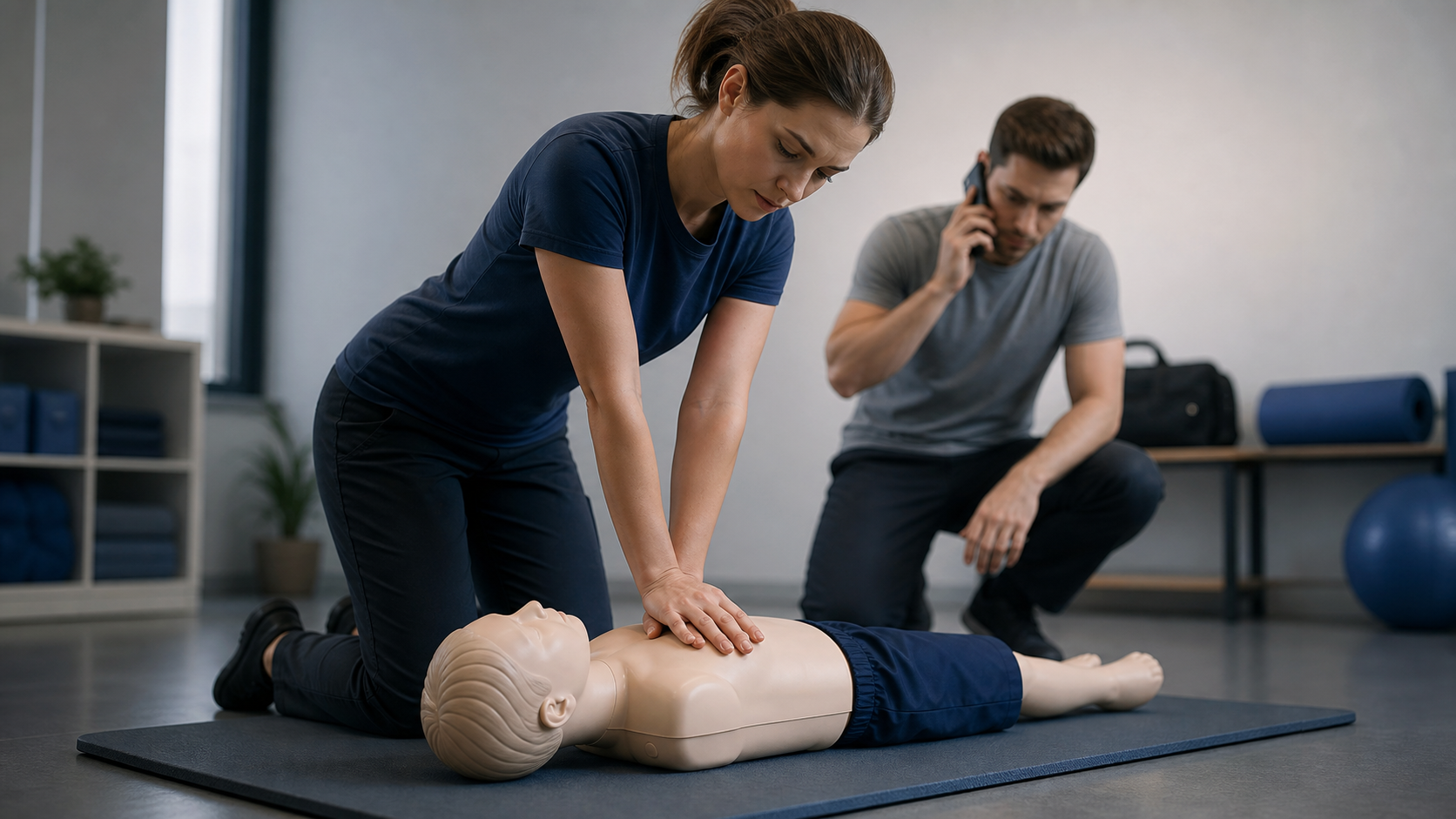
If the child or baby becomes unresponsive at any point, call 911 immediately if that has not already happened and begin CPR according to your current training and dispatcher instructions. Place the child on a firm surface and start chest compressions. When opening the airway for breaths, look in the mouth. Remove an object only if you can clearly see it. Do not perform a blind finger sweep. Continue CPR until help arrives or the child starts breathing.
In practice, this step requires training and calm under pressure. The key is to ensure oxygen is circulating as quickly as possible. Even if you had started a suction device, you should switch to CPR immediately if the victim is unconscious. Remember MedlinePlus's warning: brain damage can occur in as little as 4 minutes without oxygen, so do not hesitate to compress.
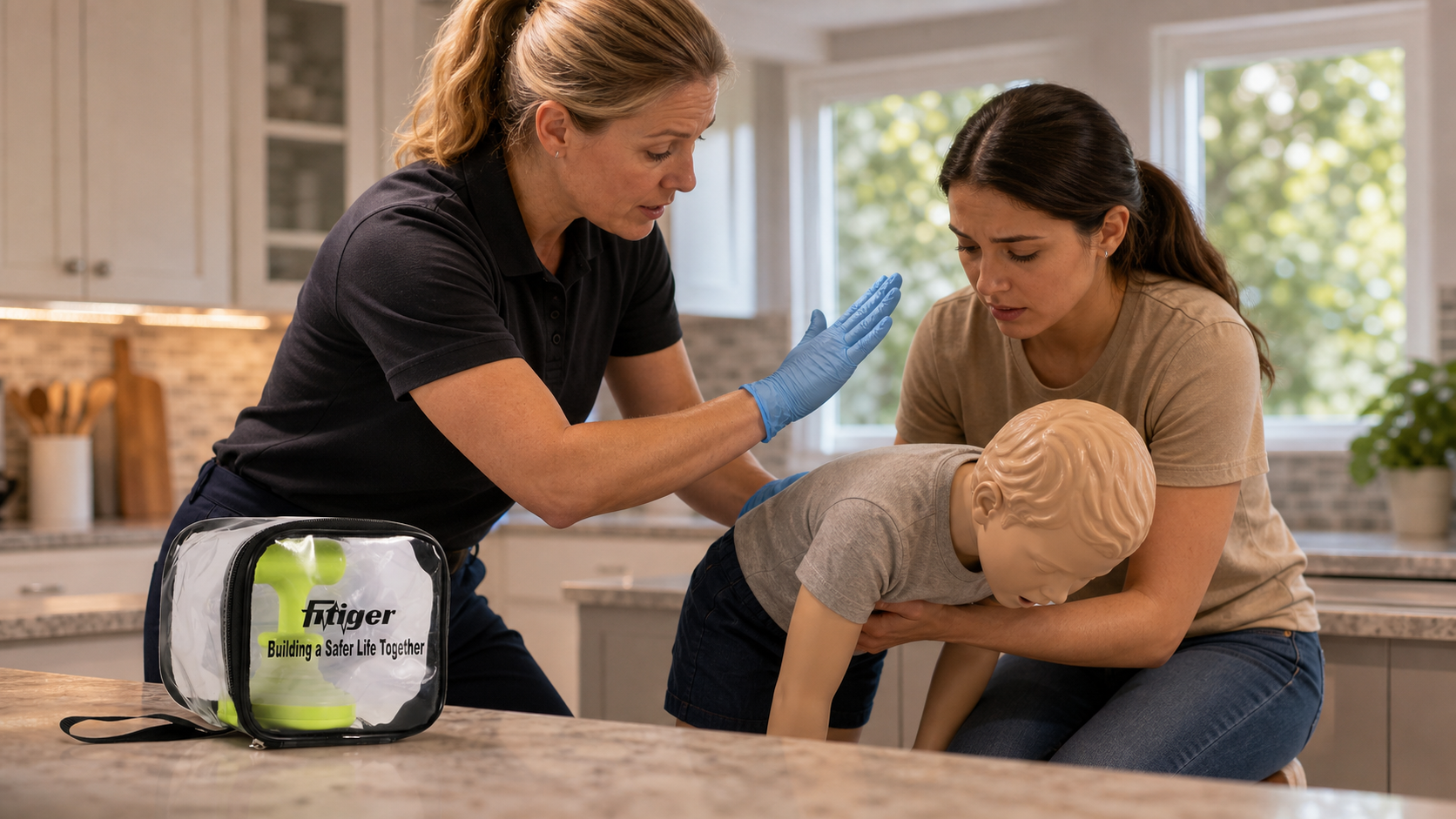
Consumers often ask, "Should I use an anti-choking suction device?" Standard choking rescue comes first. FDA's QXN category under 21 CFR 874.5400 defines a suction anti-choking device as a second-line treatment for complete airway obstruction after unsuccessful BLS choking protocol. That category boundary applies to the specific lawfully marketed device and does not automatically authorize every product sold online.
For a child, a suction anti-choking device should be considered only when the specific product's current instructions permit use for that child and only after unsuccessful standard choking rescue for complete airway obstruction. Do not assume that a product is authorized for infants or for every pediatric scenario. The device must not delay 911, age-appropriate first aid, or CPR when the child becomes unresponsive.
Placement and familiarity still matter. A backup tool that is buried in a closet or unfamiliar to caregivers may add delay. Keep any second-line device where trained adults can reach it quickly, review the current instructions, and make sure everyone understands that manual rescue comes first.

If you decide to add a suction device to your child's safety kit, consider these factors:
Age/Size: Check the current product-specific instructions, warnings, mask fit, and age limits. Do not assume a device is appropriate for an infant or for every child.
Training and Simplicity: Will you and other caregivers remember how to use it? If you panic easily, a device with clear instructions or a simple pump mechanism can help. It's often recommended to practice the steps on a doll so you won't freeze up.
Placement: Store it within arm's reach in places where the child eats or plays. A device locked away in an office or closet does no good during a swallowing emergency. If you also have one for the home, consider duplicate units for car or travel.
Think of the Whole Plan: Buying a device should complement, not replace, basic first-aid training. The plan should be clear: begin age-appropriate manual rescue, call 911 early, and treat any device as a second-line backup only after unsuccessful standard choking rescue for complete airway obstruction.
Typical question: "Does this replace the Heimlich maneuver?" No. A suction anti-choking device is a second-line backup after unsuccessful standard choking rescue for complete airway obstruction. It does not replace 911, CPR, or first-aid training.
Family readiness CTA: For a stronger family readiness plan, review Fitiger's choking-safety resources and second-line backup options for homes and caregivers. Confirm the current instructions, age limits, and applicable regulatory status for the specific product before treating it as part of your emergency plan.
Choking can happen in an instant - a toddler swallowing a grape, or a baby who suddenly gulps a small object. The first question is always: "Can they still cry or cough?" If yes, stay calm and let them cough. If no (or if the cough is very weak), act immediately: administer age-appropriate back blows and thrusts without delay. Age matters: use five back blows + five chest thrusts for infants, and five back blows + five abdominal thrusts for older children. Always have a phone nearby to call 911 the moment the child stops responding or becomes unconscious. Finally, if your family keeps a Fitiger second-line backup option on hand, remember that it belongs after unsuccessful manual rescue, never before it. With early recognition, prompt first aid, and a clear plan (including EMS activation and optional device backup), you give a child the best chance of recovering from a choking emergency.
A: Severe choking signs include inability to cry or make much noise, weak or no cough, difficulty breathing, bluish or pale skin, and panic or confusion. Babies may simply become very quiet, look frightened, or drool, while older children might clutch their throat. If the child cannot cough forcefully or speak, assume a full blockage and act.
A: Support the baby face-down on your arm, keeping the head lower than the chest. Give 5 firm back blows. Then turn the baby face-up and give 5 chest thrusts with the heel of one hand. Repeat the 5+5 cycle until the object comes out or the baby becomes unresponsive. Do not perform abdominal thrusts on an infant.
A: Stand or kneel behind the child. Alternate 5 back blows with 5 abdominal thrusts (Heimlich maneuver). Each time give a clear, separate blow or thrust. Continue until the item is dislodged or the child becomes unresponsive. If the child is too large to reach around or is pregnant, use chest thrusts instead. Always ensure someone calls 911 as soon as possible.
A: Only if you can clearly see it. If the child is conscious, do not blindly sweep with your finger, as you could push the object further back. If the child becomes unconscious and you are giving CPR, after compressions carefully look in the mouth and remove any visible obstruction. Otherwise, focus on back blows and thrusts.
A: No, not yet. A strong, forceful cough often dislodges a partial blockage on its own. Stay close and encourage coughing if the child can still cough or cry. If the coughing weakens, speech stops, or breathing becomes labored, switch to first-aid steps immediately.
A: Not long - without oxygen, the brain can suffer damage in as little as 4 minutes. That's why every second counts. Get help immediately and begin rescue efforts as soon as you recognize severe choking.
A: No. A suction anti-choking device is a second-line backup for complete airway obstruction after unsuccessful standard choking rescue. It does not replace manual first aid, 911, CPR, or first-aid training.
A: Do not assume that an anti-choking device is appropriate for an infant. For infants, follow the infant choking protocol of 5 back blows and 5 chest thrusts and call emergency services. Check the current instructions, warnings, and age limits for the specific product.
A: If the facility chooses to have a choking device (or other safety equipment), it should be stored where meals and snacks occur, with trained staff who know where it is. A locked office far from the cafeteria won't help in those critical first moments. Proper placement and simple training are key to making any equipment effective.
American Heart Association - 2025 CPR & ECC Guidelines - Supports updated choking response framing and 5-and-5 rescue sequence guidance.
FDA - 2026 Choking Rescue Protocols Safety Communication - Supports established choking rescue protocols first and second-line device boundaries.
FDA - De Novo Classification DEN250012 - Supports the QXN suction anti-choking device classification and second-line use after unsuccessful BLS choking protocol.
MedlinePlus - Choking First Aid - Supports choking signs, no blind finger sweep, and oxygen-window urgency.
American Red Cross - Learn First Aid - Supports public first-aid education for choking response.
Mayo Clinic - First Aid for Choking - Supports emergency first-aid framing for choking response.
This article is for general informational purposes and does not replace professional medical advice or hands-on first-aid training. In any choking emergency, call emergency services, follow dispatcher instructions, and use guidance from trained medical personnel.


